Shouldn’t a president be mildly aware of the world around him?

Here we go again. Trump’s idea of diplomacy is a sane person’s idea of bullying.

Donald Trump has threatened to “blow up” Oman if it fails to “behave” in a casual aside during a cabinet meeting, as the US scrambles to reopen the strait of Hormuz.

I had two students from Oman this past semester. One of the things I, a mere college professor, do is look up my students’ backgrounds to avoid saying something stupid and insensitive, like “we should blow up your home”. If only our president were a tenth as aware.

SHUT THE FUCK UP, DONNY.

I choose not to be optimistic

I see a lot of online commentary anticipating that Democrats will flip the house and maybe the senate. They’ve been encouraged by the nomination of Ken Paxton, a totally repulsive corrupt sleazeball, to run against James Talarico — the idea is that that is going to weaken the Republican vote in Texas, along with other visible factors.

Over the last several days, I traveled 550 miles through trump country in Wisconsin, Iowa and Minnesota. I have reliable information that this route was once replete with Trump shrines, but on this trip, there was one (and it was a doozy, near Effigy Mounds, Iowa). All the others had vanished some time over the winter. This isn’t Texas, but it is a very MAGA landscape, and thus a good an indicator. In at least one case, the former Trump Shrine had over the years displayed anti-abortion and various jingoistic symbology. All that stuff was still up, but the name Trump had been taken down. The point is: right wingers, even hard MAGA level right wingers, are erasing Trump from their rhetoric. Assuming that this is a national phenomenon, it matters in Texas.

And now, with the odious Paxton being put in place of the more mainstream Republcian Cornyn to run for Senate in Texas, owing to Trump loyalists following his endorsement, most observers who know Texas are saying that this seat is in play. According to The Hill, “The nonpartisan election handicapper Cook Political Report shifted its rating of the Texas Senate race toward Democrats on Tuesday from “likely Republican” to “lean Republican,” after state Attorney General Ken Paxton defeated Sen. John Cornyn in the marquee race’s GOP runoff.” Read that carefully. They are not projecting a Democratic win, but they are saying the race is in play.

I’ve seen fewer Trump signs in my area, too, but I can’t help but note that a majority of those Texas Republicans voted for the Trump-endorsed candidate anyway. I have seen predictions of the ‘blue wave’ for years, and every time, I’ve been disappointed. I refuse to fall for it anymore. I predict minimal change as a consequence of the midterms.

Greg Laden is only slightly more optimistic than I am.

There are strong indications that many Republican-held House seats are likely to flip over to the D column. There are reasons to hope for a slim Democratic majority in the Senate. The chances that Republicans will hold trifecta power after the new crop of electeds is planted in January is about zero. Will Texas be part of that important, historic, and civilization changing moment?

To answer that question, I refer to fashion and style guru, Melania Trump. I’d love Texas to get on board, but we don’t really need texas, and Texas always disappoints. For mere self preservation,

I could be totally wrong, and I hope I am, but I expect the Republican party of Evil will cling to their death grip on American politics for a few more years, simply because the electorate have convinced me that they’re morons.

An epic humble brag

Liang Cheng is an oncologist a Brown University. I’d never heard of him before, but I am told that he is incredibly famous by Liang Cheng, as he announced himself on LinkedIn.

I am deeply humbled and grateful to learn that my H-index has now reached 140. I was also honored to see that I am currently ranked among the two most-cited researchers worldwide in the fields of Urologic Oncology and Urology on Google Scholar.

In addition, my i10-index has reached 1060; that is, one thousand and sixty publications each cited at least ten times. I was told that this may represent a world record – what an extraordinary honor!

Nonetheless, these numbers are far less important than the people, mentorship, friendships, and collaborations behind them. This milestone is truly a triumph of team science. I owe immense gratitude to my mentors, colleagues, collaborators, residents, fellows, medical students, and friends who have inspired and supported me throughout this journey over the past two decades.

Academic medicine is never an individual accomplishment. It is ultimately about advancing science and medicine, educating future generations, and improving patient care. If our work has contributed even in a small way toward those goals, then I feel extraordinarily fortunate and grateful.

Thank you for being part of this journey. The best is yet to come!

I hate to be the one to tear him down, but no one cares about your H-index and i10-index except, maybe and importantly, administrators and fellow H-index chasers. Anyone else remember that scene in American Psycho where Patrick Bateman and several of his cronies are comparing business cards, noting the quality of the stock and the embossing and the inks? Yeah, that’s what it’s like seeing someone brag about their indexes. Don’t care.

It’s also because those numbers are thoroughly gamed. I looked him up on PubMed, and it’s true, his name is on a lot of papers: papers that have 10 or 20 or more authors, and there he is, somewhere in the middle of a sea of names, rarely first or last. He really does owe a lot to his “mentors, colleagues, collaborators, residents, fellows, medical students, and friends” who have been tacking his name unto their papers! And further, his publication rate, that is, the rate at which his name gets plugged in to a long list, is approximately a paper every two days, which is insane. This is authorship by rubber stamp.

I think it is valid that many research endeavors nowadays require a large team, and he may have been an indispensable member of such a team, but then to use that cooperation to brag that he is #1 or #2 in his field is unseemly. It’s also dangerous, Dr Tall Poppy. He was spamming his ‘accomplishment’ on every social media site he could find, and on Xitter, Michael Eisen noticed.

The author’s Google scholar profile falsely lists multiple papers that he didn’t author, and therefore the citation count and h-index are inaccurate.

Whooops.

I do enjoy seeing a braggart taken down a peg, but Liang Cheng is a symptom of a greater problem: we’re drowning in artificial metrics, amplified by AI slop.

Over the last few decades, science has undergone a “citation revolution.” Scientific life used to be structured by personal reputation and mutual acquaintance; now it is defined by quantitative assessments derived from citations.

And this reward system has warped scientific life in dramatic ways. It has resulted in the obvious and widespread gaming of citation metrics; but, more insidiously, it has pushed scientists toward risk-averse, incremental, and above all unambitious research. The logic of institutional science has become increasingly divorced from actual knowledge and discovery. In a system governed by these perverse incentives, the inevitable endpoint is simply AI-generated slop at scale.

Now, with AI, we’ve built a remarkable new technology that opens up dramatic new horizons for scientific work. But we’re deploying that technology within an institutional structure that incentivizes, above all else, the maximization of metrics that don’t have much to do with real science. The underlying problem is not with AI, but with the institutions and incentives that define modern science.

That is an excellent article, everyone should read it. It actually ends on a promising note, regarding AI as a tool that could break us out of the dead-end, grasping competition for a magic ranking number, as exemplified by the case of Liang Cheng.

The citation index was designed in the 1950s and ‘60s as a solution to the information crisis engulfing scientific life. It ended up becoming much more than that: a regime that reshaped what science was, how it was rewarded, and what kind of science got done. Now that regime is collapsing under the weight of its own contradictions. I think it’s a fantastic opportunity to build something better.

No bread for you, only circuses

In June, the White House will host a UFC fighting event. They’ve already torn out the White House lawn, are building a giant fighting cage to hold all the lights and cameras, and will be placing the Octagon in the center.

It’s historic, don’t you know. Bulbous sweaty men kicking each other in the face is considered a dignified way to celebrate the 250th anniversary of the United States…and it’s not political, it just happens to be held on the president’s 80th birthday.

The president promises us it won’t cost the American taxpayer a thing (I’ve heard that somewhere before). It’s all paid for by special ticket prices — this is not a public event — and sponsorships from Paramount and a crypto company. I’ve never watched UFC, is it all scripted kayfabe bullshit? If so, that would be perfect.

Canadians, Europeans, everyone living in the civilized world outside our borders: are you laughing at us? Because I feel like hiding in shame for some reason.

First day of PT!

After a long session of flexing and extending my knee, my physical therapist plugged me into an ice machine that circulated cold water around the poor tired limb.

The end result: I’m told I’m healing up very well, the recommendation is that I just do one more PT session and continue exercises at home, but so far I’m ahead of the game. I also managed to walk the 3½ blocks between my house and the hospital without much difficulty.

I look forward to returning to my hobby of Cossack-style dancing next week.

I think the Ark is slowly sinking

It’s been afloat for about 10 years. When the notion was first proposed in a gambit to get state tax subsidies, Ken Ham & Co. said it would bring in 1.6 million tourists in the first year, and that that number would go up by about 4% each following years, with occasional surges by 10% as new planned exhibits were opened. By those 2015 estimates, they should be bringing in 2.5 million visitors this year. Are they?

  • Year 1(JY 2016-JE 2017): est. 800,000 (50% of projected attendance)
  • Year 2 (JY 2017-JE 2018): 865,761 (52% of projected attendance)
  • Year 3 (JY 2018-JE 2019): 875,882 (51% of projected attendance)
  • Year 4 (JY 2019-JE 2021): 841,772 (44% of projected attendance)
    Given the impact of COVID on Ark attendance, I left out March 2020-February 2021
  • Year 5 (JY 2021-JE 2022): 775,731 (39% of projected attendance)
  • Year 6 (JY 2022-JE 2023): 782,660 (36% of projected attendance)
  • Year 7 (JY 2023-JE 2024): 764,258 (34% of projected attendance)
  • Year 8 (JY 2024-JE 2025): 682,101 (27% of projected attendance)
  • Year 9 (JY 2025-JE 2026): 664, 813 (26% of projected attendance)

For May-June 2026 I used the attendance numbers from May-June 2025. If history is any guide, this may serve to overestimate Year 9 attendance.

They made the invalid assumption that, after the novelty had worn off in the first year, they would get sustained growth for some reason. I’ve been there. I feel no desire to repeat my visit, especially after the ridiculous parking and admission fees. There is nothing there in the big wooden box! Once you’ve read the numerous silly and static infographics pasted on the walls, what would be the point?

I am amused that they only got about half their projected numbers in the first year, and it’s been declining ever since. They’re probably not suffering much, though, since the costs to maintain a big empty wooden box are probably relatively low.

I went outside today

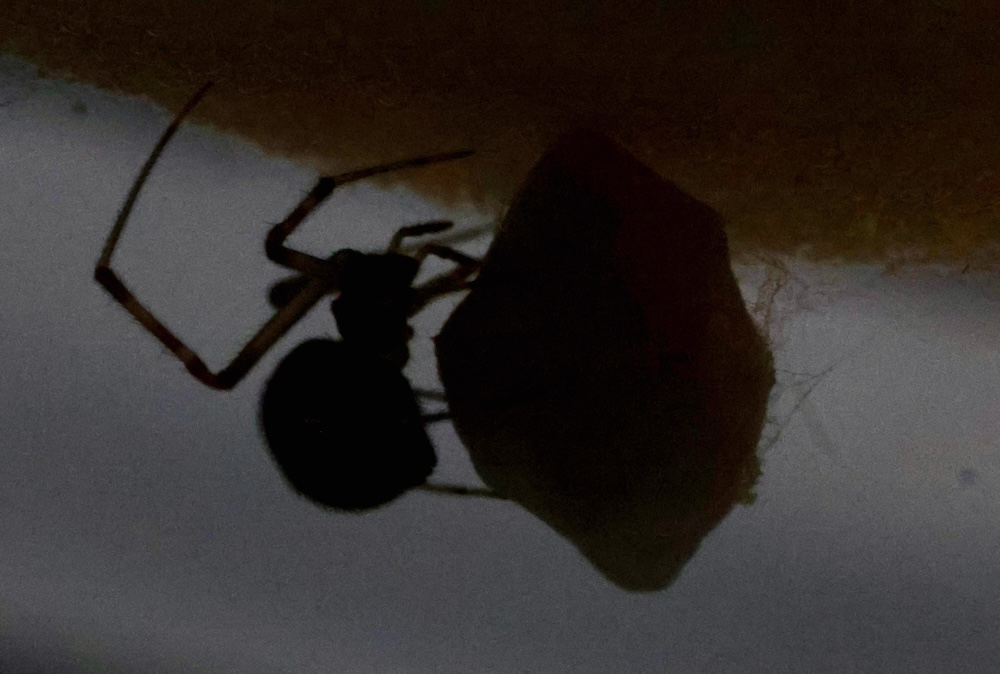
This was a triumph, although these photos are rather lackluster. I walked around my backyard without the aid of a cane, crutches, or walker! My knee is improving fast, although I can’t walk over rough ground very well, and I definitely can’t crouch. I saw a zebra:

Zebra Jumping Spider

And a wall jumper:

Asiatic Wall Jumping Spider

I didn’t fall down even once, although I was pushing it a bit.

The fallacy of inferring the spiritual superiority of our ancestors

My father always impressed me with his deep knowledge of cars. He could tell you the make, model, and year of any car with a glance, and further, he could tell you how to disassemble its carburetor or repair its brakes or tell you all about its ignition timing, and other such things that soared right over my head. I was unfortunately car-blind, an automotive ignoramus who could not distinguish a Ford from a Chevy, let alone make any finer distinctions. Clearly, there has been a generational decline in awareness of the automotive world. Our forefathers had a deeper appreciation of cars and their place in the world around us.

You can see it in the art of our culture.

I thought about this when I read this article, Humanity’s ancient bond with biodiversity is visible in rock art.

Across continents and cultures, one of the most striking features of ancient rock art is how often it places the natural world at its center. Whether etched into sandstone cliffs in the Sahara, painted in hidden shelters in Southern Africa, or drawn on stone faces deep in the Amazon, the recurring subject is not architecture, warfare or abstract political power.

It is animals, forests, rivers, spirits of the land and the intimate relationship between people and the living world around them. I have seen rock art in remote regions of the Amazon, left by ancient San communities in Angola, across the Ennedi Plateau in Chad, and in the Nuba Mountains of Sudan, I have come to believe that these works reveal something profound: long before the language of “biodiversity” existed, many human societies understood that their survival, identity and spirituality were inseparable from the ecosystems that sustained them.

Modern conservation discourse often treats biodiversity as a scientific concept — a measurable index of species richness, ecological resilience and genetic variation. This framing is useful, but it can obscure an older and deeper truth. For much of human history, biodiversity was not an abstraction. It was immediate, sacred and embedded in daily life. The extraordinary prevalence of animal and ecological imagery in rock art across the world suggests that early human societies recognized, at minimum intuitively, the centrality of the natural world to both material survival and cultural meaning.

I do not think my father regarded cars as “sacred”, although he’d agree that the diversity was not an abstraction. It was real! He was an auto mechanic. That was his business. I would not be surprised to learn that he believed that automotive diversity was central to both material survival and cultural meaning. He also admired the beauty of certain cars and expressed aesthetic preferences in addition to appreciating the practical mechanical differences.I am certain that we can find people who have attached a kind of spiritual reverence for certain models of cars. But so what? Humans categorize and classify and add value arguments to everything we see; it is not at all surprising or informative to retroactively paint spiritual interpretations on top of the work of survival, and it is especially specious to then deplore how the current generation has lost their proper understanding of how the world works.

Of course, it would be simplistic and romantic to suggest that ancient peoples were conservationists in the modern sense. They hunted, altered landscapes, and undoubtedly contributed to local ecological pressures at times. But what the rock art strongly implies is that many societies understood themselves as existing within ecological systems, not above them. Nature was not viewed merely instrumentally. It was spiritually, socially and existentially central.

This matters because modern industrial societies have, in many respects, lost that orientation.

Yes. Let’s recognize the pragmatic pressures that drive a culture’s artistic focus. Show me societies that did not understand that they exist within ecological systems, while being dependent on those same ecological systems. Of course ancient artists were fascinated with the living world around them, and drew it and probably dreamed about it. I would agree that modern industrial societies have shifted their focus from natural ecosystems to technological ecosystems, and it would be a good idea for us to be more conscious of the broader biological implications of our way of life, it is not surprising that human beings dwell on the subjects that most interest them and have difficulty expanding their sphere of analysis.

I am sure that many of those ancient cultures also had interpretations of the world that were rooted in magic and gods and invalid spiritual ideas, and that we’ve abandoned. Most of that is invisible and unexpressed in the catalog of rock art that we have, because it’s easier to draw a gazelle than a cosmic spiritual connection. We have to make up the spiritual element now and impose it on the art, which makes trying to draw conclusions and interpret our interpretations a masturbatory act.

I can sympathize with many of the conclusion this author reaches while being skeptical of how they reached them.

Ancient rock art is therefore more than archaeological evidence or aesthetic achievement. It is testimony. It bears witness to the fact that human societies across vast stretches of time and geography saw themselves in a relationship with a biologically rich world and considered that relationship important enough to record in an enduring form.

In this sense, rock art offers a quiet but powerful rebuke to modern ecological indifference. It reminds us that our ancestors often lived with a deeper awareness of ecological dependence than many contemporary societies do. They may not have had the vocabulary of biodiversity science, but they understood that the fate of humans and the fate of the living world were intertwined.

We would be wise to recover some of that understanding.

OK, yes, we should have a deeper appreciation of biodiversity and work to preserve it. But is the way to do that by invoking the inferred spirituality of our ancestors, and suggesting that they had the right answer, while we do not? I know we don’t have the right answer, but we also have this new layer of technology that complicates our understanding of the world that must be incorporated into our answer, and pretending that solutions that worked in Chad ten thousand years ago will work again is dodging the problem. I suppose we could just simplify the world, jettison all the technology, and go back to living in small villages, and then we’d appreciate nature much more.

My dad, who has been dead for 34 years, could also work himself up into a good rant about those goddamn fuel injection systems and unrepairable computer chips in modern cars. We’ve lost our understanding of the elegance of a simple V8 engine. Bring back the beauty of the Fords of the 1950s.