The fallacy of inferring the spiritual superiority of our ancestors

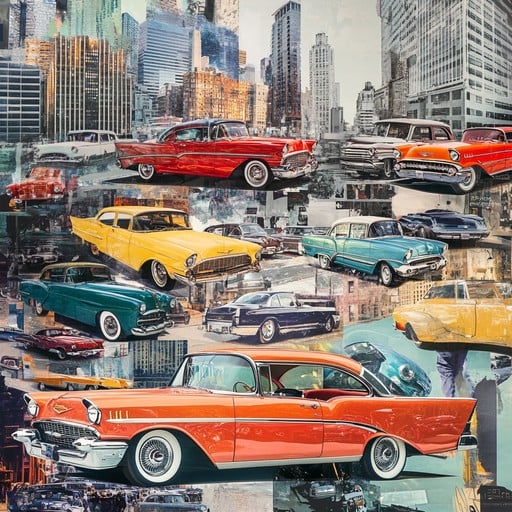
My father always impressed me with his deep knowledge of cars. He could tell you the make, model, and year of any car with a glance, and further, he could tell you how to disassemble its carburetor or repair its brakes or tell you all about its ignition timing, and other such things that soared right over my head. I was unfortunately car-blind, an automotive ignoramus who could not distinguish a Ford from a Chevy, let alone make any finer distinctions. Clearly, there has been a generational decline in awareness of the automotive world. Our forefathers had a deeper appreciation of cars and their place in the world around us.

You can see it in the art of our culture.

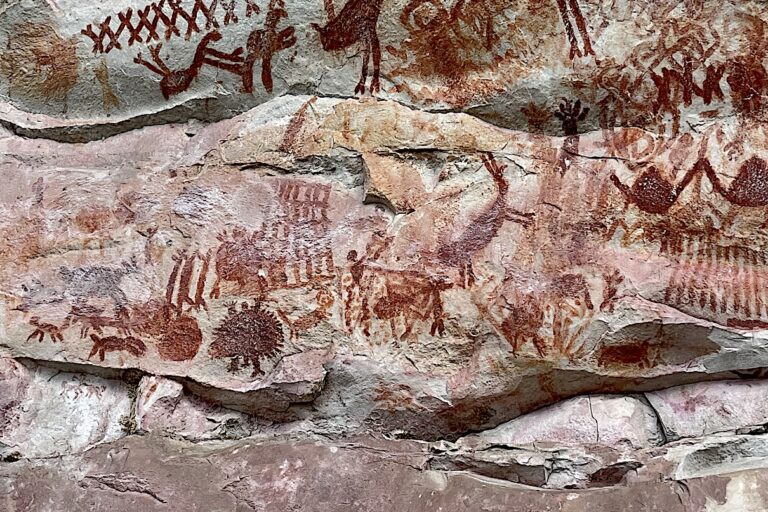
I thought about this when I read this article, Humanity’s ancient bond with biodiversity is visible in rock art.

Across continents and cultures, one of the most striking features of ancient rock art is how often it places the natural world at its center. Whether etched into sandstone cliffs in the Sahara, painted in hidden shelters in Southern Africa, or drawn on stone faces deep in the Amazon, the recurring subject is not architecture, warfare or abstract political power.

It is animals, forests, rivers, spirits of the land and the intimate relationship between people and the living world around them. I have seen rock art in remote regions of the Amazon, left by ancient San communities in Angola, across the Ennedi Plateau in Chad, and in the Nuba Mountains of Sudan, I have come to believe that these works reveal something profound: long before the language of “biodiversity” existed, many human societies understood that their survival, identity and spirituality were inseparable from the ecosystems that sustained them.

Modern conservation discourse often treats biodiversity as a scientific concept — a measurable index of species richness, ecological resilience and genetic variation. This framing is useful, but it can obscure an older and deeper truth. For much of human history, biodiversity was not an abstraction. It was immediate, sacred and embedded in daily life. The extraordinary prevalence of animal and ecological imagery in rock art across the world suggests that early human societies recognized, at minimum intuitively, the centrality of the natural world to both material survival and cultural meaning.

I do not think my father regarded cars as “sacred”, although he’d agree that the diversity was not an abstraction. It was real! He was an auto mechanic. That was his business. I would not be surprised to learn that he believed that automotive diversity was central to both material survival and cultural meaning. He also admired the beauty of certain cars and expressed aesthetic preferences in addition to appreciating the practical mechanical differences.I am certain that we can find people who have attached a kind of spiritual reverence for certain models of cars. But so what? Humans categorize and classify and add value arguments to everything we see; it is not at all surprising or informative to retroactively paint spiritual interpretations on top of the work of survival, and it is especially specious to then deplore how the current generation has lost their proper understanding of how the world works.

Of course, it would be simplistic and romantic to suggest that ancient peoples were conservationists in the modern sense. They hunted, altered landscapes, and undoubtedly contributed to local ecological pressures at times. But what the rock art strongly implies is that many societies understood themselves as existing within ecological systems, not above them. Nature was not viewed merely instrumentally. It was spiritually, socially and existentially central.

This matters because modern industrial societies have, in many respects, lost that orientation.

Yes. Let’s recognize the pragmatic pressures that drive a culture’s artistic focus. Show me societies that did not understand that they exist within ecological systems, while being dependent on those same ecological systems. Of course ancient artists were fascinated with the living world around them, and drew it and probably dreamed about it. I would agree that modern industrial societies have shifted their focus from natural ecosystems to technological ecosystems, and it would be a good idea for us to be more conscious of the broader biological implications of our way of life, it is not surprising that human beings dwell on the subjects that most interest them and have difficulty expanding their sphere of analysis.

I am sure that many of those ancient cultures also had interpretations of the world that were rooted in magic and gods and invalid spiritual ideas, and that we’ve abandoned. Most of that is invisible and unexpressed in the catalog of rock art that we have, because it’s easier to draw a gazelle than a cosmic spiritual connection. We have to make up the spiritual element now and impose it on the art, which makes trying to draw conclusions and interpret our interpretations a masturbatory act.

I can sympathize with many of the conclusion this author reaches while being skeptical of how they reached them.

Ancient rock art is therefore more than archaeological evidence or aesthetic achievement. It is testimony. It bears witness to the fact that human societies across vast stretches of time and geography saw themselves in a relationship with a biologically rich world and considered that relationship important enough to record in an enduring form.

In this sense, rock art offers a quiet but powerful rebuke to modern ecological indifference. It reminds us that our ancestors often lived with a deeper awareness of ecological dependence than many contemporary societies do. They may not have had the vocabulary of biodiversity science, but they understood that the fate of humans and the fate of the living world were intertwined.

We would be wise to recover some of that understanding.

OK, yes, we should have a deeper appreciation of biodiversity and work to preserve it. But is the way to do that by invoking the inferred spirituality of our ancestors, and suggesting that they had the right answer, while we do not? I know we don’t have the right answer, but we also have this new layer of technology that complicates our understanding of the world that must be incorporated into our answer, and pretending that solutions that worked in Chad ten thousand years ago will work again is dodging the problem. I suppose we could just simplify the world, jettison all the technology, and go back to living in small villages, and then we’d appreciate nature much more.

My dad, who has been dead for 34 years, could also work himself up into a good rant about those goddamn fuel injection systems and unrepairable computer chips in modern cars. We’ve lost our understanding of the elegance of a simple V8 engine. Bring back the beauty of the Fords of the 1950s.

Something has happened to my blog

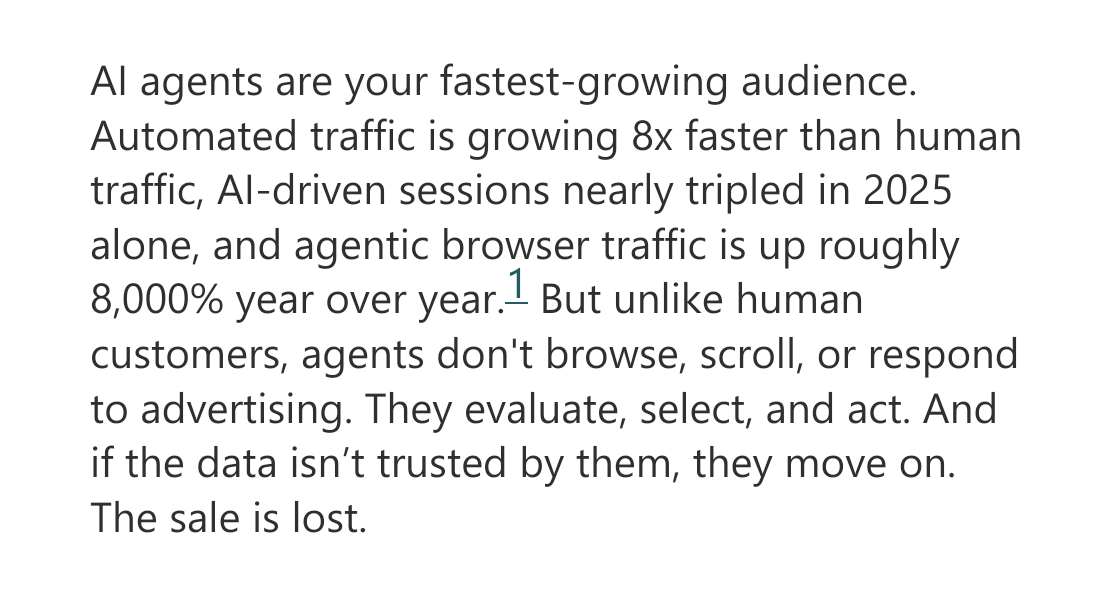
I don’t pay much attention to site stats, actively avoiding digging into them. I’m not interested in optimizing for traffic, or that SEO nonsense, but as the administrator for this site I’ve got this little toolbar at the top of the window that graphically shows how many visits the site gets. It’s not something I really care about, but I did like the predictable wave-like plot — visits rise until about noon, and then slowly decline over the course of the afternoon and evening, before starting to rise in the early morning. The tide goes in, the tide goes out, and you can’t explain that…OK, except that I can, because it tells me I have a predominantly American audience and it’s just a reflection of human daily activity levels in my hemisphere. That’s another reason to not attach much significance to those numbers.

Except…over the last few weeks, the rhythm has been disrupted. The waves are gone. I’m getting site activity all night long, which makes me suspect this isn’t human activity. On closer inspection, site views have also been more than doubled, which sounds like a good thing, except that I seem to be talking to non-human entities. Not aliens, though — AIs scouring the web.

Then I saw this comment on Mastodon:

It’s all artificial, and not at all intelligent. They’re not contributing anything, they’re not the audience I want to talk to, and I think all they’re going to do is jack up my hosting expenses.

If it is aliens, though, welcome. Leave a comment. I’m sure many people here would love to have a conversation with you.

Far, far away

Farther away than anyone has gone before.

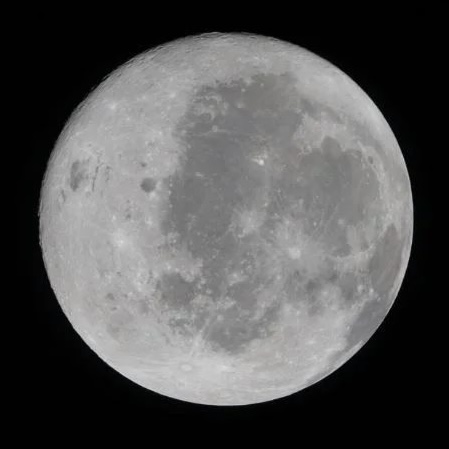
The Orion spacecraft is now in the lunar sphere of influence, meaning the moon’s gravity has more pull on the vehicle than the Earth. At 1:57 p.m. ET, the crew surpassed the record for the farthest distance traveled from Earth by humans, which was set by the Apollo 13 mission at 248,655 statute miles from Earth. At 2:45 p.m., the crew will begin making observations of the surface of the moon during the flyby.

Pretty good. Fly on!

Making babies with a computerized sperm storage site

I put together a rambling video about the final project in my genetics class, and about the responsibility of modern geneticists to deal with the terrible bad ideas of the past — eugenics. I give you a few examples of bad genetics, one relatively benign, and another actively evil (as you might guess, the evil example is Donald Trump.)

The gentler example is Fairfax Cryobank, which provides a good, useful, and even necessary service, sperm storage. I’ve visited their St Cloud branch, not as a client, but leading a field trip for a class on modern reproductive technologies, and they seem like good people with a lot of dewars. You can browse their catalog of sperm donors, and it’s a real trip. It’s more like reading the submissions to a dating site…a dating site where you’ll never meet the person whose profile you’re reading, but if you’re lucky and spend a few thousand dollars, you might get a frozen vial of sperm in the mail.

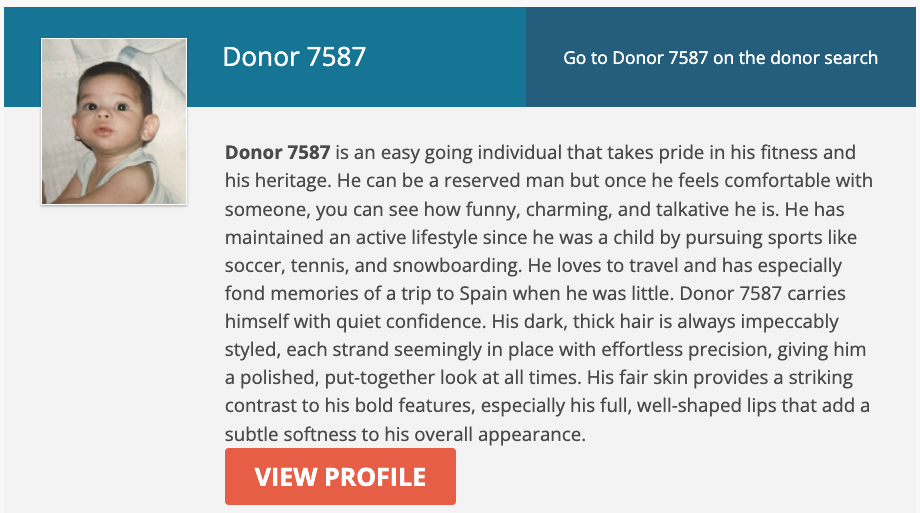
Here, for example, is one profile among many.

Donor 7587 is an easy going individual that takes pride in his fitness and his heritage. He can be a reserved man but once he feels comfortable with someone, you can see how funny, charming, and talkative he is. He has maintained an active lifestyle since he was a child by pursuing sports like soccer, tennis, and snowboarding. He loves to travel and has especially fond memories of a trip to Spain when he was little. Donor 7587 carries himself with quiet confidence. His dark, thick hair is always impeccably styled, each strand seemingly in place with effortless precision, giving him a polished, put-together look at all times. His fair skin provides a striking contrast to his bold features, especially his full, well-shaped lips that add a subtle softness to his overall appearance.

They’ve all got cute little baby pictures, since you won’t meet the adult. This is all for the benefit of clients, who will pick a vial of sperm based on vibes, but almost everything in that description is not heritable. You won’t get a vial filled with “funny, charming, and talkative,” because those are things that family, friends, and experience will generate. My objection is that it perpetuates the myth of simple inheritance of traits for everything, and misleads the client. But all of reproduction is a misleading game, as far as the traits of your child are concerned.

I would recommend adding a more appropriate button to the website: a “RANDOM CHOICE” button. Click it, they’ll send your doctor a completely random arbitrary vial from their vast collection. You’ll be surprised! But no more surprised than if you carefully choose the father of your child based entirely on a profile on a website.

Imagine having a robot to teach your kids Greek and Latin

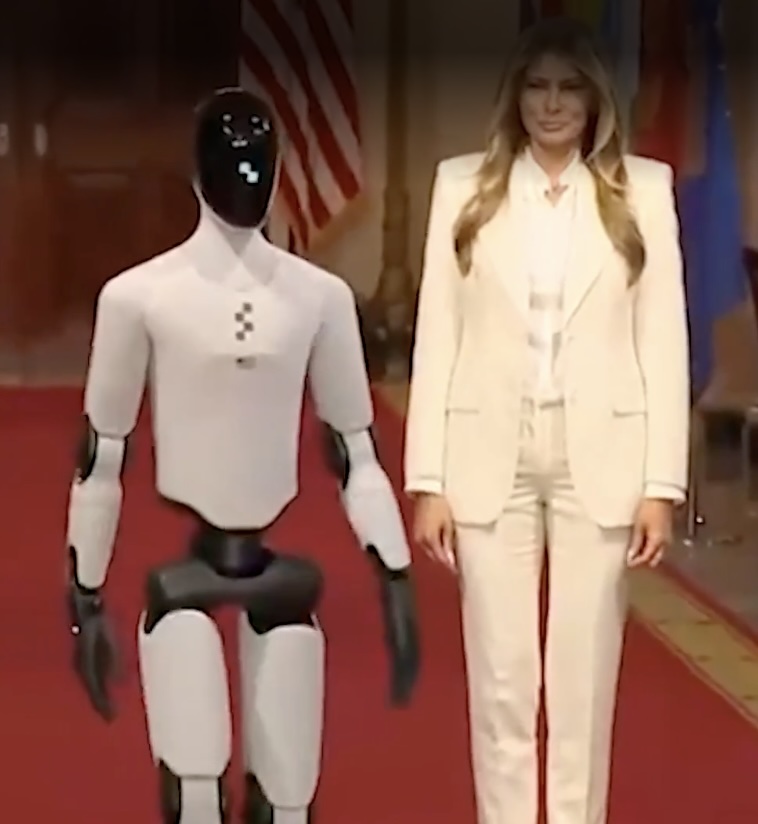
Which one is the robot?

“Bizarre” is the right word — apparently, there was an event at the White House to bless a future of AI humanoid slaves taking over all of our menial jobs, like, you know, teaching.

At a bizarre White House event on Wednesday, first lady Melania Trump walked side by side with an artificial-intelligence-powered robot before spelling out a vision of the future in which children are taught by a “humanoid educator.”

Trump was hosting an international summit on technology and education in the East Room and arrived accompanied by a white-and-black robot that matched her stride, at points unsteadily.

It looks more like a PR event for a tech company called Figure, or a demo of their current model of robot, called Figure 03. I looked up their robot, and the technical details are sparse. They claim it “takes care of household tasks like laundry, cleaning, and doing dishes, all autonomously” — you mean, it’s a glorified autoloader for the dishwasher and washing machine? I do all that already, and don’t need a robot to do it. Cleaning is a more complex task, but I don’t see how a robot is managing dusting, sweeping, mopping, cleaning up cat vomit, picking up the books I leave scattered all over the place and putting them back on the shelf correctly, or just generally tidying up after my sloppy self. They have videos of the robot in action, but they make it look like their most important task is walking slowly carrying a tray to serve champagne to wealthy venture capitalists at parties in your multi-million dollar home. A very important function to some people, I’m sure, but not something I’m at all concerned about.

You can buy your very own champagne-server and dishwasher loader for the low, low price of $30,000-$50,000, available in white, light gray, or soft blue.

Melania talked about how a humanoid robot could take over the task of teaching your children. Please note the very important word in the first sentence of this quote.

Addressing delegates at the two-day Fostering the Future Together summit, the president’s wife proceeded to speak glowingly about an imaginary robot teacher named Plato, an allusion to the philosopher in ancient Greece.

She envisioned the tech-fueled guide having a deep understanding of every major subject, including classical studies, and being available “in the comfort of your home.”

Arguing that AI will be “formed in the shape of humans,” she said the robotic Plato would “provide a personalized experience adoptive to the needs of each student.”

This “teacher” does not exist, and it specifically is not Figure 03, which looks like it’s straining its mighty brain just to walk across a room without falling over. She’s just “envisioning” things, you know. Maybe someday we can replace all those human classics teachers with machines that will also serve champagne. The techbros are all just waiting for mechanical Plato to walk into their house and teach them impressive-sounding stuff. Finally, an excuse to learn Latin, without the fuss of a human instructor!

Melania Trump is the perfect humanoid to promote this important cause.

But Trump didn’t linger. She was in the room for seven minutes for her introductory remarks, departing before a panel discussion on artificial intelligence in education and skipping the networking and relationship-building she encouraged her fellow spouses to take advantage of during Tuesday’s event.

Maybe she could have her personal humanoid robot do all those tiresome activities?

Fascinating things I learned today

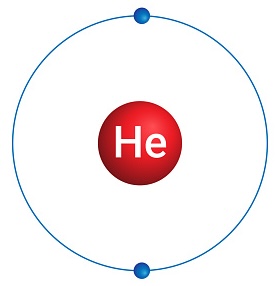
We get helium as a byproduct of liquified natural gas processing. So it’s a nice side effect of our dependence on oil.

I did not know that.

Helium is heavily used by the semiconductor industry. Making all those fancy high end chips requires helium in the process.

I had no idea.

30% of the world’s helium supply is extracted in Qatar, which ships it the semiconductor manufacturers in Japan, South Korea, Singapore, and Taiwan.

There are all kinds of surprises in the global supply chain.

The ships that transport that crucial element are currently bottled up in the Strait of Hormuz.

I can see where this is going.

Iran just blew up one of Qatar’s helium plants.

Uh-oh.

All this destruction was triggered by a rogue American president, who is also a raging asshole and incompetent moron.

At least I already knew that!

I hope no one was hoping to get a new computer (or an MRI) in the future.

Oh, and hey, if you’ve got a birthday coming up, maybe ixnay on the artypay alloonsbay. They just seem wasteful.

Anyone remember the Metaverse?

No? The huge investment Facebook made in launching a virtual reality social media platform that Mark Zuckerberg predicted would take over the internet? It was so important that Zuck renamed his whole company to Meta! How could you forget?

Well, now it’s safe to purge your memory banks. The Metaverse is dead or dying.

Horizon Worlds launched in late 2021 and never found its footing. The platform never drew more than a few hundred thousand monthly active users, which isn’t enough for a project that consumed billions of dollars. Reality Labs, the Meta division responsible for VR and metaverse development, has accumulated nearly $80 billion in losses since 2020. In the fourth quarter alone it posted an operating loss of more than $6 billion.

The costs were always the argument for staying the course. Zuckerberg had promised the metaverse would reach a billion people and generate hundreds of billions in commerce. Pulling back meant admitting those projections were wrong.

I am impressed that Zuckerberg can throw away $80 billion on a bad gamble on a whim. Surely this means the stockholders will rise up and depose their incompetent leader…nah, no, you know that once you’re rich enough you are free from consequences.

You might hope that they’d learn something from this, but no — their future is instead going to be built on AI.

What changed the calculus was AI. When ChatGPT arrived in late 2022, Meta pivoted its public messaging fast. Its AI research division, long led by scientist Yann LeCun, gave the company a credible foundation to build on. Ad revenue improved. The stock recovered. By 2024, Meta had nearly tripled in value from its 2022 lows.

AI seems to have a niche in building stock market confidence and ad revenue, that’s nice. I think it’s going to face some consequences in the near future, as people realize they’ve been sold a shiny bill of goods, and maybe people will learn to tell Zuck to shut the fuck up.

Apple Hell

I’m beginning to hate computers. I have been trying to deal with Apple security this morning, trying to log in to the system on my home Mac mini. The problem is two-fold: one is that I have to log into my Apple account; two is that I don’t own any of my computers. Somehow, they are all registered to my wife.I had to register with Apple all over again, which took an absurd amount of verification and re-verification and filling out forms. Finally got that straightened around, set up my new official account, tried to login, only for it to tell me that I needed Mary’s password now.

I took one stab at it and quit. The other delightful thing about Apple is that you get three tries, and then you are locked out of even attempting to log in for a week.

I have spent the last hour screaming profanities at the ceiling.