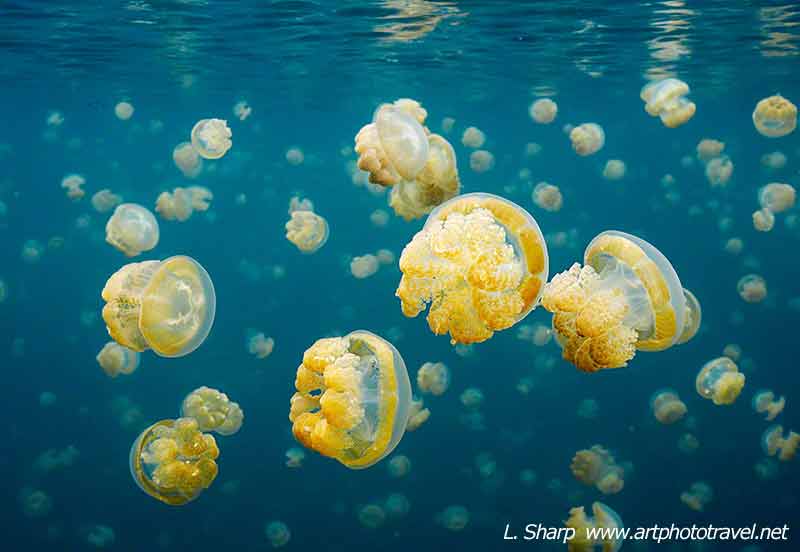
Happens all the time when you’re hauling your giant octopus around, and the truck breaks down.
In an interesting discussion of the genetic structure of human populations, Jeremy Yoder weighs in on Nicholas Wade’s little book of racism.
So with all due respct to Sewall Wright, modern genetic data pretty clearly show that if aliens arrived tomorrow and started sequencing the DNA of planet Earth, they would probably not sort Homo sapiens into multiple genetic subspecies. It is true that people from different geographic locations look different—and we have known that these visible differences have a genetic basis since the first time distant tribes met and interbred. But that interbreeding, and our drive to explore and settle the world, have maintained genetic ties among human populations all the way back to the origin of our species.
As the evolutionary anthropologist Holly Dunsworth notes in her discussion of A Troublesome Inheritance, whether you choose to focus on the visible differences among human populations, or on those deep and ancient genetic ties, comes largely down to a matter of personal inclination. Knowing what I do of evolutionary genetics, and of how our judgments about the visible differences among human populations have shifted over time, I’m far more inclined to think that the social, economic, and cultural differences among human societies are products not of our genes, but of how we treat each other.
Wade’s inclinations are, quite obviously, different from mine. However, comparing Wade’s claims to the scientific work he cites, I find it hard to conclude that we are simply looking at the same data with different perspectives. Time and again, data that refutes his arguments is not only available and widely cited in the population genetics literature—it is often in the text of the papers listed in his endnotes.
By the way, Wade has responded to various criticisms. I would not have thought he could dig himself any deeper, but he succeeded.
Despite their confident assertions that I have misrepresented the science, which I’ve been writing about for years in a major newspaper, none of these authors has any standing in statistical genetics, the relevant discipline. Raff is a postdoctoral student in genetics and anthropology. Fuentes and Marks are both anthropologists who, to judge by their webpages, do little primary research. Most of their recent publications are reviews or essays, many of them about race. Their academic reputations, not exactly outsize to begin with, might shrink substantially if their view that race had no biological basis were to be widely repudiated. Both therefore have a strong personal interest (though neither thought it worth declaring to the reader) in attempting to trash my book.
Holy crap. Nicholas Wade is a journalist who has no standing in any field of biology, and his criticism is that those who have repudiated his book aren’t experts in the very narrow and specific subfield of biology that he has deemed the only one of importance? And that they’ve only published scholarly reviews in science journals, rather than in the primary literature? You know that publishing a tertiary summary in a mass-market newspaper would have far less credibility to scientists, right, especially with Wade’s penchant for getting the science wrong?
Getting a Ph.D. is only the start of a scientific career — scientists spend their whole lives learning and exploring new ideas (that’s why it’s a little weird to see people getting multiple Ph.D.s — it’s really not necessary. Once you’ve got one, you’ve got the tools to be a scholar.) My grad school advisor started out his career with a degree in immunology, and drifted towards neuroscience, and then development, and then genetics as his career progressed — it would be really weird to judge his work as just an immunologist.
Scientists get trained in thinking scientifically more than anything else — something that Nicholas Wade missed.
John Oliver asks that you use your vast powers to rescue Net Neutrality. It’s like your whole life has been building to this moment.
Go to fcc.gov/comments and spew. Spew like you’ve never spewed before.
This month’s carnival is at the Evolution: Education and Outreach blog.
Imagine this: the way deer were hunted is to line up 100 bulldozers, and send them forward over miles of rangeland to scrape everything — trees, brush, squirrels, birds, dogs, foxes, everything in the landscape — into a big pile, and then the drivers would jump out and pick through the debris to pull out any deer. They’d leave behind a wasteland, and a wasteful pile of wreckage, and photographers and journalists would descend horrified on the mess and pillory the perpetrators.
I don’t think we’d stand for it. It would also be completely unsustainable — each pass would destroy the land and it would take decades for it to recover.
But apparently, if it takes place underwater and you can’t see it, it’s OK. Christie Wilcox explains the consequences of trawling.
“Deep-sea trawling is currently carried out along large sectors of the oceans, and it appears to have severe consequences on deep-sea sediment dynamics at a global scale,” the authors write in their conclusions. “Cumulatively, the impacts of trawling on the sediment structure, the benthic biodiversity, and the most basic of all the nutritional resources in these deep-sea sedimentary ecosystems resemble the catastrophic effects caused by man-accelerated soil erosion on land.” Their results show that trawling is a scorched-earth way of fishing that leaves little behind to rebuild. Not only are fish, corals, and invertebrates wiped from an area with each sweep, the very nature of the sea floor is altered by chronic trawling. Since upwards of 98 percent of all marine species live on or immediately above the sea floor, such dramatic changes in sediment biodiversity and chemistry are bound to ripple outward. These data explain why deep sea communities affected by trawling take longer than expected to recover, if they can recover at all.
“Intensive and chronic bottom trawling is deemed to transform large portions of the deep continental slope in to faunal deserts and highly degraded seascapes,” write the authors. “With deep-sea trawling currently conducted along most continental margins, we conclude that trawling represents a major threat to the deep seafloor ecosystem.”
We wouldn’t tolerate deer hunting with bulldozers, so why is it so difficult to get international policy to end this destructive practice?
Oh, boy, my new lab toy arrived today: a ProgRes C3. I did a quick setup and took a few uncalibrated photomicrographs, but I am resisting the temptation to play with it all weekend — I want my students to tinker first.
OK, one picture. Recognize it?
No? Maybe it’s because you’ve only seen them illustrated like this:
Last night, as promised, I watched Gasland. It’s an excellent documentary presented in a jarringly low-key style — jarring because every place visited that had extensive fracking was a horror. There were landscapes where farmers and ranchers were trying to make a living, and everywhere you looked, there were drilling rigs and condensate tanks, clouds of toxic vapor, and the water from local wells was coming up yellow to brown to black, fizzing off flammable gasses and saturated with chemical sludge. In some cases, water wells would actually explode.
Josh Fox, the documentarian, had to struggle to get any interviews with the corporate slugs who were greedily promoting this abuse of the environment. The most honest of them said, essentially, that there were always going to be compromises and a tiny bit of pollution was the price we have to pay for our energy; the worst would flat out deny that fracking could be causing any contamination of the water. Right. They snake pipes a mile or two under the ground, and then pump many thousands of liters of water loaded with organic solvents, a witch’s brew of carcinogens and teratogens and greasy poisonous crap, into the rock under such intense pressure that it cracks the confining geology, all to tap into trapped oil and gas, and there’s no way it could possibly leech into aquifers. And they pay desperate affected individuals some small sum, tens of thousands of dollars, to shut up and accept the damage.
This map was shown several times in the movie. All the red areas are deep shale beds, natural gas reservoirs, that are likely candidates for drilling.
Do you live in any of those places? You should worry. If they aren’t drilling now, they want to soon.
We also got to meet the greatest villain of this century, Dick Cheney. He’s the architect of the legal exemption of fracking companies from the restrictions of the Clean Water Act (among all the other things Ol’ Dick has done to advance the United States of Halliburton). Our government has washed its hands of any responsibilities, and an employee of the Environmental Protection Agency came right out and said the EPA was consciously avoiding getting into dealing with the consequences of fracking.
It’s one of the most depressing movies I’ve seen in years. We’re doomed, aren’t we?
At least there were a few nods to the gallant heroes are actually doing something to try and stem the flood of oil money: the movie has an interview with Theo Colborn, who really deserves wider recognition. It also features the real hero, the planet, with lots of lovely shots of Fox’s home in a secluded bit of the Delaware River basin — a place I remember well, having taken my kids camping and on scouting trips in the lush deep woods of Pennsylvania. That’s what prompted the movie, that that area is threatened with fracking development. All it would take is one neighbor to sell out to a natural gas company, and because the government is dragging its feet on protecting the environment, everyone could enjoy a river filled with benzene and 500 other killer chemicals.
By the way, today Google is celebrating Rachel Carson’s birthday.
We haven’t learned a thing.