That admissions scandal ripped off the bandage and exposed the suppurating ulcer of the “elite” university system, and gives me a handle to vent decades of frustration. I’ve known about this for a long time, but if you try to tell people that Harvard and Stanford are profiting off a facade rather than their actual, material quality, they don’t believe you — the names of those universities have become short cuts to an illusion of earned intelligence. Read this, Higher Education and the Illusion of Meritocracy, though.
The recently revealed admissions scandal seems to have it all: Three Stooges levels of ineptitude, crude Photoshops, six-figure payoffs, corrupt coaches, and a cadre of low-level celebrities for good measure. But those who see this scandal as anything other than a moment of levity are missing the forest for the trees. The U.S. Department of Justice filings confirm what we already knew — or should have known: Elite-college admissions exists chiefly to replicate class privilege.
This became depressingly clear to me during my three years as an assistant dean of admissions at an elite college. I saw how the system is rife with inequities and loopholes; how unscrupulous wealthy people are willing to pay admissions fixers to exploit those loopholes; and how grifters adjacent to the process cash in on whatever influence they wield. As I wrote in The Chronicle Review a little more than a year ago, “Admissions at elite institutions can make a fool and a liar out of anyone.”
It’s not just the abberrant criminality of this event, though, because the whole system is rigged.
Meritocratic admissions at elite institutions is the real scam. The idea of a phony soccer player is goofy for its novelty; Division III athletes being tipped into admitted classes through a warped quota system that benefits wealthy white men is a grim reality. The construction of a fabricated profile with illegitimate test scores and extracurriculars is tragicomic; a prep-school applicant carefully curated by elite counselors, tutors, essay writers, and independent admissions advisers is routine.
In short, the real corruption of elite-college admissions is more mundane than this scandal suggests, though far more deleterious to America’s meritocratic ideals. To view this scandal as the problem is to unintentionally reinforce the actual problem: In a truly meritocratic society, higher education should correct inequity; instead, elite higher education exacerbates inequity.
Worse — even if you get in (which is unlikely if you’re not a member of a privileged class), you’re screwed and are just perpetuating a criminally capitalistic system.
Jack outlines how top colleges and universities are and have long been havens of the wealthy. In 2017, a team led by the Harvard economist Raj Chetty found that students coming from families in the top 1 percent—those who make more than $630,000 a year—are 77 times more likely to be admitted to and attend an Ivy League school than students coming from families who make less than $30,000 a year. Furthermore, the study found that 38 elite colleges have more students who come from families in the top 1 percent than students who come from the bottom 60 percent (families making less than $65,000 a year). In other research, Anthony Carnevale and Jeff Strohl, of Georgetown University’s Center on Education and the Workforce, have documented how just 14 percent of undergraduates at the most competitive schools—places like Stanford, Princeton, and Columbia—come from families who make up the bottom half of U.S. income distribution.
This got me pissed off enough to make a video about it last week, although I don’t think it’s very good — it’s too long, and I could have been a lot more pithy. I should have said “fuck” more.
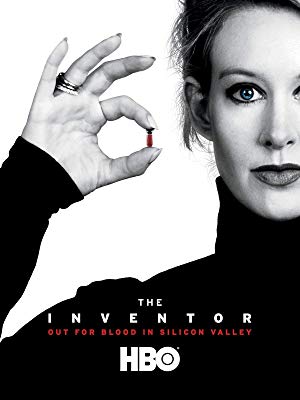
But then this week I watched The Inventor: Out for Blood in Silicon Valley, the story of Elizabeth Holmes and Theranos, and realized that she’s just another symptom of the whole rotten system. She was a Stanford drop-out, which isn’t an indictment of Stanford … it says the system is screwed up when people attend that university, not for the knowledge they can learn there — which is the core function of the university, which they do very well — but for making the connections that will make them rich and be the entry way to the 1%. Holmes dropped out as soon as she realized that she didn’t actually need to learn engineering, or biochemistry, or medicine, or pharmacology, or any of the actual utility of a university education. She comes from a family with connections, she could make more connections with bald-faced lying. The chief lesson she learned from that “elite” university is that the pretense of merit is more valuable than the substance of merit.
She didn’t have to convince anyone in biomedicine. She knew where the power lies: in old white men. In James Mattis and George Schultz, Sam Nunn and Henry Fucking-Burn-In-Hell Kissinger. She got the backing of Rupert Murdoch and Larry Ellison and Bill Clinton. None of these people have any competence in biomedicine (one could even argue that they don’t have much competence in anything, other than leeching off the public, which they are very, very good at). The corruption runs all the way from an overly ambitious and not very knowledgeable 19 year old, to retired heads of state who’ve been coasting on wealth and power to more wealth and power.
You want to know where the rot in the “elite” universities leads? Straight to Elizabeth Holmes, the poster girl for pseudo-meritocracy. It was so predictable that on the day the Wall Street Journal broke the story of the Theranos fraud, Holmes was unavailable because she was off being inducted into the Harvard Medical School Board of Fellows. Of course she was. Rich liars are exactly the kind of people they want at the top of university administration.
Seriously, look at the Theranos board. It’s a web of connections to other wealthy people, nothing more. If you see any of those names on any company anywhere, run. They’re empty figureheads who’ll screw everything up. Holmes belongs in prison, but so do all those untouchable fat cats who manipulate the system.