People love to be told what tribe they belong to, I guess

I submitted a DNA sample to 23andMe, and now they send me periodic updates on what they’ve figured out lately from my genes. For instance, they’ve informed me about traits I might have.

This is strange. I know what I take away from it, but I wonder what the general populations learns from this kind of list. Here are the two important messages I learn from this kind of revelation:

  • Notice all the “likely”s and “less likely”s? That will never change, because if there’s one thing we can be confident of, it’s that every trait is the product of multiple genes interacting in complex ways. It says I’m not likely to have a cleft chin, but I know for a fact that under my beard there is a cleft chin, and that I’ve passed that on to my children and inherited it from my father. It doesn’t mean 23andMe did something wrong, it means that they’re missing information about all the factors that contribute to chin shape, and are estimating from knowledge of a few genes. They’re drawing on correlations in the large database that they have, but can’t infer mechanisms or the full range of interactions that occur during jaw development.
  • What’s really depressing, though, is how trivial all these traits are. Does anyone really care that I’m less likely to get dandruff? Wouldn’t I get better information about that by checking my shoulders than by analyzing my DNA? Part of the reason for the triviality is that they also have a “health report” that they charge extra for which summarizes more substantial predilections, which I haven’t paid for. It would have exactly the same kind of probabilistic statements. It might, for instance, say I’m genetically predisposed to heart disease, but I could probably guess that from the fact that my father died young of heart disease, and would be better off going to my doctor to have my cholesterol and blood pressure checked (as I do regularly, and no worries — I’m in good shape for a man of my age).

So what I take away from this is a lesson in uncertainty and doubt; is that the information they’re trying to share with the general public? Because that’s not what I get from their “traits tutorial”, which starts off “Our Traits Reports are a fun way to explore how your DNA makes you unique.” Where’s the fun? Where’s the uniqueness? Am I special in my resistance to bunions, or am I supposed to be entertained with the news that I probably have blue or green eyes? (Not blue, by the way, more green, kind of hazel; I usually say they’re the color of rich algal swamp mud).

My general impression is that this is “fun” in the way taking Myers-Briggs tests and horoscope readings are fun; it’s mostly bogus, phrased in a way to seem positive, and we can poke through them for affirmations of stuff we were pretty sure of, already.

I signed up mainly for the ancestry component, but even there, it’s vague.

My god, I’m a white guy! Who’d have guessed?

Meanwhile, this is just nonsense.

Yes, I’m a member of haplogroups that include European royalty, which is true of almost all the white people from Northern Europe. You might as well announce that I have pale skin, just like the kings and queens of old Europe! Whoop-te-doo! I am fun and unique.

I am not opposed to the idea of 23andMe, and think they’ve gathered a lot of potentially useful information. I just feel that the way its presented to the public is biased to reinforce false ideas of genetic determinism to induce people to participate, and that worries me.

You need some Halloween spiders

Here, have a few. These are from my collection of juvenile P. tepidariorum.

I can tell this one is going to be a big boy.

Webs! This one is an artist.

While this one is looking at me and making mystical gestures.

Hey, I’ve had dozens and dozens of trick-or-treaters come to my house tonight, and I’m nearly out of candy. Would it be OK if I started handing out spiders?

Everyone likes cute furries more than spiders, I’ve noticed

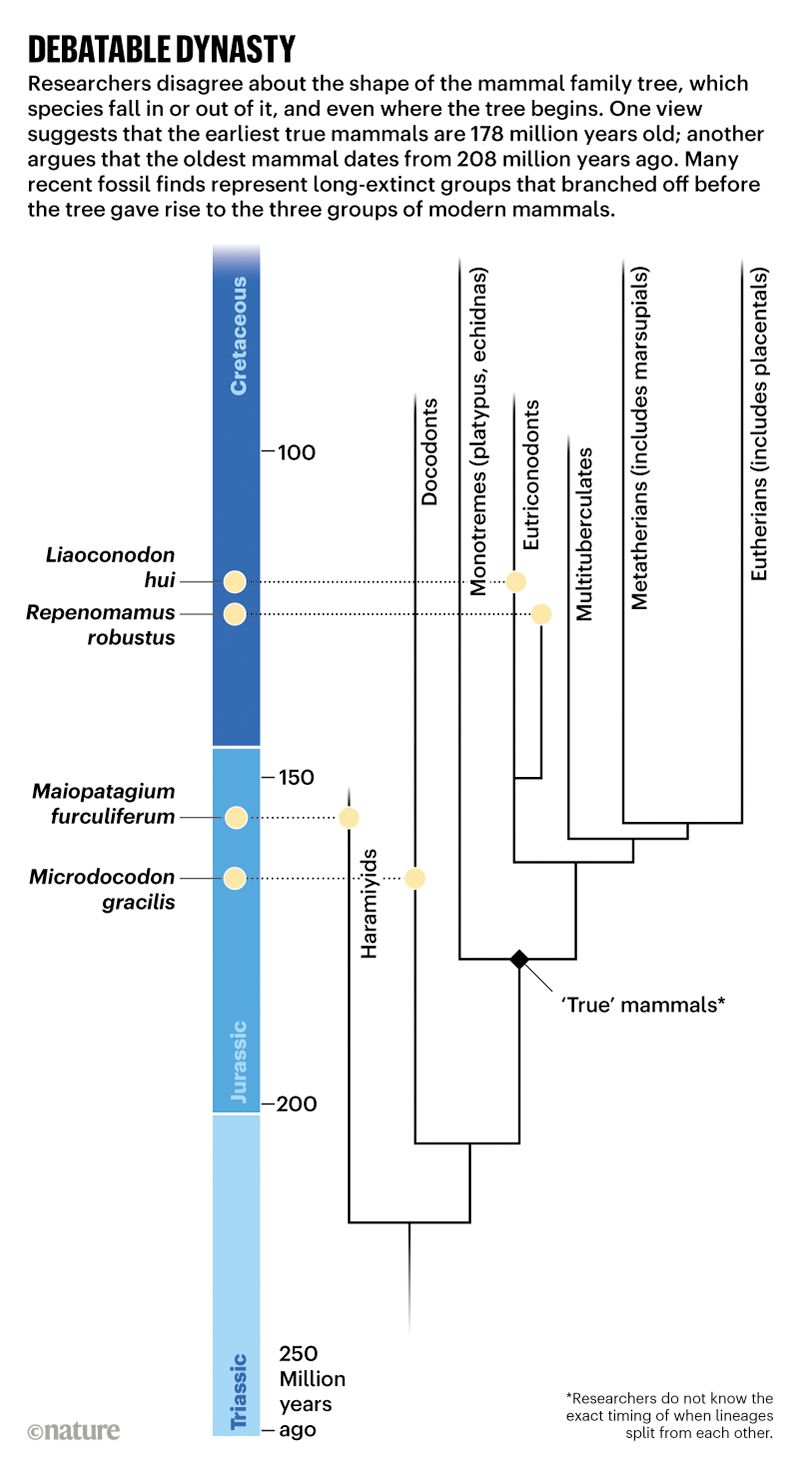
I can’t be the only one who reads outside my discipline to get material to help me cover all those evolutionary phenomena I know little about. I know a bit about fish and arthropods, but my understanding of the details of mammalian evolution is a bit thin — yet for some reason, students are more interested in the history of mammals than of spiders. I really appreciate it when I stumble across information that fills in the gaps in my knowledge in presentable ways, and Nature has done just that with a graphically rich article on How the earliest mammals thrived alongside dinosaurs. There is lots of good stuff here, and I particularly like the emphasis on the importance of fossilized infants. Development matters!

Sometimes it goes a little too far, though — for example, this illustration is way too dense to be useful, but it it interesting.

Why didn’t she get vaccinated?

Now I’ve got the heebie-jeebies. A woman undergoing safety training for a lab tech job was offered a smallpox vaccination because she’d be working with Vaccinia virus, and she turned it down. She didn’t understand the possible consequences at the time of training.

Naturally, what happens next? She’s trying to inject a mouse and accidentally pokes herself with the syringe needle. There are graphic photos at the link! It looks like some nasty ulceration of her finger and some systemic problems as well.

Although she continued to be treated, by day 10 her finger was looking very swollen, and she wasn’t feeling well.

“On day 12, she was treated at a university-based emergency department for fever (100.9°F or 38.3°C), left axillary lymphadenopathy [swollen lymph nodes], malaise, pain, and worsening edema of her finger,” a case report explains.

“Health care providers were concerned about progression to compartment syndrome (excessive pressure in an enclosed muscle space, resulting from swelling after an injury), joint infection, or further spread.”

She survived and is healing.

Vaccinations are important for people dealing with dangerous pathogens, but also for everyone else. Have you gotten your flu shot? If not, what’s your excuse?

#SpiderSunday : How about some Halloween colors?

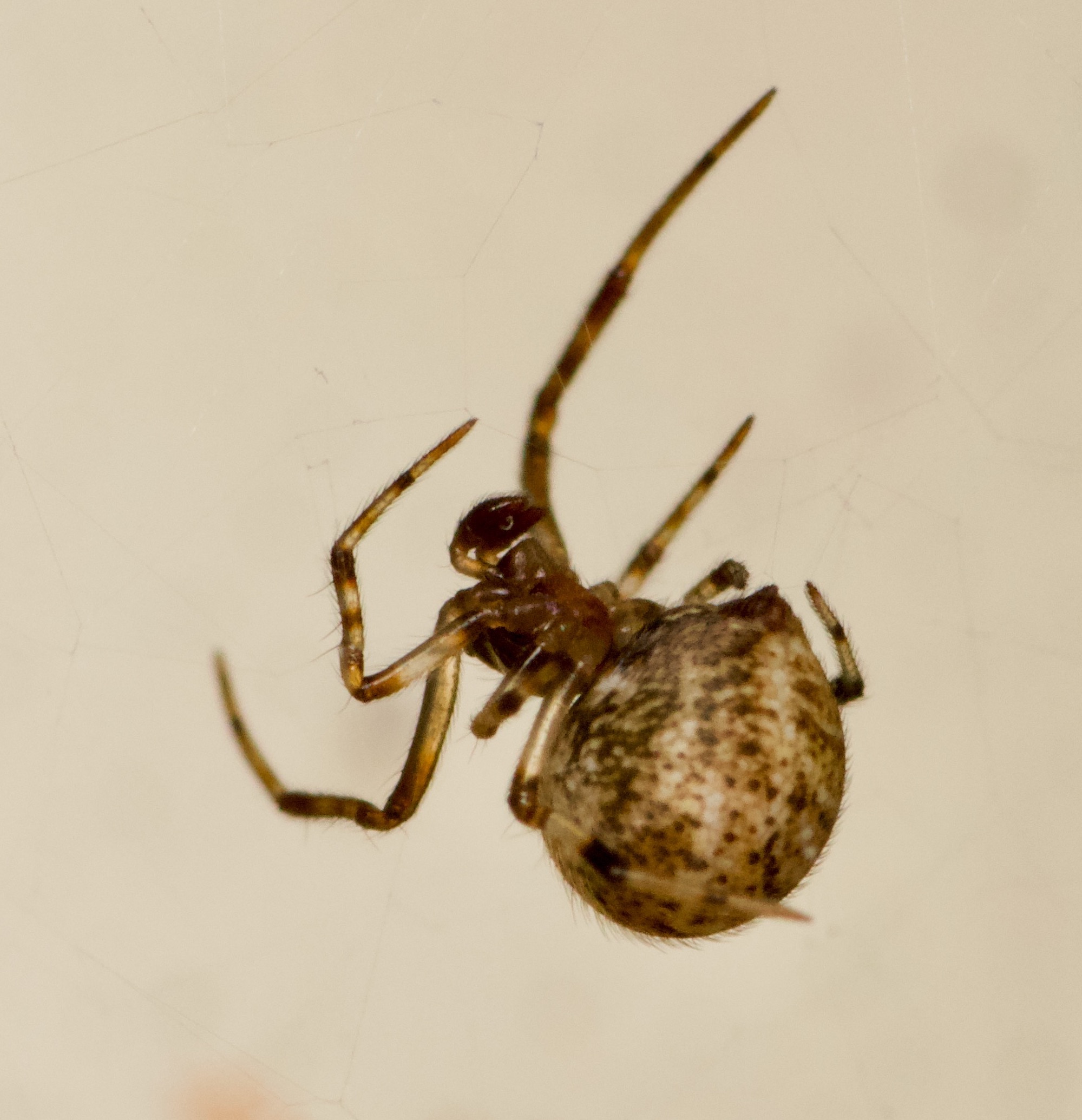
Here’s a juvenile S. borealis, ventral side up, on a bright orange background.

S. borealis is different — where P. tepidariorum builds intricate three-dimensional webs and likes to hang suspended in space in the middle of them, borealis hugs corners and surfaces, and builds denser, sheet-like webs. They just have a different lifestyle.

It’s unfortunate that she wouldn’t roll over for me, because she has a lovely white dorsal median stripe on a dark body.

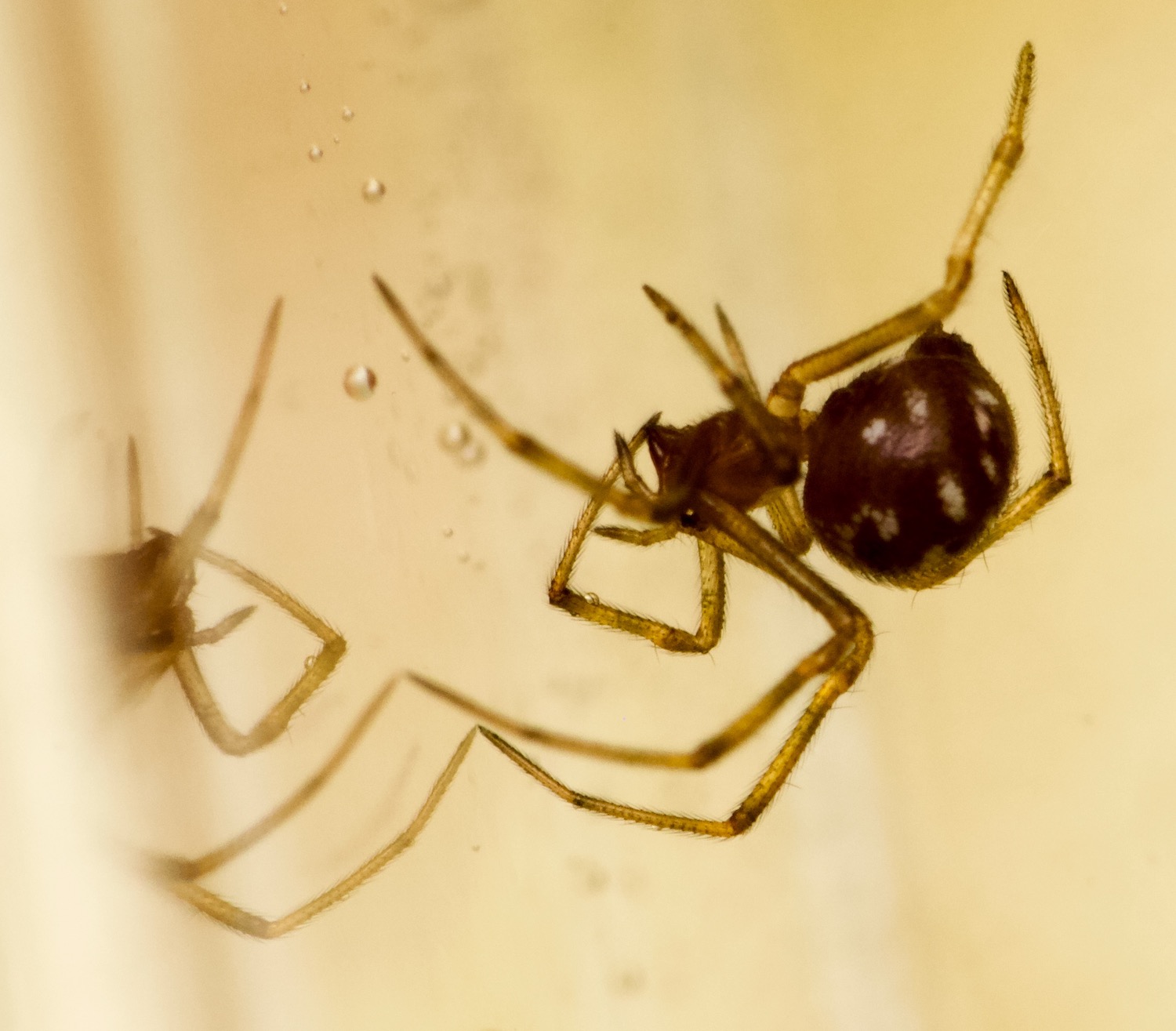
This one is P. tepidariorum, and is just a wee little baby, less than two weeks old…but filling out fast.

You might be able to see wisps of its web, but it just doesn’t show up well on this light blue background. I tried to highlight it by misting the container with water, which is why you see little droplets everywhere.

Playing with a camera today #spider

I’m still taking this new lens on a shakedown, working out effective ways to photograph developing spiders. Today was all about trying to get a feel for where the focus is (spoiler: it’s way out there) and how to position camera and lights and specimen, so nothing exciting to report.

So which background do you like, light or dark?

I’m kind of leaning towards the darker backgrounds, since it brings out the webs they’re on, and a spider is intimately connected to its web. On the other hand, since the goal here is to map pigment development, the lighter background makes that snap a bit more and removes the distractions, at the expense of leaving the subject looking like it’s floating in space.

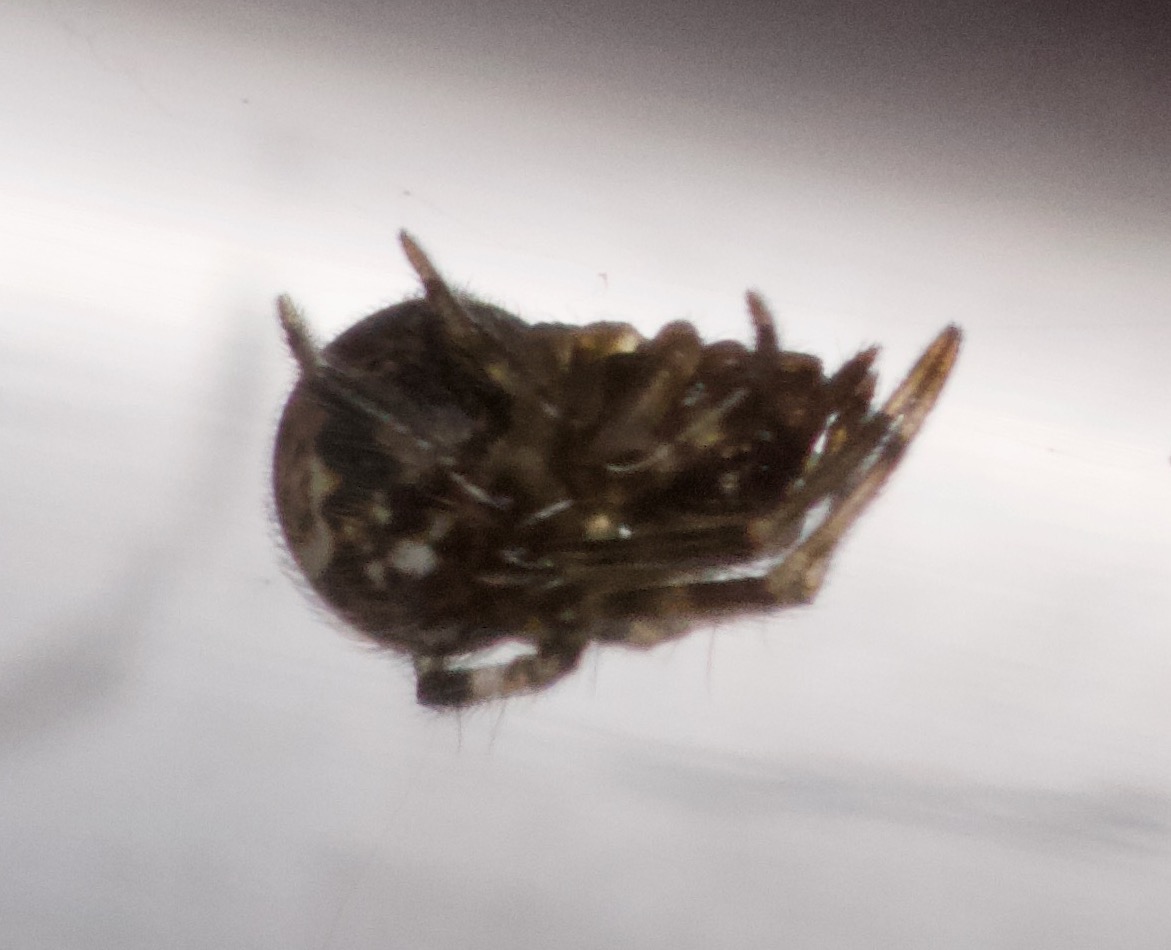
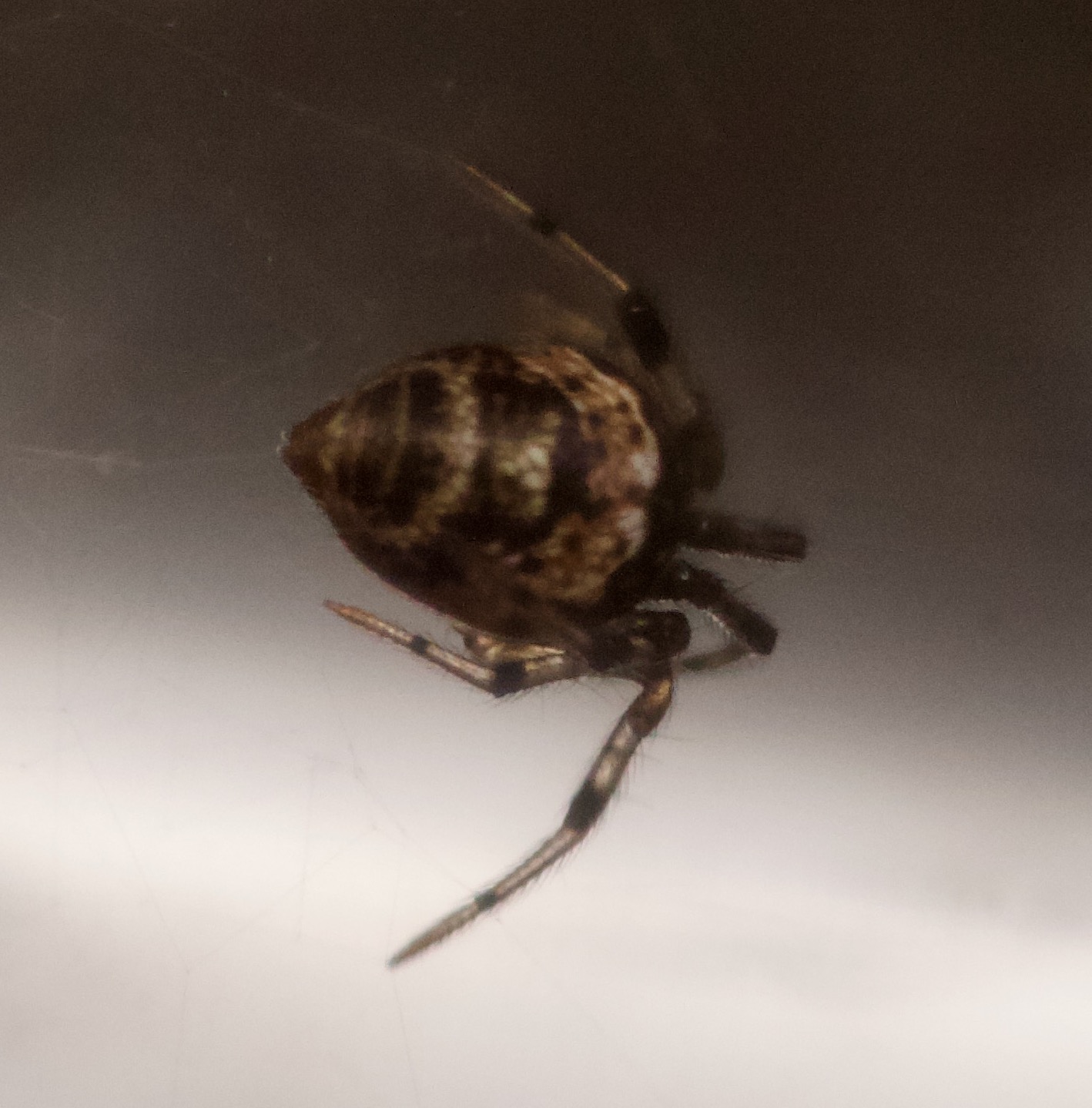
Both photos are of the same animal, Steatoda triangulosa, a young juvenile that’s about a month and a half old.

Experimenting today

I’m tinkering with getting better images of these silly spiders, and my latest attempt is to build a little itty-bitty photographic studio on a benchtop. I can mount light sources and reflectors on the bench, play with backgrounds, and position specimens where I want — they are extremely obliging models, as long as I’m bringing in the whole cardboard frame their webs are structured around, which is a slight limitation, because the space has to be big enough for not just the spiders, but also their whole cage. I’m also putting the camera on a tripod and locking it down — it’s heavy — and just manipulating the airy light spiders to get them in position.

They’re all good girls. As long as I’m not messing with the web, they are quite calm and well-behaved, so I can just leave these venomous spiders out of their cages as long as I want and they don’t try to escape or get aggressive at all, they rest suspended happily while I move gadgets around them. I was also able to get some respectable video out of the set up, too, so you might have that to look forward to, too.