Meat “scientist”
There are scientists I respect, and there are scientists I do not. José Manuel Lorenzo is in the latter category, although I’m sure he wouldn’t care. He’s rolling in the money and the false coin of scientific “prestige”.
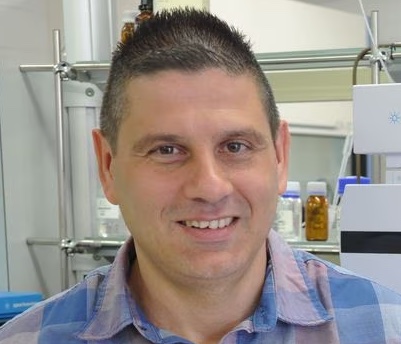
Meat expert José Manuel Lorenzo, 46, is the researcher who has published the most scientific studies in Spain. He put his name on 176 papers last year, according to a count by John Ioannidis — an expert in biomedical statistics at Stanford University — which was requested by EL PAÍS.
Lorenzo publishes a study every other day (if you include weekends). It’s an astonishing figure, far above the second-highest ranked scientist: the prestigious ecologist Josep Peñuelas, 65, who published 112 studies in 2022
I’m trying to picture the logistics of all that. It typically takes a month or more to get a paper published, and that’s if there are no revisions or rejections. I’ve heard of high priority, dramatic results getting a turnaround of a week or so — maybe trash papers that no one cares about similarly get rapid publication. At any rate, it must mean he’s got dozens of papers stacked up in a queue at any one time. How does he find time to cope with revisions, let alone actually write them? Forget about actual research. The “evidence” backing up the claims that warrant a publication would have to be done in a day or two!
Oh wait, there is a way. Don’t do the research, don’t do the writing, and don’t even read the papers.
José Manuel Lorenzo is the head of research at the Meat Technology Center (CTC) — an entity dedicated to meat products, supported by the regional government of Galicia — in San Cibrao das Viñas, a city in the Spanish province of Ourense. A person who has worked with him recalls that, around 2018, his laboratory became “a sausage factory.” Lorenzo went from publishing less than 20 studies a year to signing his name to more than 120. “He doesn’t even have time to read them,” says another person, who has collaborated on projects with the man.
At one point, Lorenzo began collaborating with exotic researchers — who nobody knew about — on topics that have nothing to do with meat. Four months ago, he published a study on the hospital management of monkeypox, alongside Iraqi, Indian and Pakistani co-authors. And a year ago, he and some researchers from India and Saudi Arabia published an article on the treatment of gum disease with bee venom. In a telephone conversation with EL PAÍS, Lorenzo admits that he doesn’t know any of these co-authors in person, nor is he an expert on any of these issues.
That’s a serious lack of integrity he is admitting to. I was trained to understand that if your name was on a paper, you were expected to have contributed significantly to the work, and are familiar with the entirety of the procedures and results. You are responsible for the content of the paper. You can be held accountable for any errors, or worse, any fraud. It’s supposed to be a weighty thing…but not to Lorenzo.
One tool that allows this to go on is the existence of paper mills.
India is one of the countries where so-called “paper mills” are concentrated — factories that churn out scientific studies which are already written and ready to be published in specialized journals. Co-authorship is offered in exchange for money. EL PAÍS requested price rates from one of the Indian companies that sends their offers to Spanish scientists: iTrilon, based in Chennai. The company’s scientific director Sarath Ranganathan offered the possibility of being the first author of a study that was already written — entitled Next-generation neurotherapies against Alzheimer’s — in exchange for about $500. It’s also possible to be the fifth co-author of an article titled Emergence of rare microbial infections in India for $430. iTrilon promises to publish these ready-made studies in the journals of the world’s leading scientific publishers: Elsevier, Taylor & Francis, Springer Nature, Science and Wiley. Last year, the academic publishing industry acknowledged that at least 2% of studies each journal receives are considered to be suspicious. Sometimes, the number of suspicious studies is marked as high as 46%.
Another factor is that grant review and institutional committees are far too willing to do little oversight and superficial evaluation. The problem is that we assess scientific work based on publication, which is already poisoned by capitalism and exploitation, and not by being read.
Although, I must admit, I can understand how someone might be tempted by $400 or $500 flowing into one’s bank account every two days just for rubberstamping a stupid paper.