Pharyngula
Evolution, development, and random biological ejaculations from a godless liberal


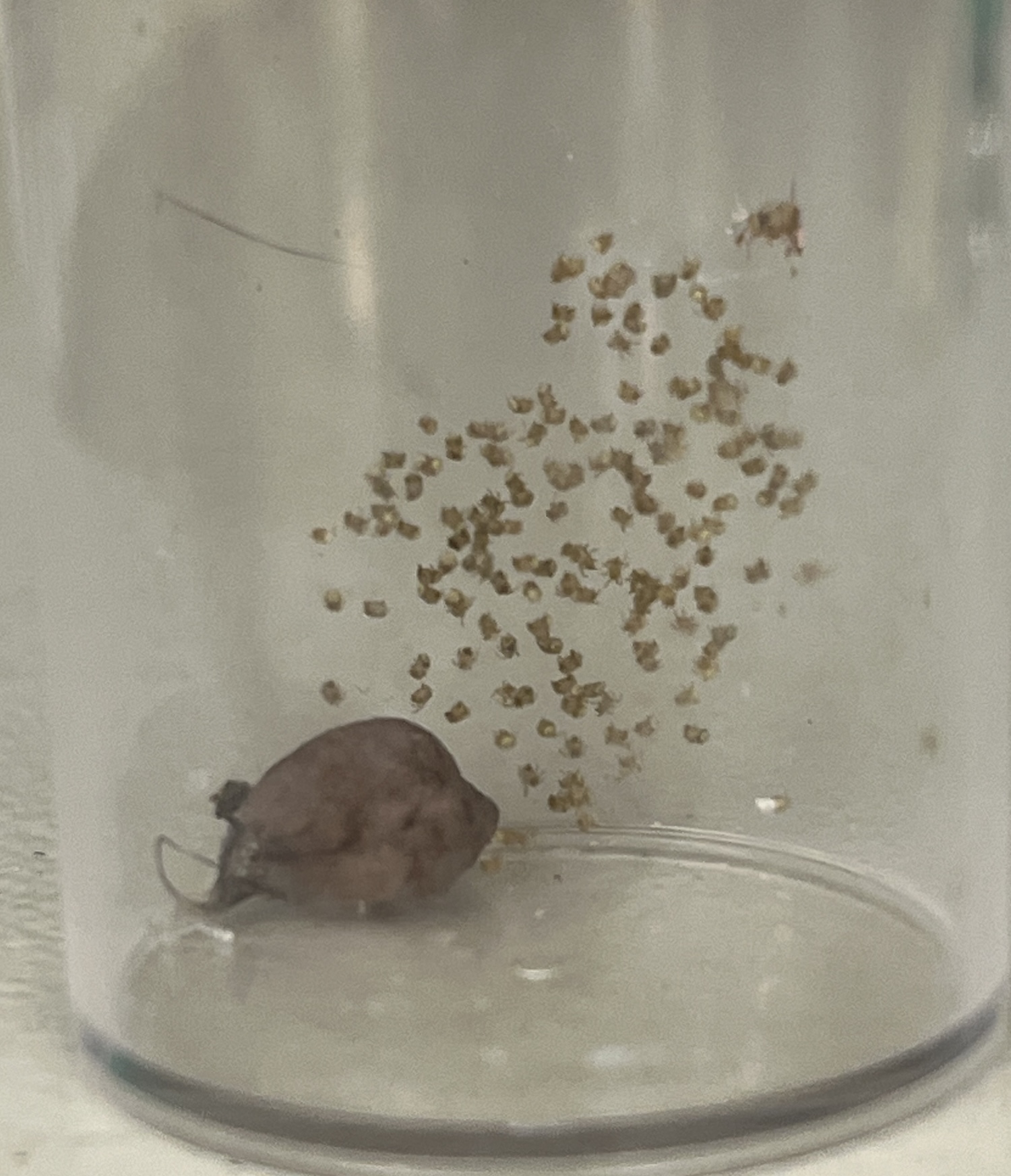
I finally got away this afternoon to check on the spiders in the lab, and behold…one of the black widow egg sacs has popped!

Close-up of a Latrodectus mactans spiderling:

At this age, they aren’t noticeably black, more of a reddish orange.
I was struggling to isolate the babies. What made it hard is that a) half of them looked up and saw freedom and rushed to disperse into the general environment of the science building, and b) the other half saw danger in that guy with the paintbrush trying to scoop them up and dived down into mama’s dense tangle of silk. I compromised and spent an hour plucking ballooning spiders out of the air, and left the rest where they were hiding. I’ll be back tomorrow to see if I can catch ’em all — black widow silk is tough and hard to break through.
Also, funny thing — when I left last week, I had 5 egg sacs, then when I got back, one had hatched, but I still had 5 egg sacs. I may have stumbled unto an algorithm for infinite spiders.

First thing I found: a cross orbweaver, Araneus diadematus. We haven’t found any of these where we live in Minnesota.
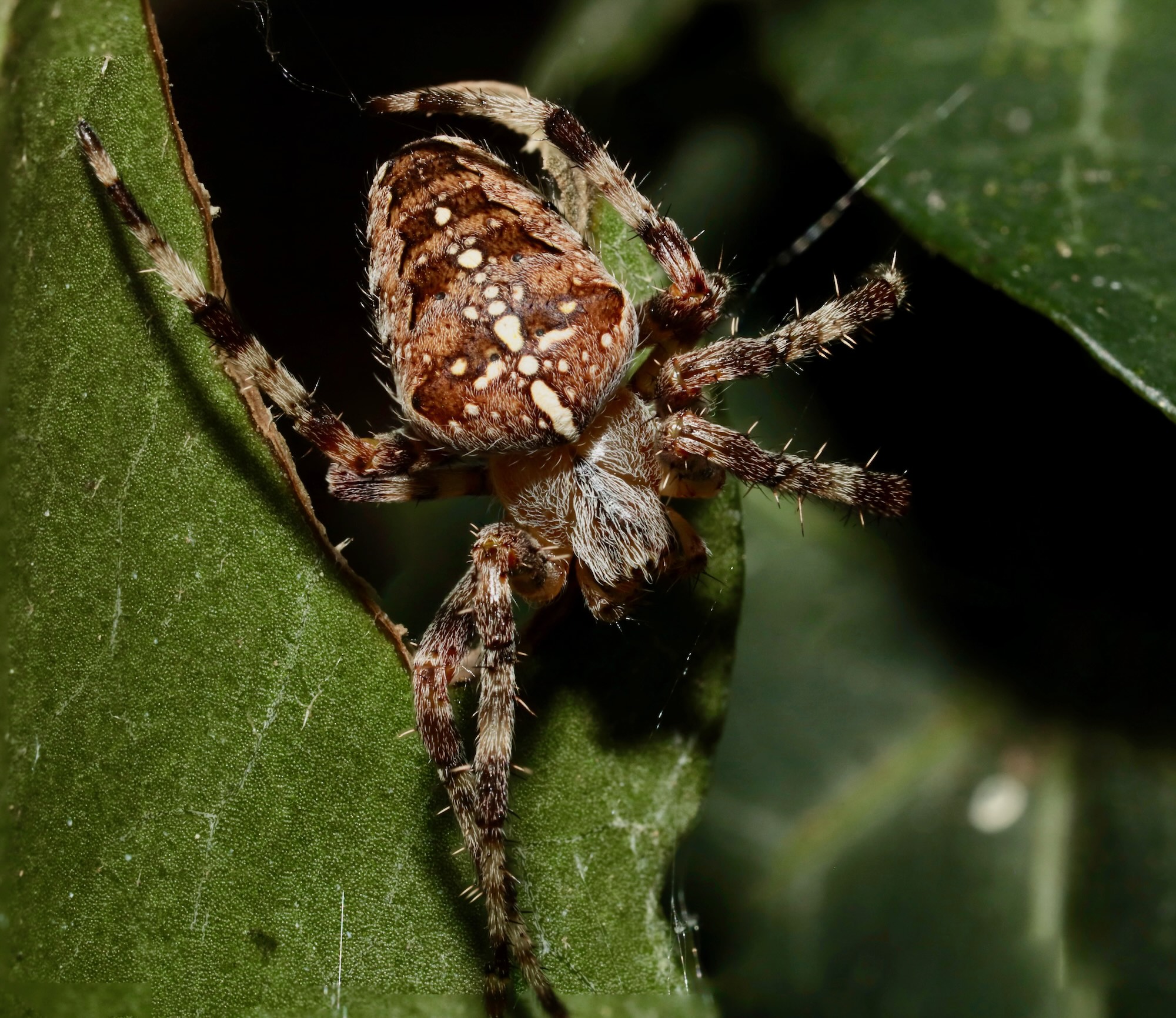
These are the common spiders both my wife and I remember from our childhoods.

Spiderlings are cute.


I just got my hands on Biology of Spiders by Rainer Foelix, and it’s very, very good…but beware, it’s an academic text, so the prices swing widely with the source and the edition, with some sources seeming to expect you’re sitting on a half million dollar grant so you’re not concerned with the cost. That’s not me, so I was happy to find a copy for $12 at Half-Price Books. Hooray for used book stores!
Anyway, I spent a pleasant morning starting to dig into this book. It’s technical and gets into a tremendous amount of detail on anatomy & physiology & behavior, and I was genuinely happy to see that it doesn’t get bogged down in the taxonomy wars. Only the last chapter is on Phylogeny and Systematics, and it’s short, and begins with a warning.
Now a book on biology is hardly the place to insert a chapter on classification.
W.S. Bristow, 1938
Despite Bristow’s warning, it seems necessary to cover the descent and classification of spiders briefly. I must admit, however, that our real knowledge of the phylogeny of spiders is very scanty, and hence to present any reliable pedigree is quite impossible.
Yes! My kind of biology text!
It saves the lengthy discussions for the good stuff, like this.
…only about 20-30 of the 34,000 species of spiders are dangerously poisonous to man (Schmidt, 1973; Maretic, 1975).
The prime example is certainly the black widow spider, Latrodectus mactans, from the family Theridiidae. The bite itself is not particularly painful and often is not even noticed (Maretic, 1983, 1987). The first real pain is felt after 10-60 minutes in the regions of the lymph nodes, from where it spreads to the muscles. Strong muscle cramps develop and the abdominal muscles become very rigid (this is an important diagnostic feature!).Another typical symptom is a contorted facial expression, called facies latrodectismi, which revers to a flushed, sweat-covered face, swollen eyelids, inflamed lips, and contracted masseter muscles. If the breathing muscles of the thorax become affected, this can eventually lead to death. Besides the strong muscle pain, black widow spider venom (BWSV) also elicits psychological symptoms, which range from anxiety feelings to actual fear of death. Apparently the toxin can pass the blood-brain barrier and directly attack the central nervous system.
Without any treatment the symptoms will last for about 5 days and a complete recovery may take weeks. About 50 years ago, lethality was 5% in the USA (Thorp and Woodson, 1945), but is now less than 1% (Zahl, 1971). The best treatment against a bite from a black widow is a combination of calcium gluconate and antivenin (e.g., Lyovac; McCrone and Netzloff, 1965) injected intraveously. Calcium causes the pain to subside quickly and the antidote binds to the toxin. The patient feels relieved within 10-20 minutes and will completely recover in a few hours.
The poison (BWVS) is a neurotoxin that affects the neuromuscular endplates, but also synapses in the CNS. The synaptic vesicles become completely depleted, causing a permanent blockage of the synapse (Clark et al., 1972; Griffiths and Smyth, 1973; Tzeng and Siekevitz, 1978; Wanke et al., 1986). One component of the poison (α-Latrotoxin) binds to a presynaptic receptor of cholinergic synapses (Meldolesi at al., 1986).
Neat-o! This is my kind of biology book, although you can tell from the dates of the references that it’s a bit old — there hasn’t been a death from a black widow bite since 1983, but I won’t mention that on any of the signage around my house.

I’ve been away this weekend. I walked back into the lab a short while ago, and here’s what I found.
A Parasteatoda egg sac had hatched out.

A second Parasteatoda egg sac hatched.
And another black widow produced a third egg sac.
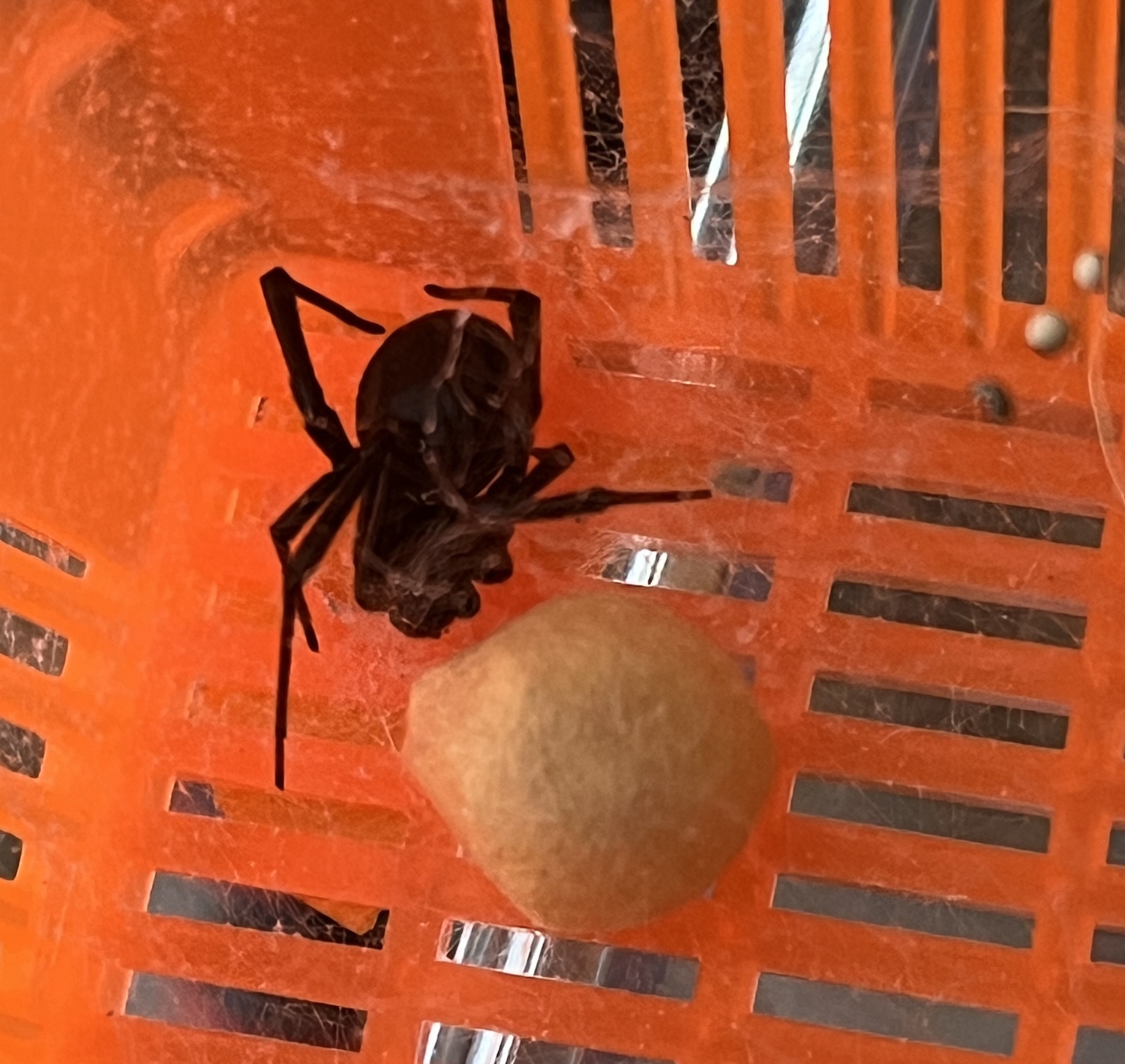
Ooof. I know what I’m doing tomorrow.

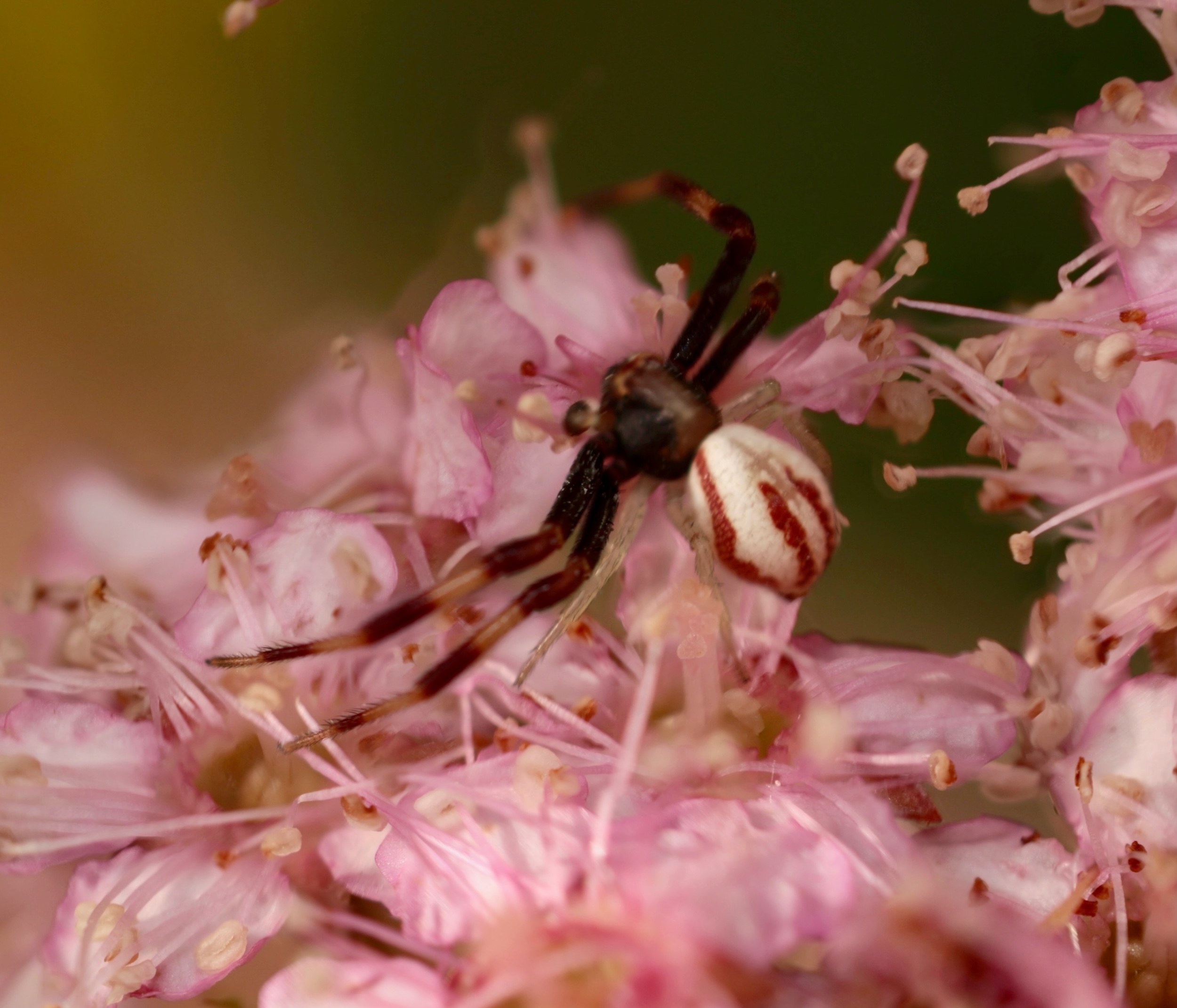
It’s been quiet here on the blog over the weekend because Mary & I took off on a short road trip. Obviously the purpose of the whole drive was to find more crab spiders.

Also, the grass spiders have arrived! You can find their silk platforms in the morning, callecting dew.
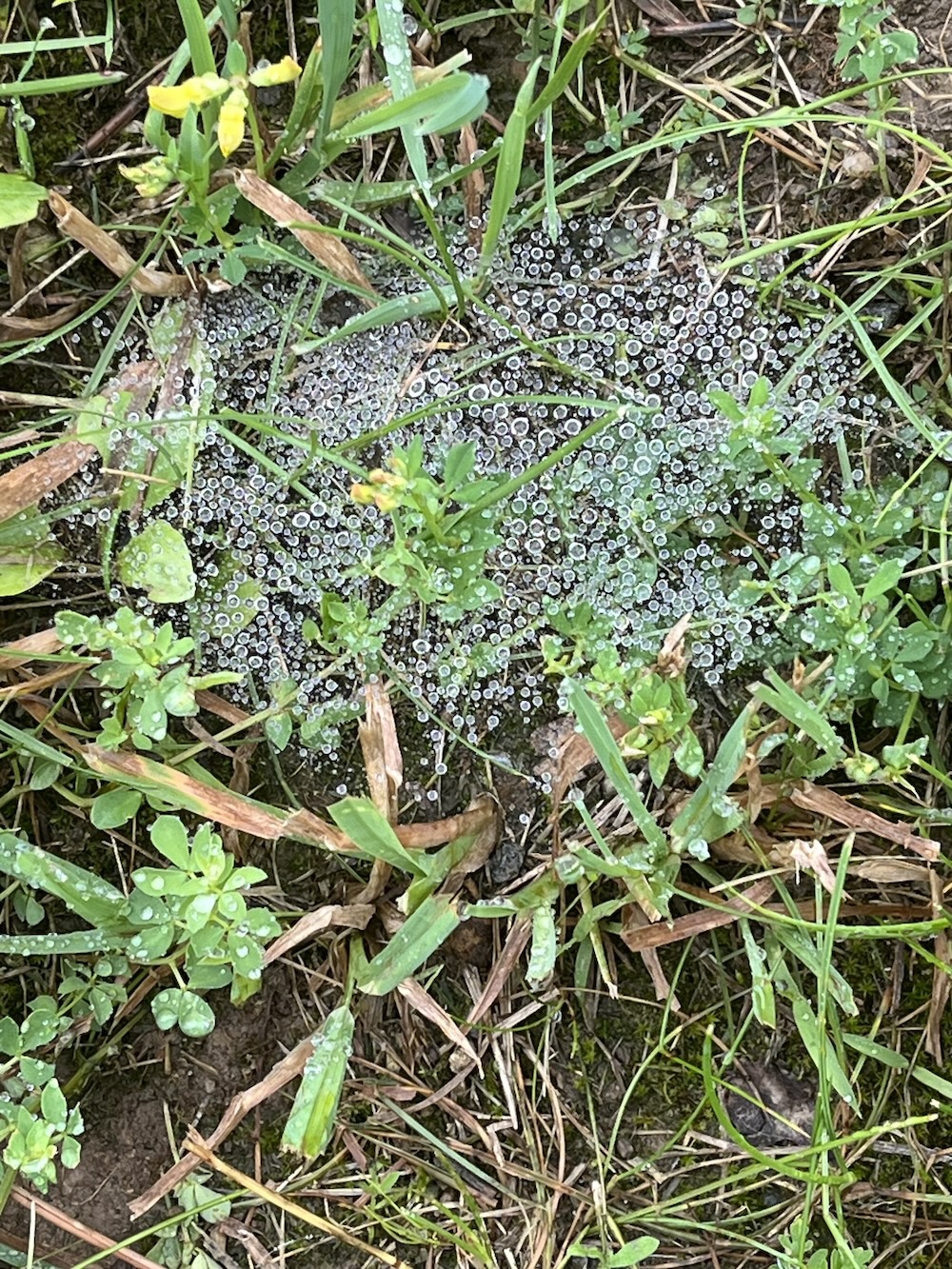
See? That’s all it takes to draw me away for a few days.

Yay!
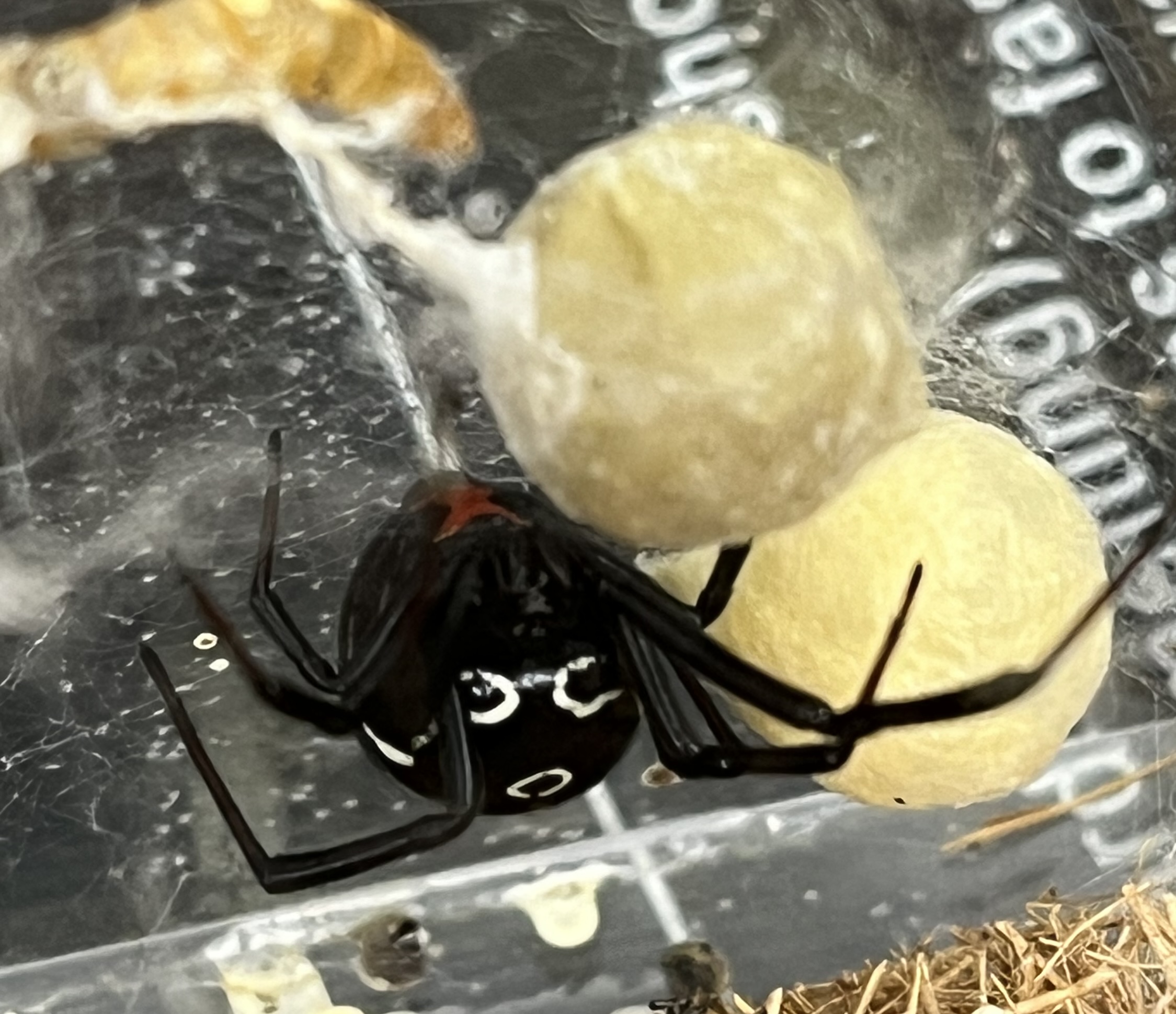
Soon enough, I’m going to be up to my ass in baby black widows.

We were strolling in the garden, and noticed that the place was full of horny pollinators. If they weren’t eating, they were fornicating.
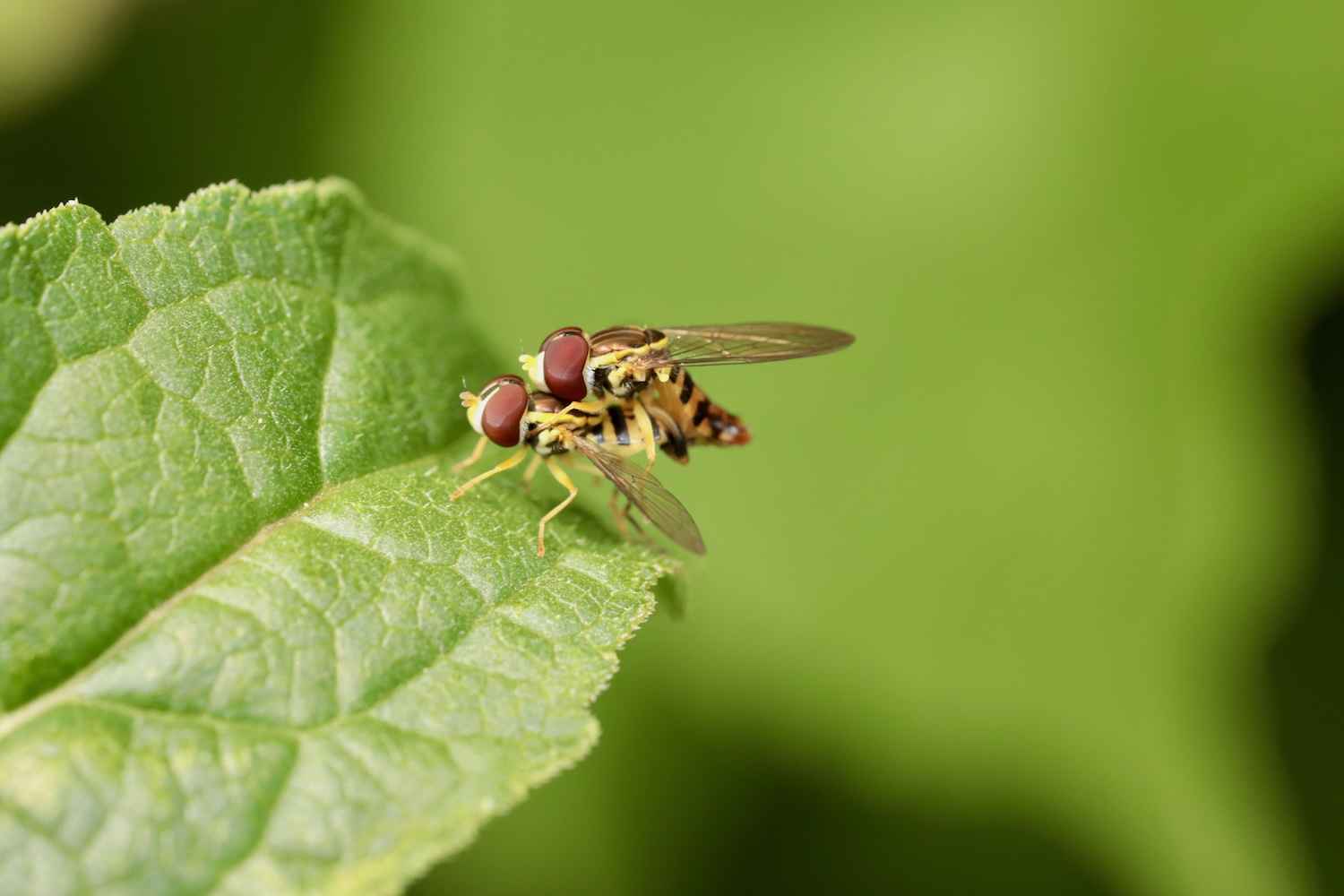
It was like hanging out with teenagers. And I thought, if this was a 70s teen horror movie, what should I see next? And I was right.
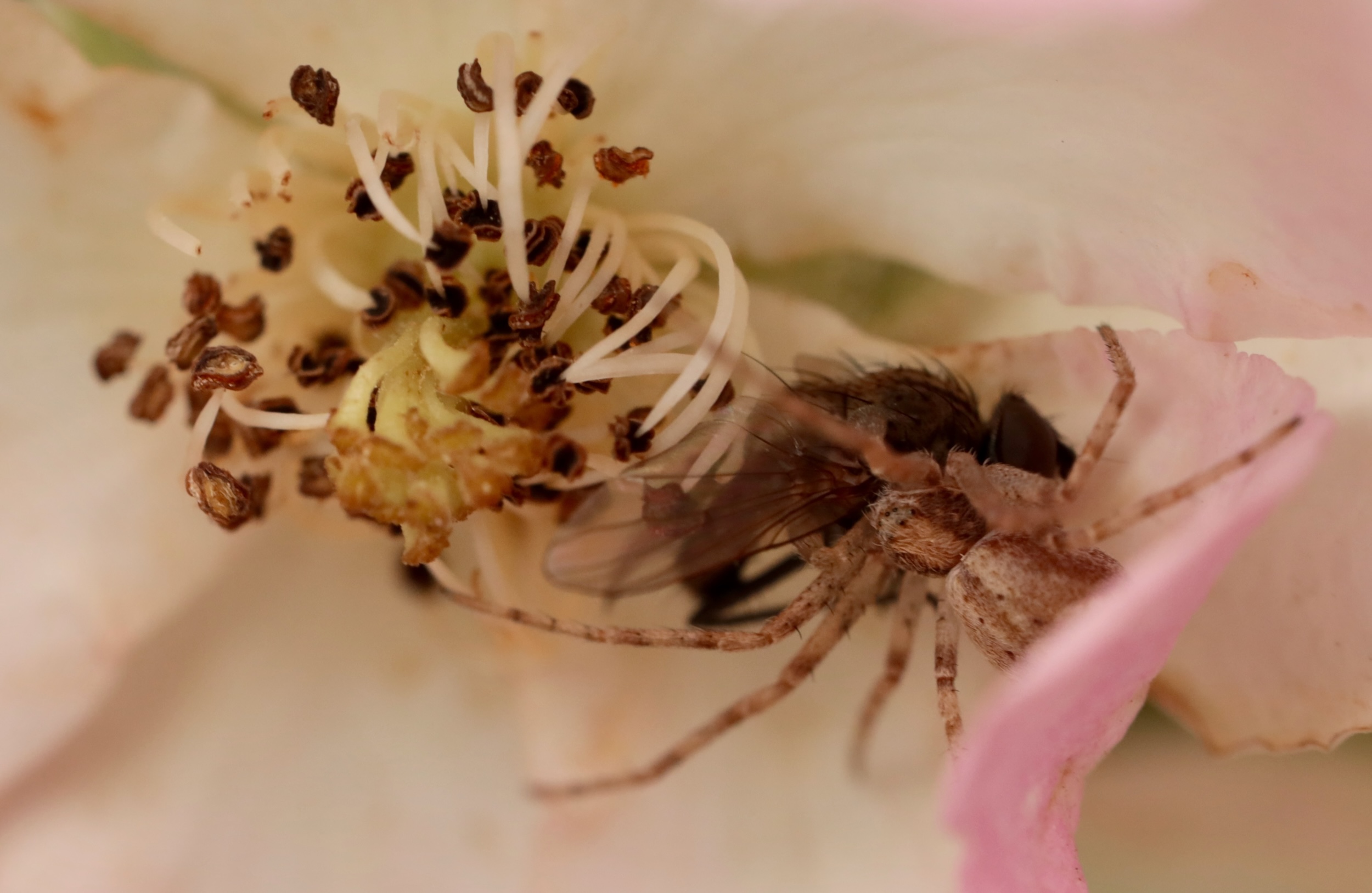
If I were a spider, I’d want to just hang out in flowers and wait for those obnoxious teenagers to stop by. It’s the perfect place to find distracted prey.

Look what’s lurking in your flowers.