Everyone needs more training to deal with racists

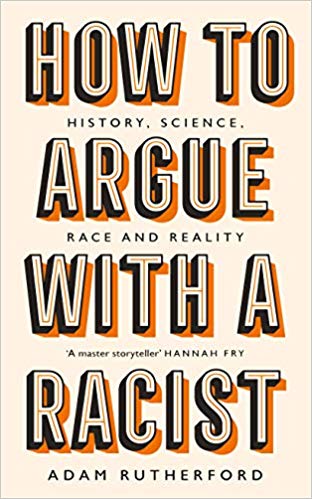
Adam Rutherford is coming out with a new and timely book, How to Argue with a Racist, expected here in the US in early February. I’ve already pre-ordered a copy, and if you’re interested, you can get a taste of the story in The Guardian.

In the 19th century, Darwin’s half-cousin Francis Galton and others tightened their scientific arguments for race though, as Darwin noted, no one could agree on how many races there actually were, the range being between one and 63. Galton was an amazing scientist, and a stunning racist. The most delicious irony about him is that the field he effectively established – human genetics – is the branch of science that has demonstrated unequivocally that race is not biologically meaningful. Modern genetics clearly shows that the way we colloquially define race does not align with the biology that underpins human variation. Instead, race is a cultural taxonomy – a social construct. This doesn’t mean it is invalid or unimportant, nor does it mean that race does not exist. Humans are social animals, and the way we perceive each other is of paramount importance. Race exists because we perceive it.

That’s one message I wish I could get across to all the so-called “scientific” racists. The consensus of real, honest science is that the artificial categories people assign to races don’t exist as biological phenomena. You only find it in the pages of racist ideologues like Charles Murray or hothouse niches on the internet for dishonest cranks like Steve Sailer. Or right-wing think-tanks. Or misinformed YouTubers who got millions of views by parroting bigotry.

I think this book ought to be required reading for journalists and other media spokespeople who seem to be responding to the rise of racism among people with power with nothing but rank credulity and reporting that just echoes the biases without criticism. Maybe the Democratic presidential nominee, whoever it might be, ought to read it to be prepared for debates with our racist president.

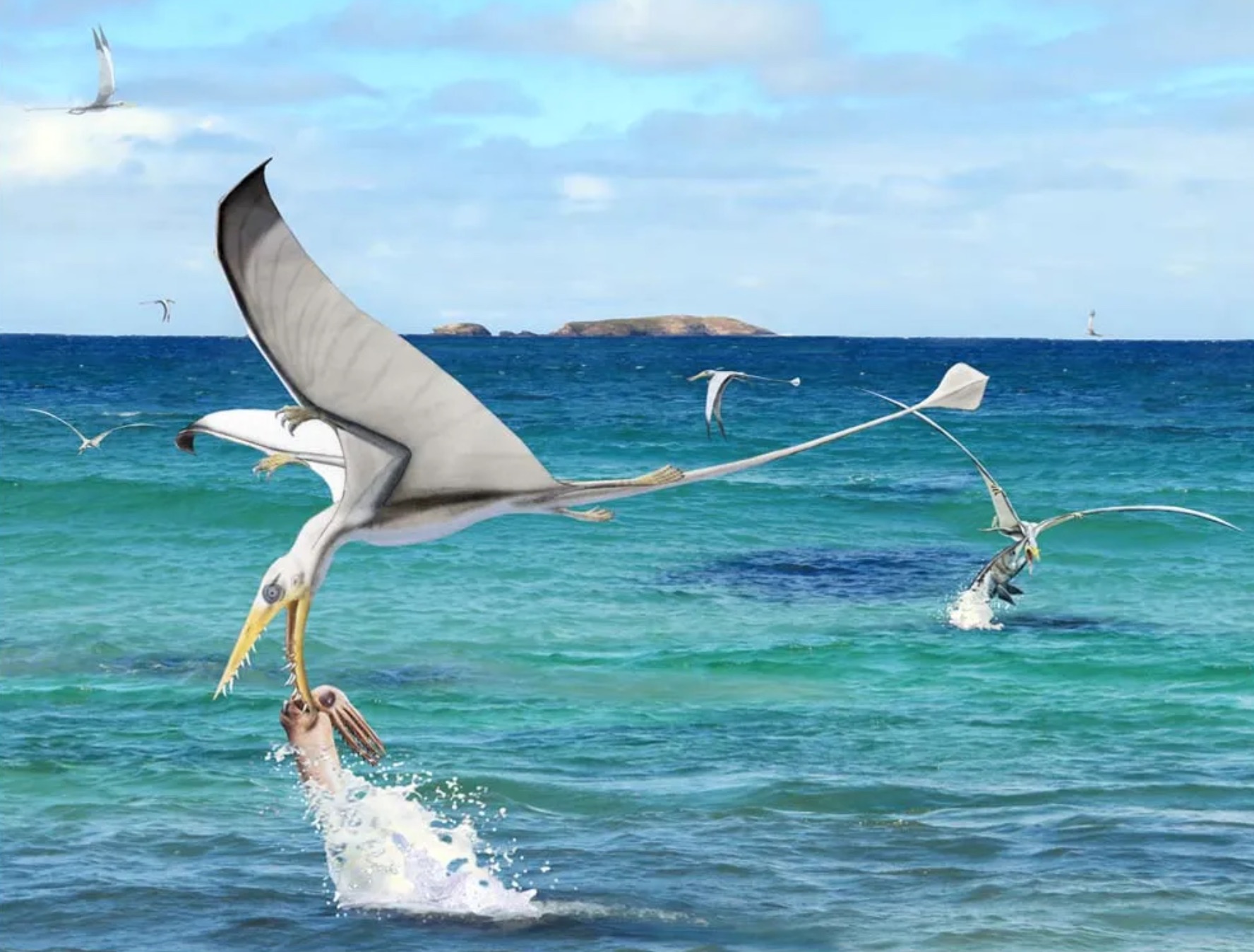
The one that got away…in the Mesozoic

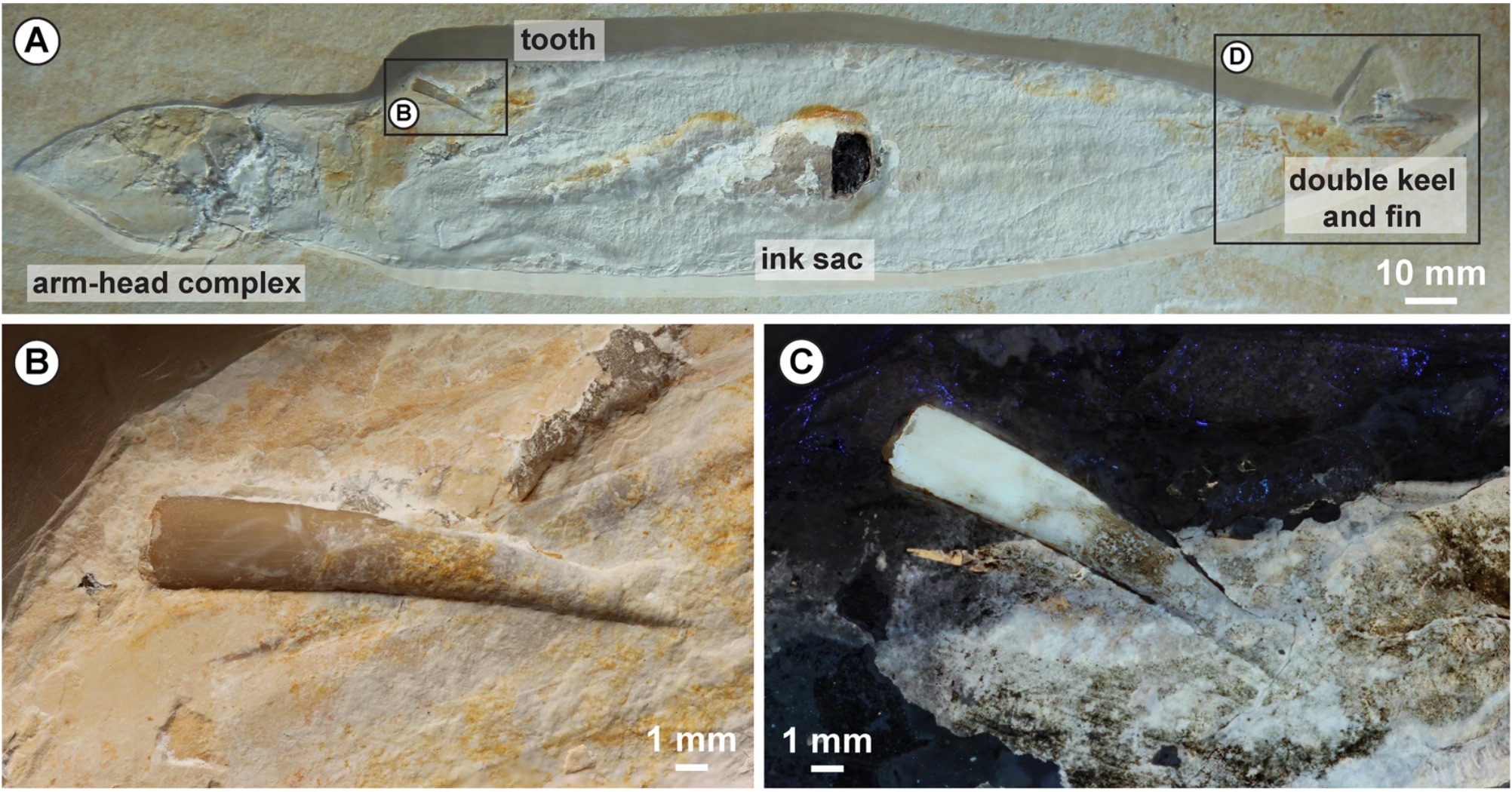
It was a bad day for both the squid, Plesioteuthis, and the Rhamphorhynchus that was skimming over the water, trying to snag dinner. The squid got stabbed by a sharp fang, and the reptile lost a tooth and a meal. We know this because of the beautiful fossil found with a broken off tooth preserved in its mantle.

Plesioteuthis subovata from the Late Jurassic Solnhofen Archipelago. An adult specimen, 28 cm long, preserved with ink sac and duct, arm-head complex, well-preserved mantle musculatures (transverse striation) and a pterosaur tooth. (B) Close-up of the 19 mm long, slightly curved Rhamphorhynchus muensteri tooth crown under normal light. (C) Ultraviolet (UV) light reveals that the tooth apex is partially covered with now phosphatized mantle tissue.

Ouch.

Direct evidence of successful or failed predation is rare in the fossil record but essential for reconstructing extinct food webs. Here, we report the first evidence of a failed predation attempt by a pterosaur on a soft-bodied coleoid cephalopod. A perfectly preserved, fully grown soft-tissue specimen of the octobrachian coleoid Plesioteuthis subovata is associated with a tooth of the pterosaur Rhamphorhynchus muensteri from the Late Jurassic Solnhofen Archipelago. Examination under ultraviolet light reveals the pterosaur tooth is embedded in the now phosphatised cephalopod soft tissue, which makes a chance association highly improbable. According to its morphology, the tooth likely originates from the anterior to middle region of the upper or lower jaw of a large, osteologically mature individual. We propose the tooth became associated with the coleoid when the pterosaur attacked Plesioteuthis at or near the water surface. Thus, Rhamphorhynchus apparently fed on aquatic animals by grabbing prey whilst flying directly above, or floating upon (less likely), the water surface. It remains unclear whether the Plesioteuthis died from the pterosaur attack or survived for some time with the broken tooth lodged in its mantle. Sinking into oxygen depleted waters explains the exceptional soft tissue preservation.

So now we know that Pterosaurs ate soft-bodied cephalopods.

I wouldn’t have recognized this spider from last week!

Before I left for the Twin Cities this weekend, I’d fed the spider colony fat juicy waxworms, and they fell upon them furiously. Today I checked on them, and boy were there a lot of bloated, indolent spiders lounging about in their webs, reluctant to even move. One surprise…I took a peek at Yara, who I’ve photographed before, and the change was striking, not just in her size, but in her pigment patterns.

Look how dark she is! This isn’t just the lighting, either — I tinkered a fair bit to get good illumination. Compare it to the previous photo, where she’s much lighter in color, and I would have said she was one of the more lightly pigmented members of the colony. Now I’m wondering how rapidly they can change color and what prompts it, especially since I’ve been following pigment development in the babies.

I was also looking at cobwebs today. There might be some potential for student projects here.

My wife went to Colorado and all I got was… #SpiderSunday

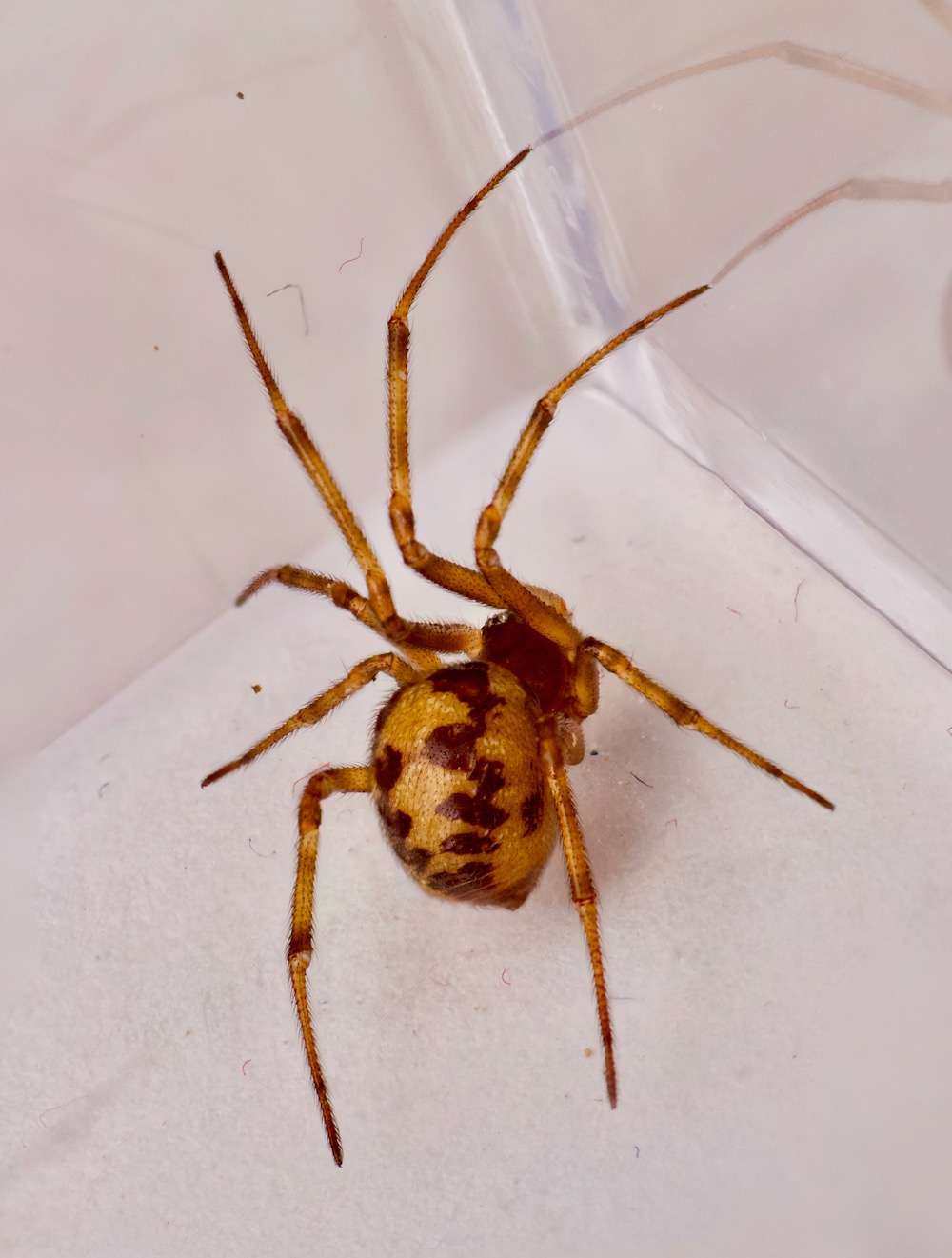
Mary has been away the last few weeks, helping Skatje and Kyle handle a ravening, demanding 15-month old, Iliana. She finally got back home last night, and she brought me a present! It was a spider. No one is surprised.

Well, I was, a little bit. Spiders show so much variation — I’m pretty sure this is Steatoda triangulosa, as it’s obviously a theridiidid, and it’s got that pretty pair of zig-zag stripes down the abdomen, but it’s so golden, and it’s got more zigs than I usually see in S. triangulosa here in Minnesota, and the patterns break up in a messy and different way. Species are so goddamned complicated. Why did I ever leave my nice, inbred, isolated zebrafish?

Anyway, she was guarding a nest in my daughter’s garage, and Mary brought back 6 egg sacs, all of the fluffy type we see with S. triangulosa. Most, probably all, are hatched out, but I’ll find out when I take them into the lab later.

Spidercloth!

I need this:

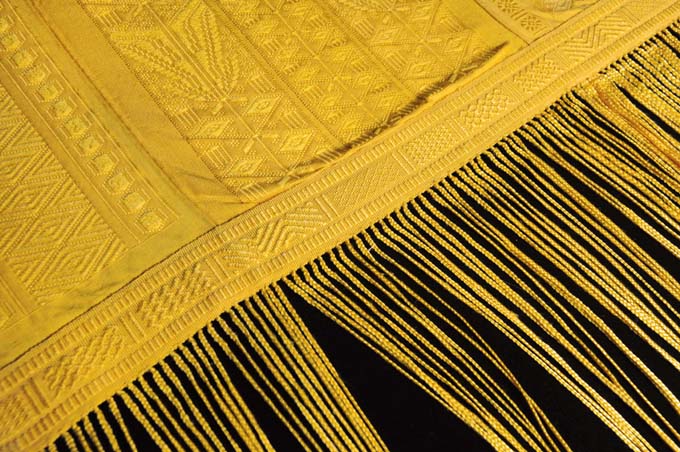
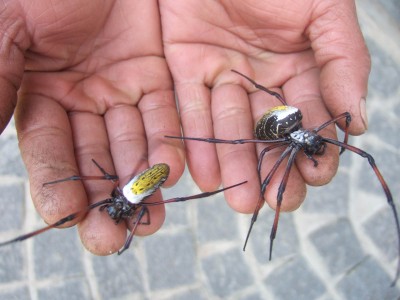
It’s spidercloth, a single piece of silky fabric made from silk drawn from a million spiders. It might be a little bit labor intensive.

To produce this unique golden cloth, 70 people spent four years collecting golden orb spiders from telephone poles in Madagascar, while another dozen workers carefully extracted about 80 feet of silk filament from each of the arachnids. The resulting 11-foot by 4-foot textile is the only large piece of cloth made from natural spider silk existing in the world today.

So I can’t pick up a spidercloth cloak at Target?

We’re going to have to figure out the chemistry, and we also have to figure out the machinery in spinnerets.

Of course, spending four years to produce a single textile of spider silk isn’t very practical for scientists trying to study the properties of spider silk or companies that want to manufacture the fabric for use as a biomedical scaffold or an alternative to Kevlar armor. Several groups have tried inserting spider genes into bacteria (or even cows and goats) to produce silk, but so far, the attempts have been only moderately successful.

Part of the reason it’s so hard to generate spider silk in the lab is that it starts out as a liquid protein that’s produced by a special gland in the spider’s abdomen. Using their spinnerets, spiders apply a physical force to rearrange the protein’s molecular structure and turn it into solid silk.

Well? Get right on that!

WWII was comprehensible as adaptations of the lineages in question. Christ.

I guess Richard Dawkins has limits on where he’ll allow the Intellectual Dork Web to take him. This is a conversation between Dawkins and Bret Weinstein, from a Pangburn debate a few years ago, where Weinstein rambles insanely about World War II as an exercise in population genetics, as if “German”, “Jew”, and “Russian” are distinct, non-overlapping sets of alleles marching off to replace each other.

…you had the Fatherland effectively raping Mother Russia … what this was was a lineage level phenomenon in which a population [Germans] went after two other populations [Jews and Russians] …understood from the perspective of German genes, vile as these behaviors were, they were completely comprehensible from the level of fitness.

That is nuts. “German genes”…what “German genes” acquired an advantage by murdering their neighbors? This is extreme reductionism assembled on a framework of simplistic and false assumptions. It is embarrassing that a biologist would flaunt his ass this nakedly.

One good thing about it is that at least Richard Dawkins demonstrates some good sense. He looks very uncomfortable during Weinstein’s monolog, and manages to utter a hesitant, mild rebuke of the former Evergreen College professor.

I think nationalism might be an even greater evil than religion. And I’m not sure that it’s actually very helpful to talk about it in Darwinian terms.

It was a net gain for Evergreen to get rid of that guy.

The creationist Paul Nelson reviewed the debate, and sad to say, chose to chide Dawkins for being insufficiently Darwinian…because Nelson seems to share with Weinstein a cartoonish version of evolution. Good work, Weinstein, you’ve got the Discovery Institute on your side.

Watch the planet breathe

This is a dramatic video of arctic ice growing and shrinking.

It was presented at Davos, as if those rich assholes matter. We should spend less effort trying to persuade the wealthy to do the right thing, and more effort stripping the wealthy of their power. Let’s make the rich irrelevant!

What the hell, Chad?

After Chad and Yara hit it off and mated, I started shuffling Chad off to meet other spider ladies. First up, I paired him with Melisandre.

This morning, I find one live spider and one dead spider. My immediate thought was that the little witch had murdered the male, but no — Chad was fine, it was Melisandre’s corpse that was dangling from a silken thread. This is not right. Chad, you brute. Now I hesitate to move a known domestic abuser to a new cage, the rotten killer. Mate, don’t murder.

I suppose it’s possible Melisandre lost her magic necklace and just died of old age…

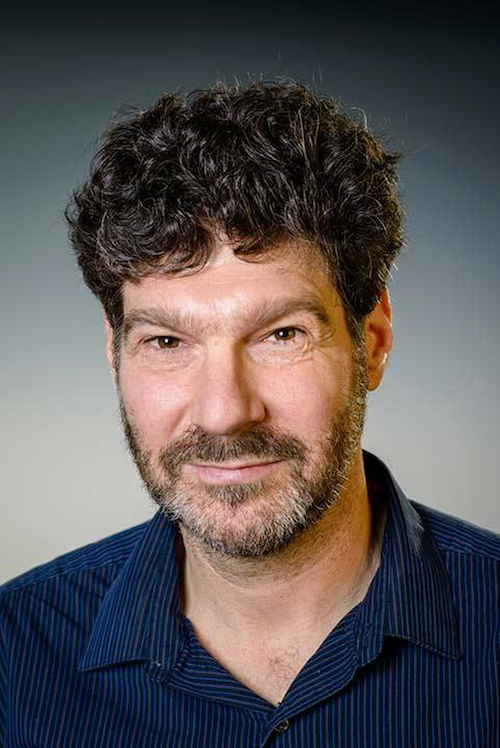
You see a man with spiders in his beard: shag, marry, kill?

This story was making the rounds last week, about a study that had found that women who are creeped out by bugs are less likely to be attracted to men with beards.

According to a new study, if a woman runs screaming from hair-dwelling creatures such as lice, ticks, fleas and the like, she’s likely to find men with beards much less attractive.
It’s on an unconscious level, of course. But from the viewpoint of her inner animal brain, who wants to pucker up to a mouth fringed by a thicket of hair that might contain tiny, squirmy, maggot-like creatures?

I’m taking this personally, as a bearded man with a fondness for creepy crawlies. For the record, my beard is respectably groomed and does not contain any squirmy maggots, and I find the implication offensive and unfounded. Do we go around suggesting that women grow their hair longer than men (usually) in order to provide a nesting ground for ticks and lice, or do we consider tastefully coiffed hair to be an attractive feature? Why assume that beards or any other hair repulsive?

So I read the paper, A multivariate analysis of women’s mating strategies and sexual selection on men’s facial morphology, by Tessa R. Clarkson, Morgan J. Sidari, Rosanna Sains, Meredith Alexander, Melissa Harrison, Valeriya Mefodeva, Samuel Pearson, Anthony J. Lee and Barnaby J. W. Dixson. I was even less impressed. In particular, they are trying to associate a phenomenological study of women’s reports of their preferences of a set of photographs with an evolutionary effect of sexual selection, which is a rather long reach. We know that fashions in hair styles vary wildly with time and location with a rapidity that cannot be associated with reproduction — shall we look at big hair styles from the 1980s and draw inferences about paleolithic mating preferences? Beards go in and out of fashion all the time, so a sample taken in 2019 of Western women’s taste in North European male faces (yes, they explicitly used only faces of a small ethnic subset) is only a snapshot of a narrow cultural preference in a tiny slice of time that cannot be interpreted as a significant biological factor.

Here’s the abstract.

The strength and direction of sexual selection via female choice on masculine facial traits in men is a paradox in human mate choice research. While masculinity may communicate benefits to women and offspring directly (i.e. resources) or indirectly (i.e. health), masculine men may be costly as long-term partners owing to lower paternal investment. Mating strategy theory suggests women’s preferences for masculine traits are strongest when the costs associated with masculinity are reduced. This study takes a multivariate approach to testing whether women’s mate preferences are context-dependent. Women (n = 919) rated attractiveness when considering long-term and short-term relationships for male faces varying in beardedness (clean-shaven and full beards) and facial masculinity (30% and 60% feminized, unmanipulated, 30% and 60% masculinized). Participants then completed scales measuring pathogen, sexual and moral disgust, disgust towards ectoparasites, reproductive ambition, self-perceived mate value and the facial hair in partners and fathers. In contrast to past research, we found no associations between pathogen disgust, self-perceived mate value or reproductive ambition and facial masculinity preferences. However, we found a significant positive association between moral disgust and preferences for masculine faces and bearded faces. Preferences for beards were lower among women with higher ectoparasite disgust, providing evidence for ectoparasite avoidance hypothesis. However, women reporting higher pathogen disgust gave higher attractiveness ratings for bearded faces than women reporting lower pathogen disgust, providing support for parasite-stress theories of sexual selection and mate choice. Preferences for beards were also highest among single and married women with the strongest reproductive ambition. Overall, our results reflect mixed associations between individual differences in mating strategies and women’s mate preferences for masculine facial traits.

Among the flaws are the aforementioned narrow set of sample images — sorry, you’re not going to get to choose whether you’d like a one-night stand with Idris Elba vs. a long-term relationship with Hugh Grant — but also, the study was executed using Amazon’s Mechanical Turk, which is going create unanalyzed biases in the respondent population. It also apparently created a far more diverse respondent population than was represented in the target images, so who knows what effect that had.

And really, the game they played was a variation on “shag, marry, kill”: would you have a quickie relationship with this face? Would you like to live with this face for months and months? Is this face totally unattractive to you? It’s the most superficial analysis possible. How many of you chose your mate because of their appearance, and nothing else, and prioritized conventional attractiveness over all other attributes? This is a meaningless study. You can’t say anything about human evolution with a study that reduces a complicated process, courtship behavior and reproduction in humans, to such a trivial scope.

Yeah, sure, you can talk all you want about Tinder and swiping left or swiping right, but that’s about transient relationships and not long-term investment in offspring.

Anyway, you want the results? Here you go.

Mean ratings (±1 s.e.m.) for attractiveness when judging short-term (a) and long-term (b) relationships for bearded (black circles) and clean-shaven (white circles). The composites were manipulated to appear 60% and 30% feminized, unmanipulated, and 30% and 60% masculinized. Note that the full rating scale ranges from 0 to 100.

Oh, wait, maybe the study isn’t so bad, since it found that bearded men are generally preferable to clean-shaven men, both for long term and short term relationships, clearly the correct result. Also women prefer the unmodified or slightly masculinized photographs, so men — be yourself, or use just a little subtle makeup.

But no…you know this result is going to vary across time and cultures. Wait a decade, and those results could flip.

This leads into the next part of the paper, which is to look at how the results vary with women’s phobias about disease and parasites and sex and morality. They even suggest a hypothesis: “The ectoparasite avoidance hypothesis proposes that ancestral humans underwent additional loss of body hair as it lessened the potential for disease-carrying ectoparasites to proliferate.” But they can’t test this hypothesis! These data are so ephemeral that you can’t use them to describe human behavior during the long period of our evolution, and further, I’d argue that it doesn’t even hold up, given that a) we don’t know much about the timing of hair loss in the human lineage, and b) they’re examining a persistent phenomenon, male facial hair. If there was selection to get rid of beards full of squirmy maggots, how come we still have them? The beards, that is, not the squirmy maggots. I’d also ask what’s special about humans, since most mammals are covered with hair; are chimpanzees uninterested in selecting mates lacking in parasites?

The authors administered a test to measure respondents attitudes about 4 dimensions of disgust and then correlated that with their measures of attractiveness. The idea was that if a woman was particularly repulsed by the sight of arthropods (“ectoparasite disgust”), then they ought to rate men with beards as less attractive, because who knows what might be lurking in that thatch?

That was sort of the result they got, that excited the popular press the most.

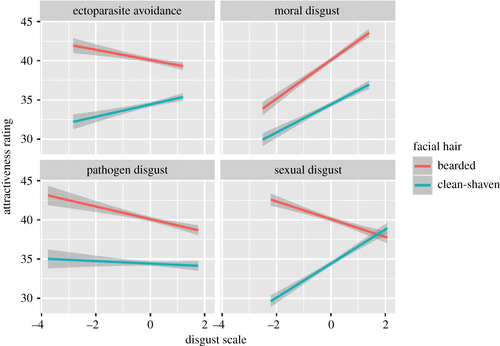
The associations between women’s ectoparasite, moral, pathogen and sexual disgust and their attractiveness ratings for male beardedness when judging bearded faces (red line) and clean-shaven faces (green line). Data show regression lines (±95% confidence interval). Note that the full rating scale ranges from 0 to 100.

Look at the ectoparasite avoidance and pathogen disgust graphs on the left. The attractiveness of bearded men did decline as the women subjects exhibited increasing queasiness about parasites…but I also notice that no matter how sensitive the women were, they still (on average) found bearded men more attractive than cleanshaven men. Which I interpret to mean that if I cultivated spiders in my beard, I might be slightly less attractive to more women, but I’d still be prettier than the beardless boys. I don’t see how it provides evidence that beardlessness has a selective advantage; I take it to mean that the forces behind the growth of male facial hair are more complex and diverse than can be accounted for by one simplistic hypothesis.

The moral disgust graph is complicated. Increasing moral disgust means the respondent attaches more importance to upright behavior, that they are repulsed by criminality, for instance. Those women find both bearded and clean-shaven men more attractive, and that may be a consequence of, for instance, avoiding homosexuality, to speculate a bit. Every man looks prettier when you’re afraid of falling for the wrong sex.

The sexual disgust scale is the only one that shows a preference for clean-shaven men over bearded ones at the extreme end. Sexual disgust is a measure of the importance of sexual propriety (no incest, for example) and also of the desirability of an individual for reproduction — again to speculate, maybe beards are a way of concealing biological defects, so they are less attractive.

Finally, though, these measures of attractiveness are so deeply subject to trends and fashions and wildly varying personal taste that they cannot be used to test hypotheses of human evolution. This would have been a better paper if they’d avoided making the unwarranted claims of deep biological meaningfulness…but then, it wouldn’t have been picked up by the tabloids and news agencies, now would it?