Aaargh! Physicists!

I read this story with mounting disbelief. Every paragraph had me increasingly aghast. It’s another case of physicists explaining biology badly.

It started dubiously enough. Paul Davies, cosmologist and generally clever fellow, was recruited to help cure cancer, despite, by his own admission, having “no prior knowledge of cancer”.

Two years ago, in a spectacularly enlightened move, the US National Cancer Institute (NCI) decided to enlist the help of physical scientists. The idea was to bring fresh insights from disciplines like physics to help tackle cancer in radical new ways.

Uh, OK…I can agree that fresh insights can sometimes stimulate novel approaches. Cancer is an extraordinarily complex process, but maybe, just maybe, the scientists studying it are so deep in the details that they’re missing some obvious alternative avenue that would be productive to study. I can think of examples; for instance, Judah Folkman’s realization that inhibiting angiogenesis, the process by which cancers recruit a blood supply from healthy tissue, would be a clever way to attack cancers beyond just bashing the cancer cells themselves. But then, Folkman wasn’t ignorant of cancer…he came up with that strategy from a deep understanding of how cancers work.

So I’m doubtful, but prepared to read something that might be new and interesting…and then I read Davies’ suggestion. Gah.

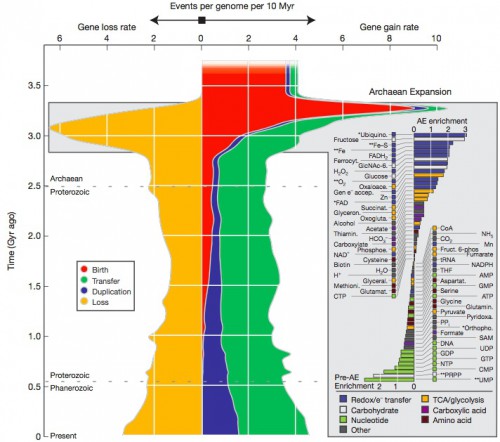
A century ago the German biologist Ernst Haekel pointed out that the stages of embryo development recapitulate the evolutionary history of the animal. Human embryos, for instance, develop, then lose, gills, webbed feet and rudimentary tails, reflecting their ancient aquatic life styles. The genes responsible for these features normally get silenced at a later stage of development, but sometimes the genetic control system malfunctions and babies get born with tails and other ancestral traits. Such anomalous features are called atavisms.

Charles Lineweaver of the Australian National University is, like me, a cosmologist and astrobiologist with a fascination for how cancer fits into the story of life on Earth. Together we developed the theory that cancer tumours are a type of atavism that appears in the adult form when something disrupts the silencing of ancestral genes. The reason that cancer deploys so many formidable survival traits in succession, is, we think, because the ancient genetic toolkit active in the earliest stages of embryogenesis gets switched back on, re-activating the Proterozoic developmental plan for building cell colonies. If you travelled in a time machine back one billion years, you would see many clumps of cells resembling modern cancer tumours.

The implications of our theory, if correct, are profound. Rather than cancers being rogue cells degenerating randomly into genetic chaos, they are better regarded as organised footsoldiers marching to the beat of an ancient drum, recapitulating a billion-year-old lifestyle. As cancer progresses in the body, so more and more of the ancestral core within the genetic toolkit is activated, replaying evolution’s story in reverse sequence. And each step confers a more malignant trait, making the oncologist’s job harder.

I’m almost speechless. I’m almost embarrassed enough for Davies that I don’t want to point out the profound stupidities in that whole line of argument. But then, there’s this vicious little part of my brain that perks up and wants to leap and rend and gnaw and shred. Maybe it’s an atavism.

Please, someone inform Davies that Haeckel was wrong. Recapitulation theory doesn’t work and embryos do not go through the evolutionary stages of their ancestors. We do not develop and then lose gills: we develop generalized branchial structures that subsequently differentiate and specialize. In fish, some of those arches differentiate into gills, but those same arches in us develop into the thyroid gland and miscellaneous cartilagenous and bony structures of the throat and ears.

It’s better to regard embryos as following von Baerian developmental trajectories, proceeding from an initially generalized state to a more refined and specialized state over time. Limbs don’t reflect our ancient aquatic ancestry in utero, instead, limbs develop as initially blobby protrusions and digits develop by later sculpting of the tissue.

Sure, there is an ancestral core of genes and processes deep in metazoan development. But Davies seems to think they’re lurking, silenced, waiting to be switched on and turn the cell into a prehistoric monster. This is not correct. Those ancient genes are active, operating in common developmental processes all over the place. You want to see Proterozoic cell colonies? Look in the bone marrow, at the hematopoietic pathways that produce masses of blood cells. The genes he’s talking about are those involved in mitosis and cell adhesion. They aren’t dinosaurs of the genome that get resurrected by genetic accidents. but the engines of cell proliferation that lose the governors that regulate their controlled expression, and go into runaway mode in cancers.

But even if their model were correct (which is such a silly way to start a paragraph; it’s like announcing, “If the Flintstones were an accurate portrayal of stone age life…”), it doesn’t help. We don’t have tools to manipulate atavisms. We don’t see any genetic circuits that can be called atavistic. The Flintstones might have made record players out of rocks, but that doesn’t imply that the music recording industry can get valuable insights from the show.

Oh, well, I shouldn’t be so negative. I’m alienating possible sources of work here. I understand the physicists have encountered some peculiar results lately. Have they considered bringing in a biologist consultant with no prior knowledge of particle physics? I have some interesting ideas that might explain their anomalies, based on my casual understanding of phlogiston theory and ætheric humours.

My cunning plan has worked!

In my talk at the Society for Developmental Biology, I encouraged more scientists to take advantage of the internet to share science with the public. Someone fell for it! Saori Haigo has started a blog, and she even explains why.

I’ve started this blog because I believe I have a social responsibility as a professional scientist to communicate science openly to the people. I will blog about what I think are important topics in the biological and biomedical sciences and explore the value, current issues, and realistic expectations of what we gain from doing research on that topic. In addition, I’ll explore how science is done, share with you why I think the research I’m working on is of interest and worth funding by taxpayers, give you a taste of what my daily activities entail, and share the latest cutting edge research published in science journals. All in layman’s terms, so you can follow too.

I hope through my posts you will come to appreciate the value of academic science and learn about a world which may seem ‘foreign’ to you. And also to learn something neat along the way. Enjoy!

So go browse already. It’s a brand new blog, but she’s already got some interesting stuff, including spinning eggs.

The new palmistry

I am a gorgeous hunk of virile manhood. How do I know? I looked at my fingers.

Research has shown that men whose ring finger on their right hand is longer than their index finger are regarded as better looking by women, possibly because their faces are more symmetrical.

There is no link, however, between this finger length and how alluring women find a man’s voice or his body odour, the study found.

Guys, you may be looking at my picture on the sidebar and thinking there must be something wrong here…but no, I assure you, my right ring finger is distinctly longer than my right index finger, and I will waggle that in your face and tell you to ignore the schlubby, hairy, homely middle-aged guy attached to that hand — the fingers don’t lie.

Right now I know a lot of you fellows are staring at your hand, and some of you are noticing that you have a long index finger, a sure sign that you are a hideous beast, unlike me. And others have nice long ring fingers, and you get to join me in my club of attractive manly men, no matter what the rest of your body looks like. We’ll get together and make the ladies swoon.

Except, well…I’ve been looking at some of the data, and I’m distinctly unimpressed.

It’s not the idea that digit ratios vary, though: that looks to be well established, with observations first made in the 19th century that men have relatively longer ring fingers, while women have relatively longer index fingers. There does seem to be an entirely plausible (but small) side-effect of testosterone/estrogen on digit development. There is even some rather noisy looking data that suggests that we can use digit length ratios as a proxy for embryonic testosterone/estrogen exposure.

The problem, unfortunately, is that there seems to be a little industry of scientific palmists who are busily cross-correlating these digit ratios with just about anything, and I think they are drifting off into measuring random noise. It’s amazing what can get published in respectable journals, and subsequently get loads of attention from the press. Look at the methods for this study of attractiveness, for instance.

The team studied 49 Caucasian men aged between 18 and 33 years of age. They measured their finger ratio, got them to recite into a voice recorder, took a photograph of them with a neutral expression and got the non-smokers to wear cotton pads under their armpits for a day. The men were then evaluated for attractiveness, facial symmetry and masculinity by 84 women, and the results are published in the Proceedings of the Royal Society B.

Wow. Tiny little sample size, probably drawn from the usual limited population of college students, one straightforward objective measure (the digit ratio), and a subjective evaluation…and from this the authors try to infer a general rule. And sometimes they get a positive correlation with one thing, and no correlations with other things.

This is not only rather uninteresting, it’s also not very reliable. But it’s easy to do!

But wait, you might say, statistics is a powerful tool, and maybe those correlations are awesomely solid. This could be, so I went looking for papers that showed some of the data, so I could get a feel for how robust these effects were. Here, for example is a chart comparing number of the number of children to the ratio of index finger length to ring finger length (2D:4D ratio) for English men, where we’d expect low ratios to be a consequence of higher testosterone and therefore more virility, and for English women, where we’d expect a reversal, because fertile womanly women would of course have more estrogen. And it works!

i-8503b112c3131577f253e4a4c1fc90d7-digitratio1.jpeg

Look at the slopes of those lines, and they actually fit the prediction. But then…look at the actual data points, and I think you can see that knowing the length of the fingers of any individual tells you absolutely nothing about how many children they have. You can guess why: it’s because there are a great many factors that influence how fecund you are, and small variations in hormones are only going to be a tiny component of such decisions.

You may also notice the outliers. Look at that man with most womanly hands of the entire group, having a 2D:4D ratio of 1.1 — he also has the second largest brood of the whole sample, with 5 kids. And the woman with man-hands with ratio somewhere around 0.87? Four kids.

It’s also a good thing that these data are collected in two separate graphs, because if you put the men and the women on the same chart, they’d overlap so much that you wouldn’t be able to tell them apart. While the sex difference may have been documented since the 19th century, it’s clearly not a big and obvious difference, and the overlap between the sexes is huge.

Or how about these data?

i-6306184888fb70c3bc4cf6c2e90a9252-digitratio2.jpeg

That’s the splat you get when you compare 2D:4D ratio in women against another classic magic number associated with attractiveness, the waist-hip ratio. A correlation emerges out of that mess, too, and it turns out that more estrogen exposure (as indirectly measured by looking at digit lengths) is correlated with relatively thicker waists. Sort of. I guess. Yeah, it’s statistics all right.

How these sorts of data are interpreted is to see them as suggesting the presence of sexually anatagonistic genes, that is, genes that respond to high testosterone with expression patterns that are beneficial to males, and genes that respond to high estrogen with expression that favorably biases morphology towards typically female variants. I can believe that such phenomena exist, and that doesn’t bother me in the slightest; what does, though, is this I’ve-got-a-hammer-so-everything-looks-like-a-nail approach, using an easily measured metric that is indirect and variable, and the neglect of the particular for the useless general. This is clearly a situation where testosterone/estrogen levels are only one relatively minor variable, and the more interesting factors would be allelic variations, genetic background, and social/cultural effects. But hey, we can measure fingers with calipers, easy, and then we can through questionnaires or easy, fast, noninvasive tests at a handy population, and look! Numbers! Must be science, then.

Except that we don’t really learn very much from it, other than that I’m really beautiful, despite what I actually look like.


Ferdenzi C,
Lemaître J-F,
Leongómez JD,
Craig Roberts SC (2011)
Digit ratio (2D:4D) predicts facial, but not voice or body odour, attractiveness in men.
Published online before print April 20, 2011, doi: 10.1098/rspb.2011.0544 Proc. R. Soc. B

Manning JT, Barley L, Walton J, Lewis-Jones DI, Trivers RL, Singh D, Thornhill R, Rohde P, Bereczkei T, Henzi P, Soler M, Szwed A. (2000) The 2nd:4th digit ratio, sexual dimorphism, population differences, and reproductive success. evidence for sexually antagonistic genes? Evol Hum Behav. 21(3):163-183.

Imagine a perfectly spherical sacred cow…

The BBC is reporting the imminent extinction of religion. This is an end result to be hoped for, which just makes me all the more critical, and I have to say up front that this is the work of mathematicians, engineers, and physicists modeling sociology. It’s interesting stuff that looks at the very biggest picture without addressing the details, and it could very well be entirely true, but I’m always going to be a little bit suspicious of academics crossing boundaries that much. Sociologists are not stupid people; I’d like to see more of them pick up on this mode of analysis, and then I’ll trust it more.

You can read the paper for yourself, it’s available on arxiv, and it’s not a piece of crackpot pseudoscience; it analyzes gross historical trends away from religious belief in diverse regions around the world, and fits a reasonable curve to the pattern using an extremely simple model of group dynamics. The simplicity of the model is the troubling part — I’m a biologist, I don’t believe in simple any more — but the fact that the model works well for at least the selected regions is a little reassuring. Here’s the short summary of what they did:

Here we use a minimal model of competition for members between social groups to explain historical census data on the growth of religious non-affiliation in 85 regions around the world. According to the model, a single parameter quantifying the perceived utility of adhering to a religion determines whether the unaffiliated group will grow in a society. The model predicts that for societies in which the perceived utility of not adhering is greater than the utility of adhering, religion will be driven toward extinction.

The data look wonderfully clean, too.

i-edc406d0750653a2c940d4944ef1f534-relextinct.jpeg

(About that rescaled time axis: the data from different regions show different rates of the deconversion process, with timescales from decades to centuries; they all fit their model with different parameters for the perceived utility of religion. The rescaling shows that the model provides a good fit to all of the data, but you can’t use this to predict the date of the worldwide Atheist Rapture — it’ll happen at different times in different regions.)

The authors also express reasonable reservations. I was wondering about these questions, myself.

Our assumption that the perceived utility of a social group remains constant may be approximately true for long stretches of time, but there may also be abrupt changes in perceived utility, a possibility that is not included in the model. We speculate that for most of human history, the perceived utility of religion was high and of non-affiliation low. Religiously non-affiliated people persisted but in small numbers. With the birth of modern secular societies, the perceived utility of adherence to religion versus non-affiliation has changed significantly in numerous countries, such as those with census data shown in Fig. 1, and the United States, where
non-affiliation is growing rapidly.

That is a real concern. Their mathematical models are built around a parameter called perceived utility, ux, which they extract from the overall data — it’s not something that can be measured directly in individuals or populations, but is derived from historical trends and then used to calculate future trends, which is a little bit circular. I’d be more confident in their prediction if perceived utility had some independent measure that could be used in the curve fitting.

And of course, as they note, it’s not at all certain that that perceived utility will remain constant — it can’t have, for one thing, or the process of deconversion would have started a long time ago, we’d be further along the curve, and we’d all be atheists now. And unfortunately, the work doesn’t address the interesting question of what caused the historical shift in the perceived utility of religion, and without that, we can’t know what kind of factors might cause it to shift back.

I’ll still hope the math is a good predictor of the fate of faith.

Support cancer research now!

I made this post a few years ago, and I’m updating it now because my family back home in the Seattle-Tacoma area has a tradition: every year they join the Relay for Life to raise money for cancer research, in honor of my sister-in-law, Karen Myers, who died of melanoma. That’s my family listed there, doing good. If anyone wants to chip in to help out, that would be nice — I’m planning to donate to my mother’s page, since I like her best, but they’re all nice people and it’s a great cause. Or if you’d prefer to donate to the one who’ll probably expend the most energy running around the track, Alex Hahn is the littlest ball of fire.


i-b558f93a3ca94abc5a6f1a7c5acb620d-karen_myers.jpg

This is my sister-in-law, Karen Myers — mother to 3, shy but always cheerful, and with a wonderful laugh that you were sure to hear any time you were with her. You would have liked her if you’d known her…unfortunately, she was slowly eaten alive by an implacable melanoma several years ago. It doesn’t matter what kind of person you are; lots of good people — and you probably have known some yourself — are killed by cancer every year.

About 20 years ago, I was funded by a cancer training grant which required me to experience a fair amount of clinical training in oncology. It is not one of my happiest memories. What I saw were lots of dying people, in pain, with treatments that caused more pain — or were palliative because the patient was expected to die. Pediatric oncology was the worst, because they were dying children. I’m afraid my training convinced me to run screaming from anything clinical.

So last week, I met Beth Villavicencio, who told me she was a pediatric oncologist. The first words out of my mouth were something like, “That’s funny — you don’t look depressed or suicidal.” And she wasn’t. She looked awfully happy for someone who works with critically ill kids … so she turned me around 180°. She wasn’t miserable, because people bring dying kids to her and she saves them — she has a job where she is literally taking people who would be dying otherwise and she makes them healthy again with excellent success rates, which sounds like something that would make anyone cheerful.

[Read more…]

21st century science publishing will be multilevel and multimedia

I have to call your attention to this article, Stalking the Fourth Domain in Metagenomic Data: Searching for, Discovering, and Interpreting Novel, Deep Branches in Marker Gene Phylogenetic Trees, just published in PLoS One. It’s cool in itself; it’s about the analysis of metagenomic data, which may have exposed a fourth major branch in the tree of life, beyond the bacteria, eukaryotes, and archaea…or it may have just exposed some very weird, highly derived viruses. This is work spawned from Craig Venter’s wonderfully fascinating work of just doing shotgun sequencing of sea water, processing all of the DNA from the crazy assortment of organisms present there, and sorting them out afterwards.

But something else that’s special about it is that the author, Jonathan Eisen, has bypassed his university’s press office and not written a formal press release at all. Instead, he has provided informal commentary on the paper on his own blog, which isn’t novel, except in its conscious effort to change the game (Eisen has also been important in open publishing, as in PLoS). This is awesome, and scientists ought to get a little nervous. It maintains the formality and structured writing of a standard peer-reviewed paper, which is good — we don’t want new media to violate the discipline of well-tested, successful formats. But it also adds another layer of effort to the work, in which the author breaks out from the conventional structure and talks about the work as he or she would in a seminar or in meeting with other scientists. A paper provides the data and major interpretations, but it’s this kind of conversational interaction that can let you see the bigger picture.

I say scientists might want to be a little bit nervous about this, because I can imagine a day when this kind of presentation becomes de rigueur for everything you publish, just as it’s now understood that you could give a talk on a paper. It’s a different skill set, too, and it’s going to require a different kind of talent to be able to address fellow scientists, the lay public, and science journalists. Those are important skills to have, and this kind of thing could end up making them better appreciated in the science community.

Are any of your grad students and post-docs blogging? You might want to think about getting them trained in this brave new world now, before it’s too late. And you might want to consider getting started yourself, if you aren’t already.

Will radiation hormesis protect us from exploding nuclear reactors?

That reputable scientist, Ann Coulter, recently wrote a genuinely irresponsible and dishonest column on radiation hormesis. She claims we shouldn’t worry about the damaged Japanese reactors because they’ll make the locals healthier!

With the terrible earthquake and resulting tsunami that have devastated Japan, the only good news is that anyone exposed to excess radiation from the nuclear power plants is now probably much less likely to get cancer.

This only seems counterintuitive because of media hysteria for the past 20 years trying to convince Americans that radiation at any dose is bad. There is, however, burgeoning evidence that excess radiation operates as a sort of cancer vaccine.

As The New York Times science section reported in 2001, an increasing number of scientists believe that at some level — much higher than the minimums set by the U.S. government — radiation is good for you.

But wait! If that isn’t enough stupid for you, she went on the O’Reilly show to argue about it. Yes! Coulter and O’Reilly, arguing over science. America really has become an idiocracy.

I only know about hormesis from my dabbling in teratology; a pharmacologist or toxicologist would be a far better source. But I know enough about hormesis to tell you that she’s wrong. She has taken a tiny grain of truth and mangled it to make an entirely fallacious argument.

Radiation is always harmful — it breaks DNA, for instance, and can produce free radicals that damage cells. You want to minimize exposure as much as possible, all right? However, your cells also have repair and protective mechanisms that they can switch on or up-regulate and produce a positive effect. So: radiation is bad for you, cellular defense mechanisms are good for you.

Hormesis refers to a biphasic dose response curve. That is, when exposed to a toxic agent at very low doses, you may observe an initial reduction in deleterious effects; as the dose is increased, you begin to see a dose-dependent increase in the effects. The most likely mechanism is an upregulation of cellular defenses that overcompensates for the damage the agent is doing. This is real (I told you there’s a grain of truth to what she wrote), and it’s been observed in multiple situations. I can even give an example from my own work.

Alcohol is a teratogenic substance — it causes severe deformities in zebrafish embryos at high doses and prolonged exposure, on the order of several percent for several hours. I’ve done concentration series, where we give sets of embryos exposures at increasing concentrations, and we get a nice linear curve out of it: more alcohol leads to increasing frequency and severity of midline and branchial arch defects. With one exception: at low concentrations of about 0.5% alcohol, the treated embryos actually have reduced mortality rates relative to the controls, and no developmental anomalies.

If Ann Coulter got her hands on that work, she’d probably be arguing that pregnant women ought to run out and party all night.

We think there is probably a combination of factors going on. One is that alcohol is actually a fuel, so what they’re getting is a little extra dose of energy; it’s also deleterious to pathogens, so we’re probably killing off bacteria that might otherwise harm the embryos, and we’re killing those faster than we are killing healthy embryonic cells. It’s the same principle behind medieval beer and wine drinking — it was healthier than the water because the alcohol killed the germs.

However, the key thing to note about hormetic effects is that they only apply at low dosages. Low dosages tend to be where the damaging effects are weakest, anyway, and where the data are also the poorest. The US government recommendations for radiation exposure are based on a linear no threshold model in which there is no hormesis to reduced effects at low concentrations for a couple of reasons. One is methodological. The data we can get from high exposures to toxic agents tends to be much more robust and consistent, and we do see simple relationships like a ten-fold increase in dose produces a ten-fold increase in effect, whereas at low doses, where the effects are much weaker, variability adds so much noise to the measurements that it may be difficult to get a repeatable and consistent relationship. So the strategy is to determine the relationships at high doses and extrapolate backwards.

Then, of course, the major reason recommendations are made on the simple linear model is that it is the most conservative model. The data are weaker at the low end; there is more variability from individual to individual; the safest bet is always to recommend lower exposures than are known to be harmful.

In the low dosage regime, these responses get complicated at the same time the data gets harder to collect. This is why it’s a bad idea to base public policy on the weakest information. I’ll quote a chunk from a review by Calabrese (2008) that describes why you have to be careful in interpreting these data.

In 2002, Calabrese and Baldwin published a paper entitled “Defining hormesis” in which they argued that hormesis is a dose-response relationship with specific quantitative and temporal characteristics. It was further argued that the concept of benefit or harm should be decoupled from that definition. To fail to do so has the potential of politicizing the scientific evaluation of the dose-response relationship, especially in the area of risk assessment. Calabrese and Baldwin also recognized that benefit or harm had the distinct potential to be seen from specific points of view. For example, in a highly heterogeneous population with considerable inter-individual variation, a beneficial dose for one subgroup may be a harmful dose for another subgroup. In addition, it is now known that low doses of antiviral, antibacterial, and antitumor drugs can enhance the growth of these potentially harmful agents (i.e., viruses), cells, and organisms while possibly harming the human patient receiving the drug. In such cases, a low concentration of these agents may be hormetic for the disease-causing organisms but harmful to people. In many assessments of immune responses, it was determined that approximately 80% of the reported hormetic responses that were assessed with respect to clinical implications were thought to be beneficial to humans. This suggested, however, that approximately 20% of the hormetic-like low-dose stimulatory responses may be potentially adverse. Most antianxiety drugs at low doses display hormetic dose-response relationships, thereby showing beneficial responses to animal models and human subjects. Some antianxiety drugs enhance anxiety in the low-dose stimulatory zone while decreasing anxiety at higher inhibitory doses. In these two cases, the hormetic stimulation is either decreasing or increasing anxiety, depending on the agent and the animal model]. Thus, the concepts of beneficial or harmful are important to apply to dose-response relationships and need to be seen within a broad biological, clinical, and societal context. The dose-response relationship itself, however, should be seen in a manner that is distinct from these necessary and yet subsequent applications.

I know, the Cabrese quote may have been a little dense for most. Let me give you another real world example with which I’m familiar, and you probably are, too.

Here in Minnesota in the winter we get very snowy, icy conditions. If I’m driving down the road and I sense a slippery patch, what I will immediately do is become more alert, slow down, and drive more carefully — I will effectively reduce my risk of an accident on that road because I detected ice. This does not in any way imply that ice reduces traffic accidents. Again, with the way Ann Coulter’s mind works, she’d argue that what we ought to do to encourage more responsible driving is to send trucks out before a storm to hose the roads down with water instead of salt.

Ann Coulter is blithely ignoring competent scientists’ informed recommendations to promote a dangerous complacency in the face of a radiation hazard. She’s using a childish, lazy interpretation of a complex phenomenon to tell people lies.


Calabrese EJ (2008) Hormesis: Why it is important to toxicology and toxicologists. Environmental Toxicology and Chemistry 27(7):1451-1474.

Brachiopods: another piece in the puzzle of eye evolution

i-e88a953e59c2ce6c5e2ac4568c7f0c36-rb.png

About 600 million years ago, or a little more, there was a population of small wormlike creatures that were the forebears of all modern bilaterian animals. They were small, soft-bodied, and simple, not much more than a jellyfish in structure, and they lived by crawling sluglike over the soft muck of the sea bottom. We have no fossils of them, and no direct picture of their form, but we know a surprising amount about them because we can infer the nature of their genes.

These animals would have been the predecessors of flies and squid, cats and starfish, and what we can do is look at the genes that these diverse modern animals have, and those that are held in common we all inherited together from that distant ancestor. So we know that flies and cats both have hearts that are initiated in early development by the same genes, nkx2.5 and tinman, and infer that our common ancestor had a heart induced by those genes…and that it was only a simple muscular tube. We know that modern animals all have a body plan demarcated by expression of Hox genes, containing muscles expressing myoD, so it’s reasonable to deduce that our last common ancestor had a muscular and longitudinally patterned body. And all of us have anterior eyes demarcated by early expression of pax6, as did our ancient many-times-great grandparent worm.

i-273ccf6ddad17af1bbd4674e0fbc722e-matrix.jpeg

We do not have fossils of these small, soft organisms, but that’s no obstacle to picturing them. You just have to see the world like a modern molecular or developmental biologist. One of the graphical conceits of the Matrix movies was that the hero could see the hidden mathematical structure of the world, which was visualized as green streams of symbols flowing over everything. We aspire to the same understanding of the structure of life, only what we see are patterns of genetic circuity, shared modules that are whirring away throughout development to produce the forms we see with our eyes; and also, unfortunately, we currently only see these patterns spottily and murkily. There is no developmental biologist with the power of Neo yet, but give us a few decades.

There’s another thing we know about these ancient ancestors: they had two kinds of eyes. ciliary and rhabomeric. Your eyes contain ciliary photoreceptors; they have a particular cellular structure, and they use a recognizable form of opsin. A squid has a distinctly different kind of photoreceptor, called rhabdomeric, with a different cell structure and a different form of opsin. We humans also have some rhabdomeric receptors tucked away in our retinas, while invertebrates have ciliary receptors as well, so we know the common ancestor had both.

Now this ancestral population eventually split into two great tribes, the protostomes, which includes squid and flies, and the deuterostomes, which includes cats and starfish. It should be an obvious indication of the general state of that ancestor that it represents all that those four diverse animals have in common. It also tells us that while that ancestor had eyes, they were almost certainly very simple, and could have been nothing more than a patch of light-sensitive cells, or perhaps even single cells, as we see in some larval eyes.

What we think happened at this division is that both tribes took the primitive eyes and specialized them independently. Each group evolved under similar constraints: they needed directionally-sensitive eyes that could tell what direction a source of illumination was coming from (and these would eventually form true image-forming eyes), and they also needed sensors to detect general light levels — is it day or night, are we in the open or under a rock? Think of it like a camera system: there is a part that gets all the attention, the lens and image-forming chip, but there’s also a light meter that senses ambient light levels.

The two tribes made different choices, though. The protostomes pulled the rhabdomeric photoreceptor out of their toolbox, and used that to make the camera; they used the ciliary photoreceptor to make their light meter. The deuterostomes (actually, just us chordates) instead used the ciliary photoreceptor for their camera, and the rhabdomeric photoreceptor for the light meter. It’s the same ancestral toolkit, but we’ve just specialized in different ways.

At least, that’s the general model we’ve been exploring. A new discovery at the Kewalo Marine Laboratory, one of the premiere labs for evo-devo research, has made the interpretation a little more complex.

That discovery is that brachiopod larvae, which are protostomes, have been found to have directionally sensitive eyes…which are ciliary. A protostome should have directionally sensitive eyes that are rhabdomeric. How interesting!

i-d60159d94316ec8d38e4c091e84a429f-brachiopodeyes.jpeg
Brightfield microscopy of a Terebratalia transversa larva, with red eye spots visible in the apical lobe (black arrows). (A) Dorsal view. (B) Lateral view.

In addition to being ciliary in structure, these eyes express ciliary opsin. They are also true cerebral eyes, also expressing pax6 and having a nervous connection to the central nervous system.

Notice what is going on here: a protostome is building a camera, and unlike all the other protostomes we’ve observed, it’s pulled a ciliary photoreceptor out of its pocket to make it. This is a surprise, but it doesn’t upset any theories too much — it just means we need to explore a couple of alternative explanations. We don’t have answers to resolve these hypotheses yet — we need more data and experiments — but it’ll be fun to watch the work roll onward.

One explanation is illustrated in A, below. The initial animal state was to build directional, cerebral eyes using rhabdomeric photoreceptors. The vertebrates are oddballs who swapped in ciliary receptors instead, while these larval eyes in brachiopods are major peculiarities, an evolutionary novelty which resembles a cerebral eye, but is actually non-homologous. This seems unlikely to me; there are multiple elements of the eye circuitry at work in these eyes, and if they’re using the same gene circuitry, we ought to recognize them as homologous at the molecular level…the only one that counts.

The second explanation in B is that all of these cerebral eyes are homologous, but that the receptor type is more plastic than we thought — it’s relatively easy to switch on the ciliary module vs. the rhabodmeric module, so we would expect to see multiple flip-flops in the evolutionary record.

If we accept that it’s easy to switch receptor type, though, then why assume that the last common ancestor had a directional, cerebral eye that was rhabdomeric? It could have been ciliary, which is also a more parsimonious explanation, because it requires only one switch of types in the protostomes, shown in C.

i-ce7a3df55993c986b97d516e84e9041e-models-thumb-400x141-62593.jpeg
(Click for larger image)

Alternative hypothesis on the evolution of photoreceptor deployment in cerebral eyes. Schematic representation of three hypotheses accounting for the deployment of ciliary photoreceptors in the cerebral eyes of Terebratalia and vertebrates, versus rhabdomeric photoreceptors in Platynereis and other protostomes. (A) Deployment of rhabdomeric photoreceptors as the ancestral state in cerebral eyes, with the larval eyes of Terebratalia, containing ciliary photoreceptors, representing an evolutionary novelty. The deployment of ciliary photoreceptors is the result of a substitution (with ciliary photoreceptors having replaced rhabdomeric photoreceptors in the cerebral eyes) early in the chordate lineage. (B) Larval eyes in Terebratalia are homologous to the cerebral eyes in other protostomes, but ciliary photoreceptors have been substituted for rhabdomeric photoreceptors, as in the vertebrates. (C) Ciliary photoreceptors in cerebral eyes represent the ancestral condition, inherited by Terebratalia and vertebrates. Deployment of rhabdomeric photoreceptors in the cerebral eyes of Platynereis and other protostomes are the result of substitution events.

Whichever hypothesis pans out, though, the important message is that photoreceptor type is a more evolutionarily labile choice than previously thought. What I want to see is more research into photoreceptor development in more exotic invertebrates — that’s where we’ll learn more about our evolutionary history.


I have to mention a couple of other cool features of this paper. If you ever want to see a minimalist directional eye, here it is: the larval eye sensor of brachiopods consists of two cells, a lens cell that actually does the job of light detection, and a pigment cell that acts as a shade, preventing light from one direction from striking the lens cell. That’s all it takes.

i-b1738b6556ff1a04b804d4e4f22e11ce-2celleye.jpeg

I lied! That isn’t a minimal directional eye at all: here it is.

i-855bd089740480150447e707ace1fd5f-gastrula.jpeg

This rather blew my mind. The brachiopod gastrula senses light. The figure above is of a very early stage in development, when the organism is little more than a couple of sheets of cells with no organs at all, only tisses in the process of forming up into rough structures. It definitely has no brain, no nervous tissue at all, and no eyes…and there it is, that dark blue smear is a region selectively expressing ciliary opsin as if it were a retina. Furthermore, when tested behaviorally (mind blown again…behavior, in a gastrula), populations in a light box show a statistical tendency to drift into the light. Presumably, light stimulation of the opsin is coupled to the activity of cilia used for motility in the outer epithelium of the embryo.

Amazing. It suggests how eyes evolved in multicellular organisms, as well — initially, it was just localized general expression of light-sensitive molecules coupled directly to motors in the skin, no brain required.


Passamaneck Y, Furchheim N, Hejnol A, Martindale MQ, Lüter C (2011) Ciliary photoreceptors in the cerebral eyes of a protostome larva. EvoDevo, 2:6.