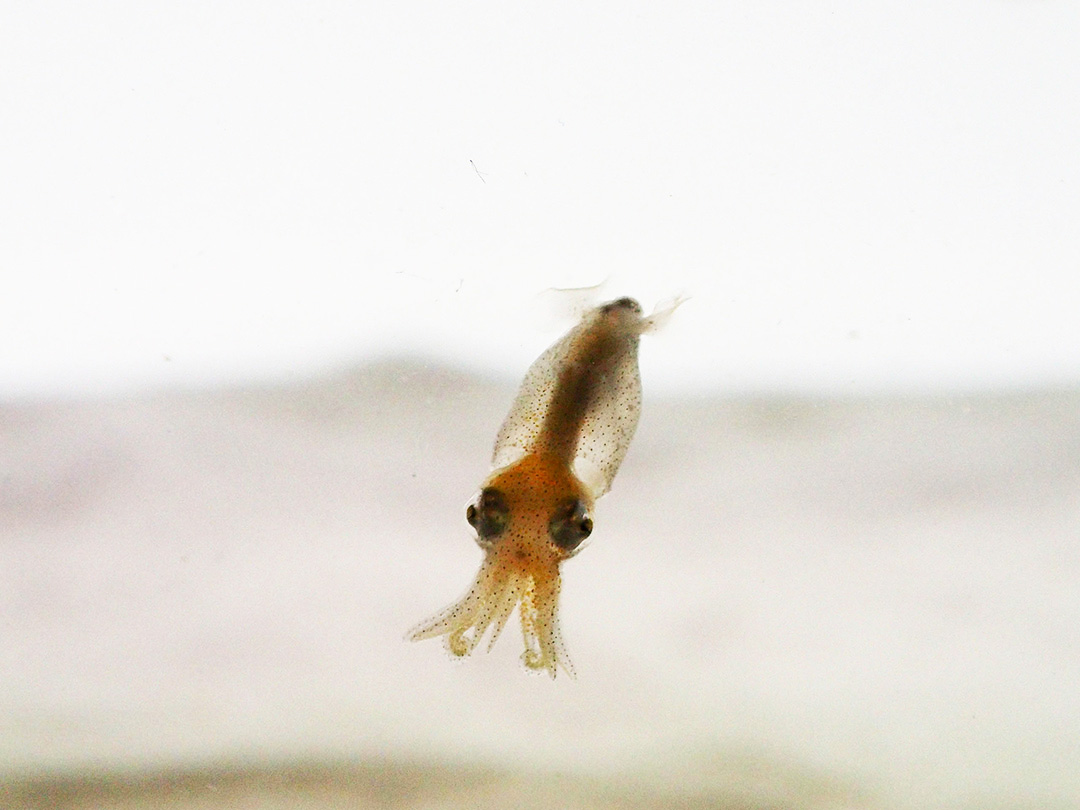
I’m suddenly seeing more to admire in the beautiful octopus.
Pharyngula
Evolution, development, and random biological ejaculations from a godless liberal

I’m suddenly seeing more to admire in the beautiful octopus.

Once again, Casey Luskin demonstrates that he’s a biological ignoramus. He is much buoyed by a science report that chloroquinone resistance in the malaria parasite requires two mutations, claims that Michael Behe has been vindicated because that’s exactly what he said, and demands an apology from all of Behe’s critics.
Will Ken Miller, Jerry Coyne, Paul Gross, Nick Matzke, Sean Carroll, Richard Dawkins, and PZ Myers Now Apologize to Michael Behe?
No.
Here’s what his critics actually said. We have no problem with the idea that a particular functional phenotype requires a couple of mutations; I can think of lots of examples of that, such as the work of Joe Thornton on corticosteroid receptors. That the malaria parasite needs two mutations was never a point of contention, nor was it particularly worrisome. What was wrong with Behe’s work is that he naively claimed that the two mutations had to occur simultanously in the same individual organism, so that the probability that could happen was the product of multiplying the two individual probabilities. That’s ridiculous.
As Sean Carroll explained:
Behe’s main argument rests on the assertion that two or more simultaneous mutations are required for increases in biochemical complexity and that such changes are, except in rare circumstances, beyond the limit of evolution. .. Examples of cumulative selection changing multiple sites in evolving proteins include … pyrimethamine resistance in malarial parasites (6) — a notable omission given Behe’s extensive discussion of malarial drug resistance.
To show that the activity required two mutations, as the new paper says, is not an issue; it would have to claim that two simultaneous mutations were required, and that the cumulative accumulation of mutations in the population does not happen. And Behe goes further and declares on the basis of his bogus calculations that no evolution, beyond minor changes in a species or genus, occur at all.
So it’s weird to see Luskin announce that I’ve already conceded Behe’s point. No, I have not.
What we’ll probably get is nothing more than PZ Myers’s concession, offered in the context of the rant quoted above:
Fair enough; if you demand a very specific pair of amino acid changes in specific places in a specific protein, I agree, the odds are going to be very long on theoretical considerations alone, and the empirical evidence supports the claim of improbability for that specific combination.
Well, that’s more or less what’s required to generate chloroquine resistance. We’ll gladly take this — i.e., simply being proven right — in lieu of an apology.
Yet if you actually read the post in question, you’ll see that I’m not conceding that Behe is right — I’m explaining that a low probability is not a barrier to evolution.
Yet his argument for this dramatic conclusion is not only weak, it’s wrong. I could, for instance, correctly argue that the odds of getting a straight flush dealt to you in a 5 card poker hand is about 1 in 6×10⁴; we could calculate this with probability theory, and we could also deal lots of poker hands and determine it empirically. No one’s going to argue with that part of the math.
But now, if I were to define a Straight Flush Complexity Cluster (SFCC) parameter and wave it around and claim that “no hand of the same complexity as a straight flush has been dealt by chance in the last ten years of poker games here in town,” that players can only possibly win one hand in 60,000, or worse, that no one has won a poker hand without cheating and stacking the deck, you’d know I was crazy. But that is basically Behe’s entire argument — he claims to have found the “edge of evolution,” and that it is much sharper and steeper and more impassable than anyone but a creationist could believe.
I’m flattered that Luskin thinks a concession from me would be so significant, but he ought to wait until I’ve actually made one before declaring victory.
Ken Miller wrote to second my comments:
With respect to the malaria mutations, your rebuttal is exactly correct. I’m attaching my review of Behe’s book in Nature. The portion of that review that directly deals with Behe’s contention about two mutations is this:
Behe, incredibly, thinks he has determined
the odds of a mutation “of the same complexity”
occurring in the human line. He hasn’t. What
he has actually done is to determine the odds of
these two exact mutations occurring simultaneously
at precisely the same position in exactly
the same gene in a single individual. He then
leads his unsuspecting readers to believe that
this spurious calculation is a hard and fast statistical
barrier to the accumulation of enough
variation to drive darwinian evolution.
It would be difficult to imagine a more
breathtaking abuse of statistical genetics.Then, later on, I wrote:
“Behe obtains his probabilities by considering
each mutation as an independent event, ruling
out any role for cumulative selection, and
requiring evolution to achieve an exact, predetermined
result. Not only are each of these
conditions unrealistic, but they do not apply
even in the case of his chosen example. First,
he overlooks the existence of chloroquine resistant
strains of malaria lacking one of the
mutations he claims to be essential (at position
220). This matters, because it shows that there
are several mutational routes to effective drug
resistance. Second, and more importantly, Behe
waves away evidence suggesting that chloroquine
resistance may be the result of sequential,
not simultaneous, mutations (Science 298,
74–75; 2002), boosted by the so-called ARMD
(accelerated resistance to multiple drugs)
phenotype, which is itself drug induced.”I hope these quotes are useful to you and your readers. As usual, Luskin is playing the “pretend” game of taking a new scientific paper and telling folks that it presents a “problem” for evolution. Ain’t life grand?
Best Wishes,
Ken


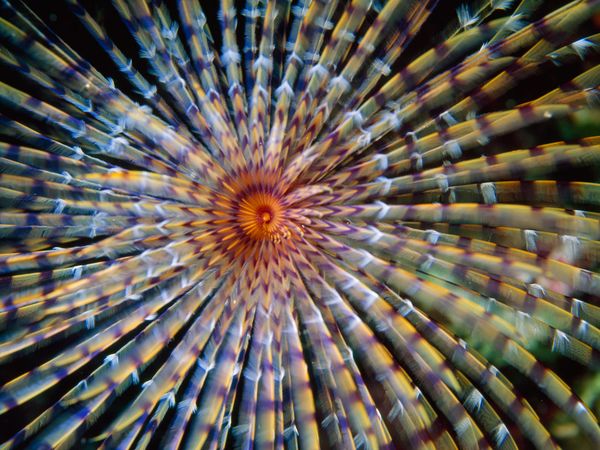
Dang, I teach all this stuff about genes and chromosomes and epigenetics, but I don’t have the advantage of giant floating holographic molecules floating around me. Maybe I’ll have to steal this for my classes.
Although it could use some discussion of Blaschko’s lines, to explain why you get a stripey pattern rather than just salt-and-pepper.

There’s a new vampire series on FX by Guillermo Del Toro, The Strain. I haven’t seen it — I don’t get that channel — but I’ve read the book, which I found interesting for making vampires utterly disgusting, and also for stealing biological analogues for the infection (alas, I thought the story started very well but got tedious by the end). Apparently, the model for the vampire parasite was the horsehair worm, or nematomorpha. These are best known as parasites of orthopterans.
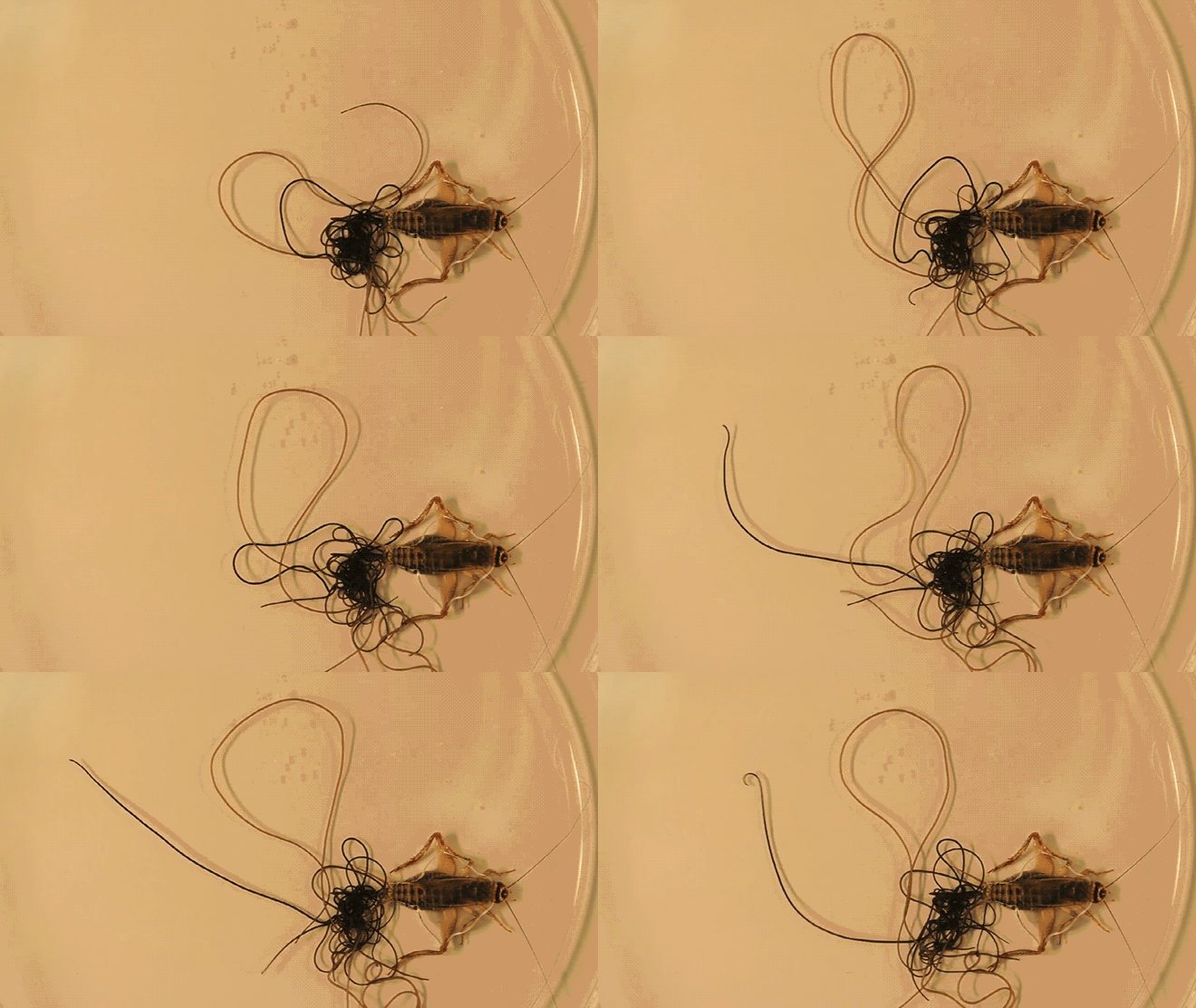
I do have to object to one statement in that story: “Really, for my money, worms are among the worst animal groups out there.” Worms are not a proper taxon. The Nematomorpha are a completely different phylum from the worms most people are familiar with, from nematodes, from polychaetes, from flatworms, etc. Worms are phyletically diverse! Not all of them turn you into a vampire.

They seem to be nifty little devices, and now I have one more reason to get one.
American Atheists announced Wednesday that it has set Tuesday, July 29, 2014, as the official date for the launch of Atheist TV, the world’s first television channel dedicated to atheist content, on Roku. The national atheist nonprofit will host a launch party that night in Manhattan to celebrate.
“The launch of Atheist TV is history in the making,” said American Atheists President David Silverman. “There are hundreds of TV channels dedicated to religious programming, but nothing like this has ever existed before for atheists, and yet the demand is overwhelming. For the first time, atheist video content—from firebrand speeches, to stand-up comedy, to documentaries, to real science-based educational programming, and more—is now available to atheists worldwide, on the air and all in one place. Atheist TV brings consistent, quality, superstition-free programming for children and adults, on the air and on-demand, right from your regular television. This is an idea whose time has come and we’re celebrating.”
The invitation-only launch party will take place from 6-8 pm ET at the Union Square Penthouse venue in Manhattan. Well-known TV producers and personalities, atheist activists and public speakers, video content producers for the channel, and Atheist TV and American Atheists sponsors and donors will be in attendance. The celebration and launch will feature a speech by President David Silverman and a countdown to the first broadcast at 7 pm, at which time a welcome video starring several well-known atheists and science educators will air.
The channel, which provides both an on-air streaming schedule and video-on-demand, is available worldwide for free via Roku, a small device that connects to the back of a television, similar to a cable box. The on-air live streaming portion will also be viewable free on the channel’s website. See http://www.atheists.tv for more information.

Behold, the latest example of human stupidity and shortsightedness.
In small towns across America, manly men are customizing their jacked-up diesel trucks to intentionally emit giant plumes of toxic smoke every time they rev their engines. They call it “rollin’ coal,” and it’s something they do for fun.
An entire subculture has emerged on the Internet surrounding this soot-spewing pastime—where self-declared rednecks gather on Facebook pages (16,000 collective followers) Tumblers and Instagram (156,714 posts) to share photos and videos of their Dodge Rams and GM Silverados purposefully poisoning the sky. As one of their memes reads: “Roll, roll, rollin’ coal, let the hybrid see. A big black cloud. Exhaust that’s loud. Watch the city boy flee.”
These dumbasses think they’re being tough and rebellious, when they’re simply parroting conservative stupidity.
Aside from being macho, the rollin’ coal culture is also a renegade one. Kids make a point of blowing smoke back at pedestrians, in addition to cop cars and rice burners (Japanese-made sedans), which can make it dangerously difficult to see out of the windshield. Diesel soot can also be a great road rage weapon should some wimpy looking Honda Civic ever piss you off. “If someone makes you mad, you can just roll coal, and it makes you feel better sometimes,” says Ryan, a high school senior who works at the diesel garage with Robbie. “The other day I did it to this kid who was driving a Mustang with his windows down, and it was awesome.”
The ultimate highway enemy, however, are “nature nuffies,” or people who drive hybrid cars, because apparently, pro-earth sentiment is an offense to the diesel-trucking lifestyle. “The feeling around here is that everyone who drives a small car is a liberal,” says Ryan. “I rolled coal on a Prius once just because they were tailing me.”
I despair of humanity sometimes. If we make it that far, future generations will look back aghast at these idiots. I know there is something at least that keeps me going.
According to the Clean Air Taskforce, diesel exhaust is one of the country’s greatest sources of toxic pollutants and leads to 21,000 premature deaths each year, but even that won’t deter the coal rollers. “I’m not a scientist, but it couldn’t be too horrible,” Robbie says. “There are a lot of factories that are doing way worse than my truck.”
I’m not ready to die off yet, because I want to see these motherfuckers die first.

We’re always talking about this curious phenomenon, that we see lots of women at the undergraduate and graduate level in biology, but large numbers of them leave science rather than rising through the ranks. Why is that? It seems that one answer is that elite male faculty in the life sciences employ fewer women, that is, the more prestigious, well-known labs headed by male faculty with great academic reputations tend not to hire women for the next level of training.
Women make up over one-half of all doctoral recipients in biology- related fields but are vastly underrepresented at the faculty level in the life sciences. To explore the current causes of women’s underrepresentation in biology, we collected publicly accessible data from university directories and faculty websites about the composition of biology laboratories at leading academic institutions in the United States. We found that male faculty members tended to employ fewer female graduate students and postdoctoral researchers (post-docs) than female faculty members did. Furthermore, elite male faculty—those whose research was funded by the Howard Hughes Medical Institute, who had been elected to the National Academy of Sciences, or who had won a major career award—trained significantly fewer women than other male faculty members. In contrast, elite female faculty did not exhibit a gender bias in employment patterns. New assistant professors at the institutions that we surveyed were largely comprised of postdoctoral researchers from these prominent laboratories, and correspondingly, the laboratories that produced assistant professors had an overabundance of male postdocs. Thus, one cause of the leaky pipeline in biomedical research may be the exclusion of women, or their self-selected absence, from certain high-achieving laboratories.
These statistics were obtained by sampling a large number of labs across the US. The leaky pipeline is rather obvious in this table: note that we have parity at the graduate student level, but that it falls off dramatically at the next level up.

This is a problem. One (not the only one!) of the criteria used to select academic hires is the reputation of the lab they came from — some labs are just really good at cranking out the data, publishing publishing publishing, and new graduates coming out of those labs are likely to continue that pattern. Coming out of a well-known lab provides a real leg-up for an academic career. But what this paper found is that women were less likely to find themselves in those labs.
We found that female trainees were much less likely to work for an elite PI, particularly at the post-doctoral level. Combining faculty of both genders, men were about 17% more likely to do their graduate training with a member of the NAS, 25% more likely to do their postdoctoral training with a member of the NAS, and 90% more likely to do their postdoctoral training with a Nobel Laureate. Thus, the gender skew in employment results in fewer women being trained in the laboratories of elite investigators.
Get with the program, Nobelists!
My first thought was that maybe this was a product of an older generation — that more senior faculty are going to be much older and perhaps unfortunately traditionalist, so all we have to do is wait for them to die off and be replaced. No such luck. When the data are carefully dissected, the correlation isn’t with age, but with elite status (as defined by membership in prestigious organizations). Young male investigators are just as unlikely as old male investigators to hire women.
As expected, among male faculty, elite status was negatively correlated with the percentage of female postdocs in a laboratory (P < 0.0001). This relationship remained true even when several other explanatory variables were added, including faculty rank, years since a faculty member had received his or her PhD, and total number of trainees in a laboratory. As a single independent variable, years since PhD was moderately negatively correlated with the percentage of female postdocs in laboratories with male faculty members (P < 0.045), but this effect disappeared when other variables were included in the model. This observation suggests that a faculty member’s age is not a significant determinant of the gender makeup of their laboratory, and both young and old elite professors employ few women. Laboratory size was also negatively correlated with the representation of female postdocs both as a single variable and in multivariable models. Regression against the percentage of female graduate students in each laboratory revealed similar, although less robust, results. In multivariable models, elite status was associated with a significantly lower percentage of female graduate students trained by male faculty. However, years since PhD correlated with an increasing representation of female graduate students, whereas laboratory size was not significantly correlated in either direction. Finally, we constructed equivalent linear models for female PIs, but we failed to find a single variable that was significantly associated with differential representation of female trainees in these laboratories.
The paper is careful to point out that they don’t know the direct causes of the differences, whether it’s exclusion, conscious or otherwise, by faculty men, or reluctance of women to apply to those labs. We should probably try to figure that one out, since that’s how the problem gets fixed…but it’s probably a combination of all of these factors.
Irrespective of the cause of the gender disparities in elite laboratories, its consequences significantly shape the academic ecosystem. Our data show that these laboratories function as gateways to the professoriate: new generations of faculty members are predominantly drawn from postdocs trained by high-achieving PIs. However, these feeder laboratories employ a disproportionate number of men. According to the theory of cumulative disadvantage, persistent inequalities in achievement can result from small differences in treatment over a prolonged goal-oriented process. In controlled studies, women in academia receive less favorable evaluations, receive lower salary offers, and are ignored by faculty more frequently than men. Access to training in certain laboratories may be another level at which women are disadvantaged. The absence or exclusion of female trainees from elite laboratories deprives them of the resources, visibility, networking opportunities, etc. that could facilitate their professional development. These differences may contribute to the leaky pipeline by shunting women toward laboratories that provide fewer opportunities for advancement in academic science.
I’m certainly not at one of those elite laboratories, so I can’t do much at that level — but I am training swarms of undergraduate women and stuffing them in at the base of the pipeline. One thing we can do here is encourage our graduates to be ambitious and push hard to get into the labs they really want…and to prepare them for the institutional biases that will get in the way.