
The Probability Broach, chapter 19
Now that the Continental Congress has gotten past the preliminaries, they call Win Bear to the stand. But before he can do that, he comes face to face with the bad guys and their henchmen:
A bit nervous, I got up and walked slowly to the dais, detouring to approach the Hamiltonians. Sure enough, there was Oscar Burgess, sneering at me. I glanced at the SecPol agent. “Stay out of this, slime! Madison, I want my friends back, quick, in good condition—Hold it, Kleingunther, or you won’t leave this room attached to your nuts!” I shoved Burgess back, gave Kleingunther an elbow in the eye, and snatched their leader’s lower lip, digging in with my thumb. “And Madison,” I warned, watching blood seep up around my thumbnail, “I’ve got no more scruples about initiated force than you do, So think about it, while you’ve got a chance!”
I let go, wiped my hand on Burgess’s shirt, and pointedly turned my back on them (not without a nervous qualm or two), continuing on in a widening circle of shocked silence.
This gross scene would make more sense if the Hamiltonians tried to obstruct Win from getting up to testify, and he had to shove and fight past them.
As it is, Smith is going out of his way to show his hero starting a fight, violently attacking people who’d done nothing to him. That’s supposed to be a massive no-no in this world. Logically, it should discredit his testimony in the eyes of everyone present. Imagine a prosecution witness called to testify at a trial, and just before he takes the stand, he punches the defendant!
Like many libertarians, Smith has the same hypocritical attitude as Ayn Rand. They both say initiating violence is always bad, but what they show is that it’s okay when the good guys do it.
Win tells his story: how he was a police officer on his Earth, how he discovered the Probability Broach and stumbled through it into this world, and how he’s been dodging assassination attempts ever since at the hands of the Hamiltonians. Madison gets a chance to cross-examine him, deriding his testimony as the ravings of a lunatic:
Madison came charging down the aisle. “Isn’t it true you’re a charlatan? An ordinary, third-rate commercial peeper, covering up thefts from a client whose trust you’ve also rewarded by implicating him in this fantasy of yours? Speak up! The nation must understand the depths of your depravity!”
…I struggled not to get angrier. “Mr. Vice President, in the place I come from—in my history, George Washington defeated the Whiskey Rebellion. Just as there were two George Washingtons, in your world where he was executed, and in mine where he died in bed, there are two Edward William Bears—and Madison’s perfectly aware of it. The Edward Bear in your world, a man I’ve come to regard as a brother, is a detective in Laporte. I met him—”
“Just a moment,” Madison interrupted. “If there are two of you, why not simply produce this superfluous Edward Bear for us?”
“Because, you son of a bitch, he’s one of the people you kidnapped aboard the San Francisco Palace!”
Denying Win’s story as a madman’s delusions would be a clever move, except the scientists have already presented proof that the Probability Broach exists.
It would have worked better, story-wise, if the bad guys had been able to suppress the scientists’ testimony. That way, it would just be Win’s word against Madison’s. The delegates would have been justifiably skeptical of Win’s wild story about parallel universes, and it would have made sense when the Continental Congress voted to do nothing about the Hamiltonian threat, which is what’s shortly going to happen.
For their piece de resistance, the good guys show the military films Win and Ed stole from Madison’s house:
Past midnight, when I was beyond feeling tired, they showed more film—sixteen millimeter, this time. Before Madison could finish screaming protestations, the Seventh Continental Congress sat, stricken by a horror they’d never imagined possible.
The old films were grainy, scratched with age and many reproductions: over a large industrial city, a single B-29, a steel cylinder dropping from its belly. A flash, smoke billowing 50,000 feet, forming the poisonous mushroom of death. Then Nagasaki.
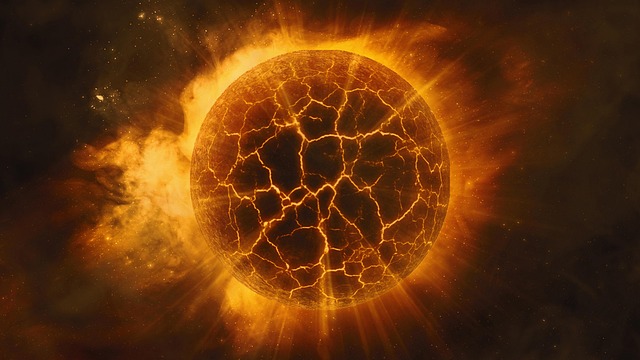
Then bigger, better bombs, fission giving way to fusion, kilotons to megadeaths. Years passed: Japanese cities, Pacific islands, Nevada, the Sahara, the Negev. Finally that hideous night in my world when the Soviets delivered their ultimatum to China, a last “humane” demonstration: a searing flash in the dark that left a jagged crack from pole to pole, visible across the surface of the moon. The Chinese surrendered the next morning.
With this scene, we’ve taken a swerve into alternate history.
Until now, we’ve been led to believe that the world Win Bear comes from is our world, either in the present (of the book) or the very near future. L. Neil Smith’s argument is that Win’s reality—an oppressive, bureaucracy-choked dystopia with arbitrary laws enforced by ruthless secret police—is where we’re headed if we don’t embrace his vision of anarcho-capitalism.
But now, late in the book, we get conclusive proof that Win’s world isn’t our world at all, and never was. Needless to say, in our timeline, the Soviets never nuked the Moon.
There are grains of historical truth in this. It’s true that the Soviet Union and China didn’t always get along; at one point, they fought a violent border clash that escalated to nuclear saber-rattling.
It’s also true that detonating a nuclear bomb on the Moon was something the Soviet Union contemplated as a show of scientific and military prowess, but they never attempted it, fearing the risk of the missile failing and crashing back to earth. (In fact, the U.S. also studied the feasibility of doing it, but chose not to for the same reason. One of the scientists who did some calculations for the project was a young Carl Sagan.)
Smith depicts the Continental Congress as horror-stricken, shocked into speechlessness at this revelation. For a place that hands out guns to toddlers, the North American Confederacy seems awfully squeamish about violence.
Throughout this book, Smith has told us that he loves weapons, of all kinds and varieties. He was insistent that everyone should carry means of dealing death at all times. He says it’s essential to a free society. In fact, on his archived personal webpage, he says it’s the one issue that supersedes all others:
Make no mistake: all politicians—even those ostensibly on the side of guns and gun ownership—hate the issue and anyone, like me, who insists on bringing it up. They hate it because it’s an X-ray machine. It’s a Vulcan mind-meld. It’s the ultimate test to which any politician—or political philosophy—can be put.
If a politician isn’t perfectly comfortable with the idea of his average constituent, any man, woman, or responsible child, walking into a hardware store and paying cash—for any rifle, shotgun, handgun, machinegun, anything—without producing ID or signing one scrap of paper, he isn’t your friend no matter what he tells you.
So why is this where he draws the line? Why should politicians gasp and flinch at “the average constituent” having access to nuclear weapons, but not at anything else? Why is this the one weapon he disapproves of, when all the rest are totally fine and even good in his eyes?
It can’t be that nukes have an unacceptable death toll. While nuclear war may be especially scary to contemplate, if you compare the number of people killed by nukes to the number of people killed by plain ordinary bullets, there’s no contest. Are people killed by guns less dead than people killed by nuclear bombs?
Perhaps his argument would be that guns can be used for self-defense, but nuclear weapons can’t. The crushing irony is that the defenders of nuclear weapons make the same argument!
The cold logic of deterrence is that a country armed with nukes has nothing to fear from its neighbors, because they know that any attack would invite their own annihilation. That’s the same argument Smith makes—that being armed makes us all safer, because no rational criminal would dare to molest an armed victim. Somehow, he accepts that logic in one case, but not the other.
New reviews of The Probability Broach will go up every Friday on my Patreon page. Sign up to see new posts early and other bonus stuff!
Other posts in this series:
The squeamishness about nuking the Moon is particularly odd, considering that in “The Venus Belt” (the sequel to “The Probablility Broach”), a company *blows up Venus to make a new asteroid belt*. And this is presented as a *good thing!*
*headdesk* and propably disturbing earth/moon’s orbits?
And according to Smith weapons grade uranium should be available at your next chemist?
that mr. show skit was real?
What is the substantive difference supposed to be, between “a gun in every home” and “a nuke in every nation”?
As a Brit, I’ve grown up with “no guns, anywhere, at all” and honestly think it’s great.
Good point about Win attacking someone on his way to testify. The traditional trope is that the smooth villain goads the hero into intemperate words or actions, so that he’s not believed by onlookers, but here the villain goads Win into violence, which has no apparent effect. Remember a few weeks back we were talking about unpopular minorities like Hamiltonians not getting a fair shake – this is evidence for that idea.
“Finally that hideous night in my world when the Soviets delivered their ultimatum to China, a last “humane” demonstration: a searing flash in the dark that left a jagged crack from pole to pole, visible across the surface of the moon.”
I’m not sure about the scare quotes around “humane” – surely a demonstration is more humane than an attack, though you’d think the Chinese would consider that the Russian’s demonstration was irrelevant. So what it they have a Moon-cracking bomb? They can’t use that on China without hurting the Soviet Union
I’ve now idea about the calculations, but that would need tzar bomba^3. And not on surface, but in a deep shaft.
we’re earthlings, we should blow up earth things
Well, one could make the case that Win’s world isn’t our world on the more general grounds that our world didn’t turn into anything like Win’s world in the decade since this book was written. That would be suspending suspension of disbelief, but it’s not like it was ever very believable in the first place.
…decade following the time when the book was written, I meant. Wasn’t trying to imply the book was written in 2016.
Yes, the idea Earth-Anarchy is so much better than our Earth hardly works when he’s not comparing it to our Earth.
“any man, woman, or responsible child,” Children with guns. God, he’s stupid.