
The Probability Broach, chapter 18
Win and Lucy are twiddling their thumbs in the meeting chamber, waiting for the Continental Congress to formally convene. Win is upset about how flippant everyone seems to be acting, given the scale of the crisis:
“But it should be taken seriously,” I finally protested. “It’s only the seventh Continental Congress in—”
“Even so, I’ll bet more folks’re watching that Mike Morrison western on channel 962 tonight. Everybody’s got a right to ignore the state and be safe doin’ it. Makes up for fanatics, like me.”
This is a clear demonstration of why anarcho-capitalism is a have-your-cake-and-eat-it-too fantasy. Smith believes everyone should have a right to ignore the state, and be safe doing so.
Obviously, this is impossible. It’s pure wishful thinking. The reason we have a state is that there are collective-action problems that affect everyone and that can’t just be ignored or wished away. Someone has to organize an evacuation if there’s a flood or a wildfire; to set up quarantine and contact tracing in case of a plague. This whole book is another example: the prospect of an invasion by a Hamiltonian army with nuclear weapons.
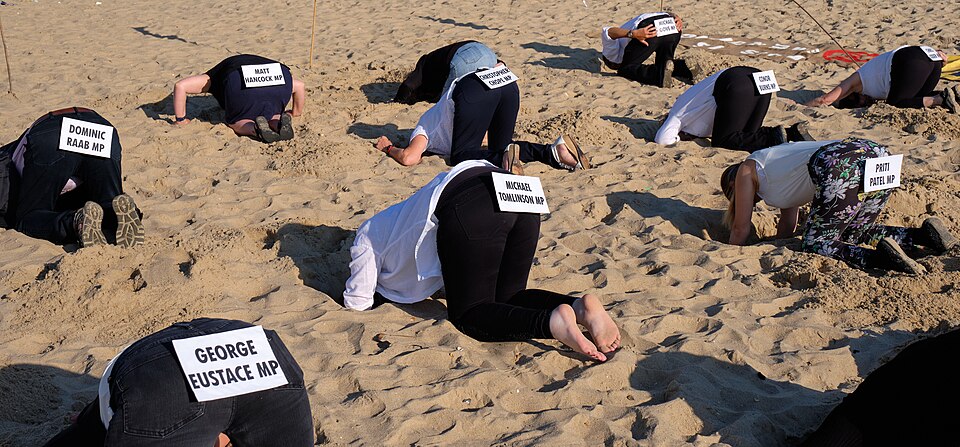
You can’t make a problem like that go away by ignoring it. But if you do choose to ignore it, you can’t insist that you have a “right” to be safe from it regardless. Dangers don’t disappear just because you stick your head in the sand so you can’t see them.
As more time drags on, Win gets impatient. He fears for the lives of his friends who’ve been kidnapped by the Hamiltonians, and it’s exasperating that the Continental Congress seems to be in no hurry:
New names blinked onto the screen, the room gradually filled. Important-looking people stopped by to greet Lucy like a long-lost friend. Apparently I’d underestimated this batty little old lady. We ordered a meal. More nothing happened. Finally: “When does this show get on the road anyway?”
… “Ain’t no certified regulation starting time. How could there be?”
“God damn it, Lucy! Clarissa and Ed are prisoners! Maybe dead already.” I cringed inwardly at the words. “And we’re sitting here on our—”
“I know. But whatever happens—even to them—is gonna happen right here, and not until at least nine-tenths of North America’s represented.”
As Lucy explains, the Continental Congress can’t begin until 90% of North America is represented, either as in-person attendees or virtually by proxy votes. Win checks the big board:
I looked: 0.83901256. “Eighty-three percent?”
“Closer t’eighty-four, and no Congress till it hits ninety.”
I brought this up last week, but I’ll reiterate it here: It’s glaringly obvious that this can’t possibly work in Smith’s anarchist politics.
The only way to know if 90% of people are represented is if there’s an authoritative record of how many people live in the North American Confederacy. But Smith has consistently said that no such thing exists. In fact, people there are so fanatical about privacy that they’d shoot a census-taker on sight.
This is a problem that’s dogged the entire book, like with Smith’s discussion of traffic fatalities, or his belief that large, heavily armed corporations would voluntarily obey an unfavorable ruling from a private arbitrator. It’s cargo cult anarcho-capitalism: he assumes that the state can vanish, but all the state functions that he takes for granted would persist as before.
(Also, who decided 90% was the threshold? Everyone treats that number as suspiciously official. Why not 95%, or 85%?)
Win frets that this could take weeks, but Lucy says to give her some credit. She and Jenny Smythe, president of the NAC, have been working behind the scenes for weeks to wrangle enough delegates to get this show on the road. Sure enough, just as she says it, the number hits 0.9:
Jenny entered without fanfare, punching in at her terminal.
Her image appeared overhead as she said softly, “The Seventh Continental Congress of the North American Confederacy is now in session. Mr. Parliamentarian, may I have the protocols?”
Win is eager to speak, but unfortunately, he and his friends aren’t the only ones who have agendas to bring before the Congress. There are other people who get time, too, as Lucy explains:
“I thought we called this Congress to warn—”
“That’s where you’re wrong. This is just us good ol’ folks, whose number ‘happens’ to be ninety percent, remember?
…everyone’s entitled to speak, and in practice, they reserve space on Jenny’s agenda, in case we ever have a Congress. Some been waiting for decades, carried over from her predecessors’ lists. Offering ’em this rare shot helped us put it together. Lucky there ain’t ten times as many.”
Win grouses, but sits impatiently as other delegates take their turn at the podium. One group (the “Franklinites”) wants Congress to agree to meet every year – a notion that’s roundly booed and quickly voted down. The next to speak is a woman who identifies as the leader of the Dissolutionist faction:
“Madame President,” said a pretty, honey-haired girl with a wry smile, “I move that Congress adjourn—”
Catcalls and curses filled the room.
Shouting over the tumult, Jenny exclaimed, “I’ll remind the delegates that a motion to adjourn is always in order! Second?”
“Madame President! May I be allowed to finish my motion?” She was still on her feet, others around her standing in their chairs. The noise died down—what can you add to a motion to adjourn? “Madame President, delegates assembled, I move that this body adjourn—permanently!”
These people are the anarchists’ anarchists. They believe there should be no legislature at all, even this vestigial one, and they’re proposing that it be dissolved permanently. They either don’t know—or, more likely, don’t care—about the threat of nuclear annihilation. It’s head-in-the-sand politics at its finest.
What should be shocking is that Lucy votes for them, despite knowing the stakes:
Lucy had leaped up, shouting, “Second, Second!” Now she came back to herself, grinned sheepishly, and sat down. “Always did have a radical streak, I guess.” She relit her cigar. The Dissolutionists lost, three to one, but for some reason they cheered again, and Lucy beamed.
She treats this as a noble effort that deserves support, even though she was one of the people who worked to get this Congress together – and knowing that if the Dissolutionists succeed in abolishing it before it can do anything, her kidnapped friends will be killed and her world will be annihilated by nuclear bombs. Yet again, Smith’s characters put ideology over common sense.
One more group, the “Neoimperialists”, want the NAC to go to war with any remnants of government left anywhere in the world:
“Nothin’ new,” Lucy explained. “The Neos, mostly war vets, start with a good enough idea. Government’s morally repugnant to any decent person. But how’d they avoid killing a lot of the very folks they’re liberating? Just won’t wash.”
A very common tactic on the right wing – from evangelical Christians to right-wing libertarians – is that they refuse to admit the existence of moral philosophies other than their own. They treat good-faith disagreement about what’s right and wrong as equivalent to vicious indifference to right and wrong.
This passage is an example of that. Lucy says that government is repugnant to “any decent person”. Because the author holds that view, he writes as if it’s the only possible view. Although he wants this book to be a work of persuasion, he’s not trying very hard to appeal to anyone who doesn’t already agree with him.
New reviews of The Probability Broach will go up every Friday on my Patreon page. Sign up to see new posts early and other bonus stuff!
Other posts in this series:

.jpg)
.jpg)