These monsters are all dead

I hope you all like long tubular creatures, because that’s all I’ve got for you today. Maybe they’d be less horrifying if they had lots of legs?

Here’s a 4-meter long salamander-like beast from the Permian, named Gaiasia.
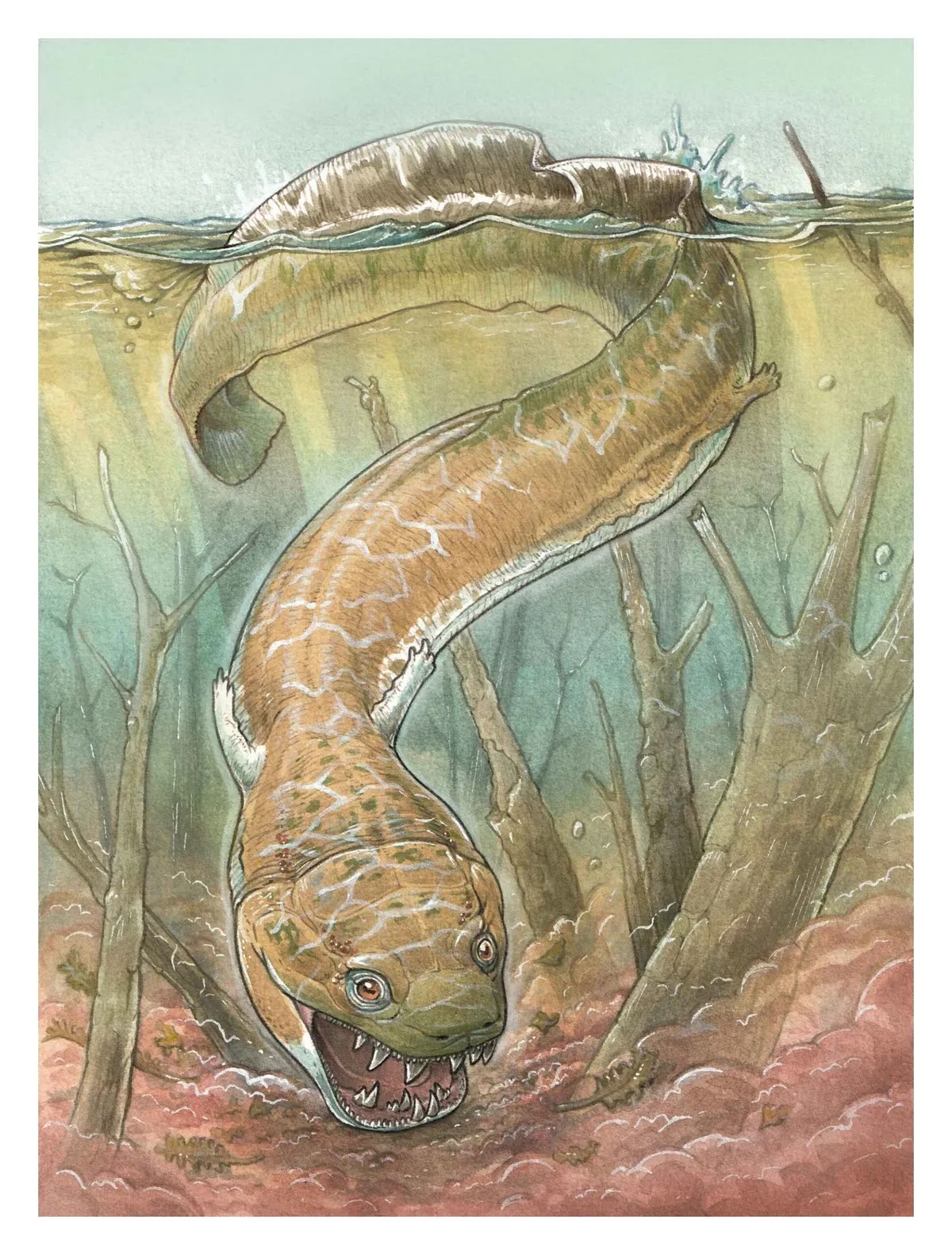
I’ve seen giant salamanders before, but not ones with big box-like skulls full of razor-sharp fangs.

Here’s another muscular tube, Vasuki indicus, only 47 million years old, but somewhere around 10-15 meters long.
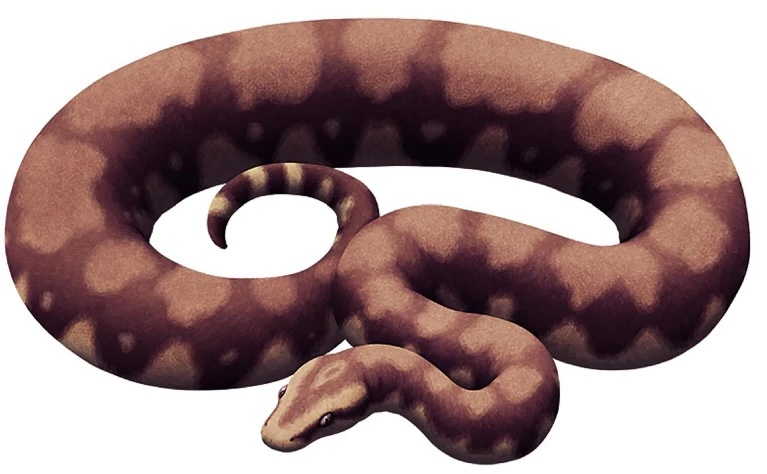
The amusing thing about this beast is that everyone in the popular press treatment is making it all about how long it is — it’s a partial skeleton, there’s not enough to determine exactly how long it is. It’s either shorter than Titanoboa, the gold standard of giant ancient snakes, or bigger than Titanoboa. It’s not a competition, people! They’re separated by about 10 million years. But of course they’re in competition for starring roles in cheesy sci-fi CGI epics.

That’s why we’re seeing ridiculous comparisons like this one:
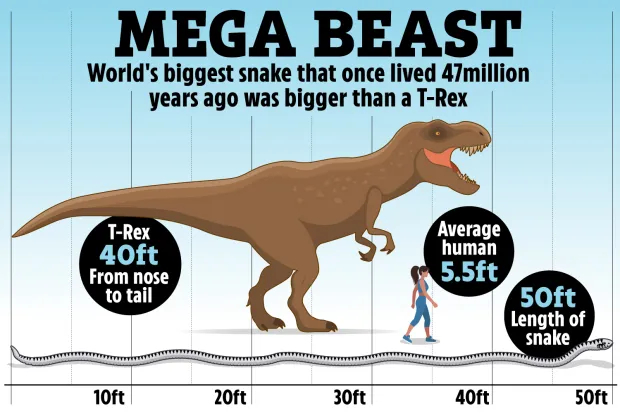
OK, the snake was longer than T. rex, but so what? It wasn’t as massive, and they were temporally distant from one another. This illustration reveals how some people are thinking:
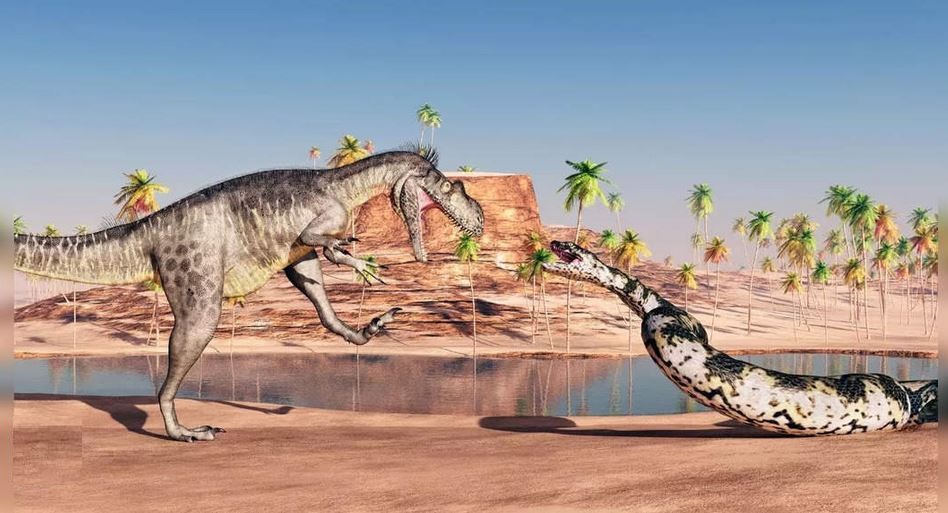
That could be an ad for the next movie by The Asylum. These kinds of team-ups are popular to promote cheese, like Godzilla vs. Mechagodzilla or Dracula vs. Frankenstein. Learn to love Vasuki for itself, OK?

A disappointing observation

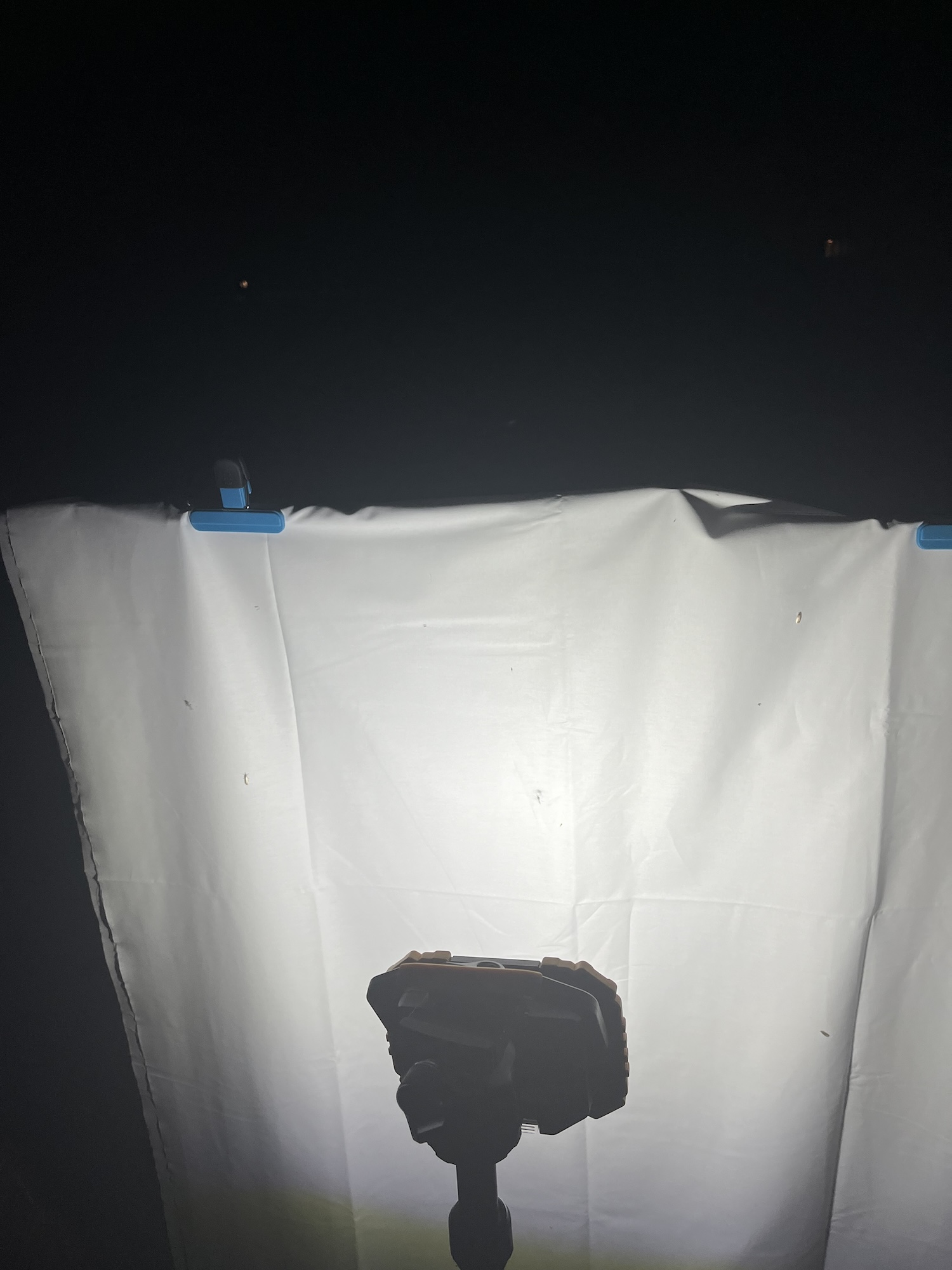
Tonight, I set up a white sheet in my yard, with a bright LED pointing at it, to see what insects would be attracted to it. It was pathetic.

After 45 minutes, 10pm to 10:45, all I found was a handful of moths, 20 or 30 tiny little flies, and about 10 mosquitoes. I’ll try again a different night with an additional UV light source, but this was mediocre. Nothing substantial enough to even feed an adult spider.

Poopology

I have read some terrible things about biology, and the worst is everything about excretion. I can’t even blame evolution — it’s all physics and thermodynamics and chemistry, in which the extraction of energy from the environment is always going to produce waste products. Even photosynthesis pumps out lots of destructive free radicals, and animals are the kings of inefficiency, making all this crap (literally) that they fling out into the environment for someone else to take care of.

I learned more than I wanted to from this article on How to Poop Correctly. It’s an art, and we’re all doing it wrong.

The stool takes time to move into the right position to come down through the anal canal, which is why you shouldn’t try to force a poop when you don’t feel the urge. Many people will try to push a poo out in the mornings before they leave for school or work.

It’s also common for people to use coffee and cigarettes, which increase the production of certain hormones and neurotransmitters that trigger bowel peristalsis (involuntary muscle movement), to encourage their body to move the poop down faster. This isn’t a great idea, as your body can become dependent on these substances to shit, and they diminish the normal movement of the bowel.

Frequently, when things aren’t moving as quickly as you’d like them to, it’s not that you’re constipated – it’s just that the stool hasn’t moved into the rectum yet. However, when you do feel the urge, you need to respond to your body’s message as soon as possible. Every time you hold it in, your stool inches a little way back up, and your rectum reabsorbs some of the water from the stool, drying it out and making it harder to push out when you finally allow yourself to go. Don’t hold it. For a lot of you, this will mean getting over your reluctance to use public restrooms. Coffee shops and high-end hotels often offer clean, safe refuge.

But that article doesn’t deal with the big problem. It only covers moving waste through your body and out to, for instance, a “high-end hotel”. Then it’s their problem. It’s not over yet, though. Here’s a study that looked at the geyser of fecal material produced by flushing.

Our study demonstrated that lid position (up or down) prior to flushing of household or public toilets of United States design seeded with MS2 bacteriophage had no significant effect on the MS2 cross contamination of household restroom surfaces. MS2 was recovered from all restroom surfaces tested, and lid closure had no impact on the results. The most effective strategies for reducing restroom cross-contamination associated with toilet flushing include the addition of a disinfectant to the toilet bowl before flushing and the use of disinfectant/detergent dispensers in the toilet tank. To reduce the risk associated with exposure to contaminated fomites in the restroom, regular disinfection of all restroom surfaces following toilet brushing, and/or use of a disinfectant that leaves residual microbicidal activity is suggested particularly when the household is occupied by an individual with an active infection with a virus, such as norovirus, causing acute gastroenteritis. Because many viral infections may be asymptomatic, this is even more important in health care facilities where immunocompromised individuals are often present.

Lid up, lid down, it doesn’t matter — you’re either going to get a plume of nastiness shooting upwards or out sideways. Coffee shops and high-end hotels are looking increasingly less attractive, because you’re just going to be wading through someone else’s fecal ejecta.

I shouldn’t read this stuff.

Also, I’m scheduling a colonoscopy for mid-August — the doctor wants me to come in the day before classes start for it. At least I’d be beginning the semester with a clean start.

Why you need guard spiders to protect your home

I just got my hands on Biology of Spiders by Rainer Foelix, and it’s very, very good…but beware, it’s an academic text, so the prices swing widely with the source and the edition, with some sources seeming to expect you’re sitting on a half million dollar grant so you’re not concerned with the cost. That’s not me, so I was happy to find a copy for $12 at Half-Price Books. Hooray for used book stores!

Anyway, I spent a pleasant morning starting to dig into this book. It’s technical and gets into a tremendous amount of detail on anatomy & physiology & behavior, and I was genuinely happy to see that it doesn’t get bogged down in the taxonomy wars. Only the last chapter is on Phylogeny and Systematics, and it’s short, and begins with a warning.

Now a book on biology is hardly the place to insert a chapter on classification.

W.S. Bristow, 1938

Despite Bristow’s warning, it seems necessary to cover the descent and classification of spiders briefly. I must admit, however, that our real knowledge of the phylogeny of spiders is very scanty, and hence to present any reliable pedigree is quite impossible.

Yes! My kind of biology text!

It saves the lengthy discussions for the good stuff, like this.

…only about 20-30 of the 34,000 species of spiders are dangerously poisonous to man (Schmidt, 1973; Maretic, 1975).

The prime example is certainly the black widow spider, Latrodectus mactans, from the family Theridiidae. The bite itself is not particularly painful and often is not even noticed (Maretic, 1983, 1987). The first real pain is felt after 10-60 minutes in the regions of the lymph nodes, from where it spreads to the muscles. Strong muscle cramps develop and the abdominal muscles become very rigid (this is an important diagnostic feature!).Another typical symptom is a contorted facial expression, called facies latrodectismi, which revers to a flushed, sweat-covered face, swollen eyelids, inflamed lips, and contracted masseter muscles. If the breathing muscles of the thorax become affected, this can eventually lead to death. Besides the strong muscle pain, black widow spider venom (BWSV) also elicits psychological symptoms, which range from anxiety feelings to actual fear of death. Apparently the toxin can pass the blood-brain barrier and directly attack the central nervous system.

Without any treatment the symptoms will last for about 5 days and a complete recovery may take weeks. About 50 years ago, lethality was 5% in the USA (Thorp and Woodson, 1945), but is now less than 1% (Zahl, 1971). The best treatment against a bite from a black widow is a combination of calcium gluconate and antivenin (e.g., Lyovac; McCrone and Netzloff, 1965) injected intraveously. Calcium causes the pain to subside quickly and the antidote binds to the toxin. The patient feels relieved within 10-20 minutes and will completely recover in a few hours.

The poison (BWVS) is a neurotoxin that affects the neuromuscular endplates, but also synapses in the CNS. The synaptic vesicles become completely depleted, causing a permanent blockage of the synapse (Clark et al., 1972; Griffiths and Smyth, 1973; Tzeng and Siekevitz, 1978; Wanke et al., 1986). One component of the poison (α-Latrotoxin) binds to a presynaptic receptor of cholinergic synapses (Meldolesi at al., 1986).

Neat-o! This is my kind of biology book, although you can tell from the dates of the references that it’s a bit old — there hasn’t been a death from a black widow bite since 1983, but I won’t mention that on any of the signage around my house.

I am disappointed in my university — do better

I met Catherine Verfaillie several years ago. She was very nice. I was visiting her lab with a couple of students, and she found the time to give us all a personal tour and to discuss her recent experiments. Unfortunately, she must not have had the time to carefully vet her published data.

Years after questions were raised about their integrity, two of the University of Minnesota’s highest-profile scientific discoveries have been retracted in one week — one that offered hope over the therapeutic potential of stem cells and another that offered a promising path toward treating Alzheimer’s disease.

The studies are more than a decade old and superseded by other discoveries in their fields. But the retractions of the Alzheimer’s paper on Monday and the stem cell paper on June 17 are setbacks for an institution that is fighting to move up the U.S. rankings in academic reputation and federal research dollars.

Both studies were published in the prestigious journal Nature and collectively have been cited nearly 7,000 times. Researchers worldwide were using these papers to support their work years after they had been disputed.

I was familiar with the stem cell work and had even discussed it in my classes, years ago. I haven’t brought them up in a while, and I guess I won’t ever again.

Dr. Catherine Verfaillie and colleagues in 2002 reported that they coaxed mesenchymal stem cells from adult bone marrow into growing numerous other cell types and tissues in the body. Only stem cells from early-stage human embryos had shown such regenerative potential at that time, and they were controversial because they were derived from aborted fetuses or leftover embryos from infertility treatments. President George W. Bush had banned federal funding for embryonic research, fueling a search for alternative stem cell sources.

Dr. Karen Ashe and colleagues similarly gained global attention in 2006 when they found a molecular target that appeared influential in the onset of Alzheimer’s disease, which remains incurable and a leading source of dementia and death in America’s aging population. Mice mimicking that molecule, amyloid beta star 56, showed worse memory loss based on their ability to navigate a maze. Ashe theorized that a drug targeting that molecule could help people overcome or slow Alzheimer’s debilitating effects.

As often seems to be the case, these bad papers were a consequence of manipulating data and images.

Verfaillie and colleagues corrected the Nature paper in 2007, which contained an image of cellular activity in mice that appeared identical to an image in a different paper that supposedly came from different mice. The U then launched an investigation over complaints of image duplications or manipulations in more of Verfaillie’s papers.

It eventually cleared her of misconduct, but blamed her for inadequate training and oversight and claimed that a junior researcher had falsified data in a similar study published in the journal Blood. That article was retracted in 2009.

Concerns resurfaced in 2019 over the Nature stem cell paper when Elisabeth Bik, a microbiologist-turned-research detective, found more examples of image duplication.

Jesus. How does this happen in a non-pathological lab situation? When I was publishing papers, every figure and table went through multiple review sessions — we presented the work in lab meetings, and in meetings of scientific societies, and we had to discuss the provenance of every image. If we lacked some critical image, we wouldn’t be told to go through the old files and find something that looks like what we wanted to see, we had to go back in the lab and repeat the experiment and get good quality images. I once spent a year doing practically nothing but repeating transmission EM preps trying to find a particular synapse, and couldn’t…so we ended up dropping the claim, and if anybody asked about it, I’d just say it must be a rare contact and that we couldn’t verify it.

Republishing images, unless it was for a review paper and was properly credited, was unthinkable. As for the Alzheimer paper…

Bik also turned out to be a key critic of Ashe’s Alzheimer’s discoveries, raising concerns about images in her Nature paper and several related studies. Much of the blame so far has fallen on co-author Sylvain Lesne, a U neuroscientist who was responsible for the published images. Lesne did not reply to a request for comment, but authorized the university to disclose that it completed its internal investigation into the Nature paper without finding any evidence of misconduct. Reviews of other publications from Lesne’s lab are ongoing.

That just tells me that the University of Minnesota’s internal investigation was more of a whitewash. Faked or duplicated images ought to be a tremendous great red flag, complete with klaxons and arc lights, and there is no excuse for being that lazy/sloppy/incompetent, especially when the article is going into a prestigious journal that will get you a lot of attention.

Watch out for the abuse of language

Whoa, this video invokes a lot of familiar tropes that I see in cults and other religions, and things like Amazon and Qanon.

Watch it to learn the dangerous tactics conspiracy theorists and religions use to recruit members. These include long-windedness, loaded language (us vs them dichotomies), thought-terminating cliches (that’s why I hate “agree to disagree”) and lots and lots of jargon. I’ve noticed that creationists are masters of the latter — so much of what they do is invoke words and phrases like “irreducible complexity” and “no transitional fossils” and it’s empty, meaningless noise, but it triggers automatic affirmations from the devotees.

Red and Blue

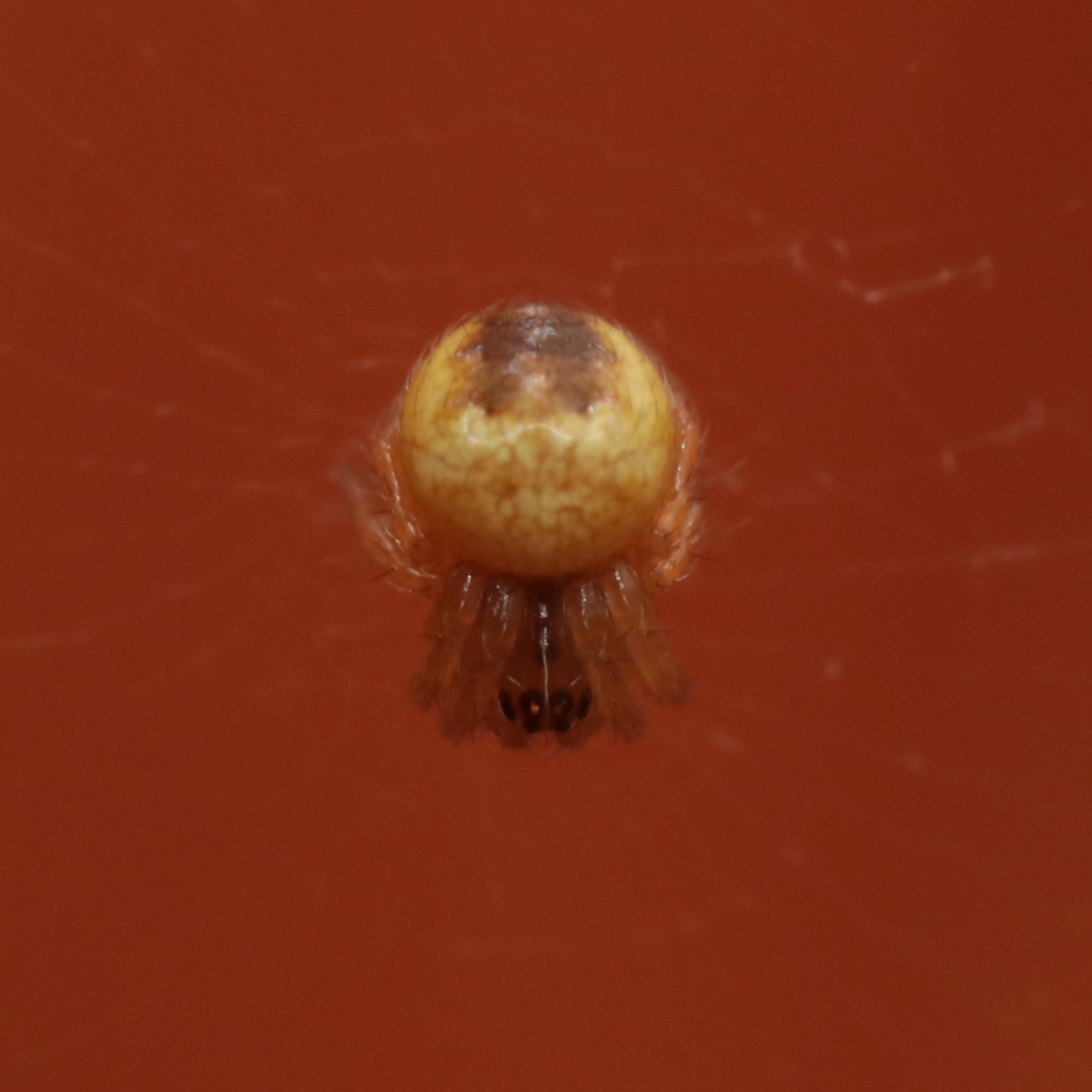
My yard is full of these tiny baby orbweavers, and I struggled to get photos of them — here I’m using my Canon 100mm f/2.8 macro lens with a Raynox DCR-250, and I’m doing this handheld. I should break down and snatch them up into a petri dish and put them on the microscope in my lab, but I’m trying not to disturb them too much.

Four of them have moved into our blue recycling container, one to each corner, and others are building webs in various corners of our orange house, so at least I get different backgrounds.

They like me! They really like me!

I hit a wall yesterday. It was just one of my bad days, when I felt kind of useless, and worried about what was coming in the fall — I’ve got one week of instruction planned, out of 15 weeks in the semester, and I’m coming out of a semester in which I’d gotten all experimental and weird and tried some things that maybe the administration would not approve of, because I was tired of trying to wedge students into boxes all the time. I just wanted them to learn how to think and have a good conversation about a subject for a change, and not be fretting over points and grades!

So that’s been weighing on my mind, in addition to the usual stuff, like backaches and being tired and it’s been raining pretty much nonstop for the past week.

And then the student evaluations appeared in my mailbox. I put off opening that message, like I usually do, because I was dreading what they would say, like always. I bit the bullet this morning and opened it up, since I didn’t think anything would make me feel worse this week, anyway. Yikes…they liked the course!

I skipped over the numerical scores, because they were always useless (despite being the only thing the university will use to evaluate my work) and went straight to the comments section. Here, they’re answering the question, “What did the instructor do that most helped your learning?”

PZ structured the class such that we had a predictable workload each week, with a variety of class activities, which was useful. Lecture days on Mondays were nice and relatively easy at the start of the week, and small group discussions on Wednesdays and Fridays were always fun. The final presentation for the class was also valuable, as it gave us the opportunity to explore a topic from the class that we found particularly interesting in depth and share our discoveries with our classmates.

Had lecture on Monday’s and allowed students to help each other.

I appreciated that we did a lot of article discussions as well as chapter discussions. It was good to think over those chapters without being lectured at

Wittyness and Sarcasm were plentiful, 10/10 course

Discussion based on what we were learning

I liked the discussion questions because they went with the lectures really well

Yes! They saw what I was trying to do!

The next question was “What suggestions do you have for improving the course?”

Clearer expectations for final presentations or updates on participation grades throughout the semester would be appreciated, although PZ did assure us periodically that we were all doing well and that he had no concerns about our performance in class.

Maybe have slightly more background when discussing topics that students don’t tend to be strong in.

I wish some of the grading standards were more clear, and that there was a proper rubric for the presentations. I honestly have no clue if my presentation was even good or not because I didn’t have any guidelines to work with other than “15–20 minutes long and can be about whatever that’s relevant and also it can be whatever medium you like”

Get these college kids to talk more, they all look so nervous to have a hot take on microplastics.

It would be good if grades were updated more frequently

I like this course

Criticisms accepted. Next time I’ll try to outline my expectations more, and incorporate a few more metrics throughout the course. I may have gone too far in trying to avoid grade-chasing and point-tallying. I did appreciate the comment to “Get these college kids to talk more, they all look so nervous to have a hot take on microplastics,” because that’s exactly what I wanted, a class full of people eager to talk about eco-devo.

All right, I feel a little better today.