A small step to a happier planet

We need to get rid of outmoded regulations on lawns. There’s a growing movement to restore native plants to our yards, and they have many virtues.

Homeowners with native gardens from Florida and Maryland to Missouri and Kentucky have gotten slapped with fines or even have their yards mowed without permission. The reason – taller native plants can get mistaken for weeds. Many cities don’t allow weeds to grow above a certain height, and they don’t have the time or staff to find out what’s what. But native plants have a lot of benefits for the planet. For one, they keep the land cooler. Indiana University biology professor Heather Reynolds says they use heat from their environment to pull water up from the soil and out their leaves.

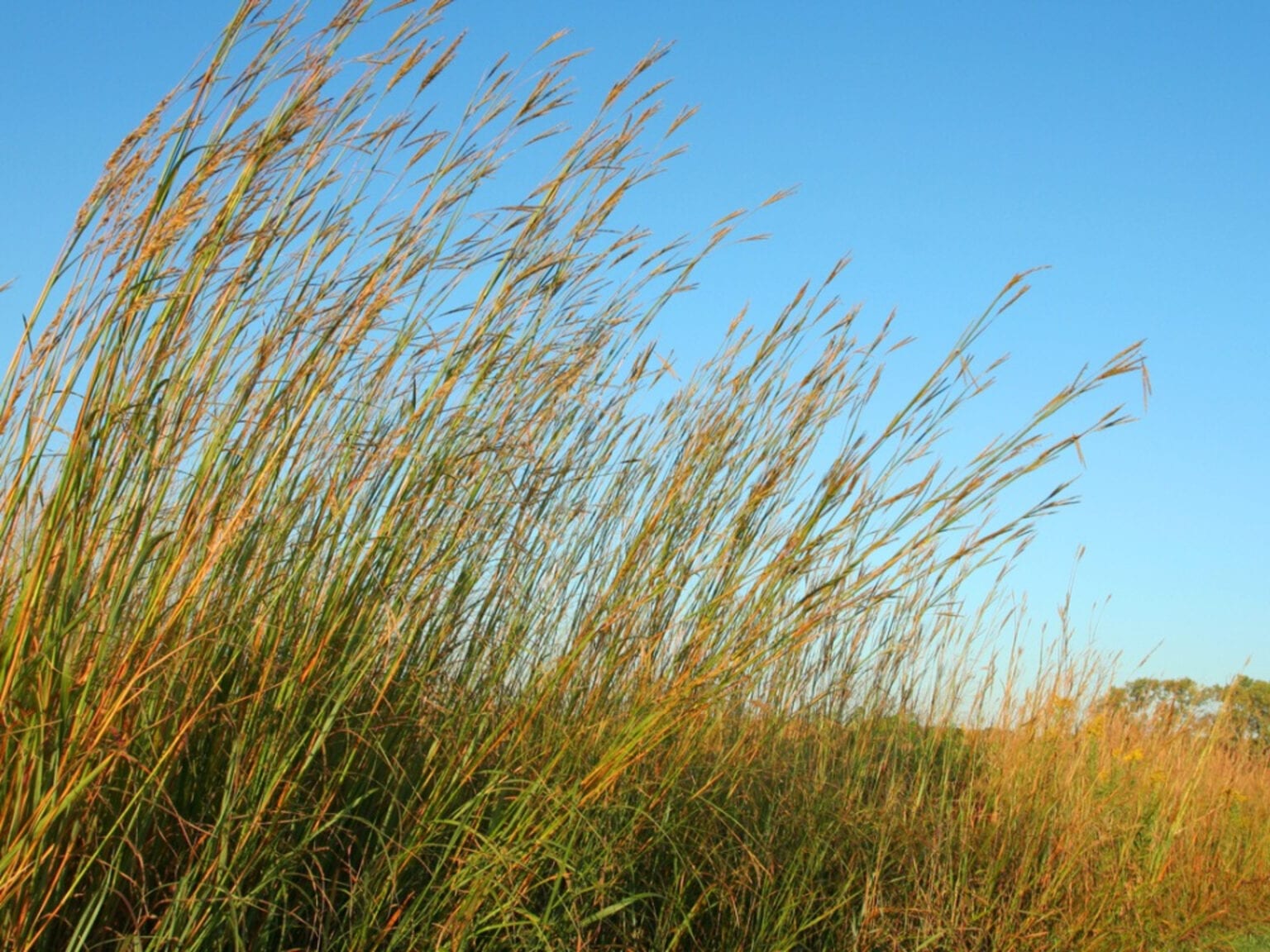
That got me wondering…how do we define weeds? Is big bluestem ( Andropogon gerardi) a “weed”? That stuff grows to be 8 feet tall with roots diving down 10 feet — it was the native grass that grew all over the region I’m living in, which has since been mostly replaced by corn, which also grows to be 8 feet tall, but has much more shallow roots. Is corn a weed? I live in one of those cities that defines “weeds” by their height. The city of Morris has defined 8 inches as the acceptable height for plants in our yards.

SEC. 10.21. MAINTENANCE OF PRIVATE PROPERTY.
Subd. 1. It is the primary responsibility of any owner or occupant of any lot or
parcel of land to maintain any weeds or grass growing thereon at a height of not more than eight
(8”) inches (except for native grasses and wildflowers indigenous to Minnesota, planted and
maintained on any occupied lot or parcel of land, set back a minimum of ten (10’) feet from the
front property line as part of a garden or landscape treatment, which are exempt from being no
more than 8”); to remove all public health or safety hazards therefrom; to install or repair water
service lines upon any property which is improved with commercial or habitable structures; and
to treat or remove insect-infested or diseased trees thereon. It shall also be unlawful for any such
person or persons to cause, suffer or allow noxious weeds or plants identified and defined by the
Minnesota Department of Agriculture to grow on any such lot or parcel of land so as to endanger
the health, safety and welfare of the City.

I’m pleased with the exemption for native plants, as long as they’re not too close to the front of the property, but I’d like to see a different standard. Let’s call Kentucky bluegrass a weed. Let’s condemn any lawn that is too uniform, that doesn’t support species diversity, that is lacking in flowers to support pollinators.

Who needs a privacy fence when your lawn is made up of grasses and forbs climbing up above window height? Think of all the interesting insects and spiders you’ll get, too, and the birds that will thrive in that environment. It might be a problem when the bison come back and start migrating through your yard, but I think that would be amazing. (Sorry, can’t come in to work today, I’ve got a small herd of a few thousand bison blocking my driveway.)

Beauty and pain

Tomorrow, we go on a field trip to the UMM EcoStation.

Today, I suffer with an Achilles tendon flare-up — I have nasty bone spurs on my heels that sometimes stab my tendon, triggering inflammation, and I’m reduced to hobbling about. I’m still going! I may end up just sitting under a tree and looking at ground spiders, while the students range about. It’ll still be good.

Right now, it’s ibuprofen and ice.

Violent weather

We had a tough time getting sleep last night — a severe thunderstorm slammed into us. Literally slammed us, since the doors to our house, which we had open to encourage air circulation, suddenly all banged shut and then banged open and closed again as we got a little more circulation than we wanted. We were running around the house sealing everything up while the wind howled at us. I had a window open in my office, and I got soaked just walking into close it. Then, for the next several hours, there was a freight train roaring overhead, with constant flashes of lightning. It was not exactly conducive to rest.

The cat disappeared, too. She does not respond well to thunderstorms.

Anyway, our garden was well-watered!

These kinds of fierce storms have been getting more common in recent years. Will people wake up to the reality of climate change someday?

Meanwhile, down south where Republicans rule, the ocean off the Florida coast hit 38°C (101°F if you persist in that clumsy temperature scheme) this week. Imagine a whole seacoast at greater than body temperature! You wouldn’t go to the beach to cool off, you’d go to witness the fish kills washing up on the shore.

Also meanwhile, Sicily is on fire. Temperatures hit 47°C. Much of the island is without power because powerlines have burned down, and underground cables under the roadways have melted.

We’re relatively lucky up here in the north, except for the fact that Canada is occasionally reduced to airborne particulates. People have to figure this out sometime. Right? They will, won’t they?

Good news from the heartland

Morris, Minnesota has won a prize!

The Morris Model team was recently notified that they were among 67 winners in the first phase of the $6.7 million Energizing Rural Communities Prize. The competition was funded by the U.S. Department of Energy and is focused on supporting innovative partnership and finance plans to help rural or remote communities develop clean energy demonstration projects.

The Morris Model will receive a $100,000 prize, in-kind-mentorship services, and eligibility to compete for another $200,000.

This prize, managed by DOE Office of Clean Energy Demonstrations (OCED), challenges individuals and organizations to develop partnership and financing strategies that support community-driven energy improvement projects in rural or remote communities.  The Morris Model Partnership seeks to make Morris a model rural sustainable community through clean energy and community resilience.

The DOE has a nice logo to go with it.

Yep, that looks like us. Except you’d have to erase the mountains and hills, and paste in a lot more cornfields.

Barbenheimer will be an improvement over the latest hot conspiracy theory fraud

My wife actually asked me if we could see the Barbie movie, which is opening at our local theater this weekend. Of course we can! I was looking forward to it already. It looks to be trippy and fun.

As the media have frequently mentioned lately, because they do love a contrast, the Oppenheimer movie also opens this weekend (but not at our theater.) Cool, I’d like to see that one, too, even more than Barbie. They’re different movies, there isn’t any real conflict between them. Here’s an article that says ‘Barbie’ and ‘Oppenheimer’ tell the same terrifying story.

The underlying premise of all the jokes — that these films come out on the same day but are about hilariously different subjects and have wildly different tones — is misguided. The two movies actually have a fundamental, and disturbing, common ground. J. Robert Oppenheimer, the man behind our nuclear age, and Barbie — a toy that takes over three cups of oil to produce before it lingers in landfills around the world — both tell the story of the dawn of our imperiled era.

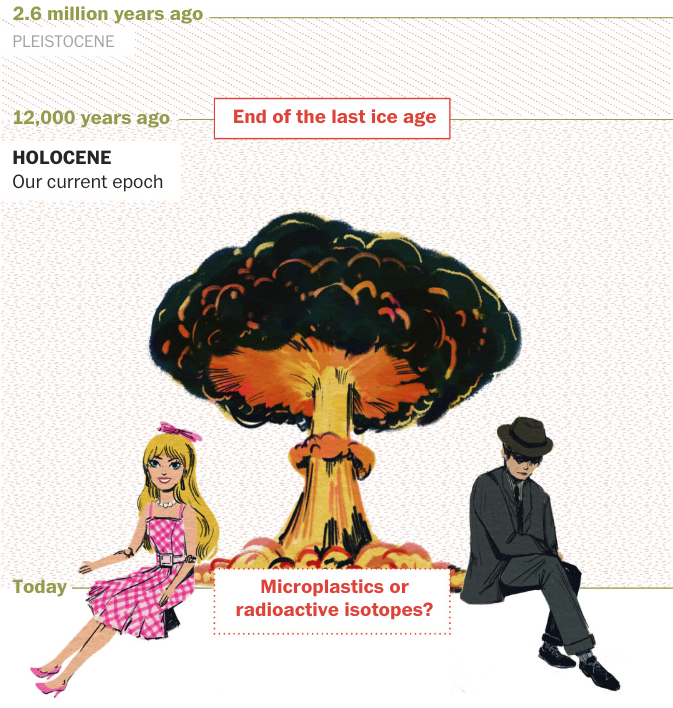
“Barbie” and “Oppenheimer” each offer a window into the creation of the Anthropocene, the suggested term for our present geological epoch, in which human beings have become the most significant influence on the natural environment at a planetary scale.

That’s an interesting connection: how do we define the anthropocene, by all the piles of plastic or the global dusting of radioactive isotopes?

Either works for me, they all coexist in a narrow slice of time, only a century long. On a geological scale, either one provides a sharp boundary.

Like I said, I’d like to see both movies. Unfortunately, Oppenheimer isn’t booked locally in the near future. Instead, we’re getting served Sound of Freedom after Barbie, a conspiracy-theory fueled abomination of a movie (see Rebecca Watson for why it’s bad). I predict it’ll clean up at the box office in our little corner of Red America.

Yes, please: death to the lawn!

If only everyone would pay attention to this video.

Lawns are deserts for living things. Rip ’em up and replace them with diverse species, even the “weedy” ones. We’re trying to evolve our yard away from the boring monoculture, but doing so gradually; Mary has been actively planting a lot of things that are not turf grass, like milkweed.

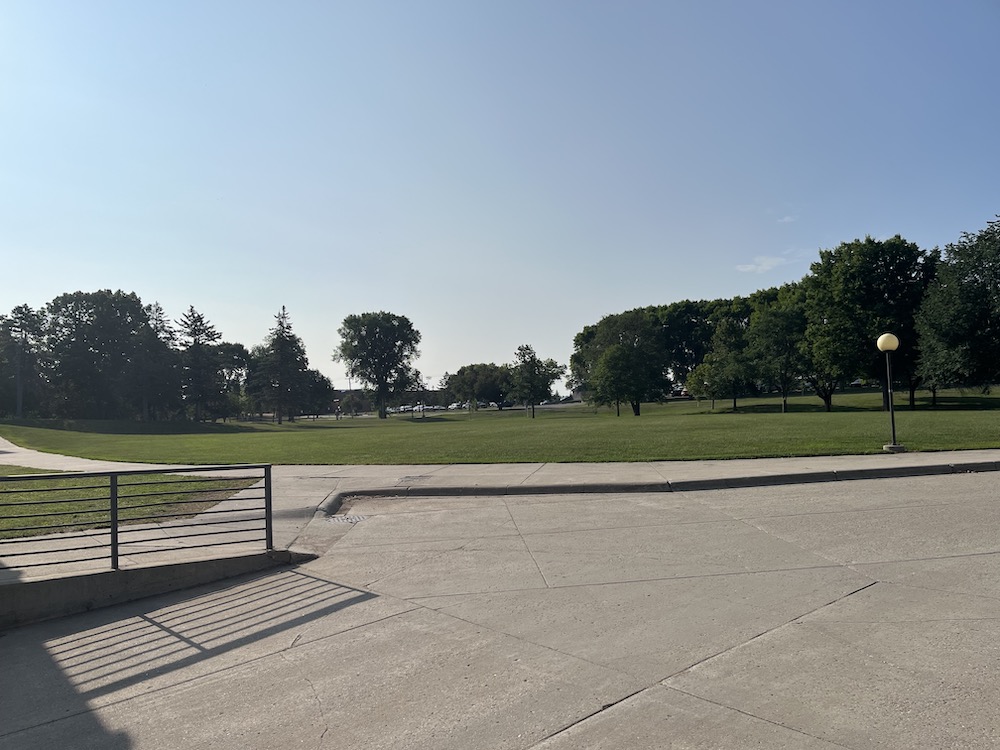
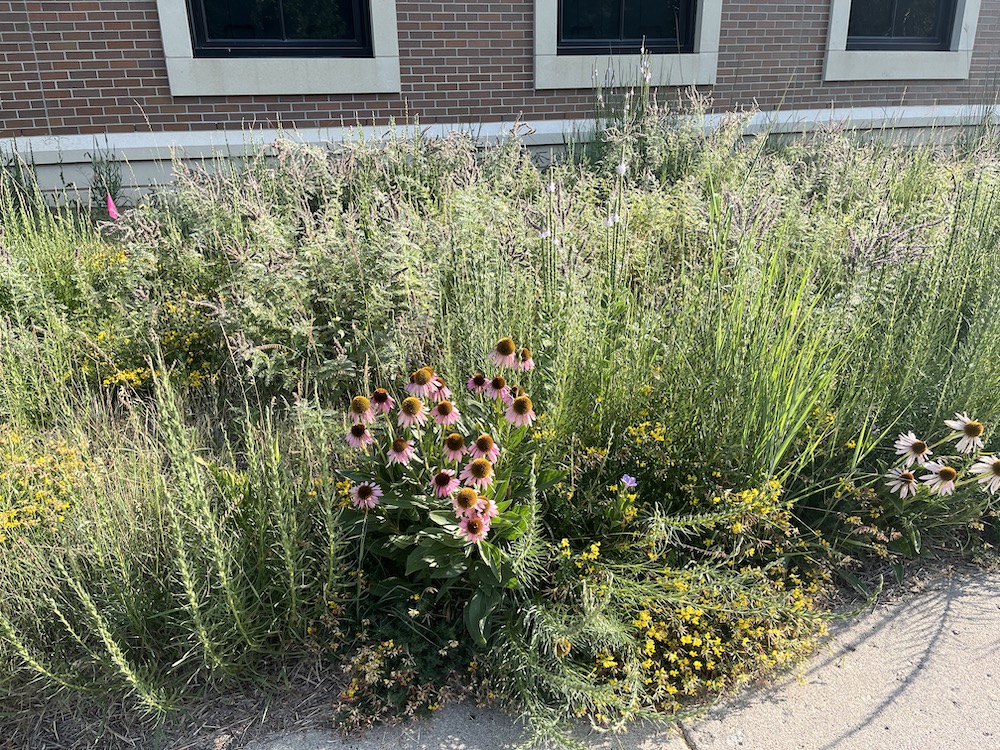
Also, I work at a so-called ‘green’ university, which is green in some ways and terribly destructively traditional in other ways. We’ve got vast empty grassy lawns, which I suppose are great for scenic views of students playing frisbee, but not much else. I recently found out that those nice fields of grass are regularly sprayed with Q4, and a few years ago I discovered that we were hosing the shrubbery with an insecticide, specifically to kill the grass spiders that would accidentally end up in the buildings. Could we not? Could we maybe let wild nature take over? We’ve got some areas planted with native prairie grasses and forbs, and they are freakin’ gorgeous — the campus would be so much more attractive if the whole place were covered in exuberant foliage, rather than the stubby boring green stuff.

The spiders would be much happier, too.

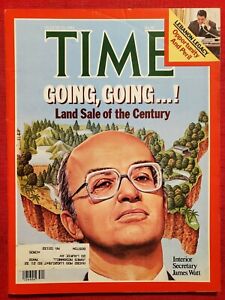
James Watt has been extremely deregulated

Most of you probably don’t remember James Watt. No, not that James Watt, famous 18th century Scottish engineer — you all know about him. I’m talking about James Watt, interior secretary under Reagan in the 1980s, notorious poltroon and anti-environmentalist. Those of us who lived through that era despised him.

Well, he’s dead now, so you don’t need to bother to look him up.

Longtermists are an existential risk

We all have lots to worry about already, with pandemics and climate change and political crises and growing irrationality, but one I’m increasingly alarmed by is the popularity of these pseudo-intellectual frauds parading about as “longtermists” or “effective altruists” who believe we should be worshipping potential future generations rather than dealing with real people in the here and now. It leads to distorted priorities. It doesn’t help that their thought-leaders are cocky ignoramuses. Émile P. Torres writes about William MacAskill’s opinion of the importance of climate change.

One finds the same insouciant attitude about climate change in MacAskill’s recent book. For example, he notes that there is a lot of uncertainty about the impacts of extreme warming of 7 to 10 degrees Celsius but says “it’s hard to see how even this could lead directly to civilisational collapse.” MacAskill argues that although “climatic instability is generally bad for agriculture,” his “best guess” is that “even with fifteen degrees of warming, the heat would not pass lethal limits for crops in most regions,” and global agriculture would survive.

I am not a climate scientist, but I know a number of them, and follow the work, and that statement is jaw-droppingly idiotic. Even with the amount of warming we’ve got now, we’ve had heat waves that kill large numbers of people, and this past year has seen a series of extreme weather disasters.

Record-breaking heat waves baked India and Pakistan, then monsoon flooding left about a third of Pakistan under water, affecting an estimated 33 million people. Temperatures exceeded 104 degrees Fahrenheit (40 Celsius) for prolonged periods in many places, and even broke 122 F (50 C) in Jacobabad, Pakistan, in May.

The Asian heat helped to melt some glaciers in the Himalayas, elevating rivers. At the same time, three times the normal annual rain fell in Pakistan during the weekslong monsoon. More than 1,500 people died in the flooding, an estimated 1.8 million homes were damaged or destroyed, and hundreds of thousands of livestock were lost. Food for the coming seasons will be in short supply.

Extreme heat in Europe led to wildfires, especially in Spain and Portugal. The drought in Spain dried up a reservoir, revealing the long-submerged “Spanish Stonehenge,” an ancient circle of megalithic stones believed to date back to around 5000 B.C. Electricity generation in France plummeted, with low rivers reducing the ability to cool nuclear power towers, and German barges had difficulty finding enough water to navigate the Rhine River.

That’s just this year! And the trend is ever upwards! Keep in mind that when climate experts tell you they’re concerned about a 3 degree rise, they’re looking at the mean temperature…and the extremes will be far worse. It’s the extremes that kill people and devastate regions, not the mean.

Yet here’s MacAskill blithely claiming that a FIFTEEN FUCKING DEGREE rise would be acceptable. Agriculture would survive, he thinks, so we’d be OK. Never mind the floods & fires & storms & mass upheaval & total disruption & civilization collapse. William MacAskill thinks he’ll still get his corn flakes every morning.

But don’t listen to me. Torres contacted real climatologists about that claim.

For example, I shared the section about global agriculture with Timothy Lenton, who directs the Global Systems Institute and is Chair in Climate Change and Earth System Science at the University of Exeter. Lenton told me that MacAskill’s assertion about 15 degrees of warming is “complete nonsense—we already show that in a 3-degree-warmer world there are major challenges of moving niches for human habitability and agriculture.”

Similarly, Luke Kemp, a research associate at the University of Cambridge’s Centre for the Study of Existential Risk who recently co-authored an article with Lenton on catastrophic climate change and is an expert on civilizational collapse, told me that “a temperature rise of 10 degrees would be a mass extinction event in the long term. It would be geologically unprecedented in speed. It would mean billions of people facing sustained lethal heat conditions, the likely displacement of billions, the Antarctic becoming virtually ice-free, surges in disease, and a plethora of cascading impacts. Confidently asserting that this would not result in collapse because agriculture is still possible in some parts of the world is silly and simplistic.”

If we’re really worried about existential risk and the possible extinction of the human species, I say we need to tar and feather these longtermist fantasists and launch them on a rail to the moon. It looks like delusional crackpots are going to kill us all.

Fifteen degrees. My god, that’s insane.