
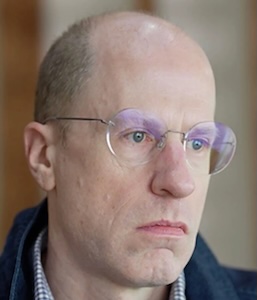
I’ve always thought of Nick Bostrom as a font of bad ideas, but that’s not his self-estimation. He considers himself a genius!
Bostrom considers himself to be a towering intellect of cosmic-historical importance. He is not shy when boasting about his supposed accomplishments, even quoting on his website an article that describes him as the “Swedish superbrain.” For many years, he bragged that — to quote his profile on Edge.org — “his performance as an undergraduate set a national record in Sweden,” though he backed away from this after Simon Knutsson pointed out that there is no evidence to support such a claim. (See the “Potentially Dishonest Self-Promotion” section of this article.)
The kinds of ideas he claims to have come up with are, for instance, the belief that AI represents an existential risk comparable to a nuclear holocaust which must nevertheless be pursued zealously, making him a hero to the capitalists building massive data centers right now. He also promotes the belief that potential people could be so numerous that it’s more valuable to create conditions that enable space flight and virtual people in computers than to actually help the poor and develop an egalitarian politics, again endearing him to the hyper-rich.
In brief, the paper argues that if we colonize space — especially as digital posthumans — the future population could be enormous. Bostrom estimates some 10^38 digital people within the Virgo Supercluster, a cluster of galaxy clusters that includes our own Milky Way. (That’s a 10 followed by 38 zeros, by the way.)
If one accepts a utilitarian perspective, this means the expected value of ensuring the realization of all those future people (assuming they have net-positive lives) far exceeds the value of, e.g., helping poor people today. If you’re a truly altruistic person who aims to maximize your philanthropic impact, then you should focus not on present-day people but those living perhaps millions or billions of years from now. It’s not that future digital people are inherently more valuable. It’s just a numbers-game: there are so many more of them (potentially) than present-day people, they overwhelm the simplistic equations of utilitarianism’s moral mathematics.
Bostrom’s conclusion is that we should colonize the universe as soon as possible, because every single century, decade, and even second of delaying this results in an “astronomical” loss of potential value — i.e., the non-existence of people who could have otherwise been created in some distant galaxy if only we had started colonizing just a bit sooner. However, Bostrom also concludes that “priority number one, two, three and four should … be to reduce existential risk.” Space colonization should therefore be priority number five once we secure our survival. Perhaps you can see why Musk loves this paper.
It’s an incredibly stupid idea — it also has ties to eugenics and natalism and other flawed beliefs — and I have weird feelings about this article. It’s mainly functioning to excuse Bostrom from fault. Bostrom didn’t come up with all these bad ideas! No, he just stole all of them. He doesn’t have original ideas!
Yet, because I’m so conversant with the foundational literature of the TESCREAL movement, I’ve noticed that a large number of the “original,” “novel,” even (supposedly) “groundbreaking” ideas attributed to Bostrom actually originated with other thinkers. As early as 2018, I was posting about this on social media and privately sharing examples with colleagues — some of whom were rather shocked to see Bostrom’s work juxtaposed with that of others (from whom he borrowed without sufficient attribution). I wrote to one colleague that Bostrom’s “genius” seems to be taking ideas from other theorists and repackaging them in his own language such that they’re just different enough for him to avoid being accused of intellectual plagiarism. His oeuvre reminds me of the line, often misattributed to Picasso: “Good artists copy; great artists steal.”
It’s a long and thorough article, and traces Bostrom’s soft plagiarism back to multiple sources, but one of them is notorious crackpot and self-promoter Eliezer Yudkowsky.
Shouldn’t that be instantly disqualifying?

Sure but, because tech billionaires are aligned with future people, among present-day people they are much, much more important than the rest of us. Facts are facts! Additionally, since it is a well known fact that that tech billionaires are going to live forever, a good argument can be made that tech billionaires should really be counted as future people and therefore inherently more valuable.
Half of these things are the sort of things that thousands of designated stoner friends have come up with while chilling, in a dazed & confused state so it’s hardly surprising. Like,… D00D, what if we’re living,… like in a simulation,… like a giant computer game…. That’d be so far out, D00D!
The numbers argument that there is only one in a trillion chance that there will be 10^38 people in the universe is very similar to the argument that there may be only one in a trillion chance that God exists but we will exist in eternity if he does.
And the economist destroys the numbers game with two words. “Future discount”. The numbers game of made up numbers can be defeated by a different made up number.
Yeah, this is just wrong, crackpottery, lunatic fringe stuff.
IIRC, this is the so called “effective altruism”, which is neither effective nor altruism.
Those future people are imaginary. They don’t exist.
The people living today are real and do exist.
You could easily reverse their argument.
If we don’t take care of the earth today and the people living right now, there isn’t going to be future for any humans.
@4, remyporter,
My thought exactly; the net present value of all these possible future people is zero.
For people who claim to be geniuses, they seem to have no conception of economics (or even basic math).
This reminds me of something I read recently:
“One who boasts of his own ability has no merit.” – Lao Tzu
Well then, if all these tech billionaire arseholes believe they are in the process of making huge progress for the future, and we should focus entirely on the future rather than the present, perhaps they would like to pay right now the quadrillions of pounds in tax their inevitable vast big-brain endeavours will accrue?
“Like,… D00D, what if we’re living,… like in a simulation,… like a giant computer game….”
.
The idea of sapient beings existing in a purely digital environment was to my knowledge first presented in a short story by Stanislaw Lem in the 1960s. German readers will be familiar with it from the anthology Nacht und Schimmel. I do not know the title od the Polish anthology that first published it.
Stanislaw Lem and Arthur C. Clarke between them came up with a lot of the ideas that today are staples of SF.
Nick Bostrom reminds me of another fake scholar, Steven Pinker.
They both repackage obvious ideas and then pretend they actually have something important to say.
There are a lot of them out there and PZ has mentioned a few other names.
I generally avoid them because crackpots are a waste of time when we have real people and real problems to deal at this time (the present 2026) and in the place where we all live (reality).
One of Steven Pinker’s big ideas is that things are steadily getting better.
It isn’t exactly wrong.
If you draw a line with two points, from the stone age to the present, then yeah, things have gotten better over time.
But this is trivial and obviously true.
.1. It neglects the fact that the progress of humankind is the result of hard work and hard thinking by millions of people over millennia. It didn’t just happen, humans created the modern world and a lot of them were killed in various gruesome ways to bring it about.
.2. That line with two points is also misleading.
There have been a huge number of zigzags over the millennia and a lot of times when things were actually getting worse. We are in one of those times right now in the USA.
It is quite likely that you could spend your life in one of those zigszags, where everything is steadily getting worse. It’s happening now in places like Syria, Iran, Gaza, Russia, North Korea, parts of Africa, and of course, the USA.
The Idea of human enhancement (which he is advocating elsewhere) is, however, a valid concept, especially as we identify the gene variants associated with various diseases, and also identify -from the genomes of other vertebrates – genes that help cell repair, delay ageing and fight cancer. I would not mind a healthy life lasting the span of bowhead whales.
.
Identifying the genes programming human nature would be an enormous task, but it would help if we got less prone to hostility. Our ancestors have already modified their nature for millions of years and we are certainly less violent than chimpanzees but there is more to be done…
.
Finally, if humans are ever to be cryogenically preserved – for instance, during long space journeys- this will require a lot of changes at the cellular level, otherwise what is thawed out will be dead mush.
I’m sure Chief Justice Roberts would be happy to join with this Bostrum guy in declaring all those
imaginary“potential lives” to be fully real and deserving of full Constitutional rights.…the paper argues that if we colonize space — especially as digital posthumans — the future population could be enormous…
Except that “we” the humans reading or writing that article are not, and never will be, the “we” who might colonize space “as digital posthumans.”
Stanislaw Lem and Arthur C. Clarke between them came up with a lot of the ideas that today are staples of SF.
Also Ferrett Steinmetz dealt with all this “digital post human” shit far more honestly in “The Uploaded.” Also check out the anime miniseries “Pantheon” on Netflix, which is based on short stories by Ken Liu. If any of this “digital posthuman” stuff ever becomes more than ridiculous vaporware, it won’t be anywhere near as wunnerful as these stupid broligarchs (pretend to) think it will be.
The thing is that the kid living now that you’re ignoring in favour of zillions of future digital people in another galaxy millennia from now might just be the kid who helps makes that possible. Help her get a university education and she might be the inventor of the electro-magnotomic fitzis that ends up being a core part of interstellar travel. Or at the very least she won’t be one of the main figures in the revolution that forces people like Bostrom to work in the radium mines of Io.
Musk takes ‘crusade’ to Europe with Armie Hammer film
This assumption is doing a lot of heavy lifting… After all, if virtualisation / mind uploading is possible, then it’s probably possible to do it non-consensually, in which case the majority of those “10^38 digital people” might end up enduring a fate worse than death.
Anyway, we can trivially dispose of the idea that Nick Bostrom actually believes that we have a duty to maximise utility by maximising the number of people in existence by observing that he only has one child. What about the loss of all of those other children you could have had, Nick? Don’t they count for anything?
One of my favourite YouTubers recently posted a a somewhat relevant video essay: Those Transhuman Bastards”. (Re-titled for YT as “The world’s worst people have their own special ideology” because YT doesn’t like the work “Bastards”…)
This “never mind the people suffering now, think of all the countless future people who will totally exist if we let billionaires build rockets and data centres instead of paying taxes!” reminds me of something in a recent post by Cory Doctorow:
There’s a kind of Billionaires’ Syllogism at work here. That is, if the material conditions you enjoy are based upon the assumption that other people are not real; furthermore, that future people are doubly not real (by virtue of not existing yet); therefore, it pays to concentrate on the future people in order to maintain those conditions.
@6: I don’t agree that future people count for nothing, insofar as I think that we’re obliged to leave a livable world for our descendants. Where I differ with Bostrom &co is I don’t agree that we’re obliged to bring some arbitrarily large number of people into existence in the first place, just for the sake of maximizing some ill-defined “value”. People that exist ought to be happy; but there is no obligation to bring anyone into existence just in order that they can be happy.
Despite being generally consequentialist, I violently disagree with the simplistic utilitarianism that adds up everyone’s individual utilities to yield some aggregate number which we’re supposed to worship and serve. As Christine Korsgaard (a Kantian) puts it, well-being and ill-being must “tethered” to the individuals experiencing it; summing it up yields a meaningless abstraction. Thus, a society consisting of a quintillion happy beings is not a better state of affairs (on account of the mere number) than one consisting of only a billion. So: fuck utility-maximizing futurists.
Musk is said to be a fan of The Hitchhiker’s guide to the Galaxy The modesty of Zaphod Beeblebrox and the moral profundity of Ford Prefect perhaps?
@3: I am actually puzzled by Bostrom’s position, since he is also the author of the short essay “Pascal’s Mugging” which (unless I have badly misread it) is a rebuttal of this kind of simplistic application of expected value reasoning. A wildly improbable outcome (assuming we’ve even got a defensible estimate of that probability in the first place, which I strongly doubt) does not become the rational choice to pursue just because we make up even bigger number as the value of that outcome.
By their logic, them allowing a single child to die a preventable death today kills millions of potential future people, thereby making them horrible monsters.
Without following their logic, I agree with that conclusion.
@5: When EA points out that it’s umpteen times more cost-effective (as measured in meals-on-tables) to give $100 to the local food bank than to buy $100 of groceries and give them that, thanks that’s useful to know. When they ask whether I should give $100 to help one person locally or provide roughly the same level of help to 10 people in Bangladesh, okay that’s a genuine dilemma to ponder — can I show some favoritism to people who are socially close to me? Maybe, maybe not. But worrying about the fate of some literally astronomical number of hypothetical future people, most of whom are virtual persons existing inside computers (which we don’t know for sure is even possible)? That’s simplistic utilitarianism combined with a heavy dose of science fiction, on steroids. Not worth taking seriously.
Reginald @15: Why the fuck would anyone want to watch that POS when we already have the “Taken” movies?
… some 10^38 digital people …
If these entities even slightly resemble Homo sapiens, that means some very low (no notation necessary – possibly just 1) number of individuals and 10^38 subroutines, following some giant game of Core War based on competitive cyber skills with little correlation to physical surviving and thriving.
At least the remaining biomass scattered across the “colonized” planets may retain cellularity as it starts over, and its sentient progeny may learn a little from the wreckage.
Apologies if, as seems likely, this has already been dealt with and surpassed by the material found in birgerjohansson’s # 9 & Raging Bee’s # 13.
Meh. While biological ‘legacy’ humans will be around, real General Artificial Intelligence will be increasingly important. They will serve as a bulwark against the more harebrained ideas.
.
BTW the one-page short SF stories published at the vack of the Nature journal is more full of original ideas that the Muskosphere.
.
It is too bad we lost Freeman Dyson in 2020. He was one of the few futurologists that had a good prediction record. His 2000 The Sun, The Genome and the Internet wss right on the money.
@12: … and I’m sure only Roberts and his ilk truly know what those future people wish to do with their rights.