
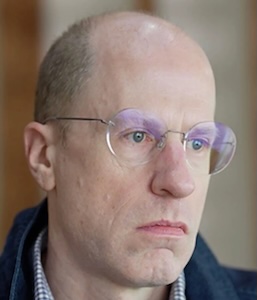
I’ve always thought of Nick Bostrom as a font of bad ideas, but that’s not his self-estimation. He considers himself a genius!
Bostrom considers himself to be a towering intellect of cosmic-historical importance. He is not shy when boasting about his supposed accomplishments, even quoting on his website an article that describes him as the “Swedish superbrain.” For many years, he bragged that — to quote his profile on Edge.org — “his performance as an undergraduate set a national record in Sweden,” though he backed away from this after Simon Knutsson pointed out that there is no evidence to support such a claim. (See the “Potentially Dishonest Self-Promotion” section of this article.)
The kinds of ideas he claims to have come up with are, for instance, the belief that AI represents an existential risk comparable to a nuclear holocaust which must nevertheless be pursued zealously, making him a hero to the capitalists building massive data centers right now. He also promotes the belief that potential people could be so numerous that it’s more valuable to create conditions that enable space flight and virtual people in computers than to actually help the poor and develop an egalitarian politics, again endearing him to the hyper-rich.
In brief, the paper argues that if we colonize space — especially as digital posthumans — the future population could be enormous. Bostrom estimates some 10^38 digital people within the Virgo Supercluster, a cluster of galaxy clusters that includes our own Milky Way. (That’s a 10 followed by 38 zeros, by the way.)
If one accepts a utilitarian perspective, this means the expected value of ensuring the realization of all those future people (assuming they have net-positive lives) far exceeds the value of, e.g., helping poor people today. If you’re a truly altruistic person who aims to maximize your philanthropic impact, then you should focus not on present-day people but those living perhaps millions or billions of years from now. It’s not that future digital people are inherently more valuable. It’s just a numbers-game: there are so many more of them (potentially) than present-day people, they overwhelm the simplistic equations of utilitarianism’s moral mathematics.
Bostrom’s conclusion is that we should colonize the universe as soon as possible, because every single century, decade, and even second of delaying this results in an “astronomical” loss of potential value — i.e., the non-existence of people who could have otherwise been created in some distant galaxy if only we had started colonizing just a bit sooner. However, Bostrom also concludes that “priority number one, two, three and four should … be to reduce existential risk.” Space colonization should therefore be priority number five once we secure our survival. Perhaps you can see why Musk loves this paper.
It’s an incredibly stupid idea — it also has ties to eugenics and natalism and other flawed beliefs — and I have weird feelings about this article. It’s mainly functioning to excuse Bostrom from fault. Bostrom didn’t come up with all these bad ideas! No, he just stole all of them. He doesn’t have original ideas!
Yet, because I’m so conversant with the foundational literature of the TESCREAL movement, I’ve noticed that a large number of the “original,” “novel,” even (supposedly) “groundbreaking” ideas attributed to Bostrom actually originated with other thinkers. As early as 2018, I was posting about this on social media and privately sharing examples with colleagues — some of whom were rather shocked to see Bostrom’s work juxtaposed with that of others (from whom he borrowed without sufficient attribution). I wrote to one colleague that Bostrom’s “genius” seems to be taking ideas from other theorists and repackaging them in his own language such that they’re just different enough for him to avoid being accused of intellectual plagiarism. His oeuvre reminds me of the line, often misattributed to Picasso: “Good artists copy; great artists steal.”
It’s a long and thorough article, and traces Bostrom’s soft plagiarism back to multiple sources, but one of them is notorious crackpot and self-promoter Eliezer Yudkowsky.
Shouldn’t that be instantly disqualifying?

Sure but, because tech billionaires are aligned with future people, among present-day people they are much, much more important than the rest of us. Facts are facts! Additionally, since it is a well known fact that that tech billionaires are going to live forever, a good argument can be made that tech billionaires should really be counted as future people and therefore inherently more valuable.
Half of these things are the sort of things that thousands of designated stoner friends have come up with while chilling, in a dazed & confused state so it’s hardly surprising. Like,… D00D, what if we’re living,… like in a simulation,… like a giant computer game…. That’d be so far out, D00D!
The numbers argument that there is only one in a trillion chance that there will be 10^38 people in the universe is very similar to the argument that there may be only one in a trillion chance that God exists but we will exist in eternity if he does.