I got a break “Quod Subigo Farinam”

I took a few day’s break from working on the cutting boards and associated machinery because my car is in repair. Without it, I cannot buy the necessary materials, and it’s not worth ordering these online. I also cannot buy groceries until the car is repaired, so yesterday I baked bread, and today I baked pizza. It was under guidance from my mother who told me what to do and what ingredients to use etc. but I think I can claim most of the credit because I did most of the actual work and I did in fact knead the dough.

The bread looked kinda meh going in.

© Charly, all rights reserved. Click for full size.

But it looked splendid going out. I had it for dinner and it tasted absolutely fabulous. Not even the best bread bought at a supermarket can beat a home-baked loaf.

© Charly, all rights reserved. Click for full size.

The pizza looked as usual going in. I.E. a mess.

© Charly, all rights reserved. Click for full size.

And it did not look any better going out since pizza is one of those foods that looks like someone already ate it.

© Charly, all rights reserved. Click for full size.

But it tasted great too and after that lunch, I could not move for several hours and still have left over for dinner.

I also harvested about 45 kg of potatoes. The small patch near my greenhouse dried up about 90% already so I decided to dig them all up. 45 kg is a reasonable harvest considering that in this patch, I planted mainly leftover tiny/green potatoes from the previous year and about 5 kg of those that I could not fit into the main potato bed. Of these 45 kg about 34 kg were in good enough shape for storage and 11 kg need to be eaten or otherwise processed asap.

© Charly, all rights reserved. Click for full size.

Thus after the very crapy start of the year it at least appears I might get my money’s and time’s worth out of the garden after all. I already harvested enough pumpkin to can them as canned fruit (ala pineapple), pickled (ala gherkin), and sauerkraut ersatz to last for two years. I am still not even on the money due to the huge amount of molluscicides I had to use at the beginning of the growing season, but I should get there easily now. It would be strange if I did not get at least 100 kg of potatoes from the main patch and I will definitively get more pattypans and pumpkins still.

© Charly, all rights reserved. Click for full size.

Tomatoes outdoors got consumed by mold despite my best efforts. The weather was simply too wet and I could not spray them with fungicides all the time. At least the potatoes appear to have resisted it and the tomatoes in the greenhouse are shielded from rain and fog and thus so far resisted too. While annoying, it is not too big a loss. The weather was so cold and wet that the tomatoes outdoors did not grow above my knees anyway whereas those in the greenhouse are up to my shoulders, as shown in the picture. I hope those in the greenhouse do not catch it because if the weather stays reasonably warm, I could harvest tomatoes at least till the first frost. I would very much like to try my hand at homemade ketchup and dried tomatoes. It looks promising. The first tomato started to blush on August 2. and as these things usually go, others followed quickly after that. It takes about two weeks for a tomato to fully ripen therefore sometime toward the end of next week I should start harvesting.

© Charly, all rights reserved. Click for full size.

Like every year for the past few years, I planted beans along the south wall of our house. Those appear to have thrived and I can look forward to at least a few kg of shelled beans and some canned bean pods. Although I hope most of them ripen and dry – we still have not eaten all the canned pods from last year.

Did you have any success this year in your gardens? From what I read in the news, most people around the world do not experience abnormally cold and wet summer this year, quite the opposite. I would not mind the wet, but the cold is bumming me out. One of the strangest things that happened due to the cold weather is that some of the corn I planted in the spring started to grow only about two weeks ago. It appears that wet and too cold or dry and too hot are the only two options we have now. We haven’t had what I’d call a “normal” summer for about a decade by now.


I Don’t Need No Gym

I am doing my best to publish at least one article a week on my knife blogge, but I had trouble managing that and I could not write much for Affinity as you might have noticed. The main reason is my huge garden, which kept me occupied for two months almost continuously.

© Charly, all rights reserved. Click for full size.

Whilst re-potting my bonsai, I tried this year also to plant new poplar trees in my coppice since the water voles did such a number on them a few years ago. I found an easy way this time to plant them -instead of digging holes, I drilled them with a long carbide-tipped 12 mm masonry drill. It went comparatively easy and fast and after just a few days work I managed to plant several rows of trees. Then came warm weather and everything started to grow, the trees took root and it looked promising. And after that came abnormally deep frost (-5°C) most of the trees died and my work was thus wasted. The frost also killed one of my most beautiful outdoor bonsai trees – my only hornbeam – the roots froze in the bowl. What a beautiful spring start!

© Charly, all rights reserved. Click for full size.

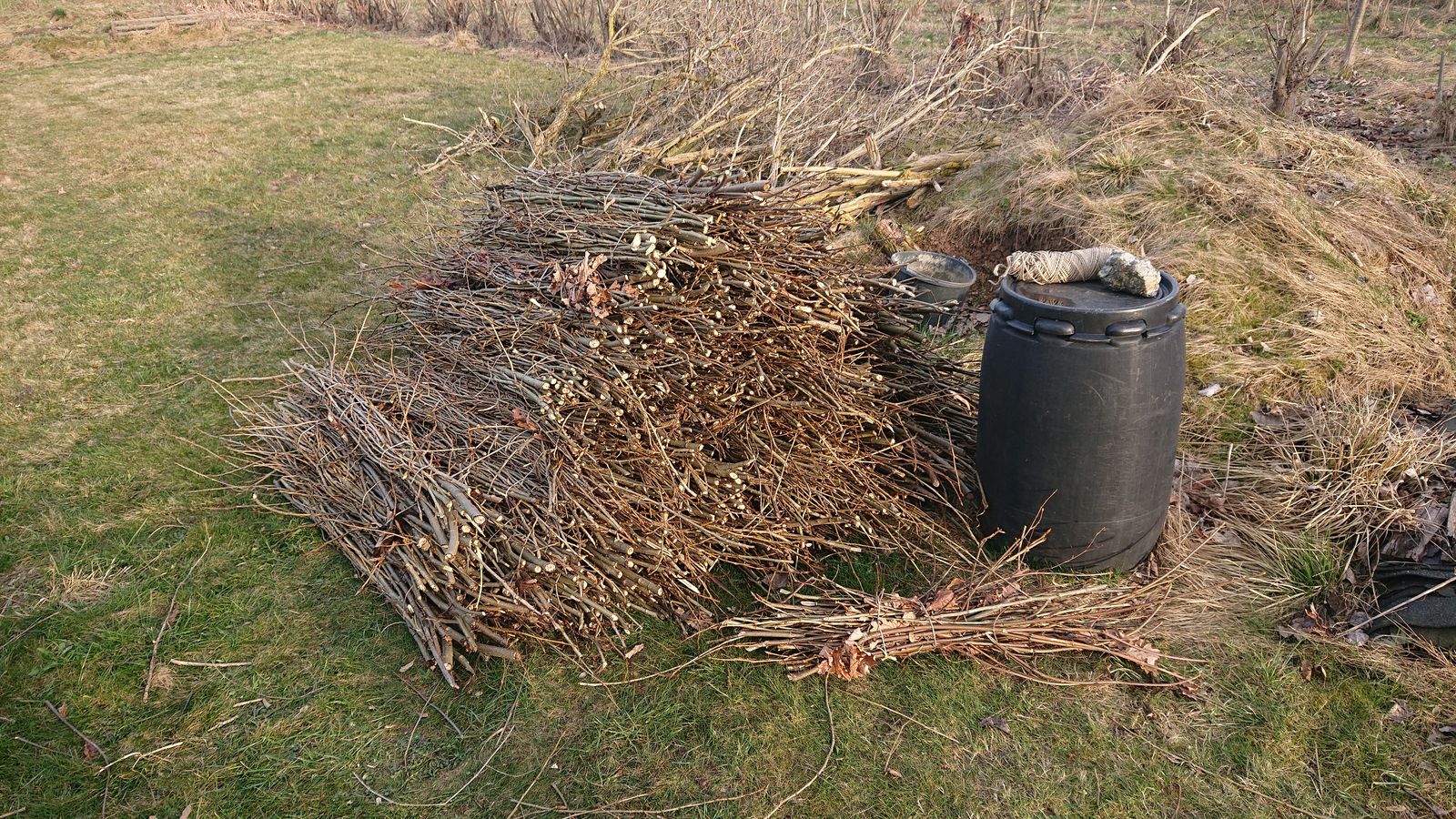
I did manage to get about 2 cubic meters of firewood from my coppice this year, which is good, about a month’s worth of heating right there, with minimal money expenditure. I also cut a lot of dead wood from my apple tree, which is slowly dying from water vole damage. The tree still lives, but only just. The odds are that next year it will all be firewood since it also received additional damage from the late frost. What a beautiful spring start!

© Charly, all rights reserved. Click for full size.

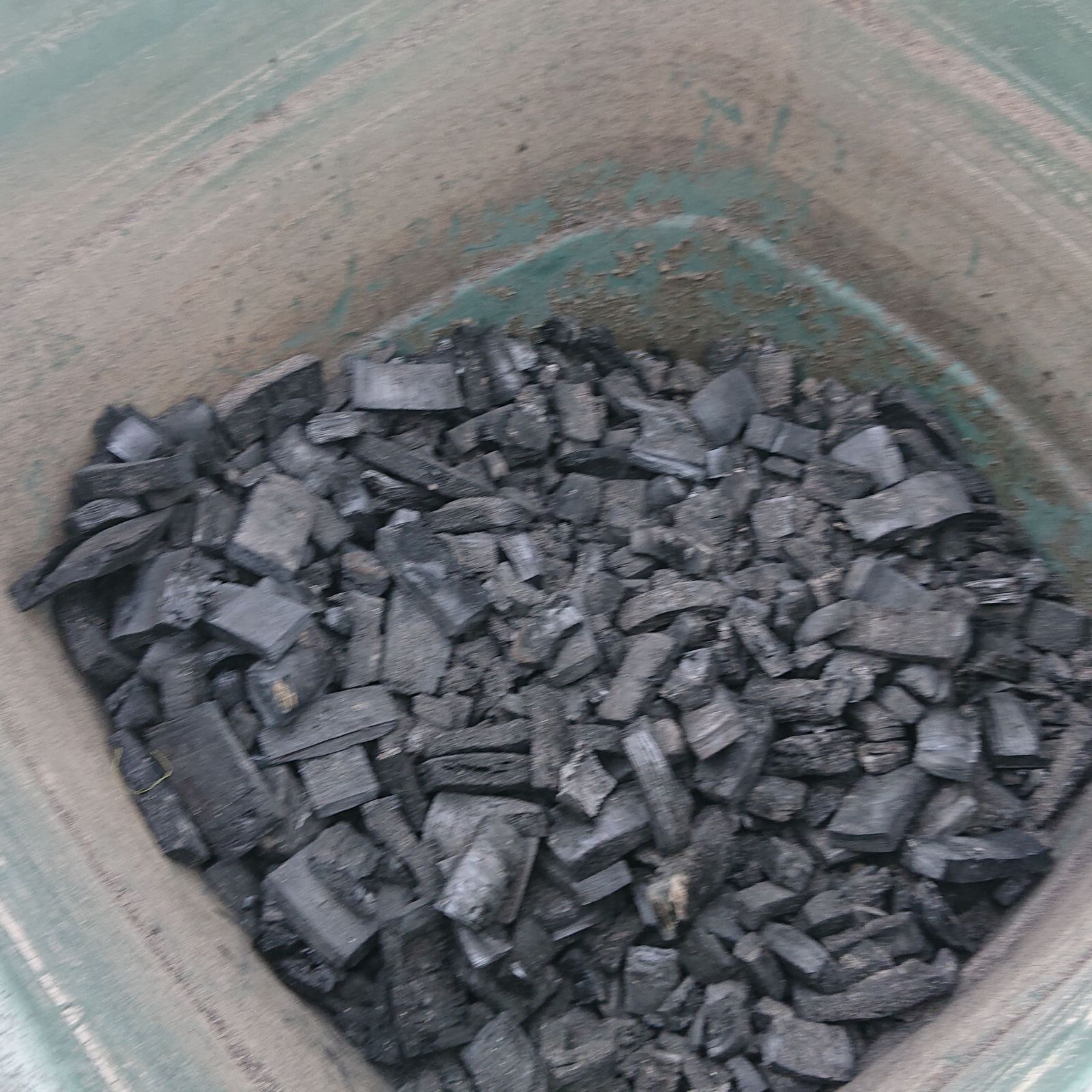
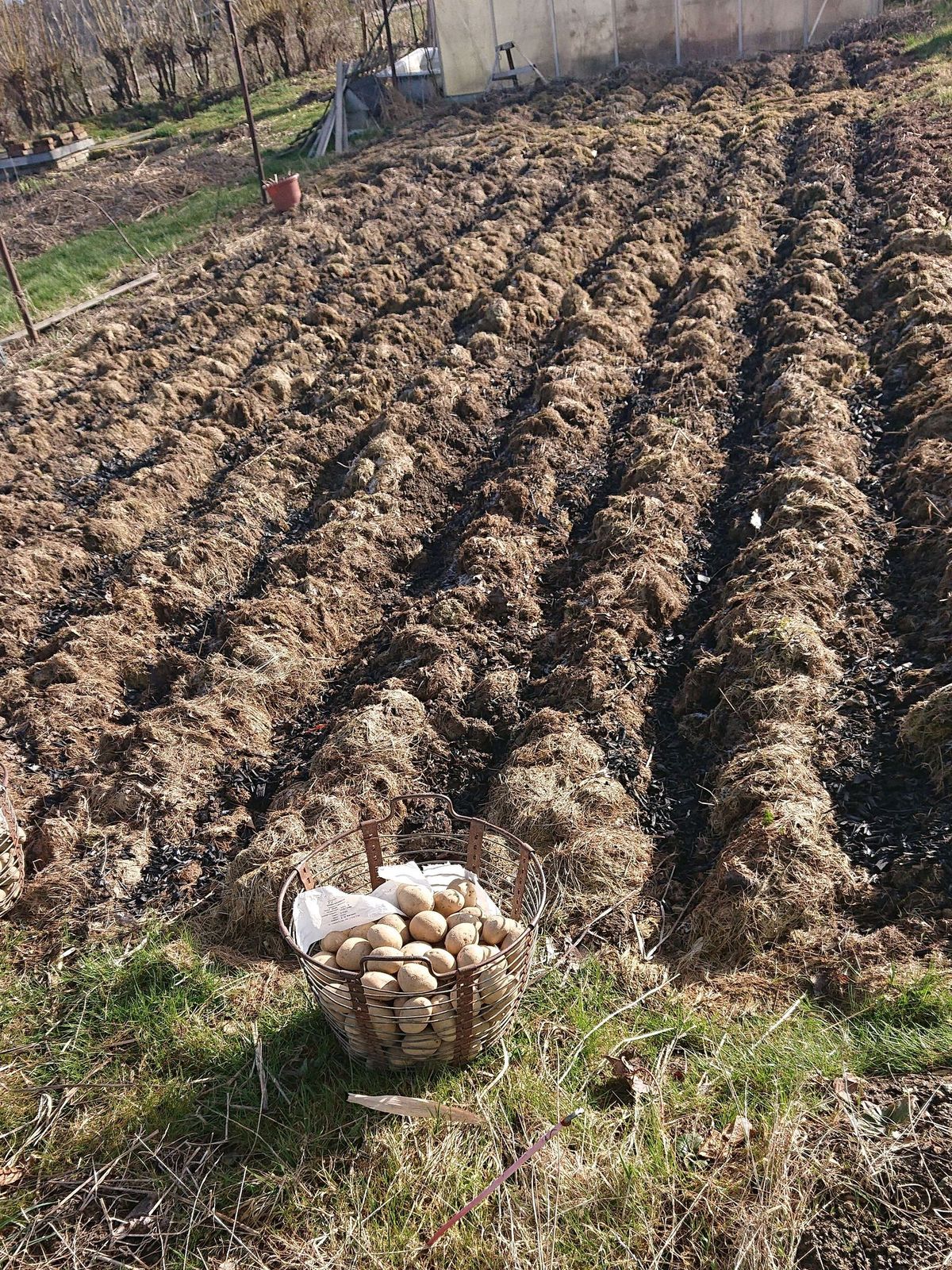
When planting potatoes this year, I added a lot of charcoal to the soil that I prepared over winter. Then I covered the potatoes with only a thin layer of soil and a thick layer of grass clippings to try at a larger scale the experiment from last year. After that came a short drought and abnormally high winds, which blew the grass away in some parts, and the potatoes froze due to the strong late frost that followed shortly after. About 10 % of the potato patch thus did not sprout at all and another 10% look weak and sickly even now. What a beautiful spring start!

© Charly, all rights reserved. Click for full size.

Here used to be several huge compost heaps. I flattened them out into one huge new patch, which took me several weeks of hard work. I planted pumpkins on there after the strong frost was over. But the weather after that was so cold and miserable that they did not grow at all for about a month and slugs destroyed about half of them despite my best efforts, using both manual and chemical tools at my disposal to kill those buggers. On some evenings I collected as much as about 1kg of slugs from the vegetable patches. This week some of the pumpkins finally started to grow as the night temperatures are over 10°C at last, but some are still tiny and there is a huge question mark over whether I will or will not have any use from all this work at all. What a beautiful spring start!

© Charly, all rights reserved. Click for full size.

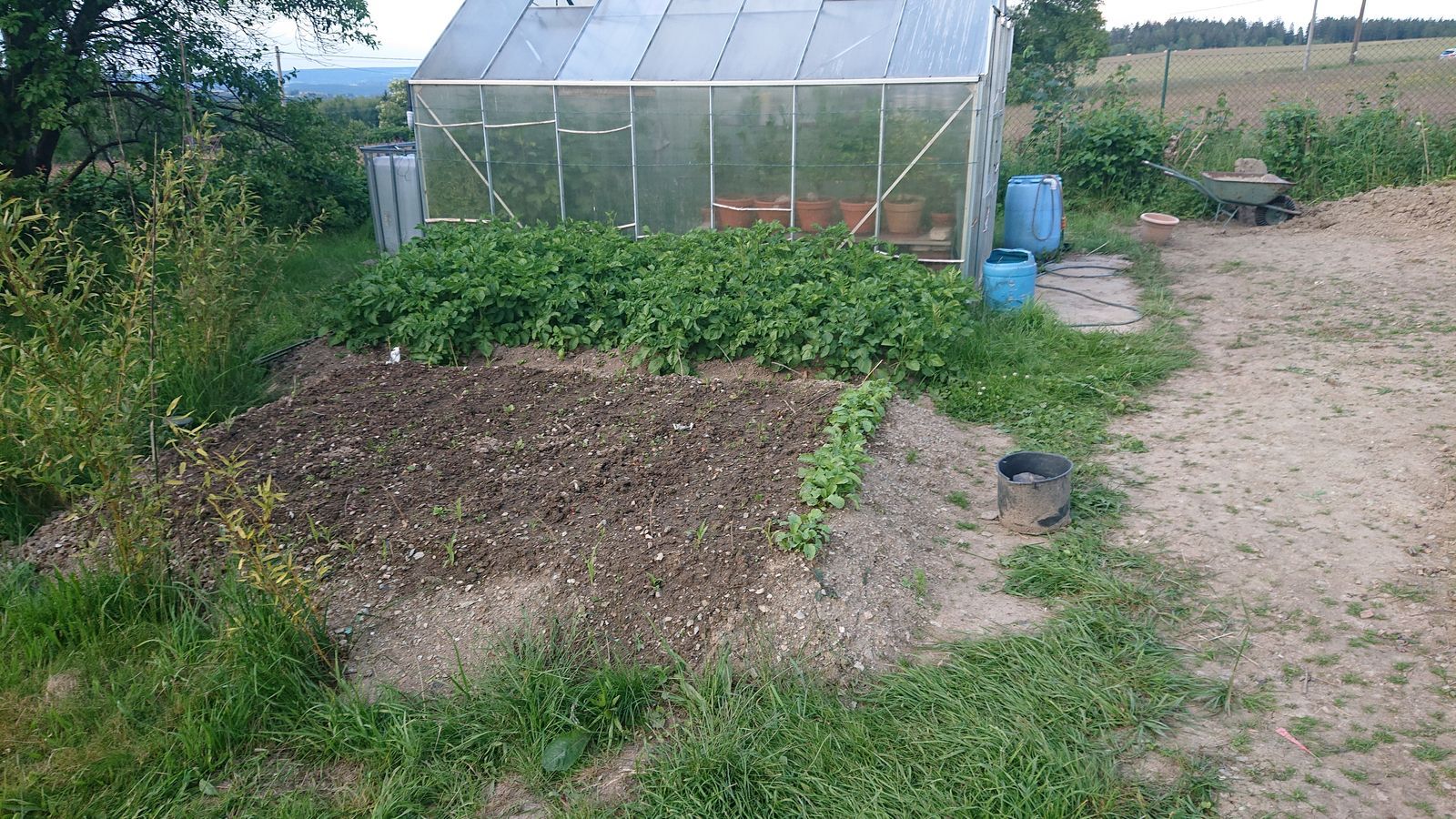
The seeding potatoes were very small and thus there was more of them than I expected. I had to prepare a small new patch near my second greenhouse to plant them. It was a lot of work to haul all that compost there to plant them, but at least these were completely unaffected by the frost and they appear to thrive. Great! When I was at it, I also prepared a second patch, where I planted red beets. Those are still tiny because the weather was so fucking cold overnight that it was on some days in June colder than it was first two weeks in April. I also planted some sweet corn, two packets. One packet did not germinate at all, and the other one produced just several sickly plants that are now still smaller than the grass that I have not mown for a week. Fuck this spring.

© Charly, all rights reserved. Click for full size.

I had so many tomato seedlings that I planted over twenty of them outside. Three got immediately mauled to death by slugs. The rest managed to grow tough enough for the slugs no longer trying to eat them but they did not grow any taller – they are positively tiny. Because the nights were so cold. I am curious if we get an extremely hot and dry summer after the extremely wet and cold spring. So, like last year, first nothing grows because it is too cold, and subsequently nothing grows because it is too hot. I hate this year’s weather.

© Charly, all rights reserved. Click for full size.

I did not sift the compost heaps but I did at least pick bigger stones manually, as I do all year throughout my vegetable patches. I got several buckets worth. If you remember, I used most of these accumulated stones last year to repair the walking path to my home. Well, I got about 20% of what I used up last year back again. Stones are not a renewable resource, but my garden has a seemingly unlimited supply of them.

© Charly, all rights reserved. Click for full size.

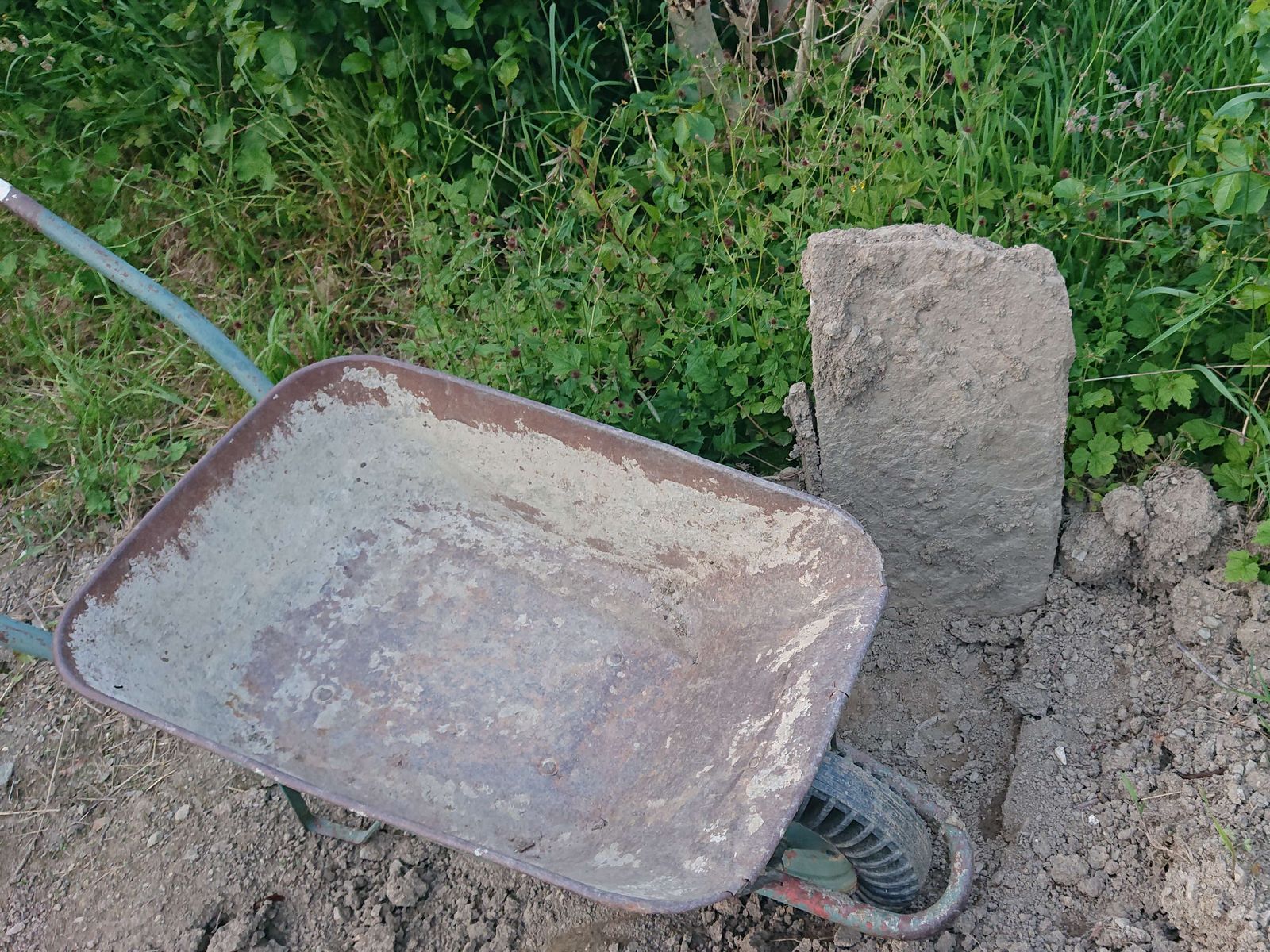
When planting the trees, I hit something hard twice. Once a bigger stone and once a buried brick. And when planting beans and working on the compost heaps I suddenly hit a really large stone, that I subsequently had to dig out. These are big slabs of phyllite that were used as paving stones in the past around here. I have a pile of them both from digging them up in my garden in seemingly random places and from the time when we too had walking paths paved with them, which I replaced with modern concrete paving a few years ago. At least these stones can be useful in the garden, but hitting one with a gardening fork or a shovel is not fun. Neither is hauling them solo onto the wheelbarrow. I procrastinate moving this one for three weeks because I sprained my back with the previous one.

© Charly, all rights reserved. Click for full size.

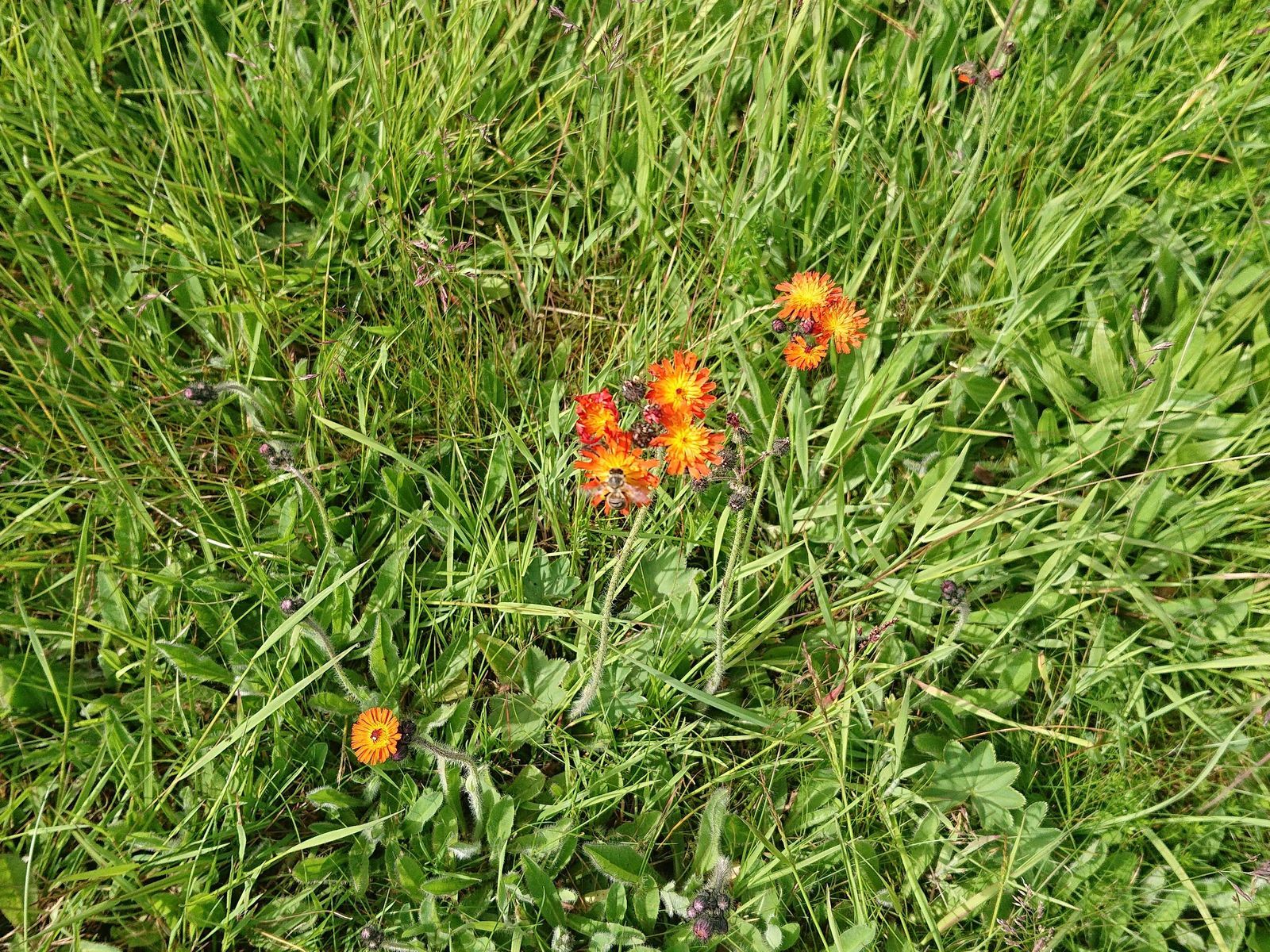
Apart from slugs, grass also thrives in the fucking cold weather. I have to mow it to be able to access all the areas of my garden where I need to work. At least there are no HOAs here so when I want to leave a patch with pretty flowers on it where it does not impede me, I can do that. So I do. Yay for pretty flowers!

© Charly, all rights reserved. Click for full size.

Tomatoes inside the greenhouse do look promising this year. I put a lot of compost and some fertilizer in there in the fall and I mixed it with the soil thoroughly. Inside the greenhouse, the climate was warm enough, albeit possibly too humid. The plants had wet leaves each morning because they had to actively pump out water. I used a chemical spray to prevent Phytophthora infestans. I hope it works because if they do not get sick, they really do look promising. Fingers crossed, I had enough setbacks this year already, and I need some wins.

© Charly, all rights reserved. Click for full size.

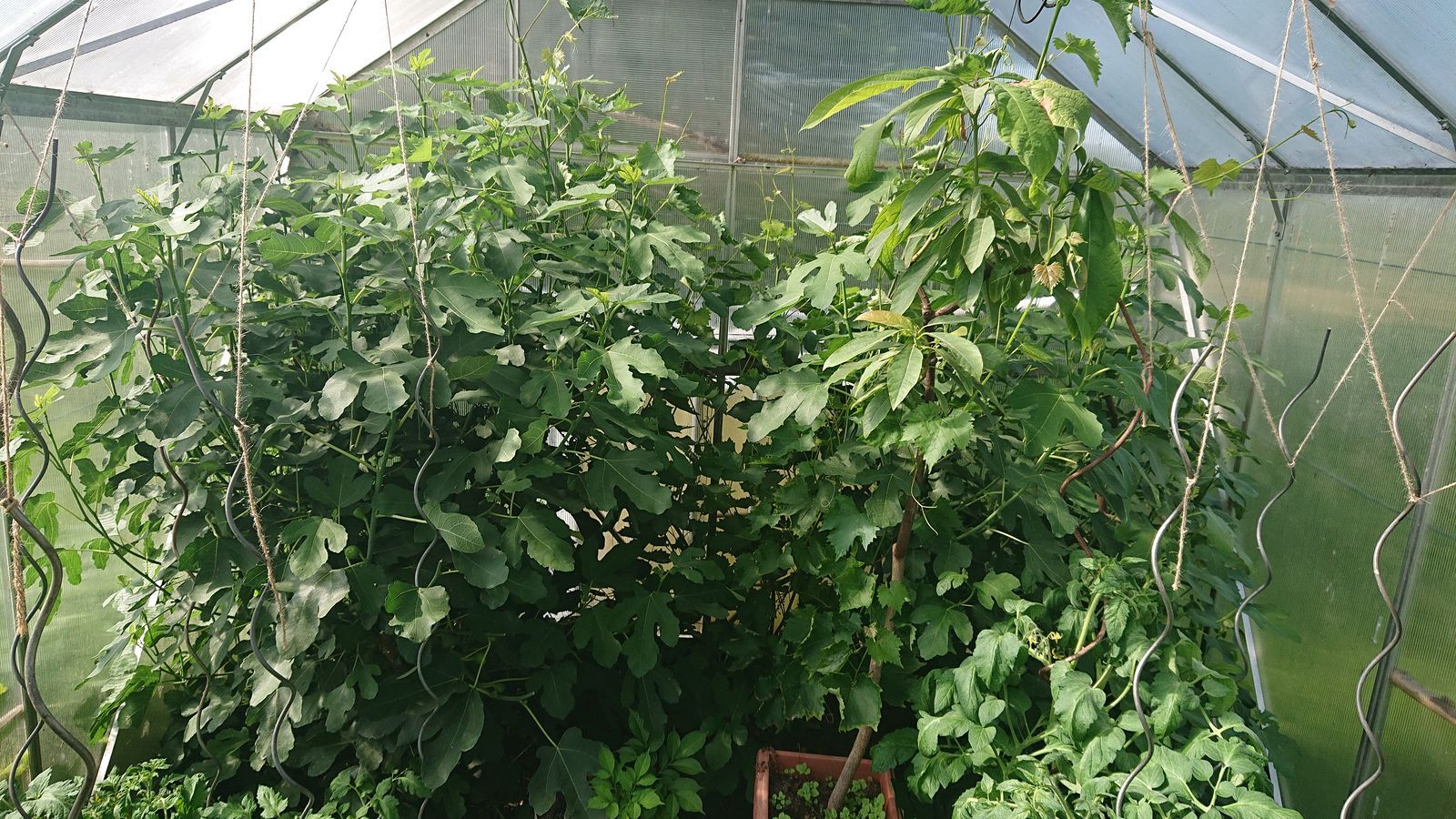
The fig trees are growing like mad. I cut them down to about 70-90 cm in height and they are double that already. They were overshadowing the tomatoes and I had to prune them. They put out some fruit already, so I might get some this year too despite the really heavy pruning in early spring. The figs really liked the warm and tepid winter and the greenhouse shielded them from the negative impacts of the cold spring, so they are the only plants that truly thrive. The grapes and pomegranates thrive too, but I did not take pictures of those since I have been ranting long enough already.

Often in the past, I said that I do not need to go to the gym, I get enough workouts in the garden and it is more useful. Well, this year the bad weather and extreme slug infestation are doing their best to make the second part of that statement untrue. At least I don’t have to pay for it. Oh wait, I do pay for it – the molluscicides, fungicides, and seeds…  Well, I might still come out with a profit, but it is not sure. I need at least 150 kg of potatoes to come even. Every other vegetable on top of that would be a bonus. That is not impossible, even with this bad start of the year.

Spiderslug!

Today in the morning I went to my greenhouse to plant some tomatoes and I was greeted by something I had never seen before – a slug hanging from the ceiling on a thread something looking very much like spider silk. It was not easy to snap a picture with my phone but I managed to get the bugger into focus twice and the thread is visible if you look closely. I do not know if it was bitten by a radioactive spider or somesuch. I suspect more that it was a freak accident where the slug fell from the ceiling and the humidity and temperature were just right for it to remain hanging on a thread of desiccated slug slime.

© Charly, all rights reserved. Click for full size.

© Charly, all rights reserved. Click for full size.

The slug did not survive its attempt at an aerial assault on my tomatoes. No slug that gets caught within the greenhouse survives long enough to tell the tale I am afraid, and neither do many that I encounter in the garden. I do not like killing living creatures but I am not working my ass off so slugs can have a feast and I learned a long time ago that one can be on the side of either the slugs or the veggies, but not both.

The Spring Came Early…

And that means pain. Lots of it. However, first, enjoy two pretty pictures:

© Charly, all rights reserved. Click for full size.

© Charly, all rights reserved. Click for full size.

Somehow, crocuses (croci?), escaped from our flower bed and now sprout occasionally in the lawn. I don’t mind, in fact, I like it. But I must watch where I step during these early spring working days. And boy, I do have lots of work. I harvested my coppice a bit late this year because February was way too windy for that to do safely. Now I am in the middle of processing all that wood because I must manage to do it before I must replant my bonsai. The winter was too warm and the spring came way too early this year. I dread the summer.
© Charly, all rights reserved. Click for full size.

© Charly, all rights reserved. Click for full size.

This year I have decided to not put all the long thin willow and poplar twigs through the shredder but to bundle them and then cut the bundles into 50 cm segments. It is a lot more work (about 3x) now but I hope it will be less work in the winter. My heating stove does not work well with wood chips, when I put too much in it at once it gets choked up and smokes a lot and later it can overheat because the chips first burn too slowly and then too fast. With bundles, there’s less smoke, and overheating does not happen because they burn more evenly throughout. Thus I can put in the oven more at once and save two or three walks down the steps into the cellar each day in winter. Further, I hope that mice will be less inclined to make nests in the bundles than in the woodchips. I find at least one nest in there each year since I no longer keep cats and traps are useless – they tend to catch more shrews than mice.

But it is hard work – the first two days I was doing the bundling I overexerted myself and could not move or even think and sleep properly for two days after that. Now I have about 1 cubic meter of bundles to cut and still some hazel, maple, ash, and hornbeam twigs to either bind or put through the shredder if they are too crooked.

© Charly, all rights reserved. Click for full size.

I also have approximately 1/2 of a cubic meter of ash, maple, and hazel rods that can be cut into 50 cm pieces without binding.

© Charly, all rights reserved. Click for full size.

And about 1 cubic meter of poplar logs to do the same. I will spend several more days, possibly two weeks, doing this. Altogether I estimate this to be circa 20% of my yearly firewood needs. It is more than usual, because this year I harvested all of the coppice, regardless of age. I had to do that so I could try and plant new trees instead of those that water voles destroyed – if I did not cut everything, the new plantings would be completely overshadowed.

I am glad the spring is here but as always I do wish I was more physically fit. It takes me twice the time to do something an average man of my age could do. Well, that’s life, it only will get worse.

My persimmon tree started growing this week, I want to replant it tomorrow and update ya’ll about how it is growing.

Preparing for Winter

Busy, busy, busy. I am tired and there’s still more work to be done than I can manage. Currently, the theme of the day is preparing the garden for winter.

You may remember that this year I have been experimenting with growing potatoes under grass clippings, without tilling the ground or preparing it in any other way. And given that I have planted only about 1 kg of pea-sized potatoes, it was a huge success, I harvested about 40 kg of reasonably large potatoes, although the blasted voles did again do some damage. Here is a picture of a small sample.

© Charly, all rights reserved. Click for full size.

Because of this, I have decided to repeat the experiment on a larger scale, on our proper vegetable bed, about 40 square meters. It was several working day’s worth of work to gather all the old and recent grass clippings from piles around the garden and spread them all over.

© Charly, all rights reserved. Click for full size.

It would be better to dry the clippings first, but alas that was no longer possible for the last mowing of the grass since the weather is now cold and wet and the days are too short for the sun to do much even when it shines. So about half is covered in dry clippings and half in fresh ones. I do hope it won’t cause problems, it should have enough time over the winter to settle. I hope. In the spring I will probably add a few bags of woodchips and shredded reeds from the sewage cleaning facility.

All in all this year was a mixed bag, gardening-wise. We had very few tomatoes and patypans. The weather at the beginning of the summer was way too hot and the plants, although they are warmth-loving, had stunted growth despite being watered enough. And when the weather subsequently cooled in July, it was again way too cold for these. In short – most of the summer the temperatures were either above or below the tomatoes’ metabolic optimum.

The beans that grew this year on the big vegetable bed as well as behind the house were a moderate success. The voles destroyed some plants early on but the rest grew vigorously and I harvested nearly 6 kg of beans and about twice as much of green bean pods that my mother canned in vinegar for later use. It is less than we could have under better conditions, but enough for our needs.

My only apple tree fell victim to water voles and continues to slowly die. I expect that it won’t wake up next spring. But I got over 30 kg of strawberries, over 10 kg of pears, and several kg of raspberries. Most of those were dried for winter too, some were made into marmalade. The plums and figs harvest was small, only a few kg, but it was enough for me to sit one whole day and make all-natural, sugar-free plum butter and to dry a few jars of figs. Plum butter is the best filler for pies, IMO, and it too should be enough for a few years. And lastly, we got again enough walnuts to give them away. The cellar reserved for preserved food and vegetables is full.

And I also had to replace the bird feeder, since it was starting to slowly fall apart. I have made a completely new one, from a few wood offcuts sorted out of my firewood. I hope it will last at least as long as the previous one. To help it last longer, I have charred all surfaces with a propane torch and I soaked it with old boiled linseed oil. That should make it somewhat resistant to humidity and fungi.

© Charly, all rights reserved. Click for full size.

Basically, it is the same design as the previous one, only the central column is not round and made from plastic tubing but square and made from wood. And the roof is a bit higher so the birds have slightly more space to sit and still have a good view of their surroundings. I did not include any perches so far, maybe I will do that later.

I have also made an additional feeder, a kind of gibbet for hanging walnuts, suet dumplings, and various other things.

© Charly, all rights reserved. Click for full size.

The weather is still warm and I did not see very many birds on the feeder yet. But the food keeps disappearing so they are definitively coming. I hope to get some pretty bird pictures again this winter. I did not use my camera for way too long this year.

The last step in winter preparations is to move indoors all plants and flowers that cannot stay in the greenhouses and put the bonsai below the benches to protect them against frosty winds. And to re-plant in the pollard all walnuts, hazels, and oaks that sprout all around the garden from nuts hidden by jays. And several other things. Busy, busy, busy…


My Lucky Pear Tree

About a decade ago, a pear tree sprouted just outside my garden in a patch near the fence where the meadow owner can’t mow the grass with a tractor so he does not bother with it at all and it is up to me to keep the growth there in check. The tree did have some tiny pears last year, edible, but nothing to write home about. I thus thought the tree wouldn’t be worth anything and I left it to grow in order to fell it for firewood when it is big enough to be worth it, like I always do with trees that sprout near the outside of my fence.

This year the tree was covered in pears, many small, but also many fist-sized. I forgot to take a picture of that, so here is one with my ladder against the tree and some last pears on the topmost branches. I had to take those off with a stick, I could not safely reach them.

© Charly, all rights reserved. Click for full size.

The tree was so covered in fruit, that one branch unfortunately snapped under the weight before I got some time to pick it. And the fruit is dee-licious! I do not know what the odds are of getting a good-quality fruit from a pear seedling but I do strongly suspect that they are not in favor. Thus I consider this my lucky pear tree.

© Charly, all rights reserved. Click for full size.

When left to ripen, they become incredibly sweet. Indeed there were many -not in this picture – that were damaged by wasps. But even when still green they are very tasty. This suits me since I do in fact prefer fruits when they are still ever so slightly unripe.

There is no way to eat this many pears before they spoil so we are processing them by cutting them up and putting them in a dehumidifier. We had to buy a second one this year so we could process all the fruit from the garden and mushrooms I brought home from the forest more expediently. We will go into this winter with an overabundance of dried pears, apples, strawberries, raspberries, and prunes. And walnuts. I intend to experiment with making my own bowel-scouring müsli from all of it and also I will try and mix some of the dried fruit in teabags to see if I can manage to make tasty homemade fruit tea.

Froot Seezun Continues

Last week I finished with strawberries. I spent two-three hours working on them for a day for nearly two weeks and in the end, I harvested over 30 kg. 22 kg I managed to dry, and the rest converted my mom into marmalade (-> cellar), pies (->freezer) and puddings  (->immediate consumption). And just as soon as the strawberry season has ended, the raspberry season has started.

© Charly, all rights reserved. Click for full size.

There is a huge patch of wild raspberries just outside my garden. My neighbor cannot mow the meadow this close to the fence, so they thrive on a strip of land approx 1 m wide. And the law in CZ is that wild fruit on publically accessible land can be picked by anyone, so I can use it – I just need to go out of my garden and walk all the way around, about 100 m. Last year we did not have any because I took a chainsaw to the whole growth to rejuvenate it – which it did.

Since these are wild raspberries that grew there from seeds some decades ago, the fruits are relatively small. They are even smaller due to seven consecutive drought years, but they are still tasty and I managed to pick over 600 g yesterday in just half an hour. I will pick a few kg over the next few days, try to dry some, and make others into jam since we run out of raspberry jam some years ago.

And to post something pleasing to the eye after a long while, the first sunflower of the year has blossomed.

© Charly, all rights reserved. Click for full size.

It is not particularly big sunflower, in part due to the drought and in part because I did not buy F1 seeds this year and I simply planted some of the surplus seeds that I fed to the birds during the winter. But it is pretty and the sunflower patch looks promising.

Strawberry Chips

It is the Time of Strawberries again and I am spending several hours daily picking, sorting, and processing strawberries.

© Charly, all rights reserved. Click for full size.

However, since we still did not eat half! of the various strawberry, figs, and other jams and marmalades that we made last year, I have decided to try and use the fruit dehumidifier on them.

© Charly, all rights reserved. Click for full size.

I was worried a bit they will lose aroma and/or color, but neither happened. They are still bright red (that might still change over time) and very aromatic. Enclosed in jars they should hold for years in our cool dark cellar. And unlike marmalade – which is way too sweet for me to eat regularly – I can add them to my breakfast yogurt together with other dried fruits from our garden (prunes and apples) almost daily without adverse effects, so they should disappear over time hopefully quicker than the marmalade (which we cannot manage to give away, let alone eat). Even running 24/7 at 60°C, the dehumidifier cannot manage to dry all strawberries that I gather daily and the smaller and unseemly fruits still have to go into marmalade, which thus will continue to accumulate. Next year I will plow over some of the strawberry patches, this is simply too much.

Blast it. I wish that more useful and edible foodstuffs grew here as well as strawberries and walnuts. I had no luck with sweet corn or red beets this year, most seeds did not even germinate. With garlic and onions, I had zero luck for several years too. And this year’s pole beans were partially destroyed by voles and partly by the too-harsh sun (although I still have enough plants to hope for a reasonable harvest), and my only apple tree appears to be dying from water vole damage. And those little fuckers ate all of my tulips as well, so I did not even have pretty flowers in the spring. I still had no luck in finding a remedy that works on these pests.

The Gardening: Almost Done!

We finished putting up the greenhouse and started to fill it:

Front view of a small greenhouse

©Giliell, all rights reserved

3/4 view of a small greenhouse

©Giliell, all rights reserved

As you can see, the foundations we found were a mixed blessing: The walls we had to put on top are huge. That’s 2 tons of concrete, they’re about 25-30 cm wide when 15-20 would have sufficed. People who know how to do that shit may be able to actually do that, we didn’t and we’re quite proud, considering that neither of us ever did anything like this. Putting up the house itself was pretty easy, all in all. Now it needs to be filled. I put down old concrete blocks in the middle to form a path, now I need to fill about 30 cm of ground. Because I want to plant tomatoes, and since tomatoes will suck the ground free of nutrients, I organised a load of horse dung from a colleague. Sorry that my tomatoes are no longer hardcore vegan. I already put in the first 5 cm or so on Sunday. I can tell you, shovelling horse dung into a greenhouse in 27°C  is not for people who enjoy breathing. Hopefully I’ll get the rest filled next weekend, so my poor tomatoes can finally move in, as well as the nice fig tree that I bought.

But do you know what the absolute best thing is about this whole project: I absolutely enjoy doing these things with my husband. Shovelling shit and pouring concrete may not be romantic, but working hand in hand on something for weeks and liking it, that’s compatibility.

Bonsai for Beginners – Part 10 – Money Tree

Previous post.

You have seen my money tree Crassula ovata before. It is probably my oldest bonsai tree, now somewhere near 60 years old and it is still healthy and it still grows strong. This is how it looked this spring before pruning.

© Charly, all rights reserved. Click for full size.

Money tree is probably the best tree for anyone who wants to begin growing bonsai or having just a few of them without spending a lot of time with care. It is extremely easy to propagate – virtually any cutting of any size, including a single leaf, can take root and grow into a new plant. It grows reasonably fast, but not extremely fast – a few cm to a dm a year – and it makes nice, thick trunks in just a few years. It is not very flexible regarding shapes and it cannot be formed by the use of a wire but it can be formed by simple pruning into interesting informal shapes nevertheless.

Money trees are extremely low-maintenance. They survive severe neglect, not being watered for weeks on end. They can survive both in direct sun and in half-shade (although shade makes them spindly and unseemly). Aphids and other common pests leave them alone, and birds and rodents too. They are not choosy about substrate either and they need not be re-planted for years without suffering. Probably the only thing that can reliably kill money trees is a combination of wet and cold – but they can survive a dry cold of around 10°C without a problem.

Here is my tree after pruning.

© Charly, all rights reserved. Click for full size.

The tree was cut back a lot and thus it looks a bit unseemly right now but that will be rectified in a month or so. When cutting money trees the cuts do not need to be treated in any way – another plus – because the cut piece will dry and fall off at the closest pair of leaves/buds on its own, leaving a clean and closed surface behind it.

And here is a bucket of pruned offcuts.

© Charly, all rights reserved. Click for full size.

Each of the offcuts could be grown into a new tree if I desired to do so. Indeed I have in the past used some of these off-cuts to grow new plants and one of them I gave to one of my friends. That is how I learned its only weakness – his mother was watering the plant too zealously when he was away and it succumbed to root rot. But I have kept some of the pieces that I have cut off in the past and I composed them into a nice little bonsai forest, about 10 years old now.

© Charly, all rights reserved. Click for full size.

This demonstrates another specific need for money trees- deeper pots. They do not make strong structural roots like true trees so they need a bit of depth to anchor them properly.

The best routine for money trees: in the summer put outdoors in full sun, out of the wind and rain, and water regularly when the weather is warm. Do not water when the weather is cold and rainy. When temperatures drop to ~10°C at night, move indoors, into a light but cool-ish place, and do not water at all or at the most once-twice a month a bit of splash. In the spring cut back strongly to promote new growth. If kept indoors all year round, the best would be a south-facing window and the plant needs to be turned twice a week at about 90° to prevent it from bending towards the window. Use substrate for succulents and deeper pots with big enough drainage holes. With just a bit of care, you can have a plant that will look well for decades and won’t die on you if you need to go on a business trip and leave it alone for a few days.

Bonsai Tree – Persimmon Still Mysterious

Previous post.

This year the tree took its time to start growing – it only started a few days ago, at the beginning of May. I was already worrying again since this is the only specimen that I have and if it dies, it is unlikely I would ever be able to replace it – it took about ten years to find one seed, dammit. But it started to grow, finally. and it looks promising.

© Charly, all rights reserved. Click for full size.

Last year it grew three branches on the main stem in the end. I cut them all down this year and they all are sprouting 2-3 buds so it is branching out, which is good.

We shall see what form the tree chooses. Preliminarily it appears to be suitable for formal broom style. I am reluctant to use wire on this wood at all, it grows relatively fast in thickness and length so there is a great risk of ingrowth, plus it is a very hard and strong wood so it would probably be prone to breaking when stressed incorrectly. And broom style often does not require the use of wire, just judicious pruning. And spreading the soft twigs apart early in the spring, which can be done by simply inserting a piece of cardboard between them as a temporary spacer. Which I did last year and I probably will have to do this year again since the tree still has a very strong tendency to grow straight upwards. That is normal for seedlings and it should slow down as it matures.

I have also worked on my other bonsai, repotting them. When they are picture-worthy again, I hope to write a few more articles about species suitable for beginners. Right now, I am very tired. A bit more than usual because in addition to re-planting the trees, I have also built a shade over them. It was necessary because my trees suffered greatly these last few years when it rained very sparsely and the summer heat was abnormally intense. I had to, on occasion, put some trees manually into the shade near the house, so I have decided this year to bring shade to all of them right from the start. I hope it will also mean I will need less water for the trees during the summer.

© Charly, all rights reserved. Click for full size.

I have re-purposed welded U-poles for a clothesline that we used to have in our garden before we got an electric clothes dryer. I put the poles over the bonsai bench and instead of clotheslines, I spanned between them thick 4 mm wires. And instead of hanging up clothes, I spanned a shading net between those wires, using our old clothespins. Should the clothespins not hold up to windy weather, I will sew the net to the wires with a rope. Although I do hope the clothespins will suffice because I will need to take the nets off again before winter.

Bonsai for Beginners – Part 9 – Larch

Previous post.

I hope to have the spoons to write at least a few posts about bonsai trees again and today I will write a bit about one genus that I consider very suitable for beginners – larches. Among coniferous trees, larches have several huge advantages.

  1. They are deciduous and create brachyblasts with terminal buds that can almost always grow into twigs/branches for several years, thus they are one of the very few conifers that can be scaled back significantly and kept at a small size for decades with minimal effort.
  2. The roots tend to grow very fast in length but they also respond very well to cutting back, branching out from the cut, and above it.
  3. The seeds germinate reasonably reliably and can be collected from grown trees. Seedlings sprout everywhere around a grown tree, being a de-facto weed in nearby gardens.
  4. Larches are very sturdy and can survive adverse conditions like frost or short drought reasonably well. They can also survive slightly rougher handling than other trees and have a reasonably large time window when they can be re-potted safely.
  5. They create very dramatic and dynamic shapes even without the use of a wire. Two of my three larch trees were never wired.
  6. They need porous and airy substrate but if put into a well-drained pot they will tolerate almost anything except maybe wet heavy clay.

You have already seen one of my larch trees in the past. And today I have made pictures of the rest and I will write something about how to care for them.

First, the tree that was in the previous post, how it looks this year before re-poting.

© Charly, all rights reserved. Click for full size.

As you can see, it has grown slightly bigger, but not that much considering it’s been six years. And it is flowering again, showing that it is indeed a mature tree and not just a few years old seedling. But it had to be put in a slightly bigger pot because there is a limit to how much back the crown can be cut – new twigs can only sprout from brachyblasts, they cannot be cut back beyond them, and the roots must be of adequate size for the crown to prosper. So with a larch tree, either start with an oversized pot or expect to increase pot size every few years ever so slightly. The base of the trunk has visible roots and is covered with moss and lichen – as it should be.

The next tree demonstrates the sturdiness of larches.

© Charly, all rights reserved. Click for full size.

Initially, it was very similar to the first tree (and they both are from seeds planted in the same year). But two years ago, most of this tree’s crown has not survived dry summer followed by a tough winter. But it bounced back remarkably from a lower branch and as you can see, it has acquired quite a character in just two years. To help the tree to recover its strengths, I have put it into a slightly larger and deeper pot and I will continue to do so for another year/two depending on how it fares. But it looks quite well and the dead wood is now part of the composition. And the tree has now a genuine story behind it – it was not my deliberate destruction that created it but nature itself. Such dead wood is oftentimes part of a composition of a bonsai tree and it needs to be preserved. I am soaking it once/twice a year with an antifungal polysulfidic sulfur solution. It will slowly preserve and also somewhat bleach the wood. If I decide I do not like the dead branch, it can be cut and it will heal in a year or two.

And the best for last.

First, a picture from 2003, shortly (several years) after I acquired the tree.

© Charly, all rights reserved. Click for full size.

Originally, the tree grew near railroad tracks, on a rocky slope, in an orientation that was turned about 90° CCW to how it is in this picture. It was cut down at least four times – you can see where the trunk suddenly ends (cut 1), then there is one dead branch (cut 2), a living branch that suddenly ends (cut 3), and a thinner branch that overgrew all the rest from under until it too was cut. It was clear to me that the tree will ultimately be destroyed so I poached it from its location with a clear conscience and re-planted it in my garden. Because it grew in a rocky location, I could not get a nice rootball with it, just two long thin roots and a stump of the main root that I had to cut. That was the beginning of several years-long journey of restoring the tree’s roots. Each year I have cut back the roots a bit so they branch out, treating the cuts with crushed charcoal, and as it developed thinner roots nearer and nearer the trunk, I have slowly shortened the stump of the main root until it was completely gone. After about five years or so the tree could be planted in a pot, originally as you see it above.

The tree also had an unseemly hollow in the trunk where the original first tip was cut and that had to be filled. I treated the hollow with fungicide, then with a bit of resin I glued in a piece of cork and waited for several years too. The tree developed a callus over the cork and the trunk healed and developed nice bark. And now, after two decades, it is a pride of my collection. It is also the only tree that prompted me to give it a name – The Reclining Dragon.
© Charly, all rights reserved. Click for full size.

As you can see, I have in the end completely changed the direction in which the tree grows, and instead of a windswept informal standing style it has a windswept semi-cascade style. A tree like this should be grown in a different pot according to Japanese bonsai rules but I like the way it looks now. I am searching for a suitably big stone to make a pot even better suiting its dramatic looks.

It is flowering this year too, so it is now covered in beautiful teensy red (female) and yellow (male) cones.

© Charly, all rights reserved. Click for full size.

If you wish to start growing bonsai trees, you cannot go wrong with larch if they prosper in your climate. The one major downside they have is that they are susceptible to being infested with aphids, especially wooly aphids. But they respond well to being treated with insecticides.