Pharyngula
Evolution, development, and random biological ejaculations from a godless liberal


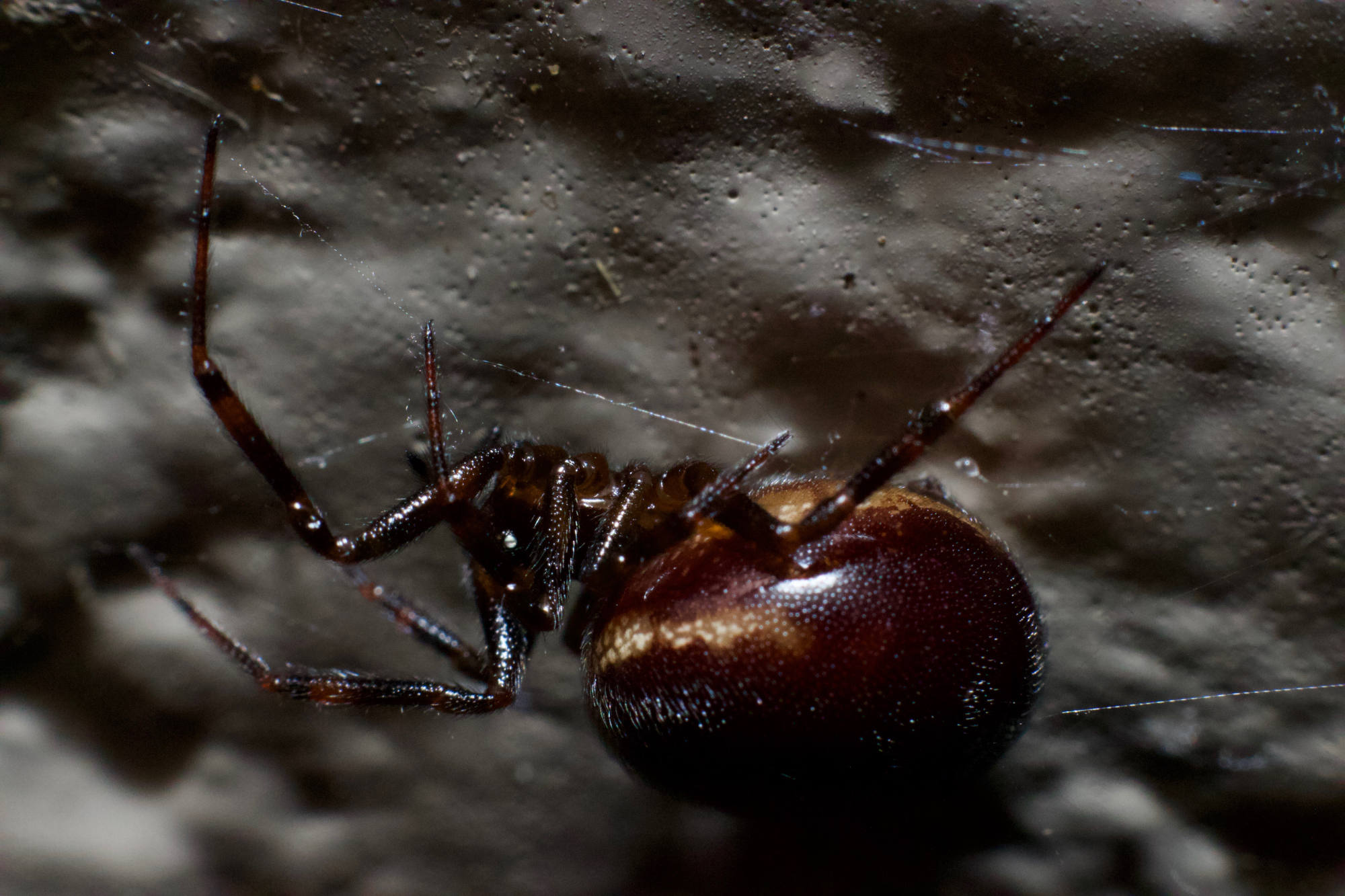
Oh my. Oh my oh my. While I was out at our climate strike event, I had to, naturally enough, prowl around for spiders, and there she was, hanging out behind the door of the men’s restroom at Green River Park, a stunning beauty, a classic Steatoda borealis, her body all dark and gleaming in confident repose. She’s perfect.
She walks in beauty, like the night
Of cloudless climes and starry skies,
And all that’s best of dark and bright
Meets in her aspect and her eyes;
Thus mellow’d to that tender light
Which Heaven to gaudy day denies.
One shade the more, one ray the less,
Had half impair’d the nameless grace
Which waves in every raven tress
Or softly lightens o’er her face,
Where thoughts serenely sweet express
How pure, how dear their dwelling-place.
And on that cheek and o’er that brow
So soft, so calm, yet eloquent,
The smiles that win, the tints that glow,
But tell of days in goodness spent,—
A mind at peace with all below,
A heart whose love is innocent.

Look at ’em, brazenly skipping my class.
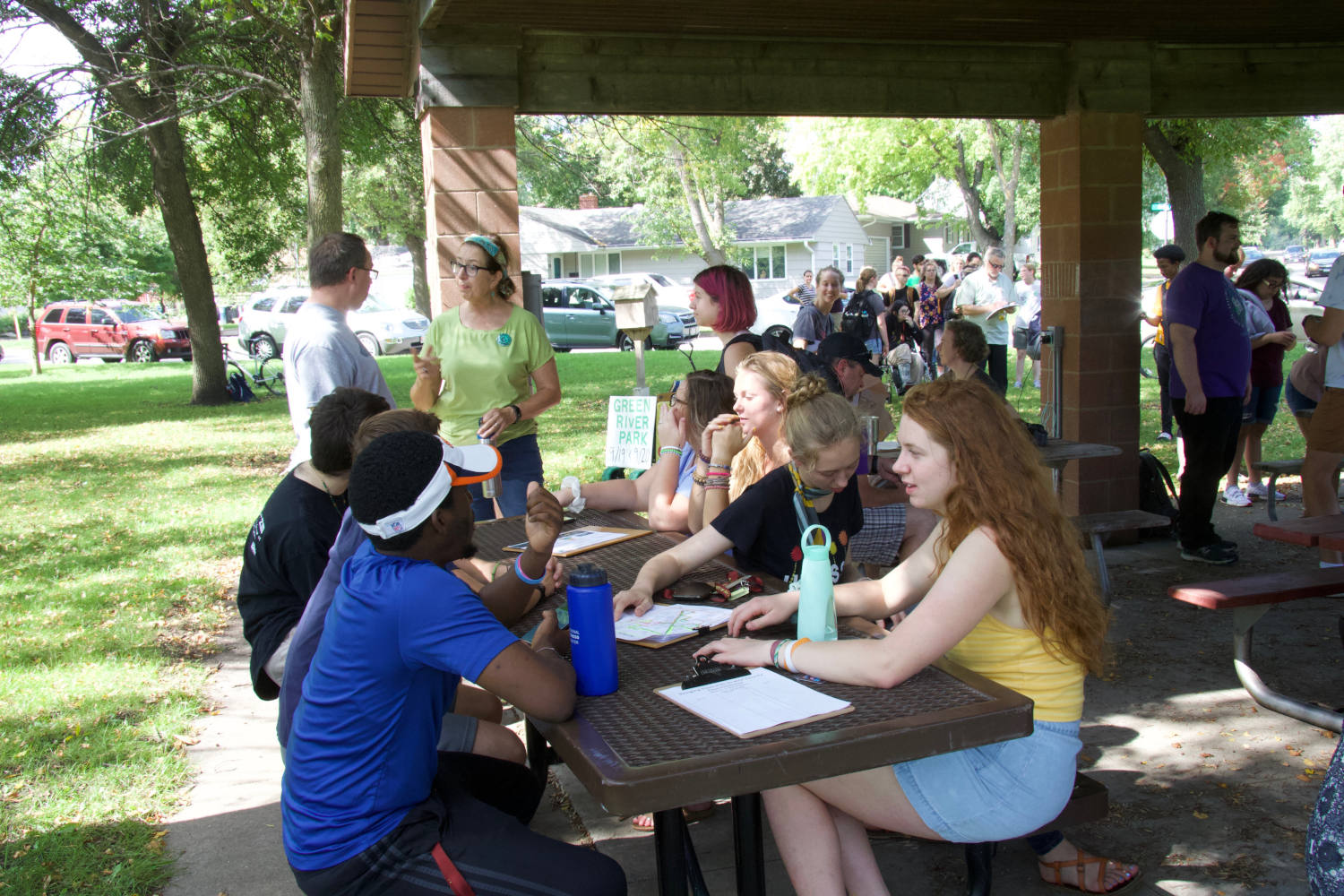
It was to take part in the climate strike, so I guess I’ll forgive them.
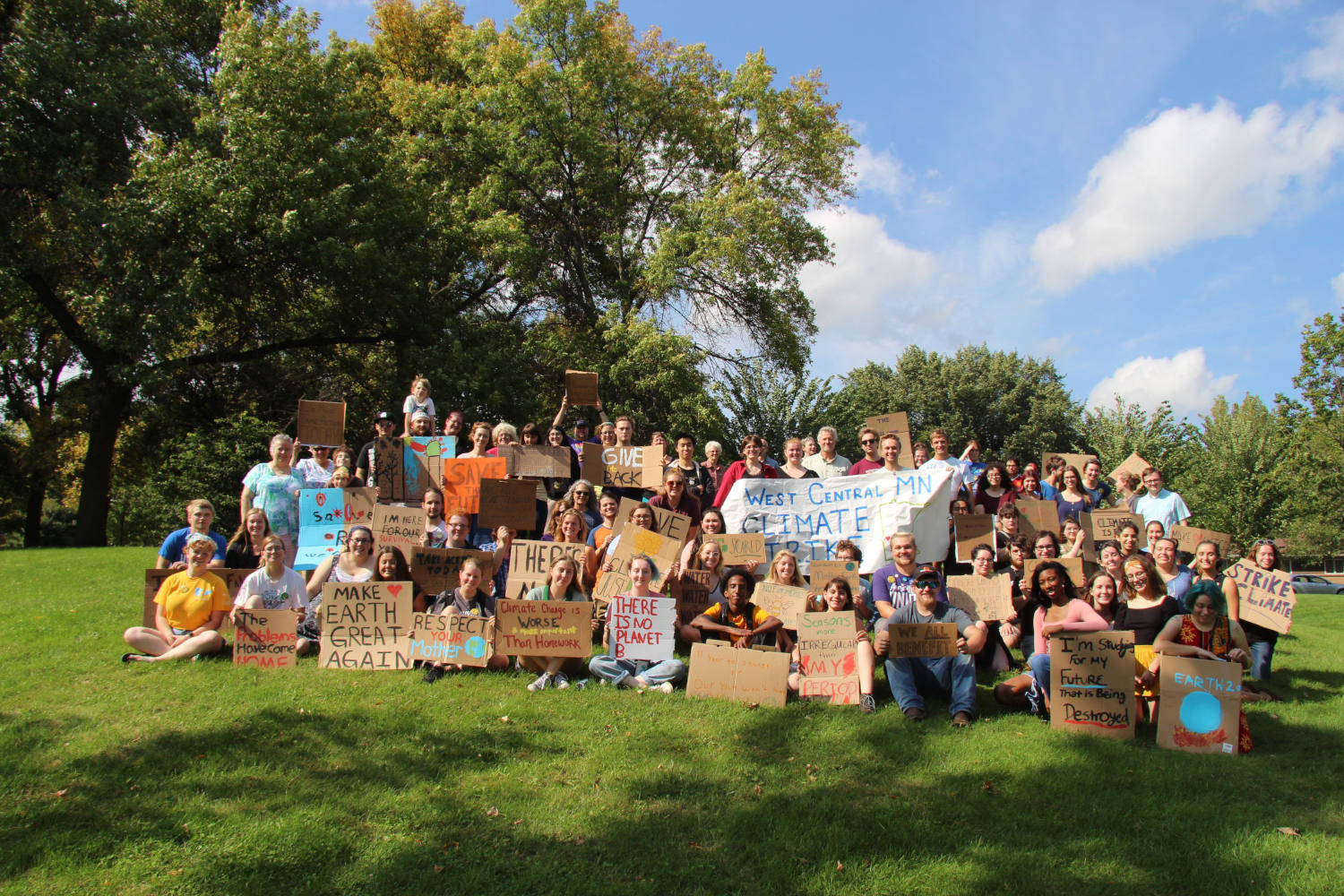
Now, about all the other students in my class who didn’t show up…

We go from the sublime to the hideous. When we were doing our routine check for egg sacs the other day, we discovered that Brienne had produced a nice one for us, deep in the elaborate network of webbing she had built in her box. It’s the pale oval on the lower left in this photo.
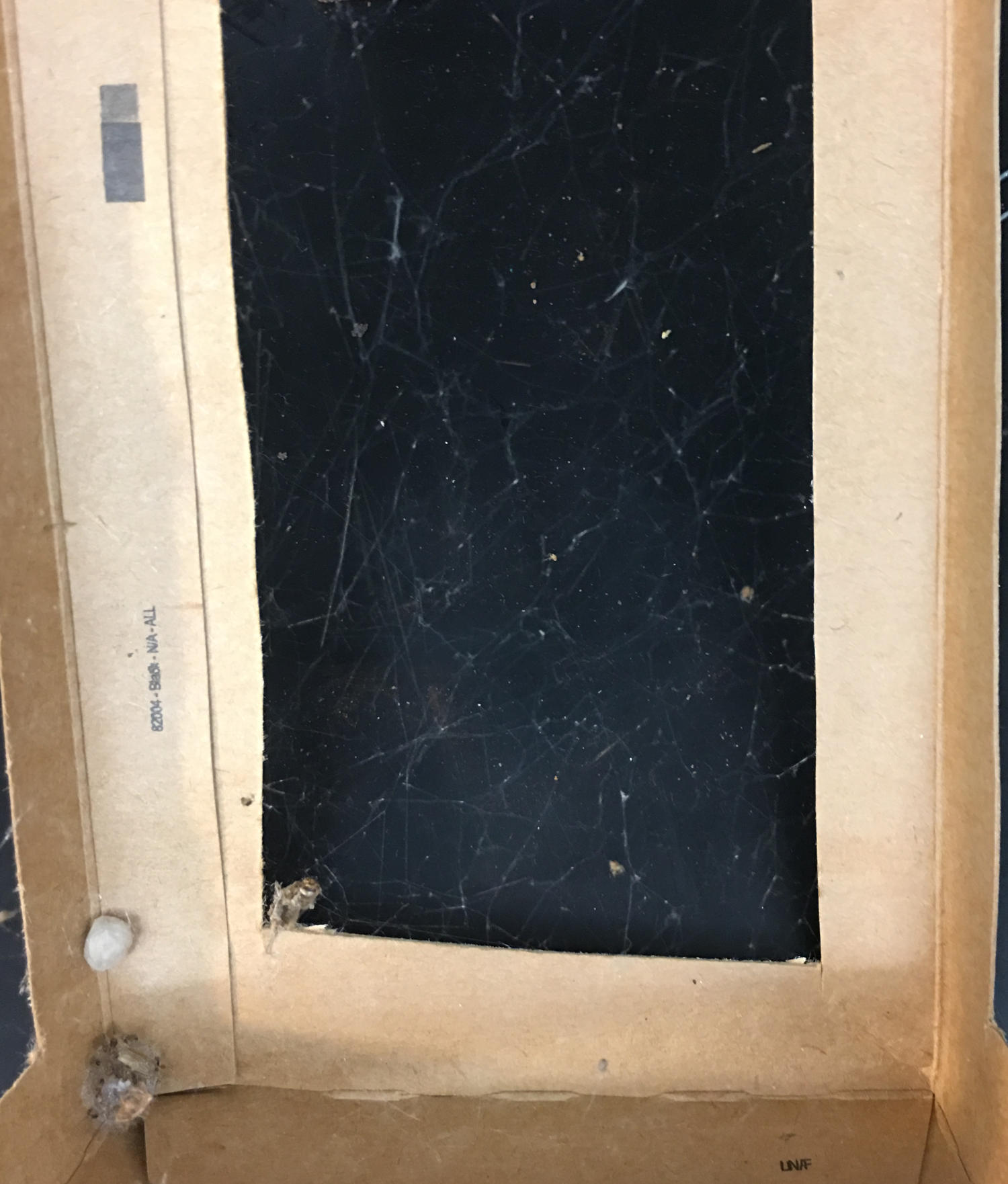
But…no Brienne. She had disappeared. Look below the egg sac above — there’s a tangled mess below it. I zoomed in on it. It’s an ogre’s nest, apparently.
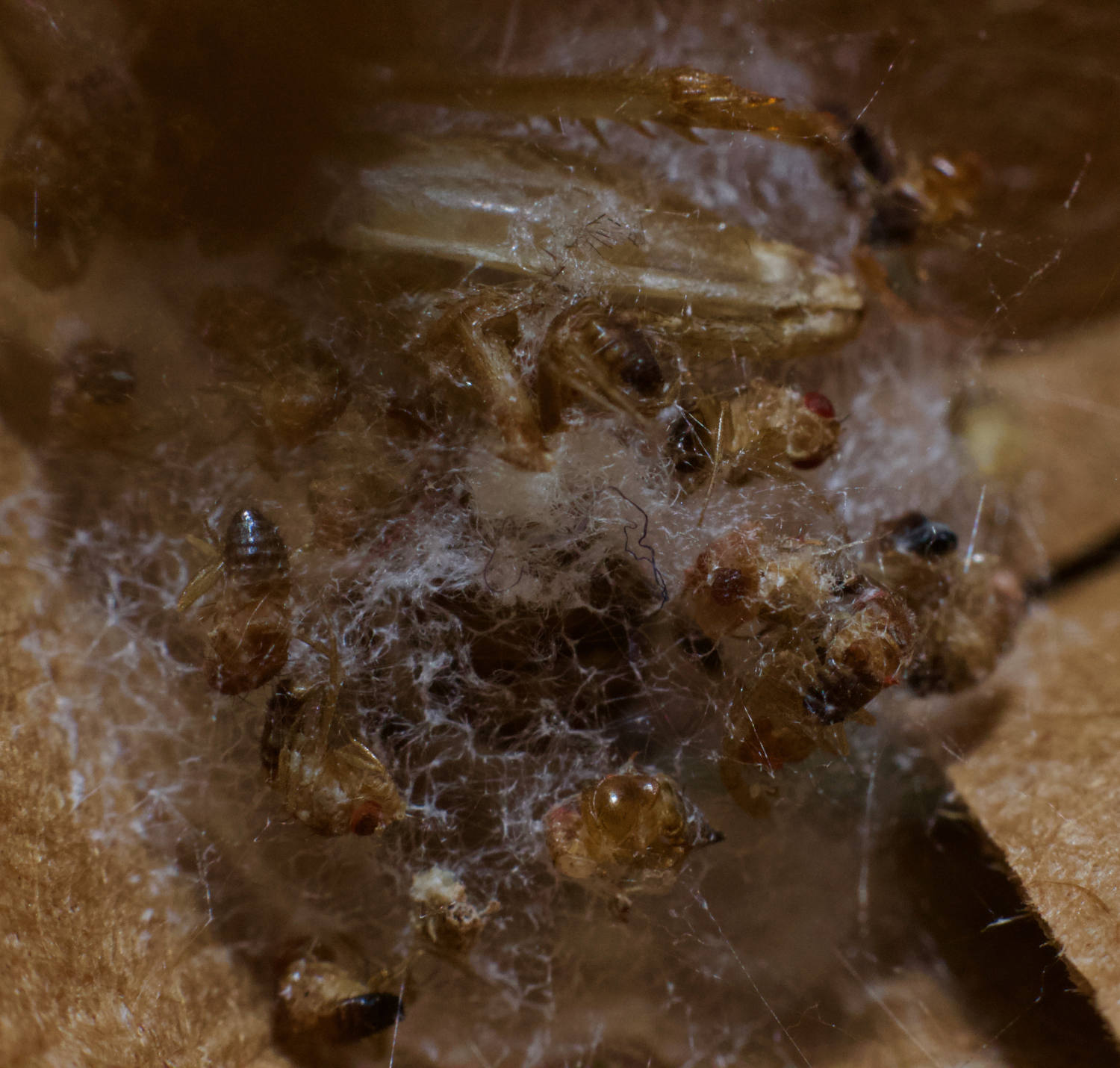
Ick. Dead flies, bits of dead cricket carapace, all strung together with thick, ropey cables of webbing. Spiders make multiple kinds of web, you know, and these spiders will make cables of web silk that are remarkably tough and hard even for humans to break. I tugged at these with forceps, and nope, they aren’t going anywhere, shy of ripping out the whole structure and possibly injuring its occupant.
Yeah, Brienne is hiding deep inside, the dark shadow near the center of the nest.
These animals always surprise me. They’ve got a complex range of behaviors, and I have no idea what triggered this strange construction. The other spiders in the colony aren’t doing it. I’ve seen a few examples of spiders cobbling together debris into shelters, but it’s not universal, and usually they aren’t this thickly armored and enclosed.
Next they’re going to start assembling tools and weapons, and then you’d better look out.


A baby Octopus octopus found by NOAA in American Samoa.


I’m not teaching today. I informed the students earlier this week that today is the day of the Global Climate Strike, so I’m joining our local responsible people at Green River Park this afternoon for our West Central Minnesota Climate Strike, and I urged them to join too.
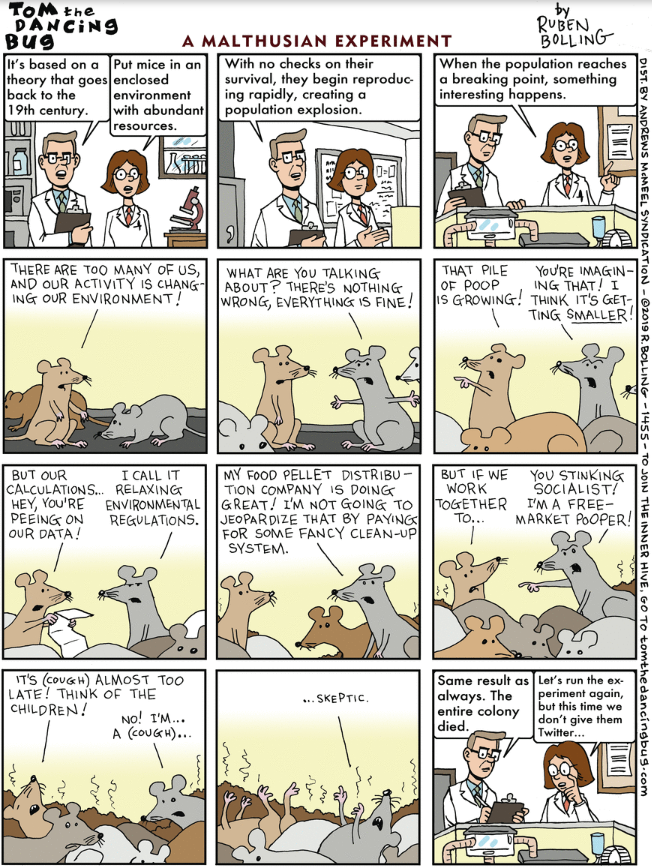
Don’t be the grey rat.


I isolated myself in a coffee shop, buckled down, and pounded straight through my grading. I got it done! Early even! The students…well, umm, there were some rough spots. The mean was about 65%, brought down by one specific page where they had to do some math, and it was a massacre. I was imagining that page soaked in blood, with more pouring out of my wicked pen, and was getting a little uneasy. I know what we’re going to be going over in the next class!
Now, though, I get to go home, where my wife has some chore involving the picket fence I’m supposed to do, but once that’s over, I’ve got to honor the completion of one onerous task (if not the outcome).
I’m thinking I’ll sit back and read the new Joe Abercrombie, A Little Hatred. It seems appropriate, very grim-dark, with lots of close-fought bloody battles. For that 65%, you know, which is barely passing and means half the class is getting Ds or worse so far.
(The title does not reflect my feelings towards the students, who are my brave compatriots in the struggle to master cell biology.)

I was at our student summer research presentations. Look at this clever pair, showing off their poster to a milling mob. They did good work.
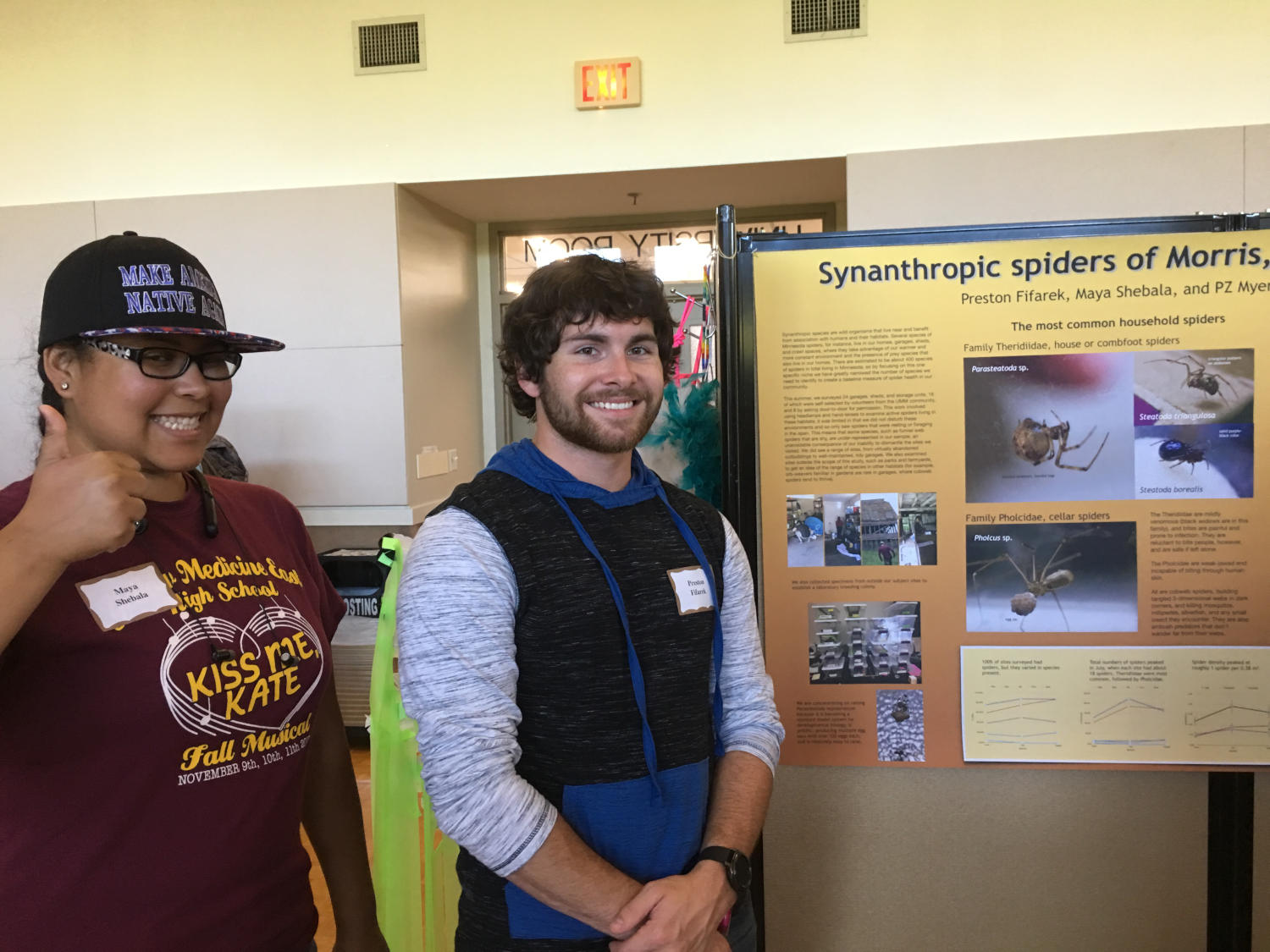
But now I get to go home and pass out, maybe get some dinner.

I got a call from campus Medical Services today — they’ve been invaded by spiders lately, and were wondering if they should be concerned. So I scurried over, because I’m wondering what exciting kind of spider they’ve found…although also I predicted exactly what it would be, and I was right.
They had a squashed specimen, and it was Agelenopsis, a grass spider, just like the one captured here in the science building the other day. I told them they were perfectly safe, these aren’t going to bite anyone, and they aren’t at all venomous to humans, but I guess they need to keep on smacking them, since they are a medical clinic and it wouldn’t do to have spiders everywhere. The problem is that this time of year the males are horny, and they’re wandering everywhere looking for mates. Also, they had an exterminator come by yesterday and spray all the vegetation outside, so all the nearby females are probably dead and they’re getting desperate.
I also checked out ceilings and corners, and I’m sorry to say our medical services office is stunningly pristine, with no cobwebs anywhere. Darn.


Also acutely relevant to the problem I just described is this article by Bruce Schneier, who explains how the problems of computer and software security are very similar to those in biological engineering.
Programmers write software through trial and error. Because computer systems are so complex and there is no real theory of software, programmers repeatedly test the code they write until it works properly. This makes sense, because both the cost of getting it wrong and the ease of trying again is so low. There are even jokes about this: a programmer would diagnose a car crash by putting another car in the same situation and seeing if it happens again.
Even finished code still has problems. Again due to the complexity of modern software systems, “works properly” doesn’t mean that it’s perfectly correct. Modern software is full of bugs — thousands of software flaws — that occasionally affect performance or security. That’s why any piece of software you use is regularly updated; the developers are still fixing bugs, even after the software is released.
Bioengineering will be largely the same: writing biological code will have these same reliability properties. Unfortunately, the software solution of making lots of mistakes and fixing them as you go doesn’t work in biology.
In nature, a similar type of trial and error is handled by “the survival of the fittest” and occurs slowly over many generations. But human-generated code from scratch doesn’t have that kind of correction mechanism. Inadvertent or intentional release of these newly coded “programs” may result in pathogens of expanded host range (just think swine flu) or organisms that wreck delicate ecological balances.
We can’t release “gene patches” to correct errors introduced when tinkering with genomes! I can imagine that someday being an issue — by analogy, going in for dialysis is kind of like a routine software management problem. But no one likes having to do dialysis, it’s a symptom of an underlying problem that is just being patched superficially, not fixed, and modifying genomes can introduce new concerns. I wonder how often software updates create new problems that weren’t present in previous versions? 100%?
I don’t think we think enough about the potential for disaster in genetic engineering, because we are enthusiastic about the potential for great good. We need a balance. It would be helpful for those most optimistic about gene modification to have more consideration for the dangers by, for instance, talking to software security experts.
Opportunities for mischief and malfeasance often occur when expertise is siloed, fields intersect only at the margins, and when the gathered knowledge of small, expert groups doesn’t make its way into the larger body of practitioners who have important contributions to make.
Good starts have been made by biologists, security agencies, and governance experts. But these efforts have tended to be siloed, in either the biological and digital spheres of influence, classified and solely within the military, or exchanged only among a very small set of investigators.
What we need is more opportunities for integration between the two disciplines. We need to share information and experiences, classified and unclassified. We have tools among our digital and biological communities to identify and mitigate biological risks, and those to write and deploy secure computer systems.
I’m optimistic about the future of genetic engineering, but I still cringe when I see some ‘bio-hacker’ inject themselves with some home-brewed cocktail of gene fragments that they think will improve their genome, but is more likely to do nothing or make them sick. I get the same feeling when I see someone stick a flash drive into the USB port of some random public terminal. I hope they’re going to practice good data hygiene and quarantine that widget before they put it in their work computer! (They probably won’t.)