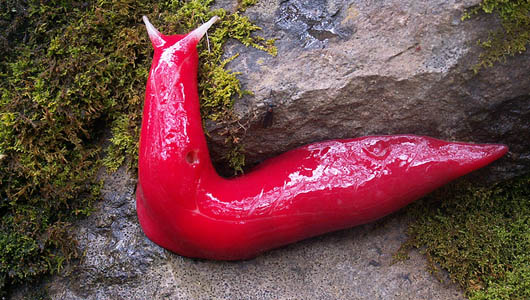
Mary’s Monday Metazoan: GIANT CARNIVOROUS RIBBON WORMS

These are awesome. I want a swarm for a pet.
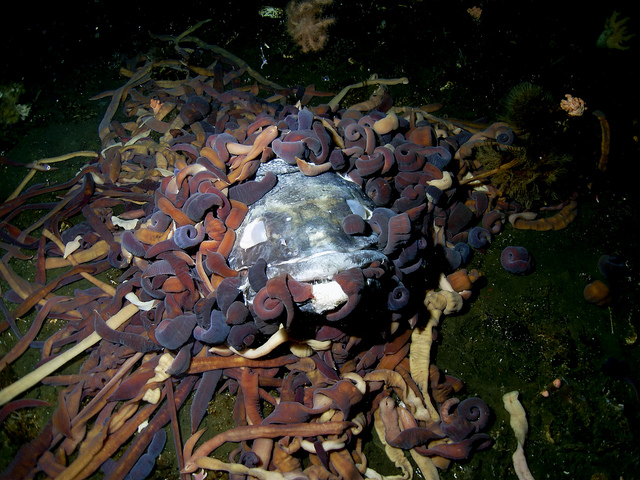
worms

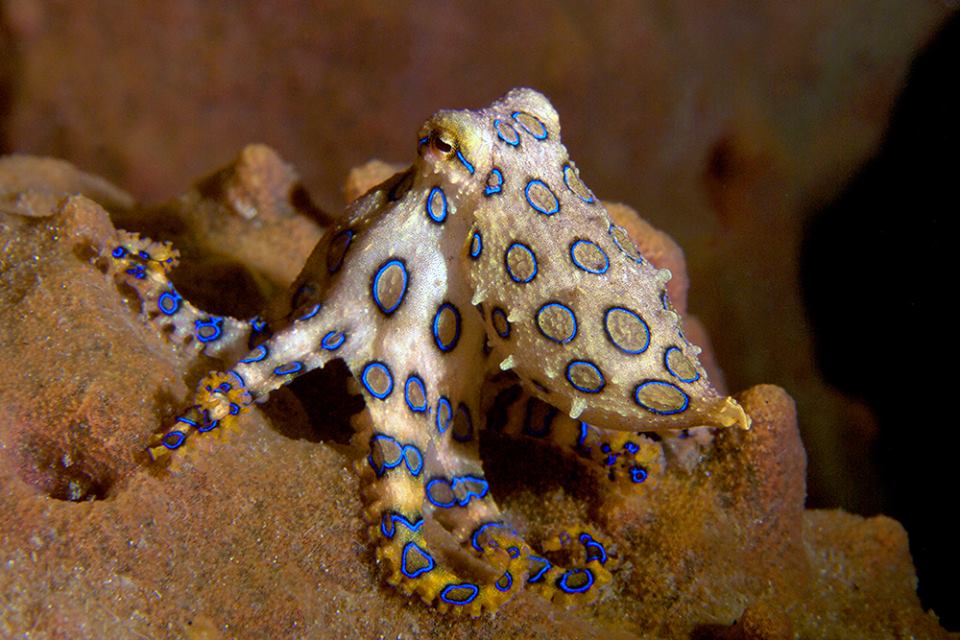
Upwards of 3 feet long and in some cases-as thick as a garden hose and have the texture of jello. There’s mucus. These things are crazy.

Key words: EAT EVERYTHING. ALIVE or DEAD. These have been fed almost everything-and they eat what’s given them: fecal pellets, starfish, dead seal meat, fish, sponges, sea anemones, worms amphipods, penguin meat, sardine meat (with tomato sauce!) and on and on….

(via The Echinoblog.)

It’s “crawdads”!

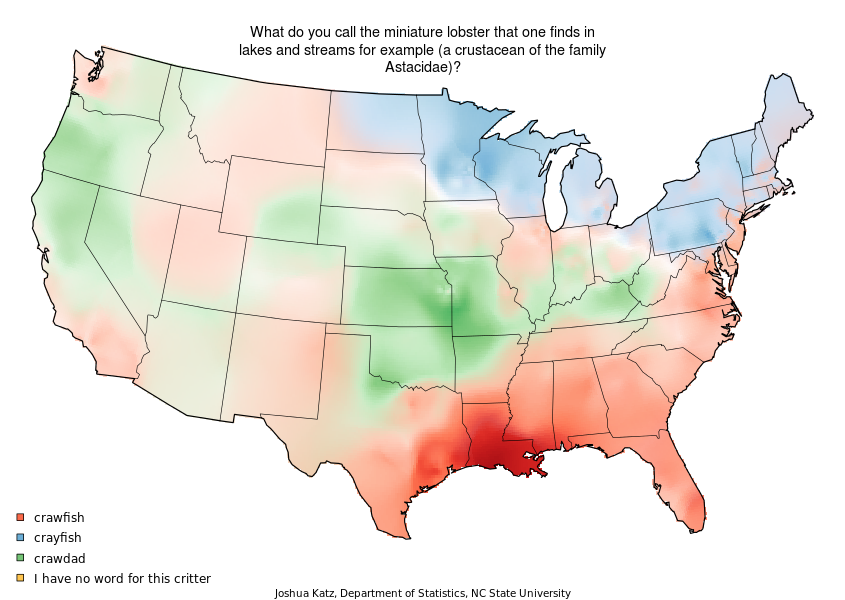
This language stuff is messy and complex. I was looking at this series of maps illustrating American pronunciation differences, and was starting to see a pattern in my own language — basically, if you look at the general rule for Washington state and Minnesota (which are often the same), that’s how I talk. With one exception:

I grew up spending many summers wading in the Green River collecting those crustaceans (and eating them), and we always called them crawdads, without question. “Crayfish” was a formal name, “crawfish” was unheard of. It’s green on this map.

tiny-lobsters-are-tearing-this-country-apart

Then I realized…it was my father the fisherman who taught us about crawdads, and his family was apparently Appalachian Scots-Irish way, way back, who ended up in Iowa during the Civil War era, and eventually wandered into lives picking fruit and vegetables in the Spokane-Yakima axis…and those areas are all greenish on the map. Cool. There are these vestiges of my family history lurking right there on my tongue.

One weird thing about the article on this, though. It says,

Regional accents are a major part of what makes American English so interesting as a dialect.

American English doesn’t vary all that much — I can easily understand everyone all across the country. English in the United Kingdom, though — that’s where you get the strong regional accents.

(via Skepchick.)

The argument from antifreeze

Another day, another stupid creationist argument. This time, it’s some pastor whining that biologists don’t understand how animals survive the winter. We don’t?

These insects are not the only ones that hibernate – there are several others butterflies, insects, and even frog that make antifreeze in the fall and hibernate through the winter.  Insects in all stages of life – eggs, pupa, and adult (CHECK THIS) – have been programmed to make various versions of antifreeze chemicals in order to survive freezing weather.  How did the first Mourning Cloak butterfly learn to make anti-freeze?  If it failed even once, the result was death – an evolutionary dead-end.  God designed this butterfly to survive the brutal winter as an adult butterfly.  The next time you see a butterfly very early in the spring – chances are it is a butterfly that knows how to make antifreeze!

How many attempts to survive the winter did the woolly bear caterpillar try?  When did a certain caterpillar “get it right” and survive?  Remember there had to be both male and female surviving to produce eggs and continue the species.  The original Arctic woolly-bear caterpillar had to make this antifreeze so that its cells would freeze without rupturing for not just one winter…but 13 times for 13 winter freezes…always remembering to produce the antifreeze only just before winter arrived.  Then it had to learn to completely rearrange its body structure to turn into a moth on the 14th spring.

How do evolutionists explain this?  They don’t!  The Arctic woolly-bear caterpillar, the Mourning Cloak butterfly, and a myriad of other creatures were designed to survive through the freezing winter.  When you see design, there must be a Designer and that Designer is God.  Those who wish to deny God’s existence see this marvelous design and say evolution did it – random mutational changes filtered by natural selection caused all this marvelous design to happen…but this is just storytelling and hand waving – it explains nothing.

Gosh, what a surprise — an ignorant creationist. Actually, we do. Winters aren’t all-or-nothing — look at a globe, and we have these things called latitudes, where we can see variation in the intensity of winters. Minnesota gets rather cold in January, while Nebraska is milder, and Texas is milder still. That means it’s trivial to find animals with a range that spreads from mild to cold environments, and that natural selection can have both variation and different selection regimes to operate. This isn’t difficult at all.

Furthermore, anti-freezes aren’t hard to generate: these are just small molecules that lower the freezing point or bind nascent ice crystals to suppress ice formation. These things evolve all the time by chance! Ask Sean Carroll.

Insects have evolved a variety of cryoprotective substances. As winter approaches, many freeze-tolerant insects produce high concentrations of glycerol and other kinds of alcohol molecules. These substances don’t prevent freezing, but they slow ice formation and allow the fluids surrounding cells to freeze in a more controlled manner while the contents of the cells remain unfrozen.

For maximum protection, some Arctic insects use a combination of such cryoprotectants and antifreezes to control ice formation, to protect cells and to prevent refreezing as they thaw. Indeed, a new kind of antifreeze was recently discovered in the Upis beetle by a team of researchers from the University of Notre Dame and the University of Alaska-Fairbanks. Unlike the protein antifreezes of other beetles, snow fleas and moths, the Upis antifreeze is a complex sugar called xylomannan that is as effective at suppressing ice growth as the most active insect protein antifreezes.

The necessity of avoiding freezing has truly been the mother of a great number of evolutionary inventions. This new finding raises the likelihood that there are more chemical tricks to discover about how insects cope with extreme cold.

Carroll has written a book, The Making of the Fittest: DNA and the Ultimate Forensic Record of Evolution, that explains in detail how the antarctic icefish antifreeze evolved. It’s a truncated pancreatic enzyme; a copy of the enzyme gene acquired a mutation that reduced it to a short 3-amino-acid long fragment (and which was subsequently expanded by duplication to multiple repeated copies) that has chemical properties that suppress ice formation. The blood of the icefish is saturated with this peptide, and it’s produced by the pancreas, just like the original enzyme, secreted into the intestine, just like the original enzyme, and then transported into the circulatory system. The genome of the icefish also contains pseudogenes, copies of original natural ‘experiments’ in the expansion of the antifreeze gene, that provide a record of its molecular history.
Meanwhile, arctic cod also carry an antifreeze protein…but it’s different and of independent origin from the one found in antarctic notothenioid fish.

So, actually, this creationist is completely wrong. Not only can we explain the evolution of antifreezes in animals, we do so in explicit detail, with step-by-step analyses of the molecular events behind them. If you want to see “storytelling and handwaving” that “explains nothing”, you’ll have to go to the loons who say “God did it.”

Diversity building at Coyot.es Network

USA HDR 2012-08-10 (12)

I’ve been in work and personal overload lately, and I apologize for not annoying people here nearly as frequently as I’d like. The work overload, at least, will likely lift soon. In the meantime, I wanted to pass something along about an opportunity for biodiversity-oriented bloggers. It’s below the fold. For you non-fold-looking-under Hordelings, here are some cuddly cacti:

[Read more…]

Shark murder, and a poll

Hey, I was only joking when I said fishing rule breakers ought to be chopped up for shark chum, but some days…this story about fisherman bragging about killing a record 1300 lb mako shark gives me second thoughts. There’s nothing praiseworthy about exterminating a top predator, especially one that doesn’t threaten your terrestrial butt at all.

There is a poll, if you’d like to express your opinion.

Should sharks be protected from fishing?

Yes 86%

No 14%

Building! Plumbing! Fishing!

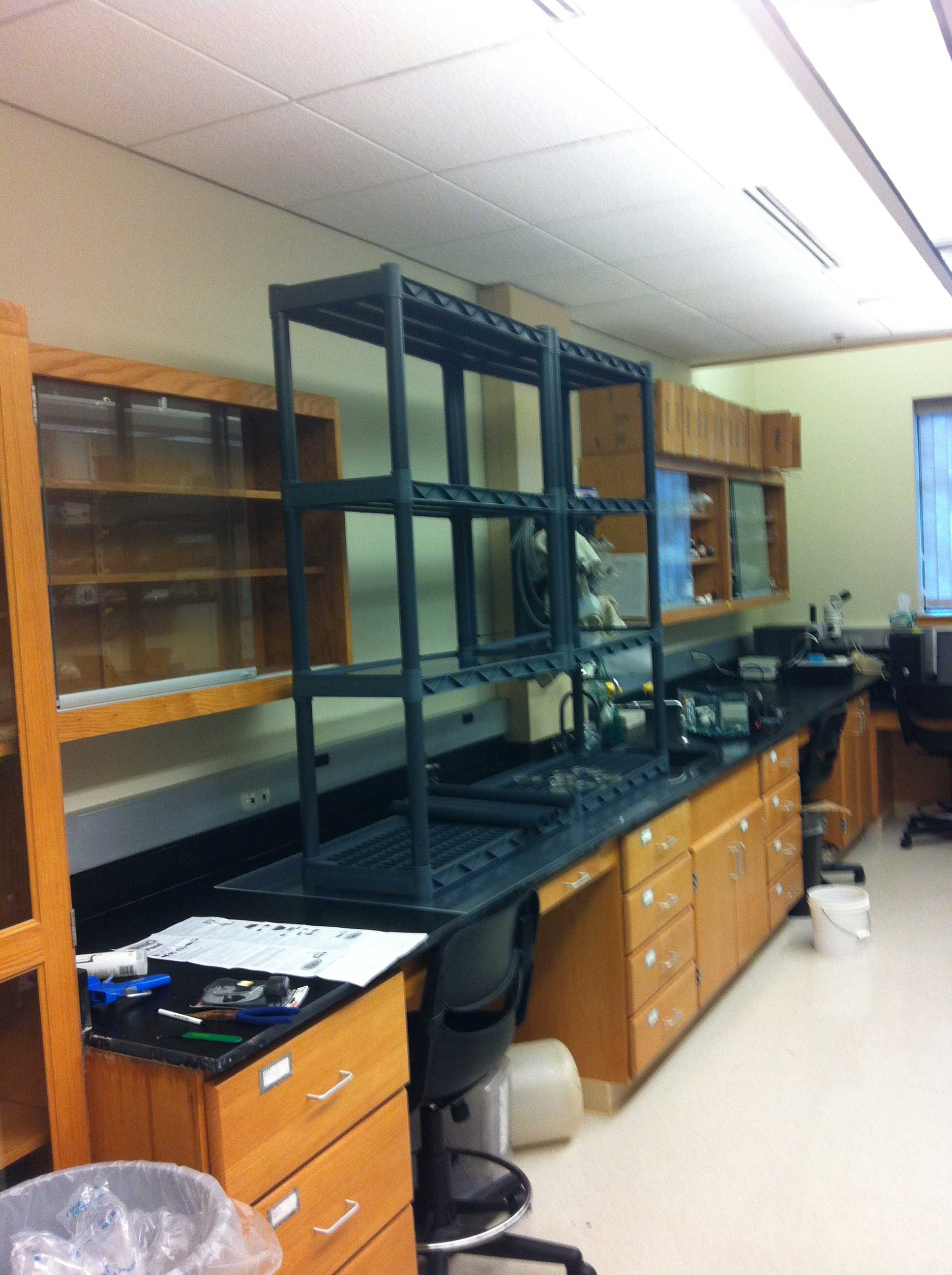
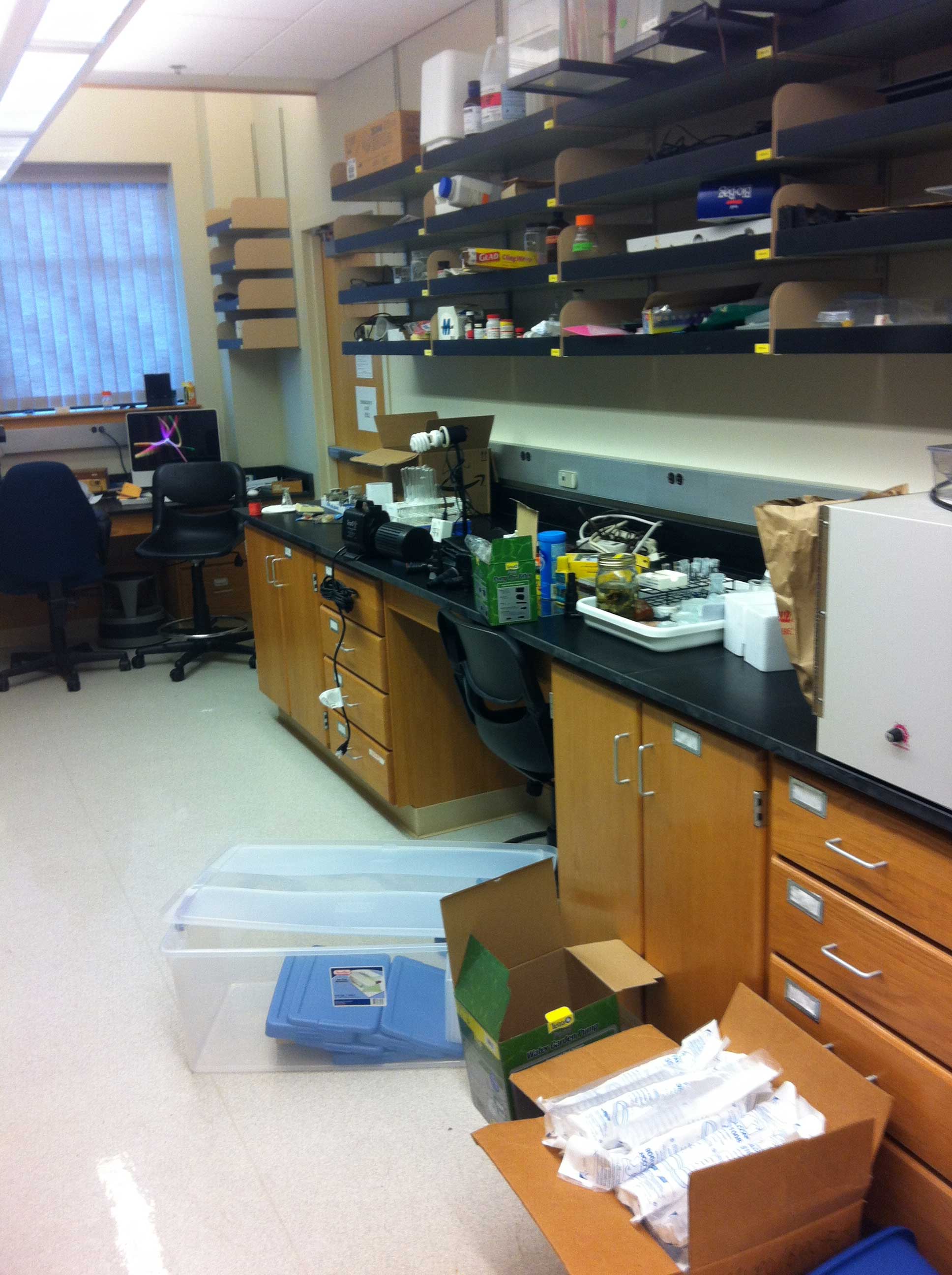
It’s been a busy, productive, tiring day. I’ve been working hard, leading and administering, while my student Josh has been working hard working working. We’re building a benchtop fish system and I seem to have spent a lot of the day in local hardware stores gathering stuff that Josh then assembles and cuts and hauls and scrubs and cleans. It’s a rough life.

Anyway, here’s the work in progress. On the left is the fish system…well, the shelves in place. On the right is the bulk of the fish system, in pieces and boxes and on the floor. We’ll be plumbing things together tomorrow, at least the stuff we’ve got — more bits will be trickling in as the week goes on. By this time next week I expect to see water cascading everywhere and fish frolicking and mating! And mermaids! And sirens! Manatees, even!

lab1lab2

Josh just started work yesterday. I think we’re making wonderful progress already.

Who’s afraid of the big bad GMO?

I don’t get it.

I really don’t get the opposition to genetically modified organisms (GMOs). We’re all genetically modified organisms — the only difference between us and the ‘objectionable’ ones is the mechanism, whether the molecular novelty was inserted by intent or inserted by chance. Much of the dissent with GMOs is based either on ignorance, or is misdirected.

From Biofortified, an excellent blog on agriculture, genetics, and molecular biology, here is a good video on the subject.

Watch Next Meal: Engineering Food on PBS. See more from QUEST.

Yet there is established policy in many countries and states to prohibit use of GMO crops. When a small patch of GMO wheat was found in Oregon, Japan responded by shutting down all wheat imports from Oregon. That’s nothing but fear based in ignorance. All of our crops, everyone’s crops, are heavily modified genetically. Wild strawberries are tiny little things. Corn is a hybrid monster shaped by centuries of selection, twisted from a seedy little grass into this weird elaborate conglomeration. Wheat and barley and rye are the product of thousands of years of genetic reshuffling and selection. Walk into the produce section of your grocery store — do you really think all those fruits and vegetables are unshaped by human hands?

This strange unfounded fear of GMOs is unfortunately most strongly expressed in the political left. It’s embarrassing that political progressives are being made to look bad by raging superstition and unscientific claims.

I was interested to see in the link above that this fear is traced back to the magic word “natural”, and specifically that awful website full of woo, Natural News. “Natural” is nonsense: everything is natural. “Natural” is a non-specific modifier attached to anything a crackpot things is good, in opposition to new-fangled technology that is different from what their grandparents did. If it helps, modern genetic modification techniques are simply directed versions of horizontal gene transfer, a process that happens “naturally”, without human assistance. We’re just doing it faster and more efficiently and selecting the genes we want to move around. The current controversial crop of genetically modified wheat simply takes a natural enzyme from a natural bacterium and transfers it to the genome of a natural grass. There’s nothing supernatural about any of it.

You want to complain about something, aim a little more accurately and target real problems in modern agribusiness.

  • The ongoing concentration of control of agricultural products into the hands of just a few corporations. These corporations lock up their products and are intent on retaining control…and this isn’t just GMOs. Hybrid seed produced by standard genetic techniques has also been a tool.

  • The corporatization of farms. The family farm is fading, it’s all giant conglomerates — and the economies of scale depend on ignoring the environmental costs of the megafarm.

  • The blandness of monocultures. Try driving through my part of the world — the old, biologically diverse prairie has been almost totally replaced by endless fields of corn and soybeans, nothing but corn and soybeans.

  • The industrialization of food. What’s being done with most of that corn? It’s being processed into high fructose corn syrup and ethanol. We take food which is rich and complex and process the heck out of it to reduce it to something more convenient for industry.

Sometimes I wonder if the GMO controversy isn’t just a giant red herring thrown into the debate about the future of agriculture just to distract us from what should be real concerns.