I had no idea such things existed, but behold the remipede:
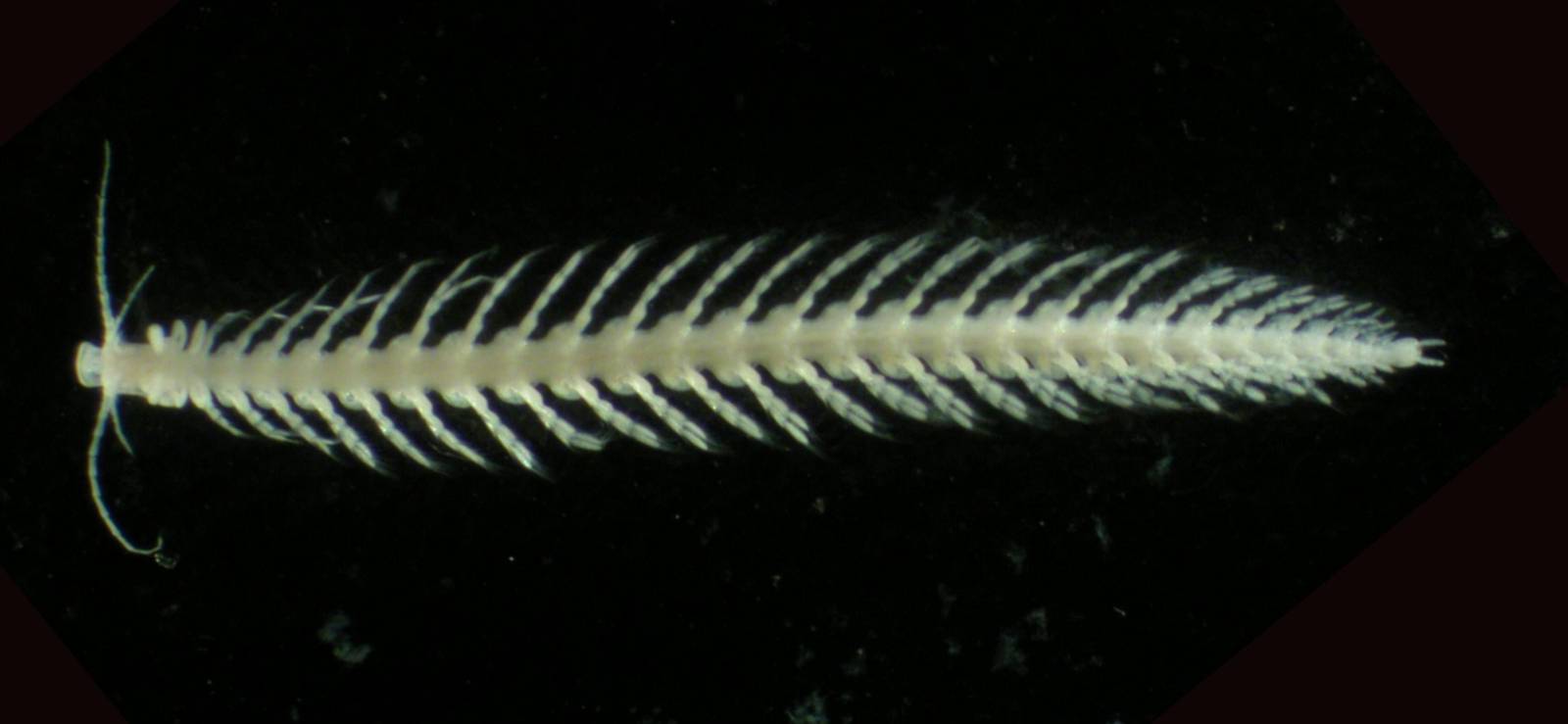
Yes, it’s a crustacean, although it doesn’t look like any I’ve seen before. You’re not likely to run into them casually; they’re found deep in Central American caves, with one species found in the Canary Islands and another in Western Australia. Besides being weird-looking critters, they’re also the only known venomous crustacean. Take a look at that clawed face!

There are no known instances of humans being bitten by one of these things — they aren’t exactly living underfoot. They have big sacs inside those front claws that contain a cocktail of proteases, chitinases, and a neurotoxin.
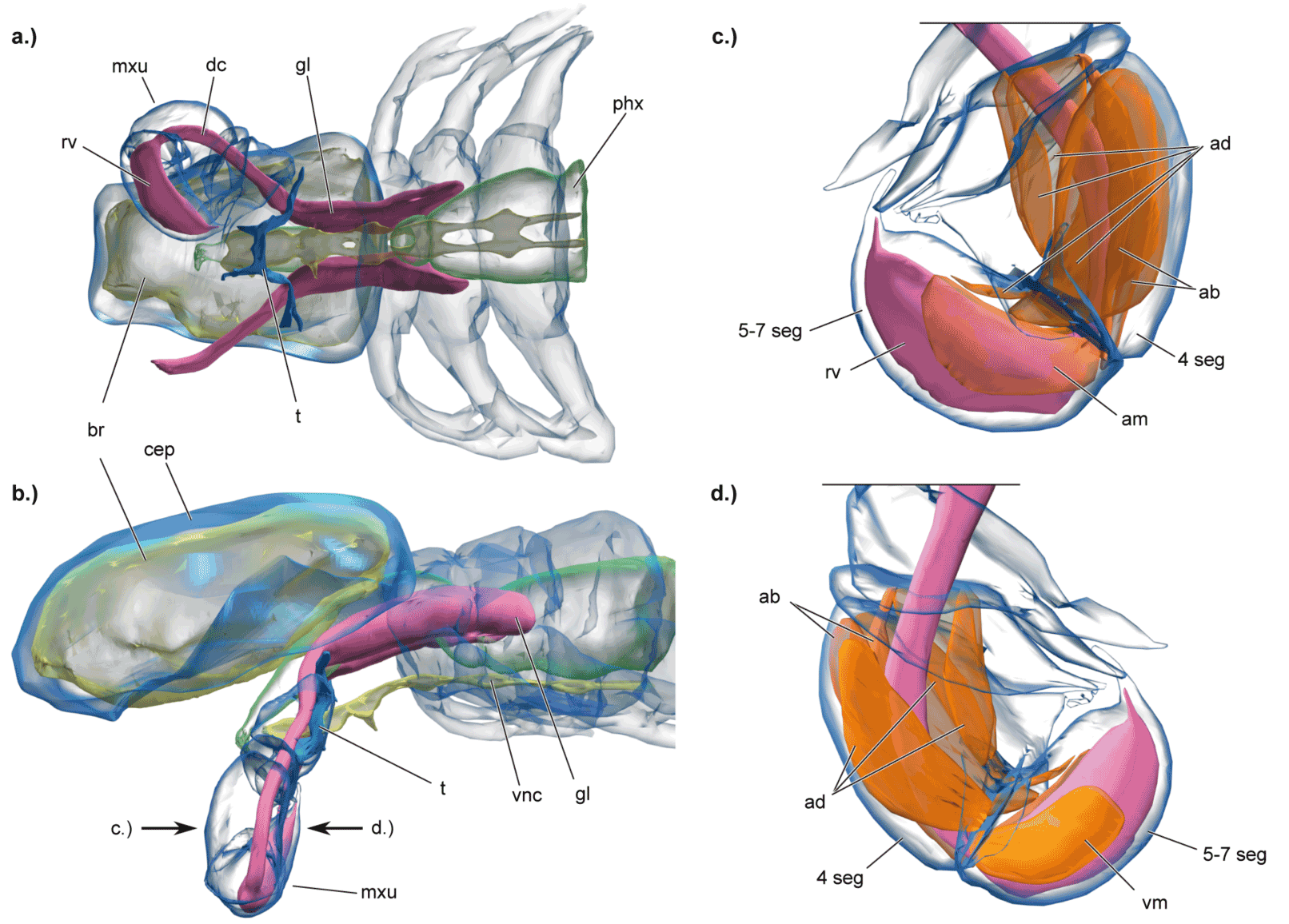
They poison their prey with an injection of a poisonous mixture that simultaneously paralyzes or kills them, and reduces their guts to a slurry that can be sucked out.
This toxin is represented by two distinct contigs that have the conserved cysteine pattern characteristic of β/δ agatoxins with virtually identical spacing [C-x(6)-C-x(6)-C-C-x(4)-C-x-C-x(6)-C-x-C] (Figure 5). β/δ agatoxins are a recently described type of spider venom neurotoxin (Billen et al. 2010), which causes pre-synaptic voltage-gated sodium channels to open at resting membrane potentials in insects. The resulting neurotransmitter release generates a stream of action potentials in motorneurons, resulting in irreversible spastic paralysis of the victim.
Charming!
von Reumont BM, Blanke A, Richter S, Alvarez F, Bleidorn C, Jenner RA. (2013) The first venomous crustacean revealed by transcriptomics and functional morphology: remipede venom glands express a unique toxin cocktail dominated by enzymes and a neurotoxin. Mol Biol Evol. 2013 Oct 16. [Epub ahead of print]