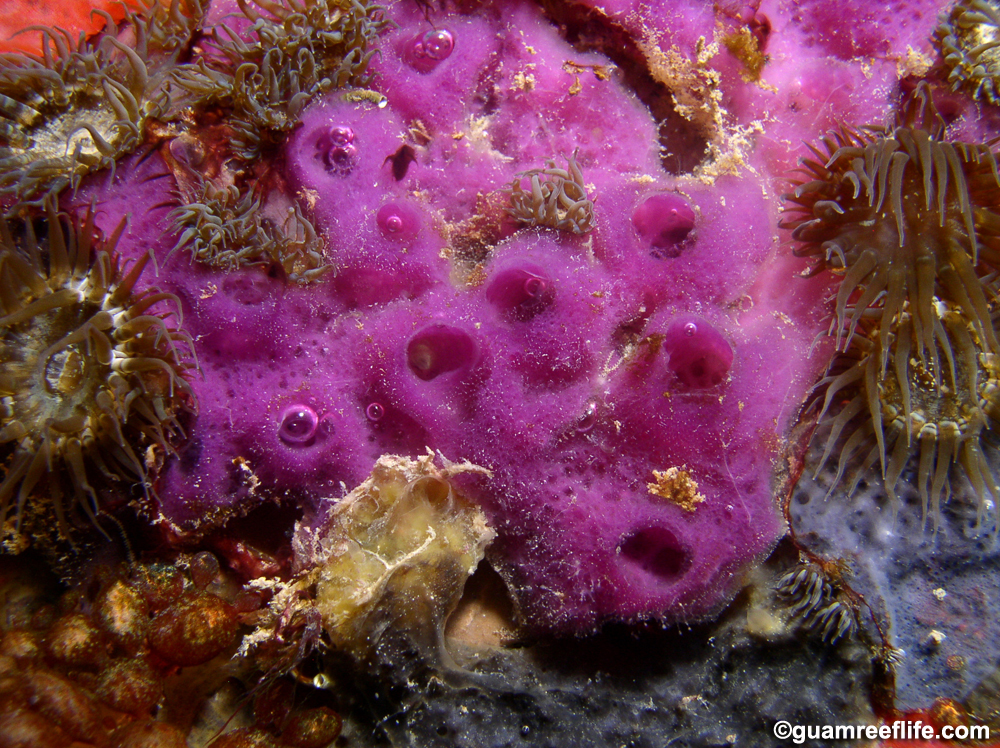
What an awful name for such a graceful animal.
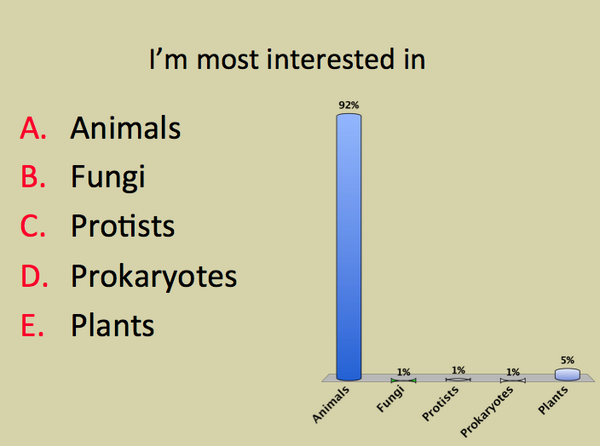
The context of this graph isn’t entirely clear, but it’s from Jeffrey Ross-Ibarra of UC Davis, and it’s from a poll of 800 first year students, so I presume it’s the results of a survey of their incoming class?
Maybe one of the things we need to do as part of popularizing science to the general public is to emphasize the diversity of life, and talk more about the cool things plants and bacteria and fungi and so forth do. I know I started out as a zoologist, am still mostly focused on animal development, but over the years I’ve become increasingly aware that there are amazing contrasts to be studied. We might wish we could study aliens from Mars, but every time I look at plant development, for instance, I feel like I’m examining extraterrestrials already.
Sometimes, people email me with good questions. Here’s one.
When I was a kid, my own visualization of evolution was Lamarckism.
But I didn’t know it. In reading Dawkins and others, I know it doesn’t exist. But it seems this article is claiming it does to some extent. Can you comment? I’m curious as to the current consensus as I’ve been reading a lot about genes that can be turned on and passed to offspring. Can you take a look?
This is a fairly common question. Looked at naively, developmental plasticity seems to be Lamarckian — we’re talking about organisms responding with morphological changes to their environment, just like Lamarck’s example of the giraffe stretching its neck. But that’s only the first step; the transmission of a distribution of traits to the next generation is purely Darwinian.
It hasn’t been very consistent, veering from “it isn’t happening” to “CO2 is healthy!” to “Al Gore is fat!”. Right now, according to prominent blowhard Erick Erickson, the correct answer is “We’re all going to die anyway, so who cares?”.
The anti-vaxxers are excited. A recent paper, Measles-mumps-rubella vaccination timing and autism among young african american boys: a reanalysis of CDC data, claims that there is evidence that vaccinations cause autism. Only one problem: it’s a crappy paper.
Orac has covered it to an Oracian level of detail, so let me give the short summary:
The New Yorker has a fascinating article on Vandana Shiva, a crusader against GMO crops. I’d never heard of her before, but apparently she has charisma and cult-like followers who hang on her every word, and her word is a rather religious opposition to scientific agriculture. Weirdly, I can agree with some of it.
At each stop, Shiva delivered a message that she has honed for nearly three decades: by engineering, patenting, and transforming seeds into costly packets of intellectual property, multinational corporations such as Monsanto, with considerable assistance from the World Bank, the World Trade Organization, the United States government, and even philanthropies like the Bill and Melinda Gates Foundation, are attempting to impose “food totalitarianism” on the world. She describes the fight against agricultural biotechnology as a global war against a few giant seed companies on behalf of the billions of farmers who depend on what they themselves grow to survive.
I might be distracted for a few days — I’m at our second annual retreat, in which we drag 50 new biology students out to a field station and force them to confront biology. Me, too…I saw a tree! And a squirrel!