Humanity’s imminent, mysterious extinction

You want something more to fear? Try this on for size.

Across the world, there’s evidence that spider populations are in danger of collapse. A landmark 2019 study in Nature found that the number of spiders, insects, and other arthropods dropped precipitously in Germany from 2008 to 2017, with the total number of different species researchers counted declining by 33 percent and total biomass dropping by 40 percent. Remember the Australian trapdoor spiders I told you about? They’re disappearing, too. After a century of settlers clearing land for crops and raising livestock, they’re becoming harder and harder to find. It’s all but certain that entire species of spiders will go extinct before we even have a chance to discover them, falling victim to industrial agriculture, pesticides, and climate change.

Then there’s this:

Alaska canceled the snow crab fishing season for the first time on Monday, as crab populations mysteriously plummet.

An estimated 1 billion snow crabs suddenly disappeared from the Bering Sea, according to CBS News. The collapse deals a heavy blow to Alaska’s biggest crab industry, and could drive many fishers out of the business.

“Mysteriously.” What a useful word. We send out trawlers to shred the seafloor, we drop traps and snatch away millions of crabs, and we spew garbage and microplastics into the ocean, and then shrug and say it’s a mystery why populations abruptly and catastrophically crash.

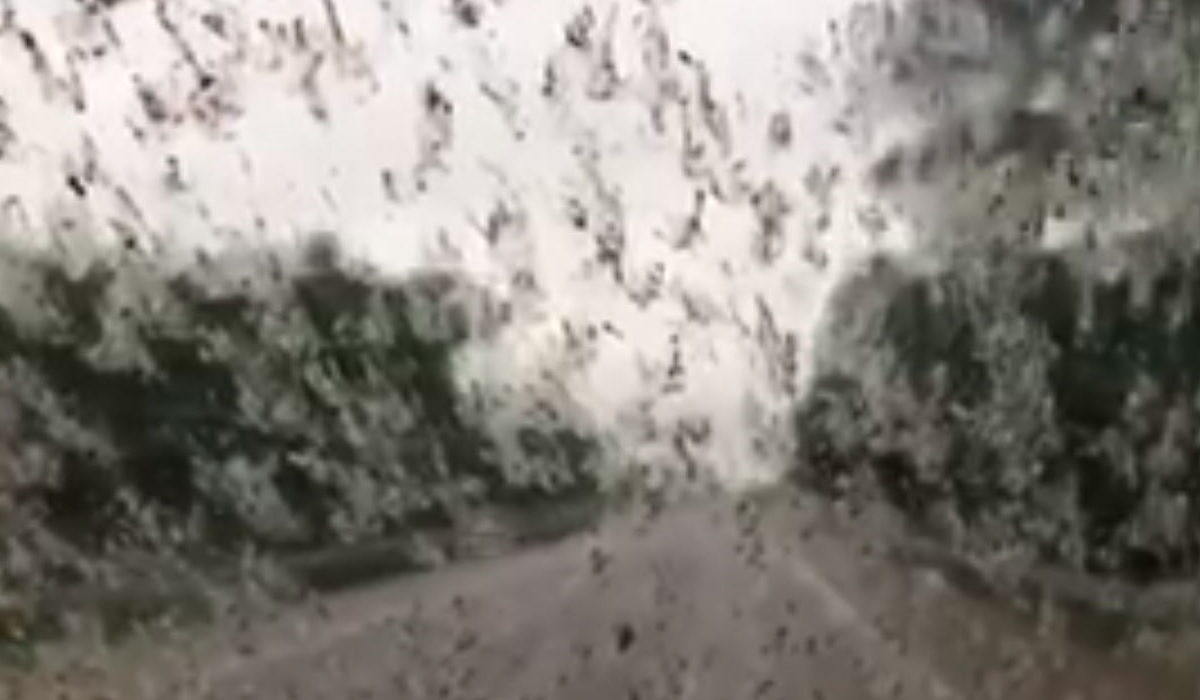
Another example: we’re seeing fewer vehicles with dead bugs splattered all over them.

From 1996 to 2017, insect splatters fell by 80 percent on one of the routes Moller regularly travels. On the other, longer stretch, they plunged 97 percent. Conventional measures show similar trends, and more recent observations have seen even sharper declines, Moller told us.

This article takes the somewhat interesting approach of speculating about alternative causes — which is fine, they’re being thorough, but we’re eventually going to have to face the reality that something “mysterious” is also happening to insect populations.

So, given this uncertainty, isn’t it possible that our spookily clean windshields are caused by factors other than rapidly declining insect populations? After all, we still see bugs everywhere, we just don’t seem to mash them with our cars as much.

Many smart people we spoke with, including entomologists and wheat farmers, speculated that maybe the cars have changed, not the bugs. As vehicles become more aerodynamic, the thinking goes, their increasingly efficient airflow whisks the bugs away from the windshield instead of creating head-on splatters.

Um, no. That’s a very silly explanation, as the experts they consult state, but also for obvious reasons. Car grills have not become more aerodynamic, nor have radiators. Also, the cars…or rather trucks people are driving are not particularly sleek. In fact, the trends are for more aggressively blunt, large, flat front ends. A lot of column inches get wasted on this ridiculous hypothesis, which can also be dismissed experimentally.

But we also saw 60 percent declines in insects between 2004 and 2021 in a British study from the Kent Wildlife Trust, which built on a Royal Society for the Protection of Birds effort in which thousands of people used “splatometers” to measure bug splatters on license plates, which aren’t much affected by aerodynamic advances elsewhere.

So then we get another off-the-wall hypothesis. It’s not that insects are in decline, it’s that there are fewer insects splattered by individual cars because we’ve vastly increased the number of cars on the road. I’m losing patience with their efforts to find any explanation other than that we’re poisoning the environment, but OK…being thorough is good.

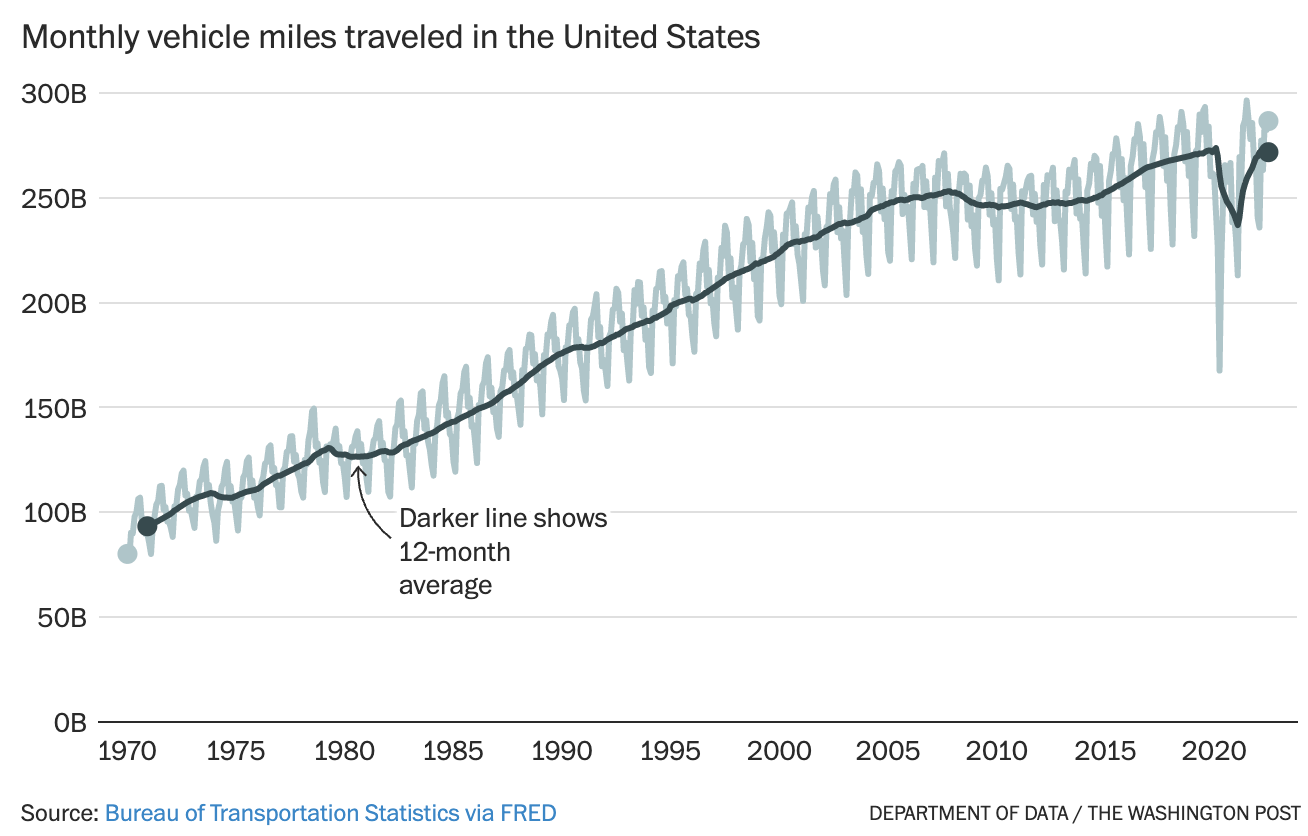
Americans now drive three times as many miles as they did in 1970, and the explosion of trucks and SUVS means many of us do it in cars with much, much larger windshields. Back-of-the-napkin math suggests acreage of windshields out on the American road has tripled. And that’s probably an underestimate in some places: A large majority of our increase in driving has come on a narrow set of major urban roads, according to our analysis of Bureau of Transportation Statistics data. And as Kenny Cornett of design-software giant Autodesk points out, more traffic means more vehicles riding in each other’s bug-free aerodynamic slipstreams.

So in our little thought experiment, which makes the depressingly accurate assumption that bugs are a finite resource, our bugs-per-windshield metric would have been cut by two-thirds even if the number of bugs had remained constant.

I…I don’t even. This would only work if, instead of sampling a tiny fraction of the extant population with our windshields, we were exhaustively extracting enough bugs with one car to deplete the population for the next car. If that were the case, then maybe tripling the number of cars would be responsible for the population crash. But that’s not the case. The column of insects wiped out by the passage of a car is minuscule compared to the population in the fields, over the lakes, around our homes.

Treating the excessive driving habits of Americans as a rationalization for insect extirpation rather than as part of the problem is troubling, too.

Weirdly, the article concludes that the problem may not be as big as we think because…we have so many cars?

So, simple math hints that the very real ecological disaster of the collapse of insect populations may look even more apocalyptic thanks to the parallel rise of another ecological time bomb: the world’s intensifying love affair with ever more and ever bigger automobiles.

No. This makes no sense. We’ve got other methods of sampling insect populations that are not bug-splatters on cars. When I first moved to the Midwest, a regular feature on the news was when vast clouds of mayflies and midges would hatch out and rise from our lakes to appear on weather radar. Nope, not so much anymore. I would go outside and marvel at the dense masses of flying insects that would cluster around streetlights — nowadays, all summer long, the lights are lonely and shining into an emptiness. I wanted to use spider populations as a proxy for insects, and spiders aren’t leaping in front of cars on the freeway…and see the first article cited, they’re in decline, too.

What’s going on? Oh, I know the answer: it’s something “mysterious”. Problem solved.

Don’t worry, though. We don’t even like bugs, so who cares if they disappear. Then, when they’re gone, the birds and fish and reptiles will fade away, but they’re not our pets, so who cares? Unexpected crop failures…well, we’ll come up with a technology to deal with that. And finally, when humans mysteriously go extinct, there will be no one left to worry about it, and all the windshields on the decaying cars we leave behind will be shiny and clean and their grills will gleam unspattered. No one will be standing around wondering what happened to all the people, and best of all, there will be no one standing around smugly to utter the non-answer, “It’s a mystery.”

I’ll miss the Pacific Ocean

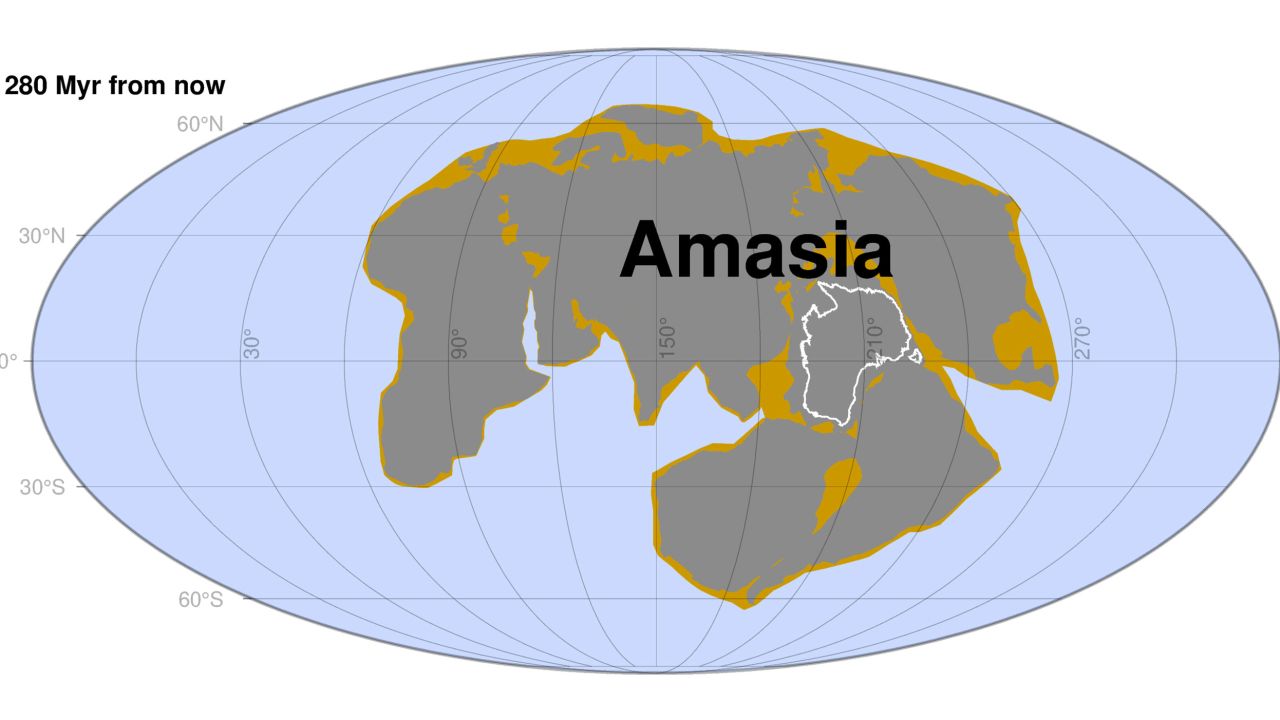
Wait, no, I won’t. I’ll be long gone. I expect the human species will be extinct by then. This is entirely predictable, that thanks to ongoing plate tectonics, eventually the continents will collide into a super-continent, Amasia.

It won’t actually be named that, of course, since the hyper-intelligent spiders that evolve to replace us won’t be using English.

Biology will get interesting, though.

Surrounded by a new superocean, the newly formed supercontinent will also have decreased biodiversity.

“Earth as we know it will be drastically different when Amasia forms. The sea level is expected to be lower, and the vast interior of the supercontinent will be very arid with high daily temperature ranges,” Li said. “Currently, Earth consists of seven continents with widely different ecosystems and human cultures, so it would be fascinating to think what the world might look like in 200 million to 300 million years’ time.”

It’ll be a harsher world in many ways, but at least it won’t have Homo sapiens screwing it up further. Also, you might want to start getting on the good side of the hyper-intelligent spiders.

It’s Nobel week, and paleogenomics wins!

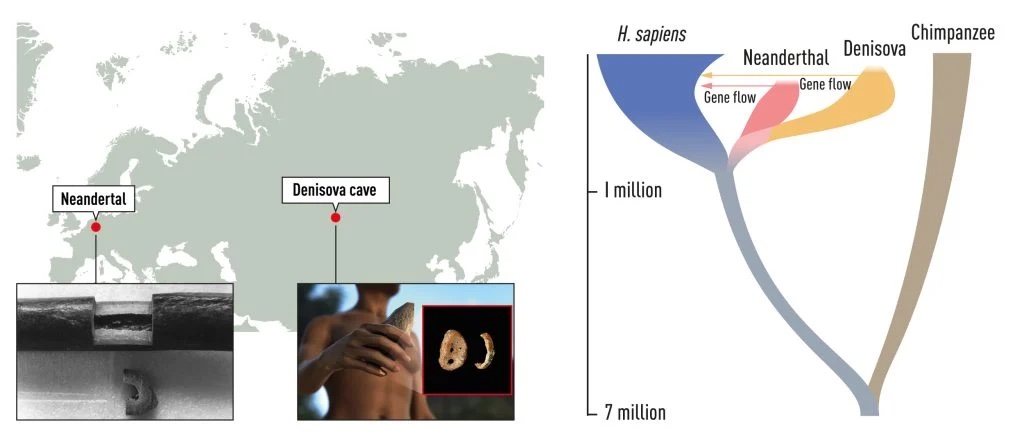
First up, look who won the 2022 Nobel in Physiology or Medicine: it’s human evolution! As represented by the paleogenomics work of Svante Pääbo, who has been recovering ancient genomes, digging up old Homo sapiens and Neandertals and Denisovans.

I do have one reservation, though: the Nobel announcement claims “the ultimate goal of explaining what makes us uniquely human.” I don’t think we can accomplish that by decoding genome sequences. Identifying the different ancestral groups that led to us is interesting and informative, but let’s not get hung up on just DNA.

Poor Dimorphos

It’s just an innocent space rock, didn’t do anyone any harm, but NASA is getting ready to practice its marksmanship and shoot at it from a distance of 7 million miles. It’s getting hit tonight, so you can watch the livestream of the sniper shot right now.


Not the view you want to see through your windshield.

Frantically rewriting lectures

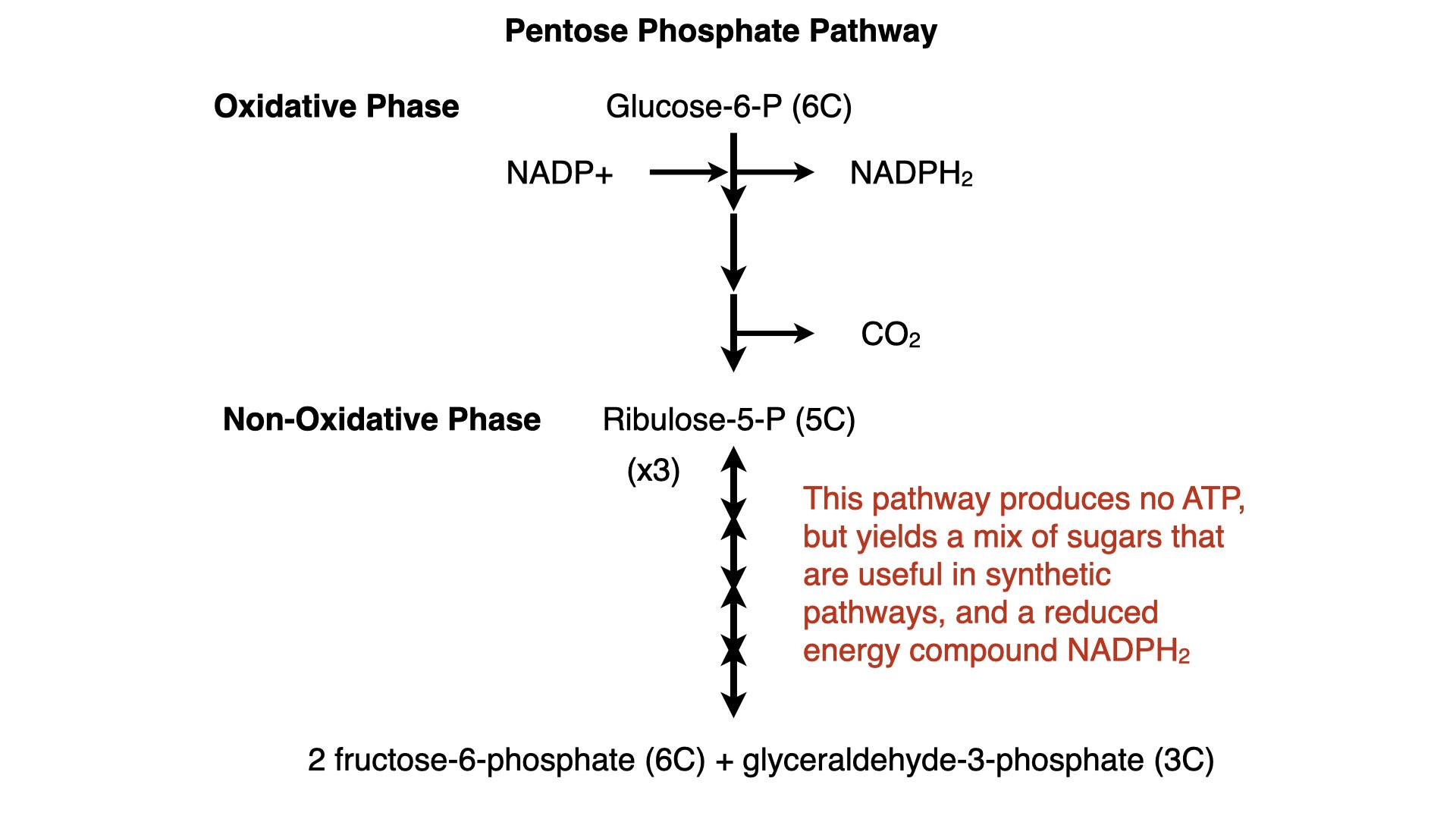
Aaargh, neglecting the blog again. My big distraction today: as always happens, I looked over last year’s notes and grumped at myself and said this will not do, this is totally inadequate, I need to rewrite the whole thing. The plan for tomorrow was to talk about the pentose phosphate pathway AKA the hexose monophosphate shunt AKA the phosphogluconate pathway because this stuff is important and, weirdly, our textbook doesn’t even mention it, so I can’t even punt and tell the students to go away, don’t bother me, just read Chapter X. As is common in cell bio, all we talk about is how we burn sugar to make ATP, and very little about essential anabolic reactions. And that bothers me.

The PPP is cool beans, too, so I rewrote the lecture from the ground up to cover more of the details, expanding what used to be a short aside into the whole dang talk, and I’m probably going to terrify them all with a peek into more advanced biochemistry (this is a class for 2nd year students, so it’s introductory level) and the way all of biochemistry is tangled and intertwined, but hey, they’re smart students. They can take it.

Unfortunately, it’s stuff that isn’t going to entertain a more general audience, unless you think filling in the details on this introductory slide would get you excited.

Man, I was so into biochemistry as an undergrad, and then I got distracted by neuroscience and development. I need to begin a second lifetime so I can catch up.

Now I have to finish grading, which is far less enthralling.

How to tell if the males of your species are assholes

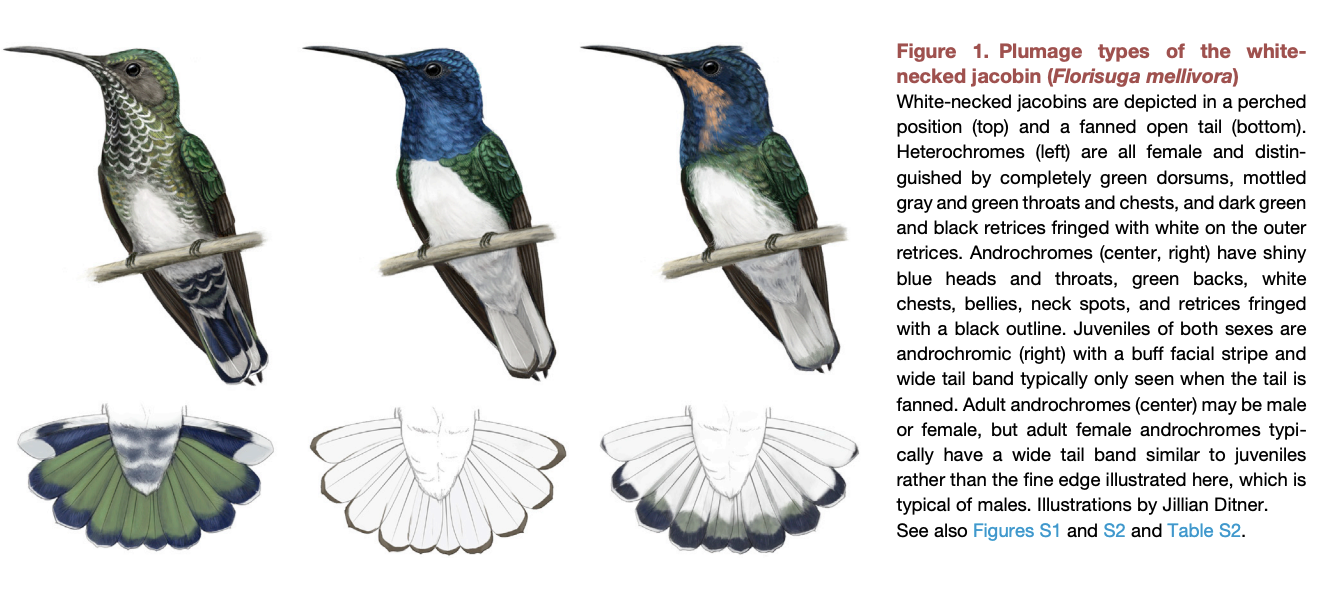
Easy. Their harassing behavior affects the evolution of females. This isn’t sexual selection, it’s just that the juvenile females are disguising themselves with male plumage to escape harassment. These birds, white-necked jacobins, are typically sexually dimorphic, but juvenile females maintain a male-like coloration, because females with adult female coloration face more aggressive assaults from males. Adopting the male coloration allows them to feed uninterrupted, while putting on the sexy female green coat brings on a plague of annoying, obnoxious males.

Ornamentation is typically observed in sexually mature adults, is often dimorphic in expression, and is most apparent during breeding, supporting a role for sexual selection in its evolution. Yet, increasing evidence suggests that nonsexual social selection may also have a role in the evolution of ornamentation, especially in females. Distinguishing between these alternatives remains challenging because sexual and nonsexual factors may both play important and overlapping roles in trait evolution. Here, we show that female ornamentation in a dichromatic hummingbird, the white-necked jacobin (Florisuga mellivora), cannot be explained by sexual selection. Although all males are ornamented, nearly 30% of females have male-like plumage. Remarkably, all juveniles of both sexes express ornamented plumage similar to adult males (androchromatism), but 80% of females acquire non-ornamented plumage (heterochromatism) as they age. This unique ontogeny excludes competition for mates as an explanation for female ornamentation because non-reproductive juveniles are more likely to be ornamented than adults. Instead, avoidance of social harassment appears to underlie this female-limited polymorphism, as heterochrome taxidermy mounts received more aggressive and sexual attention than androchrome mounts from this and other hummingbird species. Monitoring electronically tagged birds at data-logging feeders showed that androchrome females accessed feeders more than heterochrome females, presumably because of reduced harassment. Our findings demonstrate that ornamentation can arise purely through nonsexual social selection, and this hypothesis must be considered in the evolution of not only female-limited polymorphism but also the spectacular ornamentation often assumed to result from sexual selection.

They’re evolving to be able to eat dinner in peace.

Boy birds should be ashamed of their behavior, is all I can say. They can’t even leave a taxidermy dummy alone!


Falk et al., 2021. Male-like ornamentation in female hummingbirds results from social harassment
rather than sexual selection. Current Biology 31, 4381–4387. https://doi.org/10.1016/j.cub.2021.07.043

Gen III, babieee!

Fantastic success, everyone! Two of the pairs of spiders featured in my spider porn video from last week have produced egg sacs! Stri7 & Stri4, and Stri2 & Stri5, to be precise. This is huge. It may be the start of, finally, a self-sustaining colony. I’ve been struggling with this for the past few years — I get a few thriving spiders, a few egg sacs, and then over the winter they die off and I need to replenish the stocks in the spring with wild-caught adults. This is no way to do genetics. Well, it is, but that’s a different kind of genetics than I want to do.

Now I can start making plans. It will be about a month before spiderlings emerge, and then another month or two (depending on how well my fortified fruit fly diet works) to reach adulthood, which means I could have a Gen IV by Hallowe’en, or Thanksgiving at the outside. Exciting! I could be doing crosses by spring term!

Also, right now I’ve got so many spiders and spiderlings I have exceeded my lab’s capacity. In another first, while in previous years I have raided my garage for new spiders, today I took a container of about 50 Steatoda triangulosa spiderlings and released them into my garage. Sorry, babies, I can’t take care of you all, so you’re going to have to forage for yourself in the hard cruel world. Winter is coming, grow up fast.

Take your time, no rush, I’m not going to see chestnut forests in my lifetime anyway

I should look up from the spiders now and then. I did not know what was happening to forests.

Global trade and climate change are poised to make the spread and severity of arboreal plagues and pestilence worse. The hills around Syracuse are silhouetted with pale ash trees slain by emerald-colored borers. Ancient bristlecone pines out West are succumbing to bark beetle outbreaks triggered by rising temperatures. As many as 1 in 6 trees native to the Lower 48 states are at risk of extinction.

I should know. We bought a house 20 years ago that had a yard full of impressive trees, which we’ve watched steadily decline. Every few years it seems the city splashes another one with neon paint and we’re told it has to come down. But there’s hope! Science rides to the rescue, maybe! The article is about the American Chestnut, and how it’s been wiped out by a fungus.

All it takes is one gene.

The fungus infecting chestnut trees thrives by secreting a chemical called oxalic acid, which kills cells and allows the pathogen to feast on the dead tissue. But many other plants, including bananas, strawberries and wheat, avoid that fate by producing an enzyme called oxalate oxidase that breaks down the toxin.

By 2014, Powell and Maynard successfully added the wheat gene to chestnuts and were growing infection-resistant trees. The pair dubbed one line Darling 58, in honor of Herb.

Many plants use oxalate oxidase as a defense mechanism. It catalyzes the oxidation of oxalic acid into CO2 and peroxides — reactive oxygen species. Is that going to have a side effect? I don’t know. Barley makes multiple forms of oxalate oxidase, and it doesn’t seem to harm beer production.

“Making a transgenic tree — I hate to say it like this, but it isn’t that hard,” Newhouse said. The most difficult hurdle for Darling 58, he said, is winning regulatory approval.

Well. This is sort of true. Making transgenic organisms is relatively easy nowadays, EXCEPT…the difficult part is figuring out what gene to use, and since most traits have complex origins, and since the expression of the gene is going to have multiple effects on the organism, it’s difficult to predict all of the consequences. There are good reasons regulatory approval is tough to get.

But in this case, they seem to have found a relatively simple way to confer fungus resistance on a tree, and it’s been tried experimentally, and they have successfully produced healthy, blight resistant chestnut trees. However, I think uncertainty about possible outcomes is a good reason to go slow, and regulatory agencies are doing the right thing by putting the brakes on the process.

There are also bad reasons for resisting the transgenic trees, and there seem to be a lot of people blocking it. Their primary argument is this weird idea that “natural” mechanisms like breeding hybrid trees are somehow “better” than transgenic methods — this is the same reasoning that has led to GMO labeling in our grocery stores, as if somehow the fact that an agricultural scientist has intentionally tweaked a plant is bad, while wholesale, random interbreeding of varieties is more pure. I don’t get it. Don’t people realize that all of the crop plants producing your food have been extensively modified by centuries or millennia of intentional manipulation of their genomes? Everything in the supermarket is a mutant, GMO or non-GMO. I’d argue that the genetically modified plants have undergone less drastic changes than those produced the old-fashioned way.

…Powell countered that crossbreeding transfers far more genes between species. “Genetic engineering is actually a less-risky procedure than a lot of things that we’ve done in the past,” he said. “We are very precise. We’re only moving one, two — just a small number of genes into the tree.”

That the changes are small are not a reason to dismiss regulatory oversight, of course. The reason they can use only one or two genes is that they have specifically selected target genes of very large effect.

Of course, re-creating vast chestnut forests would also be a huge effect.

A good analysis, even with the Wittgenstein

LonerBox addresses the “What is a woman?” question, and I pretty much agree with him — it’s a bad question, asked in bad faith, and the answer is more complex than a conservative would be willing to accept. Of particular interest is the section starting at about 19:45, where he talks about what “an increasing number of biologists” advocate, that sex is biological, but expressed at different levels, and that brain sex is just as, or more, important than gonad sex or hormonal sex or chromosomal sex or all those other important biological aspects.

I can at least say that this biologist agrees with him, although I can think of a few others that are a bit batty on the subject.