At least I’m not the oldest and fartiest old fart around

This philosopher, Giorgio Agamben, has a remarkably pessimistic view of the future of academia. He has written a requiem for the students — as if they’re all dead now — because we’re using online teaching.

As we foresaw they would, university lessons next year will be held online [in English]. What was evident to careful observers — namely, that the so-called pandemic would be used as a pretext for the increasingly pervasive diffusion of digital technologies — is being duly realized.

We are not so much interested here in the consequent transformation of teaching, in which the element of physical presence (always so important in the relationship between students and teachers) disappears definitively, as we are in the disappearance of group discussion in seminars, which was the liveliest part of instruction. Part of the technological barbarism that we are currently living through is the cancellation from life of any experience of the senses as well as the loss of the gaze, permanently imprisoned in a spectral screen.

Actually, I don’t yet know how university classes will be held next year. We’re tentatively hoping that we’ll have some measure of normality restored, and are planning as if we’ll have students on campus in the fall, but we also have contingency plans in the works in case we’re only partially open, or have to close the campus after starting, or who knows what. This is also not a “so-called pandemic”, it’s an actual pandemic. We have to respond appropriately to a serious disease, because what’s most important is the health and safety of our students. Most of us aren’t particularly interested in having these young men and women sit at our feet and worship our words of wisdom, especially when it puts their lives at risk.

I’d rather go back to the old, comfortable, in-person methods of teaching, and it’s true that we’ve lost something when we have to do everything online. But he’s wrong about some things: I didn’t find that group discussion suffered particularly. The hard part for me was the asynchronous lecturing — losing the immediate feedback from having an audience, and not being able to punctuate an explanation with an opportunity to put students to work applying the methods. It took me a few weeks to get into the swing of it all, but near the end I was getting some very good group discussions going on Zoom. You just have to learn to use the medium. You, the teacher, have to adapt and change. I read Giorgio’s whine, and he sounds like a guy who doesn’t want to learn anything new, and is very good at inventing pompous excuses.

Some things are highly unsatisfactory when translated to the screen — lab work in particular is pretty much impossible to do well. I want to see that restored as soon as possible, but other bits don’t suffer much at all. Philosophy, for instance, ought to be eminently teachable through a “spectral screen”. Bodies are just another kind of meat robot holding the brains we want to reach, after all.

At first, Giorgio just sounds like a cranky old person who doesn’t want to do anything new. But reading further, I had to conclude he’s just a loon. His conclusion is stunningly out of touch.

1. Professors who agree — as they are doing en masse — to submit to the new dictatorship of telematics and to hold their courses only online are the perfect equivalent of the university teachers who in 1931 swore allegiance to the Fascist regime. As happened then, it is likely that only fifteen out of a thousand will refuse, but their names will surely be remembered alongside those of the fifteen who did not take the oath.

Whoa. Reluctantly accepting constraints on our familiar methodology for the sake of our students’ health is the equivalent of fascism? We’ve got students who want to learn, and compromising in our approach is not surrendering to the dictatorship of the ‘spectral screen’. It’s persevering in the face of adversity to do everything we can to educate people.

But then, this is a guy who thinks the pandemic is “so-called” and is a bit out of touch with reality. Does he need a few students to die before he wakes up to the cost of his intransigence?

2. Students who truly love to study will have to refuse to enroll in universities transformed in this way, and, as in the beginning, constitute themselves in new universitates, only within which, in the face of technological barbarism, the word of the past might remain alive and something like a new culture be born — if it will be born.

It’s not “technological barbarism”, it’s a tool for communication. That’s what teaching is about.

I don’t think that encouraging students to gather in large groups to give old farts the ability to engage with them in the traditional way is safe or sensible. We’re all looking forward to the day medical treatments restore our universities to their familiar modes of operation, but until then, respect the health of our communities and fire up the damned Zoom thingie. Make do. Try new approaches. Show a little flexibility.

What? The History Channel is showing history?

I haven’t watched the History Channel in years, since I have little interest in UFOs, Hitler, or pawn shops, but I may have to see if the tuner on my television works tonight. In celebration of Memorial Day, they’re showing a documentary on US Grant, based on the Chernow biography (which is very good), that is getting good reviews.

I wouldn’t mind seeing the Confederacy getting a good whuppin’. Again.

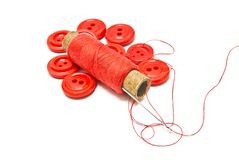
Buttons and threads, or how to achieve criticality in a non-linear fashion

I learned something a long, long time ago, first in studying the origin of life, and then in studying the relationships within networks of genes, and now when thinking about basic epidemiology. Nothing is linear. It’s an idea that’s been discussed since at least the 1980s, when Stuart Kauffman applied it to the logic of the emergence of life on Earth. Here he is talking about the appearance of autocatalytic sets, that is, collections of interlinked enzymes (or ribozymes) that generate emergent properties, like a metabolism.

Now, the next question is how hard is it to get such systems? Does it take a careful crafting of a chemist, or can it arise by chance? The body of theory I’ve been working on now for more than a decade suggests that it’s not hard.

You see this with an analogy: suppose you take 10,000 buttons and spread them out on a hardwood floor. You have a large spool of red thread. Now, what you do is you pick up a random pair of buttons and you tie them together with a piece of red thread. Put them down and pick up another random pair of buttons and tie them together with a red thread, and you just keep doing this. Every now and then lift up a button and see how many buttons you’ve lifted with your first button. A connective cluster of buttons is called a cluster or a component. When you have 10,000 buttons and only a few threads that tie them together, most of the times you’d pick up a button you’ll pick up a single button.

As the ratio of threads to buttons increases, you’re going to start to get larger clusters, three or four buttons tied together; then larger and larger clusters. At some point, you will have a number of intermediate clusters, and when you add a few more threads, you’ll have linked up the intermediate-sized clusters into one giant cluster.

So that if you plot on an axis, the ratio of threads to buttons: 10,000 buttons and no threads; 10,000 buttons and 5,000 threads; and so on, you’ll get a curve that is flat, and then all of a sudden it shoots up when you get this giant cluster. This steep curve is in fact evidence of a phase transition.

If there were an infinite number of threads and an infinite number of buttons and one just tuned the ratios, this would be a step function; it would come up in a sudden jump. So it’s a phase transition like ice freezing.

Now, the image you should take away from this is if you connect enough buttons all of a sudden they all go connected. To think about the origin of life, we have to think about the same thing.

The pattern should also affect how we think about genes. We’ve got about 20,000 genes; each gene influences the expression of some set of other genes. You may think you know exactly which genes are directly affected by a gene you are interested in — you can do experiments and work out the connections, a process called epistasis — but because each of those genes also have multiple connections, you in effect have to consider that every single gene in some way influences the activity of every other gene. Tug on one, and every other gene in the system is affected. Each of us is a supercluster of interacting genes, being tugged on in various ways by the environment.

I’m not an epidemiologist, but this also how I think about the pandemic. I am a button. I’ve been alone for months; if I had gotten the disease, I would have suffered alone but I’d also have been a dead-end for the virus. Now my wife is home, another button, and we are tied together with a red thread such that if I get the disease, she almost certainly will, and vice versa. But also, she was living with my daughter, her husband, and my granddaughter for a few months, she was part of a four-button cluster, which I’ve now joined. If one of us had the virus, it would have readily spread within that group. But it would have ended there.

Unless…what if I cheated? I decided to go out to a bar and chat with ten friends. I’ve basically connected a red thread to each of their clusters, and increased my connectivity greatly. Maybe you think it’s still a manageable number, but that’s only because you don’t see all the red threads outside of your immediate group. The point of Kauffman’s analogy is that the expansion of the network is not linear, as you might naively expect, but jumps rapidly as the number of connections increases, and can undergo a phase transition, where just going out to a bar can achieve criticality, and suddenly you are connected to everyone in the country, and the virus has avenues to reach everyone.

So think of yourself as a button. Every time you touch someone, lean in close and breathe their air, you are tying a red thread to them, linking your fate to some degree to them. You can safely build a little network with close family, and you’re still OK — the threads tangle together just your small family unit. But if your child has a playdate with a neighbor’s kid…they have made a new thread that encompasses everyone in your family, and everyone in the neighbor’s family, and you’ll have no idea how many threads connect you all. And if you decide to take the whole family to that newly opened beach and mingle with thousands of other people, forget about it — the number of connections have shot up exponentially. You’ve lost all control.

The problem is that people don’t grasp the idea of exponential increases intuitively. I don’t. I’ve worked with enough models that I know that these kind of phenomena can produce surprisingly large effects rapidly, though, and that our current situation is a perfect example of that kind of phenomenon, and damn, stay home and stop stitching all those buttons together.

Back to the spider grind

I took a tour of my house this morning to see how the spiders were shaping up. I found lots, even more than I did last week. Some were familiar, like Attulus fasciger, who had captured a mosquito-like creature. Good work, young lady!

Of course there were lots of Salticus scenicus around.

The exciting but somewhat disappointing discovery was that Parasteatoda abounded — they’d colonized several inset corners of the house and areas around the downspouts, where they had good cover and great places to hide.

The disappointing part was my own failure: I couldn’t get a good picture of any of them! They were all living in little houses made of plant debris, and if I tapped on them to ask them to come out, they did a typical Parasteatoda thing: they’d immediately bungee straight down to the ground. They’re conveniently predictable when trying to catch them, but I just wanted to say hello and take a picture.
To see what I mean about the difficulty, I saved one photo of one tucked into a bit of dried flower petal, with just her blurry butt sticking out.

I’ve got 4 of these spider nests tagged now, and I’ll be back tomorrow and will try to get some better pictures. Except I think we’ve got thunderstorms predicted for Sunday…so maybe a little later.

You can see the photos, if you really want to, on Patreon or Instagram, as usual.

We’re all going to come out of this with new phobias

I’m starting to think I never want to be around people again, what with all their filthy, moist exhalations.

On the plus side, I’ve always wanted an excuse to wear a mask and cover this homely face. I look forward to the new support for industries that make fashionable face wear — I would like a formal mask for special occasions, a professional mask for work, and a wild & crazy mask for partying in the streets (alone, of course). I may also need a spider mask for those days I’m focused on arachnids, even though they tend not to sneeze.

Modern comic book history, in 3 minutes

As a person who mostly skipped any engagement with comic books in the 80s and 90s (my sons got into them a bit during that period), this short video seems to perfectly encapsulate my experience with them. Rob Liefeld and Todd McFarlane are shown creating a new superhero character while Stan Lee kibitzes. The amazing thing is how Lee zeroes in on the deficiencies of their creation — all flash and glitz, no story and no character — and closes with words of prophecy.

“The kids like it!”