The COVID-19 crisis is an opportunity for charlatans on all sides

I’d never heard of Surgisphere before. Apparently, no one had. They just suddenly appeared out of nowhere with vast amounts of data from numerous hospitals, a gigantic database that they’d used to address the question of the utility of hydroxychoroquine in treating COVID-19, and came back with the expected answer: no, it’s not any good. They got quoted all over the place! Great PR! Suddenly, lots of people had heard of Surgisphere.

Unfortunately, Surgisphere is a crock.

The World Health Organization and a number of national governments have changed their Covid-19 policies and treatments on the basis of flawed data from a little-known US healthcare analytics company, also calling into question the integrity of key studies published in some of the world’s most prestigious medical journals.

A Guardian investigation can reveal the US-based company Surgisphere, whose handful of employees appear to include a science fiction writer and an adult-content model, has provided data for multiple studies on Covid-19 co-authored by its chief executive, but has so far failed to adequately explain its data or methodology.

Data it claims to have legitimately obtained from more than a thousand hospitals worldwide formed the basis of scientific articles that have led to changes in Covid-19 treatment policies in Latin American countries. It was also behind a decision by the WHO and research institutes around the world to halt trials of the controversial drug hydroxychloroquine. On Wednesday, the WHO announced those trials would now resume.

Hey! Nothing wrong with citizen input from science fiction writers and adult-content models. There had better be more substance behind the claims, though. It turns out that there is confusion about how many employees the company has (100? 6? 3?) depending on the source, there don’t seem to be any people with the special skills need for the study — this is Big Data stuff, lots of statistics and computer science — and the data has been falling apart. The study claimed to be derived from “96,000 patients with Covid-19, admitted to 671 hospitals from their database of 1,200 hospitals around the world”, but various hospitals have reported that the data doesn’t match what they’ve reported.

And then, the big question: how did this company get access to so much confidential medical information?

One of the questions that has most baffled the scientific community is how Surgisphere, established by Desai in 2008 as a medical education company that published textbooks, became the owner of a powerful international database. That database, despite only being announced by Surgisphere recently, boasts access to data from 96,000 patients in 1,200 hospitals around the world.

When contacted by the Guardian, Desai said his company employed just 11 people [nobody seems to know how many people work there]. The employees listed on LinkedIn were recorded on the site as having joined Surgisphere only two months ago. Several did not appear to have a scientific or statistical background, but mention expertise in strategy, copywriting, leadership and acquisition.

What is clear is that there was a massive falsification of data. It also looks like the chief executive of the company, Sapan Desai, is a con artist with a history of pseudoscientific schemes.

What’s interesting about the story, though, is that it demonstrates how everyone is a bit gullible, and is willing to suspend skepticism a bit when the science, pseudo or otherwise, seems to support prior expectations. Lots of people got fooled by this one. Researchers even suspended ongoing trials because they thought Surgisphere had just provided the definitive answer! At first, it was only the hydroxychloroquine fanatics who were skeptical of the study, and embarrassingly, they were right, in this one case. But the real difference is that the real scientists, like David Gorski, will reassess their conclusions in the light of new information, admit to their error, and move on.

That’s the difference between the cultists and me. I’ll change my mind if they present new information that checks out when I dig into it. It’s also a lesson that a believer’s skepticism when examining something he disagrees with will always be far more rigorous than when looking at a study that goes against what he currently believes. Think of it as a somewhat embarrassing reminder to myself (coupled, perhaps, with a bit of self-flagellation) to remain humble in the future and not to be too fast to dismiss criticisms coming from even the cultists.

Surgisphere’s papers are getting trashed. The legitimate hydroxychloroquine studies have resumed — way too many studies than the treatment deserves, if you ask me. If they come back with positive information about the value of the drug (I don’t think they will, since the claims all originated from sources as quacky as Sapan Desai) then I’ll accept new treatment recommendations. The question is, will the drug’s proponents accept any evidence from any studies that show its efficacy is baseless?

The patient didn’t make it, doctor

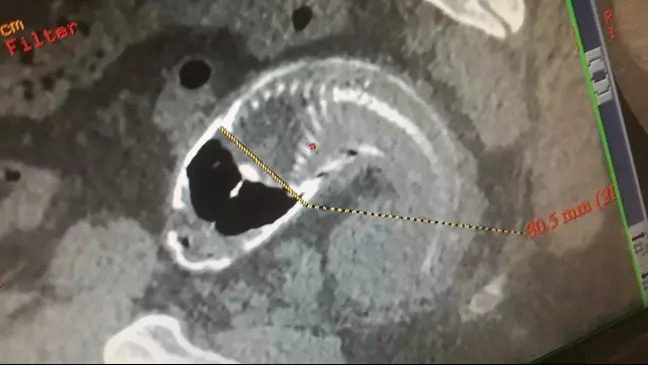
Emergency surgery: the patient, a handsome Mozambique tilapia in the prime of life, was trapped inside a maze of tunnels, an environment not compatible with life. Medical scans revealed its location, but it was deep and too large to be easily extracted.

The only solution was to go in and widen the tunnels. When they finally got to the fish, though, it was too late. It had expired.

It may have been dead for a while, and its location was not exactly conducive to preservation.

To make matters even more disgusting (if that’s possible), medics were reportedly gagging at the smell in the operating theatre.

Tragic and horrifying. O Poor Tilapia! We grieve for you.

The question remains: how did this terrible event happen to the fish?

When a nurse questioned him on it, the patient claimed he’d ‘accidentally sat on’ the fish, which then entered his body via his anus.

Seems legit.

A chat transript has circulated on China’s social media service Weibo. It states that the healthcare worker responded, saying: “Do you think I’m an idiot?”

People, look before you sit down. You never know when a fish might be sitting in your chair. From the perspective of any innocent small animal taking a break on your office chair, you’re just an ominous stinky dark hole lowering itself to engulf anything on the seat.

Can I be her when I grow up?

I’m reading Tea Francis’s story, and wow, that’s me, except I waited until I was 60 to get into spiders. I wasted so much time! (Well, not really, I do have a family and a career, so I can’t complain about that.)

I have kept spiders for almost 20 years now, sometimes just one tarantula, sometimes lots of different types of spiders, but they’ve been present in some capacity ever since I was 17 or 18. After moving somewhere with more space at the beginning of last year, my collection had expanded significantly to almost 200 spiders of all different types. I decided to start an Instagram account to post about my spiders as whenever I posted anything to do with them anywhere else, I got a load of the usual ‘kill it with fire’ responses which I find grating, to say the least. I started to focus my attention on studying them a lot more closely. I invested in my very first DSLR and macro lens and set about learning how to use it. That in itself unlocked a whole new level of appreciation for them and I quickly became hopelessly, irretrievably obsessed. With new photos popping up on my Instagram feed every day, sometimes multiple times a day, they seemed to be gaining rather a lot of interest from other enthusiasts, photographers, keepers and even arachnophobes who were consciously working on overcoming their fears. This was a bit of a revelation for me & definitely a motivation to do more! I took it to Twitter as well and began posting there too, where I ended up meeting a lot of arachnology folk who were either studying towards or already active in the field I had always quietly dreamed of being involved in myself. Actually working with and researching spiders.

Then look at her lovely spider nook! It’s like fantasy land!

I’m not too jealous, though. I look at that and see a heck of a lot of maintenance work, and also sadness — most spiders aren’t that long-lived, so there’s always death among the beloved horde. Also, this would be a terrifying time to be at the start of a science career. Stay strong, Ms Francis!

Lawless police

The police were systematically slashing car tires during the protests. They initially lied and said they didn’t do it, or that it was a few random incidents, but when every car in a lot is slashed in all four tires, you know that’s a big fat lie. Now that there’s video of cops destroying property, they’ve changed the lie.

The Star Tribune has identified the officers puncturing tires as state troopers and deputies from the Anoka County Sheriff’s Office. The officers strategically deflated the tires to “stop behaviors such as vehicles driving dangerously and at high speeds in and around protesters and law enforcement,” said Minnesota Department of Public Safety spokesperson Bruce Gordon. The troopers reportedly targeted cars that “contained items used to cause harm during violent protests” such as rocks and concrete. The Anoka County Sheriff’s Lt. Andy Knotz said deputies were following directions from the state-led Multiagency Command Center.

Yeah, right. Lie, lie, lie.

Also of note: these are Minnesota state troopers, not the Minnesota Police Department. The city is talking about defunding their police, but the staties aren’t being touched. Maybe when they’re hit with all the towing bills and lawsuits, somebody will wake up and realize they’re just as corrupt?

Just look at these pretend-soldiers destroying private property!!!. Shock! Horror!

The gray car in the video above was the rental car of Luke Mogelson, a New Yorker writer who typically covers war zones and is now stationed in Minneapolis to write about the protests. As the protest on Sunday evening turned hairy, with law enforcement tear-gassing peaceful groups soon after curfew, Mogelson went to check on his car, showing his press pass to officers along the way. (Media were exempt from the curfew.) One officer took a picture of his press pass and said he would “radio it up the chain so everyone knew that car belonged to the press,” said Mogelson. When he came back later that evening to retrieve his car, officers informed him that the tires were punctured. “They were laughing,” Mogelson recalled. “They had grins on their faces.”

ACAB. Indisputably.


Gosh. Maybe I should respect the police perspective on all this.

Linux goal for the day: iMovie replacement!

I tried KDENLive. It was too much — so many quirks and clumsiness, perhaps because it was just trying to pour every single video editing option possible in willy-nilly.

Today, I’m experimenting with Shotcut, on the recommendation of a reader. It’s simpler, so not quite as overwhelming. I might be able to work with this.

A couple of common problems I run into everything Linux. With no universal interface guidelines, every program seems to want to do everything their own way. I appreciate how the programmers can find that liberating, but in the absence of constraints and standards, they always seem to make bad choices, and you have to just stare in wonder at how they’ve decided to arbitrarily fuck up their own work. It also means that using the thing is awkward and not at all fluid, at least not until the user develops their own novel workflow. It also means the user has the power to make the most godawful ugly videos ever — I was testing various things out and made this nightmarish thing with purple 3-D titles and funky video effects and random stuff appearing in spectacularly elaborate ways that will never be seen by the eyes of any other human. I’m about to take it ’round back, shoot it, throw it in a hole, and set it on fire. But I figure out how some things work while building that monstrosity!

Bottom line: Shotcut might be my replacement for iMovie, as ugly as it is. I might just have to become insensitive to non-Mac ugliness. I know, I shouldn’t complain, it’s free software…but iMovie is also free.


First try:

Also, I’ll be on this channel at 3pm tomorrow (9 June) for a free-for-all rant about Kent Hovind and other creationists.

Let there be change at last

Give ’em hell, John Oliver. Good summary.

I would also point out a fact revealed in this thread: most police activity isn’t about preventing crime, it’s about inventing crime, finding reasons to harass and intimidate and punish people to justify their existence. That’s the reason crime rates go down when the police go on strike: it removes a significant factor, the mere reporting of crimes that are generated to give the illusion that they are essential. Cop busy work is harassment of citizens.

Ever policeman in the country needs to be thinking about alternative employment opportunities. Preferably something that doesn’t involve carrying a gun or baton.

Did he think he’d go to heaven?

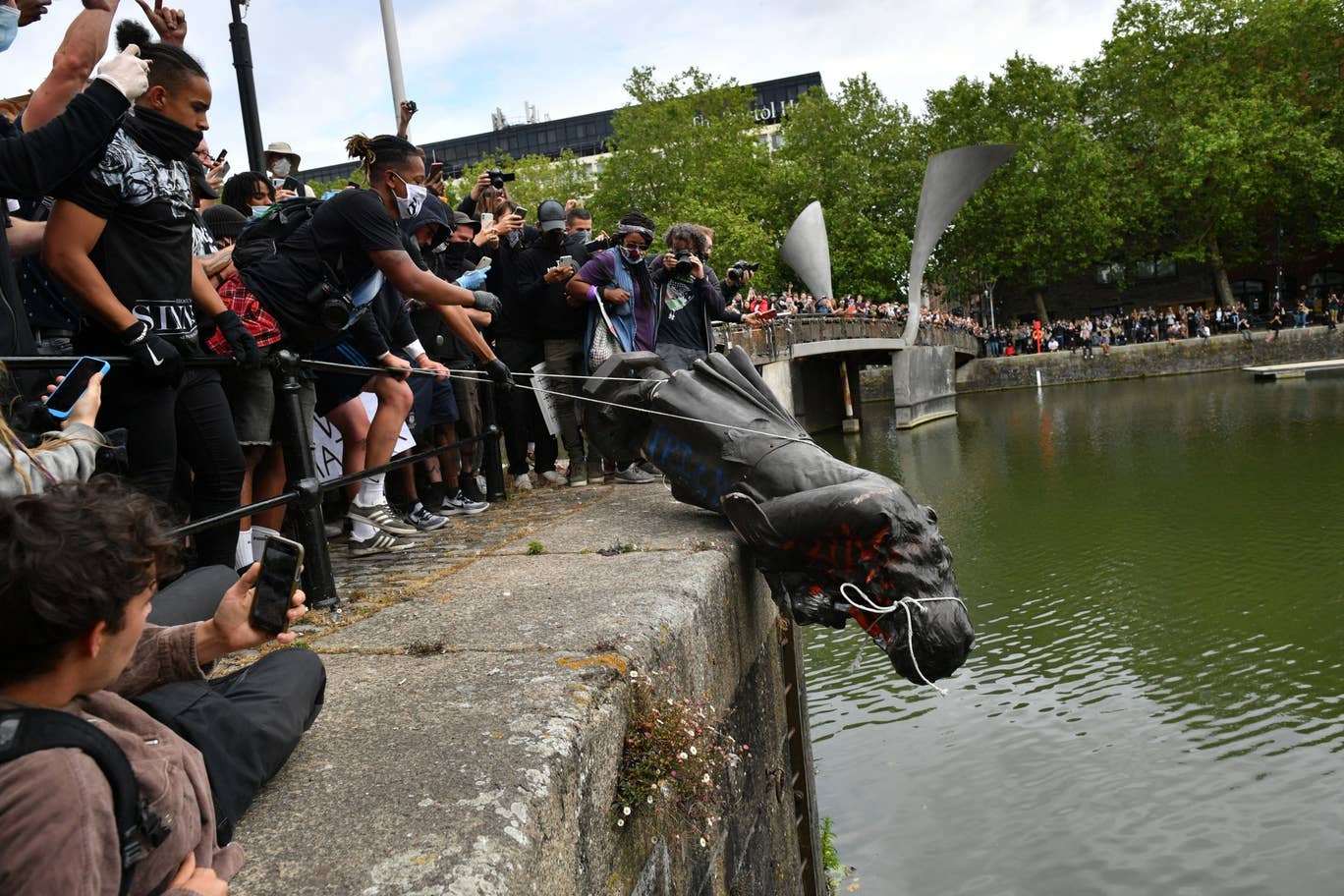
In the news, residents of Bristol tore down a statue of Edward Colston (1636-1721) and threw it in a river.

I knew nothing about the guy and had to look him up, where two prominent facts are mentioned.

A. He made a lot of money in the slave trade. In fact, he held the highest office in the Royal African Company, so he was the head honcho of the institution responsible for the British side of the slave trade.

B. He was loved in Bristol as a tremendous philanthropist, founding churches and hospitals and poorhouses, and was spending a lot of money on local, British charities.

Huh. So he was busy generating great misery in the black people of Africa, and using the profits from that ugly enterprise to benefit the white people in his hometown. Those two perspectives are irreconcilable, unless he also thought his black victims were undeserving or non-human. I rather suspect that the suffering he caused greatly outweighed the good he did at home, especially since his goodness was fortuitously focused on maintaining the institutions that kept him wealthy and powerful. So, yeah, throw his monument in the river. Recognize that the good we do for our local benefit has to take into account the global harm that we do.

It’s also an interesting example of how European communities benefited at the expense of African and Asian peoples.

Now, Belgium…about King Leopold II