Why am I here?

How odd. This video of my lecture on extrachromosomal inheritance is blowing up on YouTube — I guess The Algorithm hiccupped and is serving it to random people. That in itself isn’t very interesting, but I am amused by all the comments. It’s very existential, with people wondering “why am I here?” and just generally baffled at how this particularly video ended up in their recommendations. I wonder at this question too.

Of course, the answer to the question is easy: because a program told you to be here.

This is a blip that will quickly fade, especially since today’s topic will be maternal inheritance.

Cancel Culture! Yargleargleblarlgle! Justice!

Y’all know Louis CK was awarded a Grammy the other night, right? Boy, he sure was canceled. He won’t be whipping out his tallywacker in front of unsuspecting women from now on, will he? They might punish him with a Netflix special or something horrible like that.

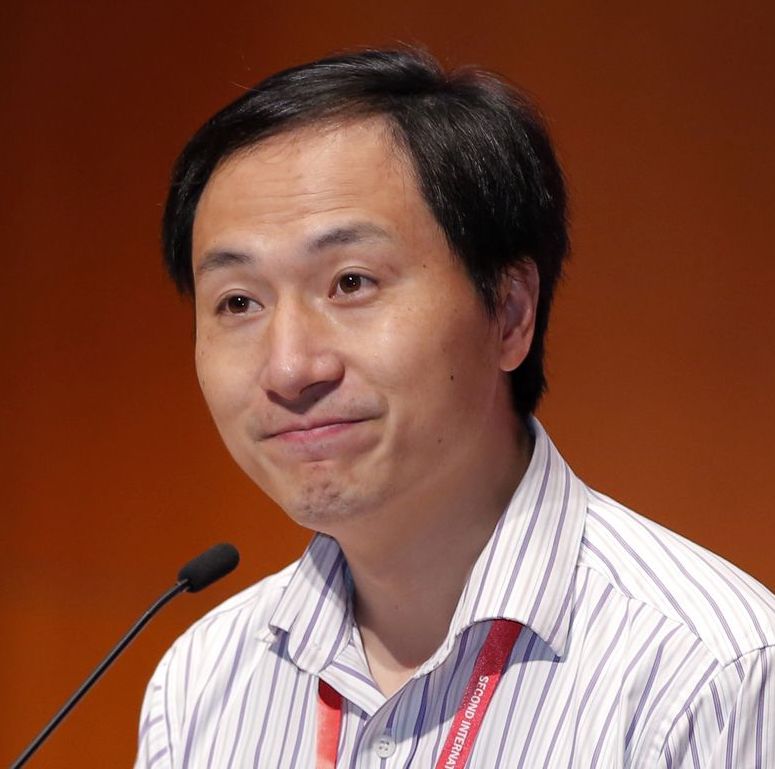
But here’s something even worse: He Jiankui has been set free. He Jiankui is the guy I called a self-aggrandizing mad scientist for his reckless, selfish experiment in which he modified human embryos with CRISPR/Cas9 and brought them to term. He claimed he was trying to prevent HIV/AIDS by deleting an immune system protein that the virus uses to bind to cells, but we know nothing about potential side effects or new susceptibilities it might confer, nor do we know how safe the procedure is, or even how effective this deletion would be. He charged ahead and ignored all ethical guidelines to make genetically modified babies, and then announced it as a big surprise at a conference. I bet he was surprised when the Chinese police arrested him and put him in prison for a few years.

But that’s all! And now he’s out.

The daring Chinese biophysicist who created the world’s first gene-edited children has been set free after three years in a Chinese prison.

Wait, wait, wait. “Daring”? You went with “daring”? What’s wrong with the editors at the MIT Technology Review? I would have suggested “unethical” or “criminal” or “incompetent”, and “biophysicist” sounds too complementary: “hack” would have been more accurate.

Then it goes on with this tripe:

It’s unclear whether He has plans to return to scientific research in China or another country. People who know him have described the biophysicist, who was trained at Rice University and Stanford, as idealistic, naïve, and ambitious.

Why are they flattering this guy? Why are there any doubts about his return to scientific research? There ought to be no question that He Jiankui should never be permitted to participate in any biomedical research ever again.

Unfortunately, he’s apparently part of a “network” of evil mad scientists who haven’t been hampered by the arrest of just one capo and are set to get back to work.

The researcher spent around three years in China’s prison system, including a period spent in detention as he awaited trial. Since his release, he has been in contact with members of his scientific network in China and abroad.

While responsibility for the experiment fell on He and other Chinese team members, many other scientists knew of the project and encouraged it. These include Michael Deem, a former professor at Rice University who participated in the experiment, and John Zhang, head of a large IVF clinic in New York who had plans to commercialize the technology.

Deem left his post at Rice in 2020, but the university has never released any findings or explanation about its involvement in the creation of the babies. Deem’s LinkedIn profile now lists employment with an energy consulting company he started.

“It is extraordinary and unusual that [He Jiankui] and some of his colleagues were imprisoned for this experiment,” says Eben Kirksey, an associate professor at the Alfred Deakin Institute, in Australia, and the author of The Mutant Project, a book about He’s experiment that includes interviews with some of the participants. “At the same time many of [his] international collaborators—like Michael Deem and John Zhang—were never sanctioned or formally censured for involvement.”

“In many ways justice has not been served,” says Kirksey.

I’m getting a little tired of “justice has not been served” stories, but that seems to be all we get anymore. Hey, how’s Donald Trump’s presidential campaign going?

What is a woman?

This seems to be the question for April. Ketanji Brown Jackson was asked, and I don’t think she gave a good answer: she basically punted. She told Marsha Blackburn that she was unable to answer the question because she is “not a biologist.” The problem isn’t that she’s not a biologist, it’s that the question is so complex and involves so many interacting perspectives that it is silly to expect a one sentence answer. It’s not a true/false question. It demands a full thesis paper to even begin to touch the subject, and it’s going to involve biology, genetics, endocrinology, psychology, sociology, and history to give an adequate answer. Good biologists know that, too, and so please, don’t expect us to deliver a definitive, complete definition. It’s also not going to lead you to the simple binary that Blackburn wants.

Would you believe Answers in Genesis tried to answer the question? They’re stuck on the biology, too — and I tell you what, if you’re expecting a bunch of young earth creationists to give a reliable answer on a biology question, you’re boned.

The biological differences between men and women go far beyond the reproductive system and secondary sexual characteristics. Women’s bones are, on average, less dense than men’s. Women have less muscle and more fat on their frames. Research suggests that women have better language skills and men are better at some types of math, though some of this has been attributed to differences in brain function, learning styles, and perhaps cultural expectations. (And while this may be true on a population level, it says nothing about the relative abilities of any particular man or woman.) Women’s biology is so different from men’s that doctors are now realizing they have distinctive heart attack symptoms and sometimes have different reactions to medication. Women’s lifespans are, on average, a few years longer than men’s. That the sexes are different regarding their bodies, their interests, abilities, and even their medical needs should not be surprising, nor should it be a boasting point for those of either sex.

Statistical epiphenomena are not particularly useful mechanisms for identifying the differences. They are even vaguely aware of the problem, as you may notice with that parenthetical comment that it says nothing about the relative abilities of any particular man or woman. Yes, there are differences in the averages, but there is significant overlap, and they are shaped by cultural expectations, as even AiG is able to notice. There are real biological differences, and the variants do tend to cluster into a bimodal distribution, but the properties of a population don’t necessarily apply to the individual. Many of those aren’t at all diagnostically useful — do we have to wait for someone to have a heart attack, die, and then use their symptoms and age at death to determine sex? Boy, those are going to be some depressing gender reveal parties.

Tellingly, they don’t answer the question, either. Their final definition relies on the pathetic trope of looking it up in a dictionary, and saying that everyone just knows what a woman is.

Merriam-Webster has, as of the date of writing, the primary definition of woman as “an adult female person.” The Oxford English Dictionary has the definition as “an adult female human being,” as does the Cambridge Dictionary. Every English dictionary has had a similar definition of the word woman, and up until very recently, everyone everywhere understood that men and women are the two biological sexes that comprise humanity. From ancient times, it is simply assumed that a person is either a man or a woman.

Great. Define “adult”. Define “female”. Define “person”. Every word of that definition has been historically and culturally fluid. Can you at least learn to recognize that these properties that you think are so rigid and definitive are and have always been weebly wobbly culturally defined conventions rather than inviolable biological absolutes?

Oh well, I thought Answers in Genesis would be the absolute rock bottom of the well being dug to haul up buckets of stupidity, but there’s always someone willing to dive a little deeper for that delicious, precious inanity, and here comes Madison Cawthorn.

His definition:

XX chromosomes, no tallywacker.

There are people who identify as women who only have one X chromosome, and other people who identify as men who lack a “tallywacker”. This is a bad definition. It’s simple-minded and trivializing, exactly what you might expect from a Madison Cawthorn.

Let’s turn it around and ask a different question.

What then is a man?

Books as empty as Madison Cawthorn’s cranium

I know. It’s just possession of a penis. Which means that a gigantic literary genre has been an epic waste of time. We can short circuit all the breast beating of Ernest Hemingway and Arthur Miller — just have their protagonists pull their pants down in the opening paragraph, done. Rip SE Hinton out of school libraries, since we can just replace her with a pantsing scene. Sir Gawain and the Green Knight? We already know what manhood and masculinity are, good riddance. Homer and the Epic of Gilgamesh? Now superfluous.

It seems to me that all these self-involved authors have been writing an awful lot about what it means to be a man, and we can clear out a lot of library shelf space if we replace it all with the collected works of Madison Cawthorn, which would be a one-page pamphlet with a single line, XX chromosomes, no tallywacker. We can keep all the biology textbooks until the day that someone actually reads one, unlike self-righteous defender of biology Cawthorn, and discovers that they all say that sex is more complex and diverse than the prudes can imagine.

Man, a heck of a lot of famous literature is just guys looking for their tallywacker.

Be the change you want to see

I have to pat myself on the back — I’ve managed to quit an addiction cold turkey. Yeah, I enjoy super-hero comic book movies. They’re the sugary breakfast cereal of Hollywood cinema, probably not very good for you, but they provide that sweet fast-paced visual gratification we all enjoy. (Hmm, maybe a more accurate analogy would be to compare them to porn.)

Now I wouldn’t mind an occasional popcorn movie at all, so I’m not saying they’re entirely bad. I’m only saying that a little more variety would be good, and I’m looking ahead to a long summer of predictable, flashy blockbusters that will fill the theaters, and in my little town with one dinky two-screen theater, that means long, long bookings that will squeeze out any alternatives. I’m casually boycotting them.

I did not see The Batman. Did it offer any novel insights into a tired genre? I doubt it.

This weekend, the theater was playing Morbius, a comic book movie about a vampire super-hero. No, I don’t think so.

Especially since that vein was satisfyingly tapped about 20 years ago, with the Blade trilogy. Did you know all three Blade movies are currently playing on Netflix? Who needs an angsty grimdark vampire movie when we’ve got this?

Oh, baby. Super cool Wesley Snipes, vampire raves with a synthy sound track, chop-sockey swordplay, and evil vampires turning into skeletons with glowing ash? Jared Leto does not tempt me at all. These are classic movies. Talk to me when you’ve got a new twist on a formula that was perfected decades ago (btw, the Michael Keaton Batman was the best, too.)

I fear I won’t be seeing many movies this summer. The new Spiderverse movie will probably be irresistible and will draw me in, but the rest look dismal. And don’t even mention the horrible Harry Potter…thing.

When compliance becomes a synonym for open-mindedness…

This study is mostly unsurprising, except for the absence of an effect of political ideology. People who don’t comply with COVID health measures tend to be close-minded, or maybe people who are already conspiracy theorists, ready to twist the evidence to fit their preconceptions, are more likely to reject health recommendations. I don’t know which way the arrow of causality goes.

Closed-minded individuals were less likely to adhere to COVID-19 preventive behaviors, such as physical distancing, according to new research that examined data collected from 17 countries. The study, published in Frontiers in Psychology, provides evidence that analytic thinking styles were more important than political ideology in predicting behaviors during the initial stages of the COVID-19 pandemic.

The study was multinational and involved over 12,000 participants, which was good, but also relied on self-assessment (everyone claims to be open-minded!) modulated by a questionnaire to drill down into actual attitudes.

The researchers found open-mindedness was a substantially stronger predictor of adherence to COVID-19 preventive behaviors than political orientation. Those who agreed with statements such as “If I do not know much about some topic, I don’t mind being taught about it, even if I know about other topics” were more likely to report avoiding physical contact with others, maintaining physical hygiene, and supporting COVID-19 restrictive mitigation policies. In contrast, those who agreed with statements such as “I think that paying attention to people who disagree with me is a waste of time” were less likely to adhere to COVID-19 preventive behaviors.

On the other hand, we have to balance open-mindedness and credulity. I’d say I’m fairly open-minded (unreliable self-assessment again), but is compliance a good aspect of open-mindedness? I’d also like to say I’m usually going to follow CDC recommendations…except that now the CDC is being political and ideological.

In late February, the US Centers for Disease Control and Prevention (CDC) unveiled a new Covid-19 monitoring system based on what they call “Community Levels.” By downplaying the importance of Sars-CoV-2 transmission, the new system instantly turned what was a pandemic map still red from Omicron transmission to green – creating the false impression that the pandemic is over.

Released four days before the State of the Union, the new CDC measures and the narrative they created let President Biden claim victory over the virus via sleight of hand: a switch from standard reporting of community transmissions to measures of risk based largely on contentious hospital-based metrics. The previous guidelines called anything over 50 cases per 100,000 people “substantial or high.” Now, they say 200 cases per 100,000 is “low” as long as hospitalizations are also low.

The resulting shift from a red map to a green one reflected no real reduction in transmission risk. It was a resort to rhetoric: an effort to craft a success story that would explain away hundreds of thousands of preventable deaths and the continued threat the virus poses.

The CDC has been captured by capitalism. The US government is also not following the science.

Some claim that the White House and the CDC are “following the science” and doing the best they can in these times. But if the goal is to prevent infection and suffering, the updated recommendations do not align with science or equity. It’s more accurate to say they’re following the money. They’ve put the desires of corporate America above the needs of our people, and especially our most vulnerable.

Am I close-minded if I don’t comply, in this case?

Is there any hope for the police?

Maybe, maybe not. It’s good to see someone breaking the “thin blue line” in defense of ordinary decency, though. In this case, a burly police sergeant is bellowing at a man who is arrested, in handcuffs, and in a police car — most ironically, he’s angry that the man “disrespected” one of his fellow officers. Then one of those officers pulls the rager away, which prompts him to then grab her by the throat, an excellent example of disrespecting a police officer.

The woman cop is being praised by her department, and the bad cop has been suspended. That’s the kind of incremental change we need.