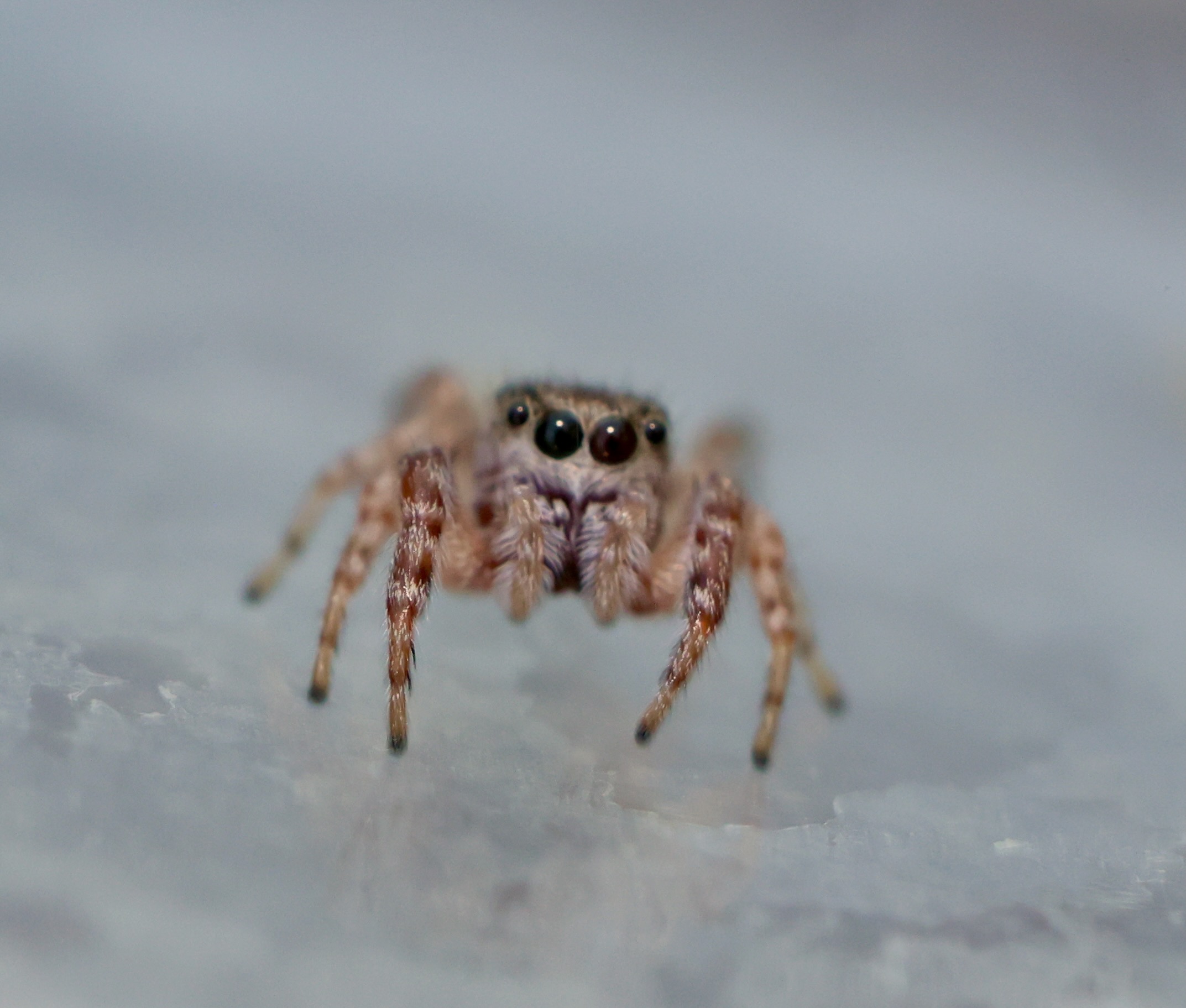
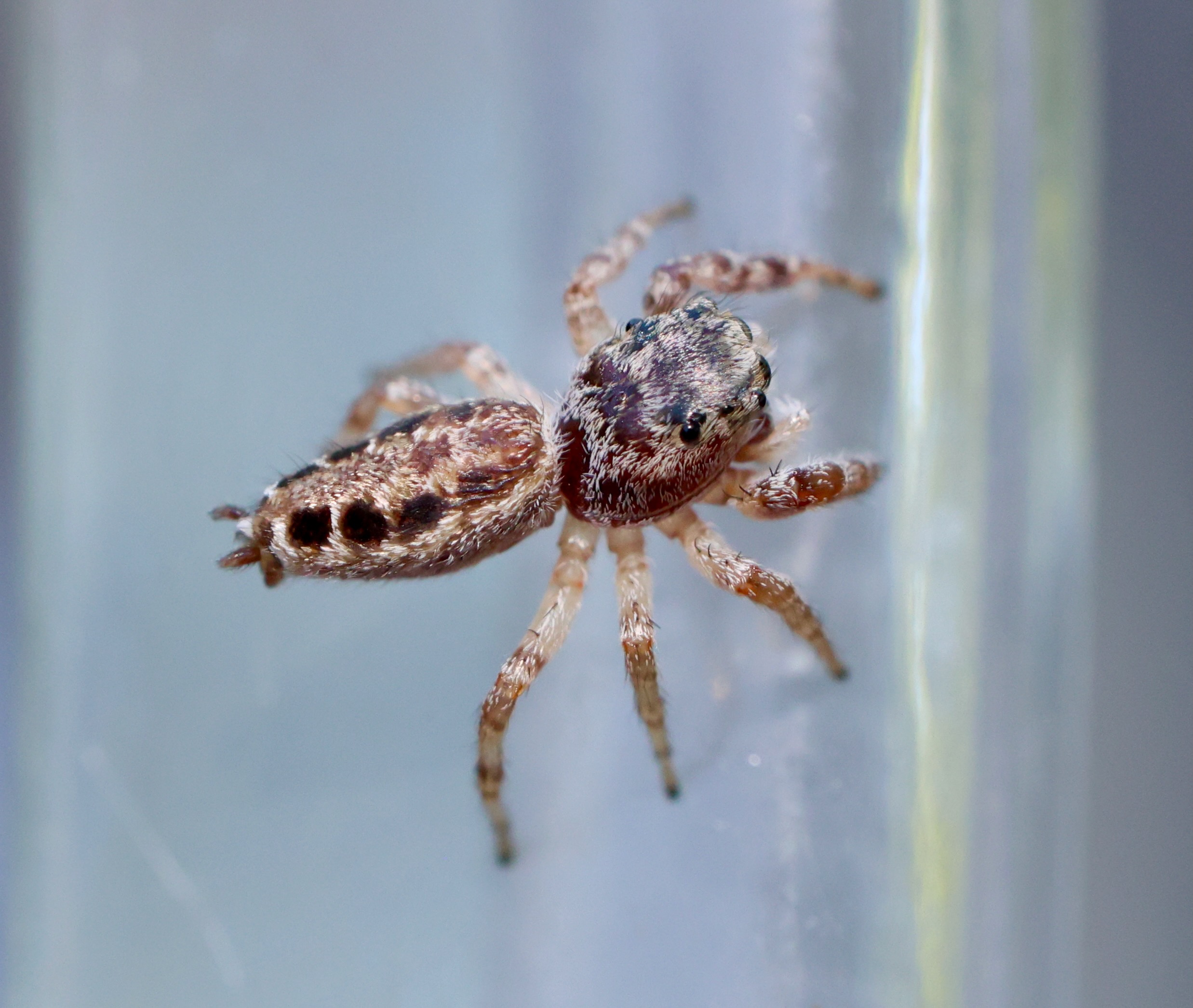
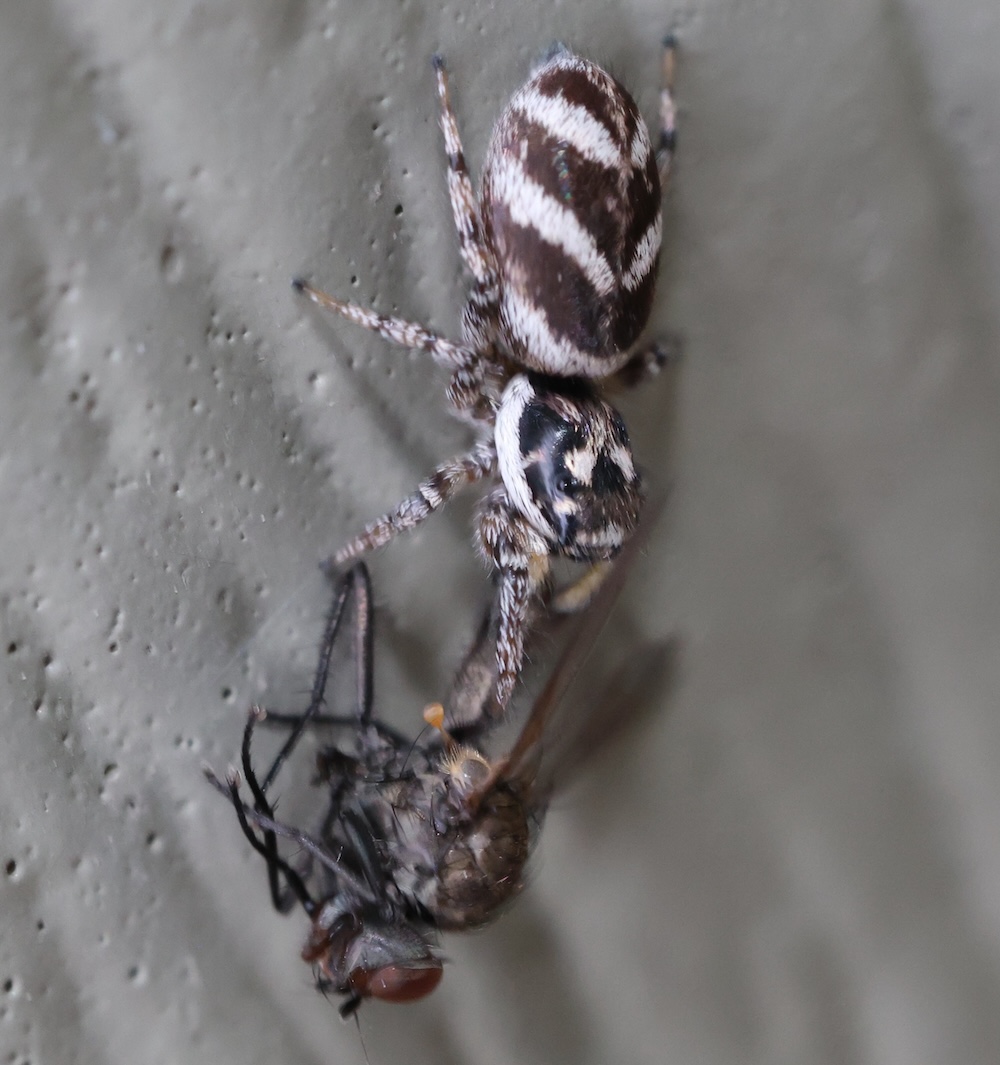
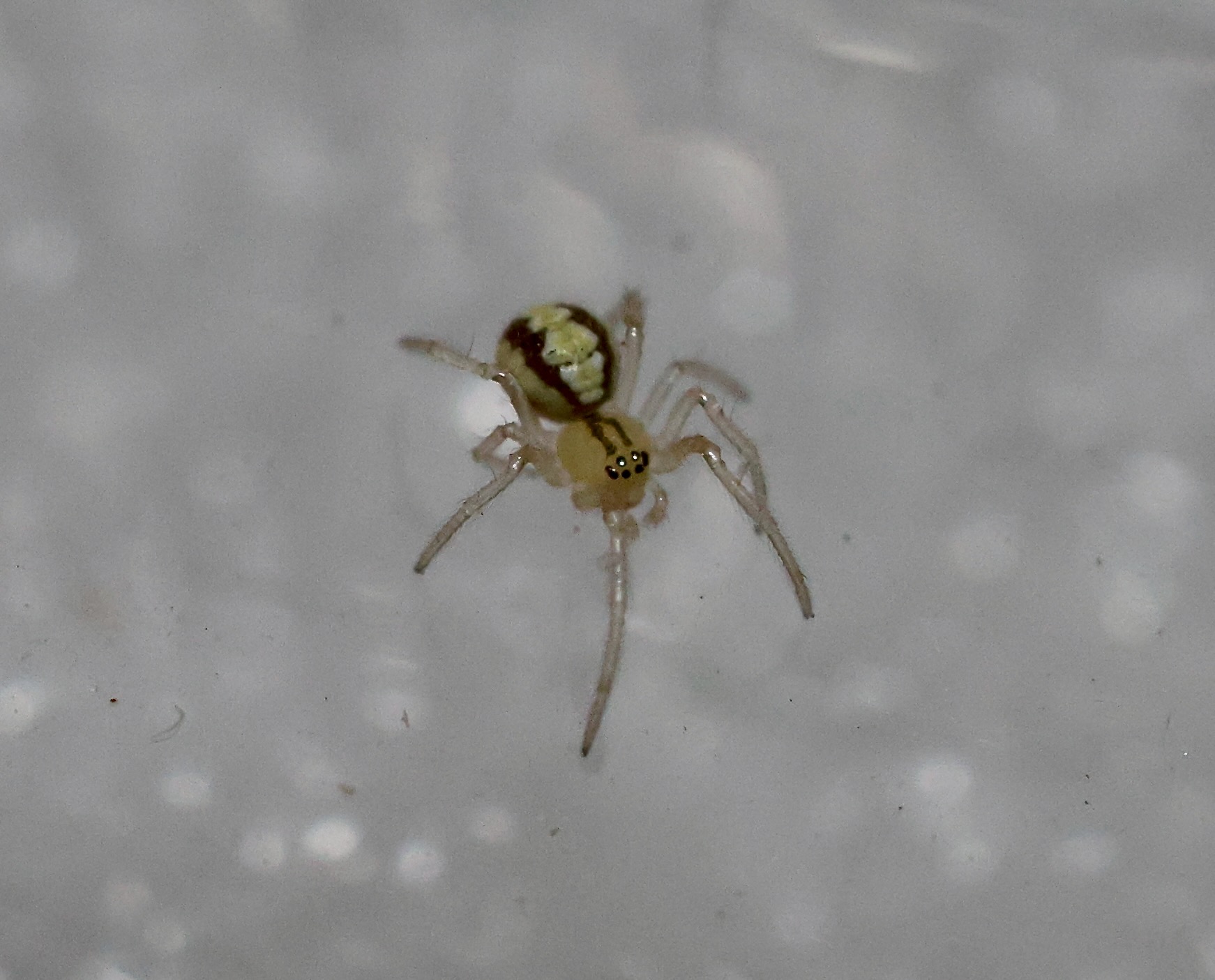
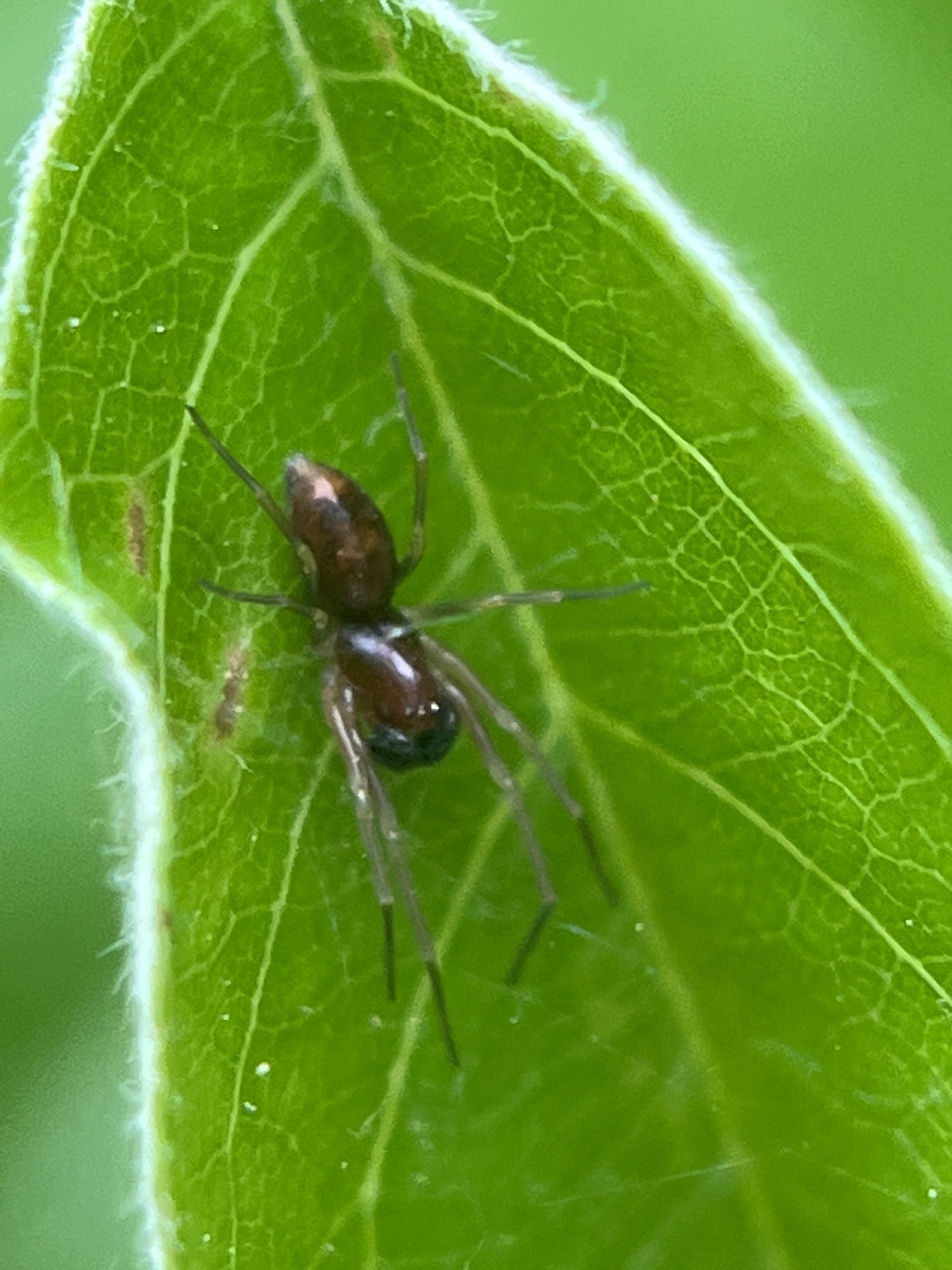
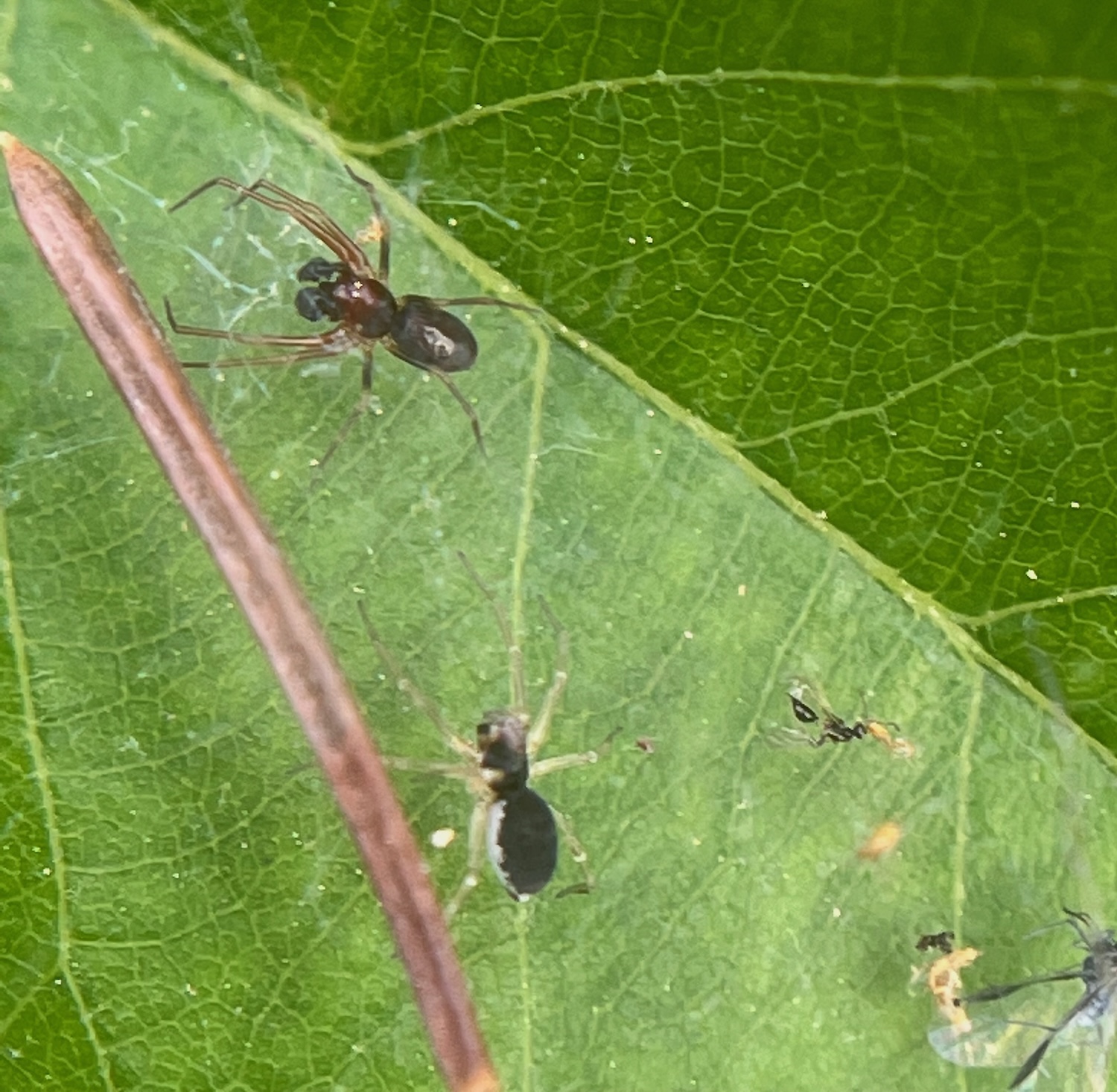
Mother of spiders!

Show me a 500 million year old chelicerate, and I’ll be happy for a day. Look at this beauty, Megachelicerax cousteaui, excavated from a Utah fossil bed.

Anatomic reconstructions of the dorsal (left) and ventral (right) morphologies. b, Artistic reconstructions by M. Hattori illustrating oblique views of the dorsal (top) and ventral (bottom) morphologies. The sanctacaridid-like morphology of the posteriormost body region is speculative. gi, gill (that is, a set of gill lamellae); te, telson.

Pretty cool, right? The best part of it is that pair of appendages at the very front of the animal — those are chelicerae, the biting/chomping/chewing/venom-injecting bits of a modern spider, that make them distinct from insects, which only have antennae at that end. That makes this the oldest known chelicerate ever discovered. It was a swimming marine animal, and doesn’t have the legs we associate with spiders — chelicerae evolved first, legs much later.

Also, this isn’t just the mother of spiders, but is also the mother of a huge family of cousins: horseshoe crabs, eurypterids, as well as spiders.

Megachelicerax documents the oldest stratigraphic occurrence of chelicerae (that is, uniramous, unichelate deutocerebral appendages) and bridges the simple body and limb organization of Cambrian megacheirans with the more derived anatomy of post-Cambrian synziphosurines and crown-group chelicerates. a, Simplified consensus topology based on Bayesian analysis (Mk model, 4 chains, 5,000,000 generations, 1/1,000 sampling resulting in 5,000 samples with 25% burn-in resulting in 3,750 samples retained); detailed results and comparison with parsimony provided in Extended Data Fig. 6. The numbers in parentheses correspond to the total number of podomeres and the number of chelae, respectively, present in the deutocerebral appendage. Taxa whose names are in bold font are illustrated in b–l. b–l, The morphology of the anterior body region in select taxa. b, Fuxianhuiid Chengjiangocaris kunmingensis (Cambrian, Stage 3). c, Artiopod Olenoides serratus (Cambrian, Wuliuan). d, Megacheiran Yohoia tenuis (Cambrian, Wuliuan). e, Megacheiran Haikoucaris ercaensis (Cambrian, Stage 3). f, Megacheiran Leanchoilia superlata (Cambrian, Wuliuan). g, Mollisoniid M. plenovenatrix (Cambrian, Wuliuan). h, Habeliid Habelia optata (Cambrian, Wuliuan). i, M. cousteaui (Cambrian, Drumian). j, Synziphosurine Dibasterium durgae (Silurian, Wenlock). k, Xiphosurid Limulus polyphemus (recent). l, Eurypterid Slimonia acuminata (Silurian, Llandovery–Wenlock).

That is one wildly successful tree. It just goes to show that you can go on to do great things even if your face looks like a nest of spiky clawed jointed tentacles.


Rudy Lerosey-Aubril, Javier Ortega-Hernández. A chelicera-bearing arthropod reveals the Cambrian origin of chelicerates. Nature, 2026; DOI: 10.1038/s41586-026-10284-2

Screaming for joy?

I can relate to this National Park Service message.

Our favorite part of spring is walking into spider webs and screaming every time. What’s yours?

I wish. I haven’t seen any webs yet, although I have spotted some individual strands of silk. Warm weather is coming, though!

Down, down, in the dark

Shirtsleeve weather, the sun is shining bright, and there are stirrings in the darkness. I prowled about my yard, searching for spiders, but the best I could find was spider-sign — they’re out and about, leaving strands of silk in crevices and corners, but I saw none.

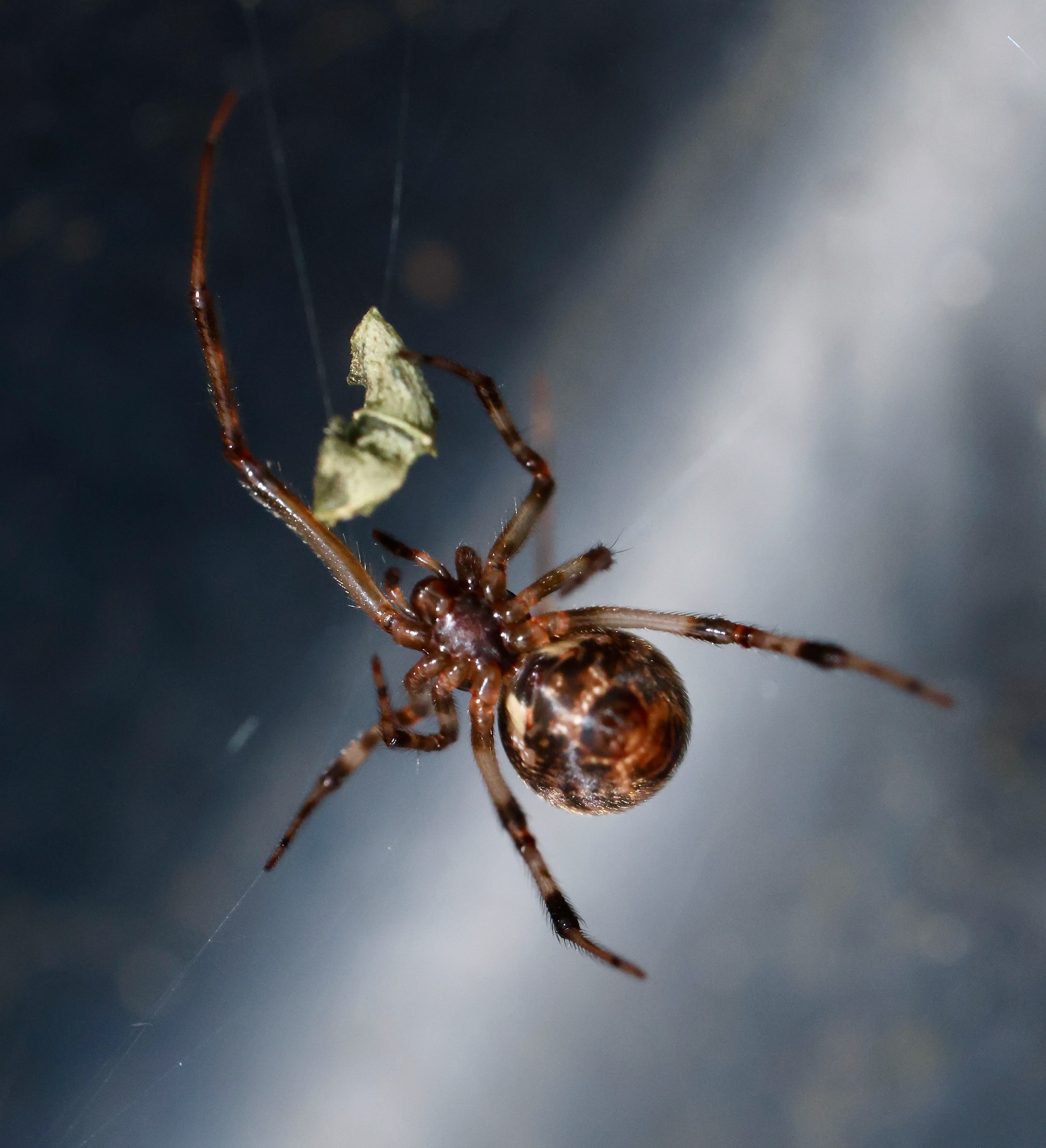
That is, until I turned to the ever-reliable compost bin. I found even more silk everywhere in there, but to find an inhabitant I had to bend over and stick my head upside down deep into the bin, way down low until I was look just above the edge of the decaying plants, and there at last I found one, a familiar old friend, Steatoda borealis.

S. borealis is entirely black in body color, and she was on the side of a black bin, in shadow, deep in darkness, so getting any kind of photo was difficult. But there she was, my first Theridiidae of the new season.

This compost bin is a favored spot. I think they snuggle down in the layers of rotting glop and overwinter there, and then they’re the first to reappear once the weather well and truly breaks. It’s kind of sweet to think of them sleeping down in the dark, in the mulch, all winter long, waiting to reemerge.

I’ve had few opportunities to photograph spiders

I haven’t been showing off my spiders much lately. There’s a reason for that. They still think it’s winter, so they’re all hunkered down in their mossy, silk-covered nests, and they don’t come out much, and when they do, they’re shy and not very photogenic. Here’s the best black widow shot I could get today.

I didn’t do myself any favors by providing them with a fairly cluttered environment, but they seem to like a space where they can hide and only come out to grab some food, and then retire quickly back into their refuge. They’re very retiring little ladies.

Minnesota is warming up, though. The snow is mostly gone, and I occasionally see jumping spiders sunning themselves, so I’m hoping to go hunting native spiders again soon.

My morning present

My wife is working today, and before she left at 6:30am she left me a gift on my desk, a wolf spider.

She know me well. Now, though, what do I do to reciprocate? Should I get her a prettier spider? My imagination is limited.

Roger is still hanging in there

Roger, a male Latrodectus mactans, is still coexisting contentedly with his partner.


I’m still disappointed that the female of the pair hasn’t yet produced any egg sacs. You have done your duty, haven’t you, Roger? I need children.

I feel like a nagging mother-in-law now.