An inspirational story?

I was reading about Greta Binford, the spider-woman, and there’s a lot of good stuff here. I was a tiny bit put off by this bit, though:

Binford came late to the study of spiders, and without morbid predilections. She grew up on a small corn- and-soybean farm in west-central Indiana—“dull spider country,” she calls it.

I’m afraid Minnesota might be even duller spider country, and I’m a bit concerned about the lethality of our winters — it might be a very seasonal spider country. But that doesn’t make them less interesting. I’ve already got some ideas for experiments to test mechanisms our local populations have for coping. Also, even in winter I’m finding lots of spiders indoors, just not the species I was focusing on.

Binford is forgiven, though. She’s most interested in spider venoms, and that’s not a particular strength of upper midwestern spiders. I’m more into development and behavior, so there’s plenty to keep me occupied here.

But this bit rings true, for sure.

The key to good hunting, Binford said, was to have a “search image” in mind. Wolf spiders, for instance, can be found by their eye shine. When you train a flashlight beam over your back yard at night and see a faint glimmering in the grass, those might be spiders gazing back at you. Loxosceles tend to splay their legs like asterisks, and to gather in pockets of dampness—anything from the bottoms of rotting logs to the spaces behind steam pipes. “It reminds me of hunting for morels as a kid,” Binford said. “There’s a kind of Zen moment where everything falls away and there’s just you and the spider.”

The stairs led down to a long, open space, with pipes and wires hung low from the ceiling. Bits of graffiti flared into view, as our headlamps swung past, and strands of webbing caught at our faces. Most of it belonged to pholcids, or daddy longlegs, Binford assured me. Their venom is strong enough to kill a mouse, and they prey on other spiders, but their fangs are too small to hurt us. She played her beam along the bottom of a wall and held it on a Steatoda, a bulbous relative of the black widow, famous among arachnologists for turning radioactive and biting Peter Parker in the recent Spider-Man film. Then she stopped and scanned the room from end to end. “It’s like an Easter-egg hunt,” she said. The spiders were hiding in plain view.

I’ve experienced the same phenomenon! I’ve been walking these halls for years, totally oblivious to spiders, and now that I’ve started seeking them out, they’re everywhere! I find myself looking in corners, and window frames, and crevices, spotting cobwebs or fragments of chitin, and tracking down these little guys who share our homes and office buildings. If you’re an arachnophobe, I recommend not ever looking for them, or you’ll start spotting your nightmares all around you. Don’t develop that search image in the first place.

But don’t worry.

Spiders have a bad reputation, largely undeserved. The great majority aren’t venomous enough to harm us, or their fangs are too small, or their jaw muscles are too puny, or they simply see no profit in attacking large, indigestible creatures that can crush them with their toes. Unlike snake venom, which is designed to kill vertebrates, spider venom is almost always meant for insects. Its toxins can stop a hornet in mid-flight, but they lack proper targets in the human nervous system. “If we were wired for spider venoms the way insects are, we would be screwed,” Binford says.

She is studying Loxosceles laeta, a more potently venomous relative of the infamous brown recluse, which is infesting a Goodwill building in Los Angeles. I don’t know if you’ll find this part of the story reassuring.

When Binford milks laeta in her lab, their fangs yield about ten times as much venom as other Loxosceles’, and medical records suggest that their bites leave larger lesions. Yet, even if the Goodwill’s population spread across Los Angeles, it isn’t clear how much of a threat these spiders would pose. Laeta are easily as reclusive as their North American cousins. They keep to dark, quiet areas and shrink from human contact. When they do bite, the venom doesn’t always have an effect: some people’s immune systems aren’t sensitive to Loxosceles toxins. Five years ago in Lenexa, Kansas, a family of four trapped and killed more than two thousand recluses in their nineteenth-century farmhouse. Yet no one in the family suffered from a bite.

I would love to find a building with thousands of recluses lurking in it, but it’s not likely. They don’t seem to have taken to living this far north. But this might be one of the advantages of climate change, you never know.

We’re here to teach and do research

Would you like to spend 10 years in higher education getting an advanced degree so you can work part time at poverty level wages? That’s the situation many are finding themselves in, as this article on the adjunct crisis explains.

Nowhere has the up-classing of contingency work gone farther, ironically, than in one of the most educated and (back in the day) secure sectors of the workforce: college teachers. In 1969, almost 80 percent of college faculty members were tenure or tenure track. Today, the numbers have essentially flipped, with two-thirds of faculty now non-tenure and half of those working only part-time, often with several different teaching jobs.

Why this should be so is not immediately obvious. Unlike the legal and the traditional news industries, higher education has been booming in recent years. Nor does higher ed seem to follow the pattern of other industries being transformed by contingent employment. In his book The Fissured Workplace, David Weil of the Boston University School of Management (and currently the administrator of the U.S. Wage and Hour Division in the U.S. Department of Labor) writes that the growth of contingent employment is being driven mostly by firms focusing on their core businesses and outsourcing the rest of the work to contractors. But teaching students is—or at least is supposed to be—the core mission of higher education. That colleges and universities have turned more and more of their frontline employees into part-time contractors suggests how far they have drifted from what they say they are all about (teaching students) to what they are increasingly all about (conducting research, running sports franchises, or, among for-profits, delivering shareholder value).

It doesn’t really get into the declining support for state universities from our government, but yeah, I can see how that’s a good point. I am fortunate to be at a university where sports are a very low priority, and where teaching is much more important than research, and our percentages of tenure vs. non-tenure faculty makes us look like we’re living in 1969.

However, I don’t know that research represents a drift away from what universities are all about. Before WWII, universities were engines of basic research — professors were hired for their expertise in a field, which made them competent to teach a subject, but also meant they were trained for, committed to, and loved that subject, so of course research was an important role for them. Consider Edwin Conklin, for instance: he worked in an era before big government grants were a thing, was strongly invested in teaching, and every summer he skedaddled off to a marine biology laboratory to stare at sea squirt embryos, and even after he retired he was working, working, working in developmental biology. You are not going to hire great teachers who are competent to teach the most advanced topics in a field if you’re not willing to hire people who want opportunities to do research. It really is part of the job.

(By the way, during and after WWII there were changes made to increase the importance of basic research and tap into the talents at universities by throwing much more money at them — NSF and the NIH, for instance, skew universities’ perspective on the value of teaching vs. research. That’s not necessarily a bad thing, but the system is still trying to digest the changes.)

That, however, is also one of the ways the adjunct system is screwing over the professoriate. Adjuncts don’t get to do much research. They get assigned heavier teaching loads, and are paid so poorly that may have to moonlight at other jobs (or piece together more and more adjunct assignments), so they don’t get the opportunity to do the research that makes them valued for those more difficult, upper-level teaching assignments.

So don’t belittle the research role of universities. That shouldn’t go away. But I agree that there should be better integration of research with teaching and vice versa, and that adjuncts and part-time instructors ought also to be given the respect and opportunity and support their position deserves.

Death

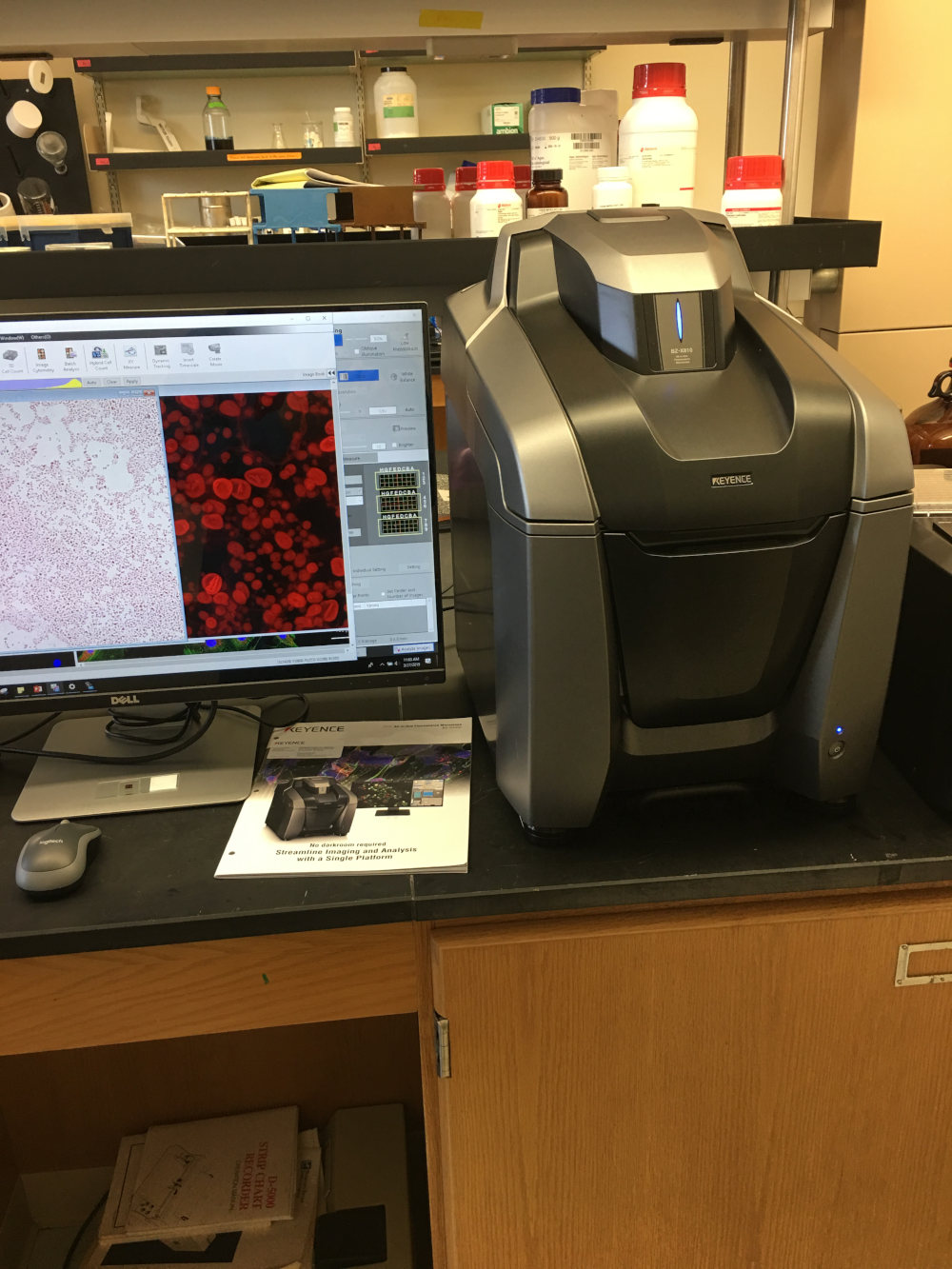
Let’s start the morning with something cheery. Here’s an innocent little ciliate swimming about and then rupturing…organelles and cytoplasm spewing into the medium…and it struggles to hold itself together and the remnant swims away…to no avail. It finally just disintegrates.

Definitely a hard death.

Don’t cry. It doesn’t have a nervous system or consciousness.

A hangout about science communication

I’m getting together with some nerds, Jackson Wheat, Phrenomythic, and ScientistMel, to talk about the challenges of communicating science on YouTube, a medium which seems to favor posturing twits, Nazis, and Nazi twits more than it does people with actual content. It’ll be a public conversation at 5pm Central time today, right here:

If you have your own questions and comments, leave them here, or tune in and leave them in the chat. Another thing: there are successful science youtubers out there. I have a long list, but if there are others you want to call attention to, let me know!


We brought up a few channels that are worth checking out:

3Blue1Brown
AronRa
Ben G Thomas
Brief Brain Facts
Draw Curiosity
Frankus Lee
Kurzgesagt
Mathologer
Neurotransmissions
PBS Eons
Paulogia
SciShow
SciStrike
Scott Manley
Shawn
Stated Clearly
Step Back History
Tony Reed
Trey the Explainer
Up and Atom
WeCreateEdu

And of course, our own:

Jackson Wheat
Phrenomythic
PZ Myers
Scientist Mel

True Facts about the bolas spider

This is funny, but I have never seen a bolas spider. Have you?

They’re on the checklist of Minnesota spiders, though, so they exist this far north. I’m going to have to make finding one an objective of my summer research plans. They’re nocturnal, though — I might turn into that weird guy poking around in the neighborhood bushes and trees late at night. I swear, officer, I’m not a peeping tom, I’m just looking for arachnids.

Hmm, the cemetery might be a safe place for nocturnal spider watching.

I wish Michael Behe would get as tired of his nonsense as I am

Michael Behe has this new book out, Darwin Devolves. I haven’t been able to muster enough enthusiasm to even want to try and dissect it — that man has been shitting on science for at least 20 years now, and having picked through his fecal piles before, I know what to expect, and am tired of it. He is tediously predictable.

Fortunately, Gregory Lang and Amber Rice have the willingness to do the dirty work and dive right in and sift through the shit in this excellent review, Evolution unscathed: Darwin Devolves argues on weak reasoning that unguided evolution is a destructive force, incapable of innovation. They discover that Behe cherry-picks his evidence, ignoring, or worse, being completely ignorant of, vast orchards of information that directly refute his premise, which Lang and Rice cite and summarize. It’s an informative review. Go read it, I won’t rehash it. You’ll learn a lot from it.

I will mention the conclusion, which discusses the peculiar tension at the heart of the evolution/creation argument. I did highlight one sentence.

Without a hint of irony, Darwin Devolves cautions us that “[t]he academic ideas of nutty professors don’t always stay confined to ivory towers. They sometimes seep out into the wider world with devastating results (p257).”

Scientists—by nature or by training—are skeptics. Even the most time-honored theories are reevaluated as new data come to light. There is active debate, for example, on the relative importance of changes to regulatory versus coding sequence in evolution (Hoekstra and Coyne 2007; Stern and Orgogozo 2008), the role of neutral processes in evolution (Kern and Hahn 2018; Jensen et al. 2019), and the extent to which evolutionary paths are contingent on chance events (Blount et al. 2018). Vigorous debate is part and parcel of the scientific process, lest our field stagnate. Behe, however, belabors the lack of consensus on relatively minor matters to proclaim that evolutionary biology as a whole is on shaky ground.

By reviewing Behe’s latest book, we run the risk of drawing attention—or worse, giving credibility—to his ideas. Books like Darwin Devolves, however, must be openly challenged and refuted, even if it risks giving publicity to misbegotten views. Science benefits from public support. Largely funded by federal grants, scientists have a moral responsibility (if not a financial obligation) to ensure that the core concepts of our respective fields are communicated effectively and accurately to the public and to our trainees. This is particularly important in evolutionary biology, where—over 150 years after On the Origin of Species—less than 20% of Americans accept that humans evolved by natural and unguided processes (Gallup 2014). It is hard to think of any other discipline where mainstream acceptance of its core paradigm is more at odds with the scientific consensus.

Why evolution by natural selection is difficult for so many to accept is beyond the scope of this review; however, it is not for a lack of evidence: the data (only some of which we present here) are more than sufficient to convince any open-minded skeptic that unguided evolution is capable of generating complex systems. A combination of social and historical factors creates a welcoming environment for an academic voice that questions the scientific consensus. Darwin Devolves was designed to fit this niche.

Creationists like to pretend that there is still a legitimate debate here, and their absurd confidence does seem to be effective in swaying, as they mention, about 80% of the population. In response to their ignorance, responsible scientists are expected to invest a great deal of effort in reacting to stupidity. It is ten thousand times harder to master the science behind evolutionary biology than it is to read a few bible verses and some clueless apologetics and decide that the science is all wrong. Behe, and people like him, are ridiculous crackpots, and we’re saddled with the obligation to refute them.

And yet we do. Or Lang and Rice do. I’m sitting this one out, which makes me immensely grateful that more scientists are joining in the battle.

Paratropis, Stormtropis

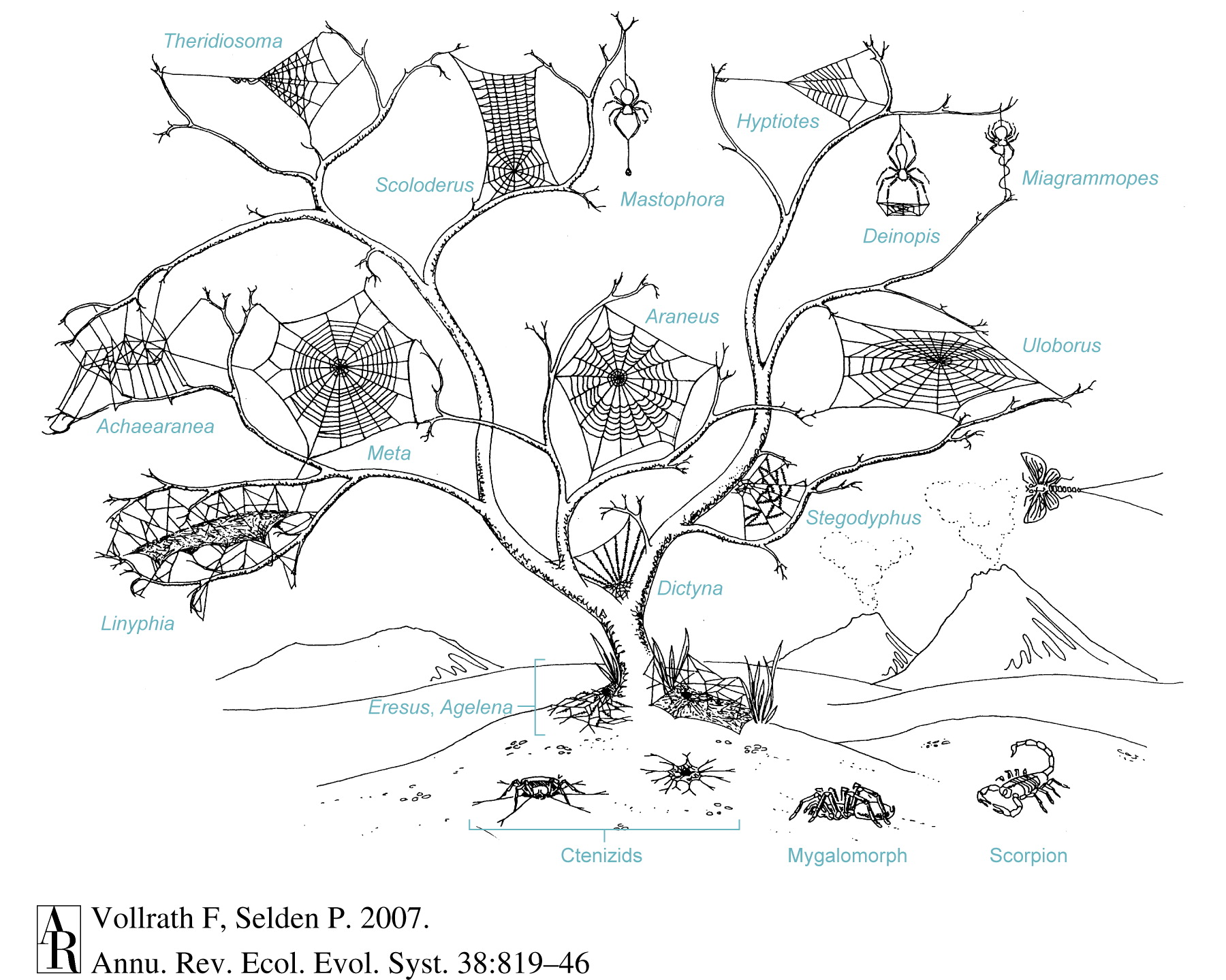
I was just reading about these recently identified genera of Central and South American mygalomorph spiders, Paratropis and Stormtropis, and got a little thrill from the photos, so I had to share. Their eyes are mounted in a little turret-like structure bulging up above the cephalothorax, and when you flip them over, oooh, those fangs. All black and pointy.

I know some of you don’t get that excited about spiders, especially ones that hairy and weird-textured and equipped with especially prominent bitey gear, so I’ll hide them below the fold.

[Read more…]

Sure is purty and slick, though

I am extremely impressed with this creator’s video editing skills. Nicely done!

I am less impressed with the content, unfortunately. The message is pure optimism: our progress in biology is so great that maybe someday we can hope to cure a host of psychological concerns, like anhedonia, misery, self-doubt, etc., with…gene editing. Got low self-esteem? Frustrated by the world around you? Finding yourself unsatisfied no matter what successes you achieve? We can fix that, someday! We’ll just reach into your genome and snip out the bits of DNA that make you question your happiness, and replace them with genes that’ll give you joy, no matter how miserable the world is making you.

Well. I guess you could aspire to that, but it sounds very 1984 to me. Maybe I like being who I am, and don’t think that jacking up my sensation of happiness artificially is entirely desirable. There are drugs I can buy right now that will enhance my contentment with things as they are without meddling with my genome in a permanent way, but I don’t think elevated bliss is necessarily the purpose of my existence.

But set all that aside. Why would anyone think your satisfaction with the status quo is genetic? This is naive biological reductionism and genetic essentialism in raw form. I’d recommend learning some real genetics, molecular biology, and neuroscience, except that if your goal is happiness regardless of the circumstances, maybe artificially maintained ignorance is what you need.