An Ordovician ancestor to spiders

On this Memorial Day, I’m going to have to have a discussion with my spiders about their distinguished, noble ancestry. It was kind of Nature to publish a study of their many-times-great grand uncles, an ancient euchelicerate named Setapedites abundantis, a common fossil found in Moroccan sediments that are about 478 million years old, which puts it right in the middle of the Great Ordovician Biodiversification Event, a key moment in the evolution of modern taxa.

This is not a spider, though. It belongs in the euchelicerata, the large systematic group that includes spiders, scorpions, ticks, horseshoe crabs, sea scorpions, and other extinct groups. As you might guess from the name, a key feature is the presence of chelicerae, anterior appendages that in spiders carry the venomous fangs. It also has a common feature we see in both spiders and horseshoe crabs, the fusion of the anterior segments to form a prosoma, with posterior segments forming the abdomen or opisthosoma.

While it’s a cool looking little dude, it’s marine and pretty remote from modern chelicerates. From the dorsal side, it looks like an undistinguished little crustacean, of a type that was probably swarming in Ordovician seas.
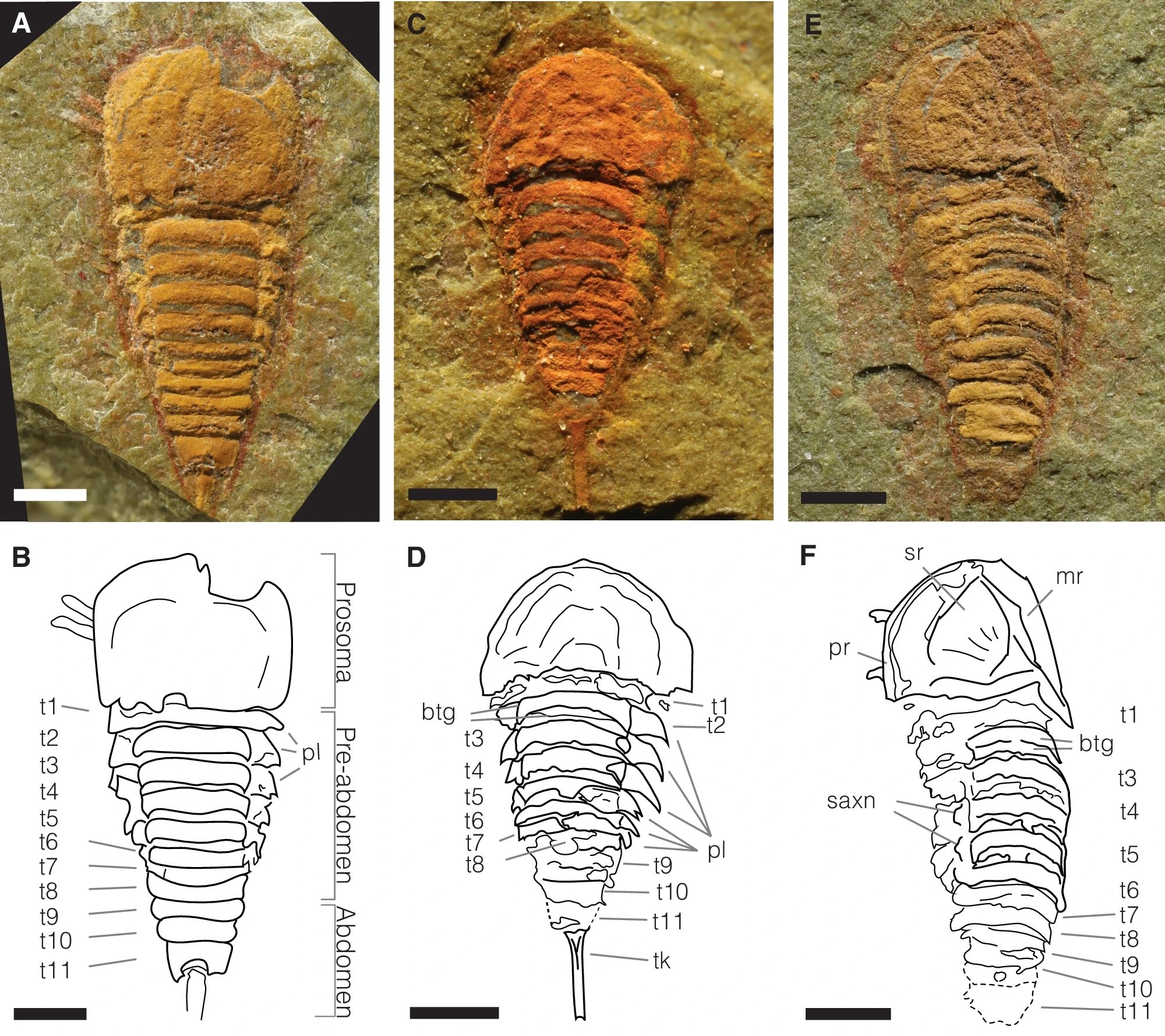
A, B MGL.102899 and interpretative drawing, articulated specimen in dorsal view. C, D MGL.102828 and interpretative drawing, articulated specimen in dorsal view. E, F MGL. 102872 and interpretative drawing, articulated specimen in dorsal view. Abbreviations: btg, bipartite tergites; mr, median ridge; pl, pleura; pr, prosomal rim; saxn, sub-axial node; sr, sunken region; t1–11, tergites 1–11; t, telson; tk, telson keel. Scale bars, (A–F) 1 mm.

Where it gets interesting is when it’s flipped over, and you get a glimpse of the mass of limbs.
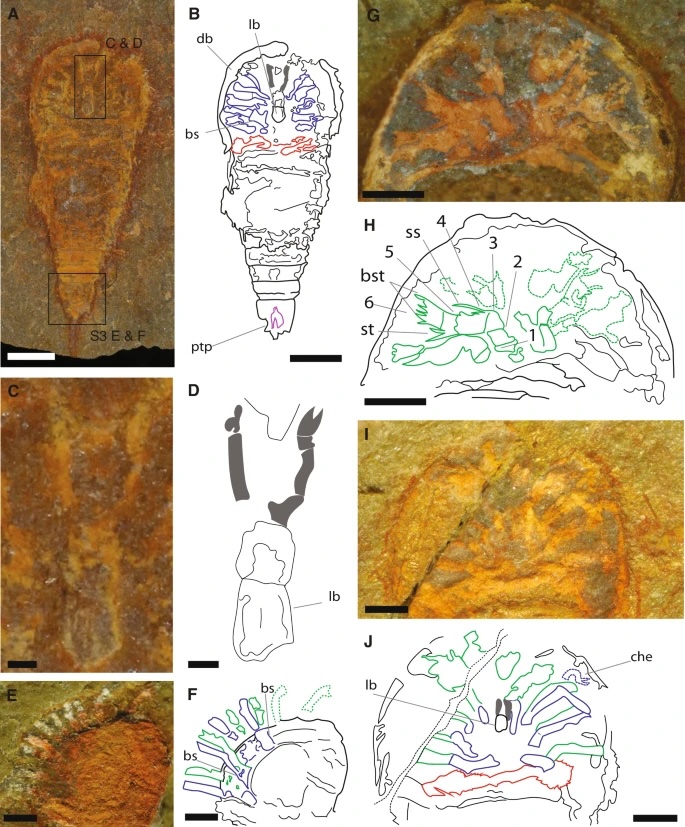
A, B YPM IP 517932c and interpretative drawing (counterpart), articulated specimen in ventral view. C, D YPM IP 517932c and interpretative drawing, chelicerae, and labrum anatomy detail. E, F Close-up of the prosoma of MGL.102934 and interpretative drawing, in dorso-lateral view. G, H Close-up of the prosoma of MGL.102634 and interpretative drawing, in ventral view. I, J Close-up of the prosoma of MGL.102800a under alcohol and polarized lighting, and interpretative drawing, in ventral view. Abbreviations: 1–6, podomeres 1–6 of the exopod; ptp, pretelsonic process; bs, basipodite; bst, brush-like setae; che, chelate podomere; db, doublure; lb, labrum; ss, single setae; st, pair of setae. Chelicerae are highlighted in gray, endopods in blue, exopods in green, opisthosomal appendages in red, and the pretelsonic process in purple. Scale bars, (A, B) 1 mm; (C, D) 100 µm; (E–K) 500 µm.

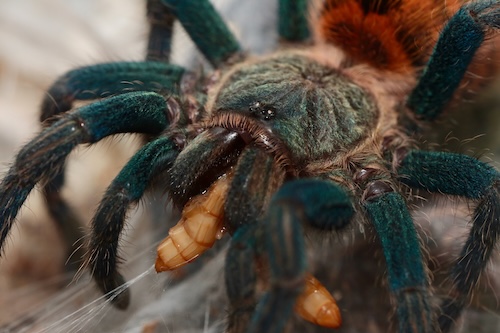
In front of the jaws proper (labrum, lb) it has a pair of small chelicerae (che). These have since evolved into the massive, sharptoothed chompers you can see my tarantula using to turn a mealworm into macerated mush.
Setapedites wasn’t such a fierce predator. Here’s what it looked like.
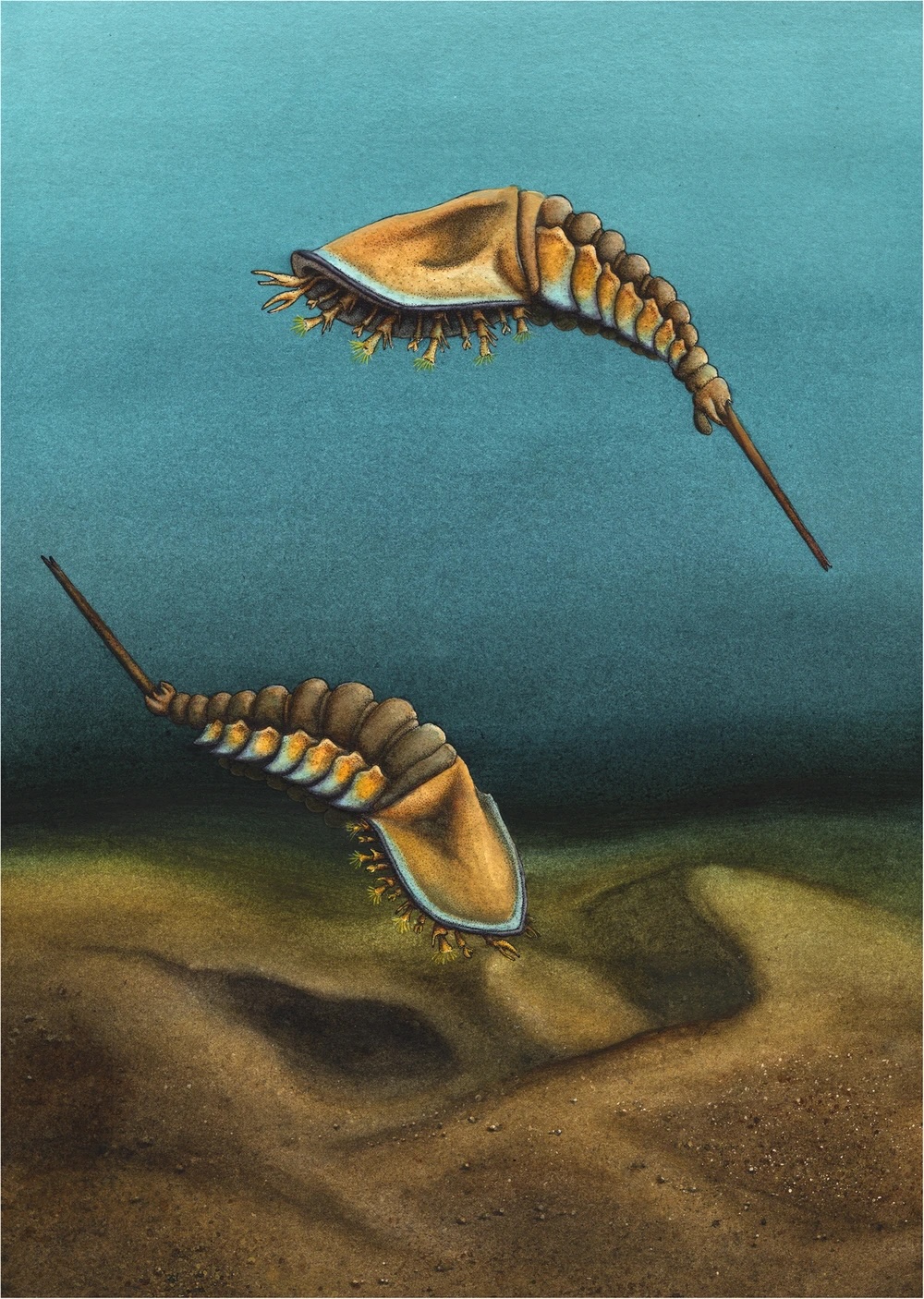
Illustration by Elissa Sorojsrisom.

Cute, right? I don’t know why it’s drawn as a swimmer, though — with that anatomy, it looks more like a benthic organism.

The final bit of interesting information is that they mapped out the correspondences in the segmentation of this animal with other, similar fossils and the extant Xiphosurians.
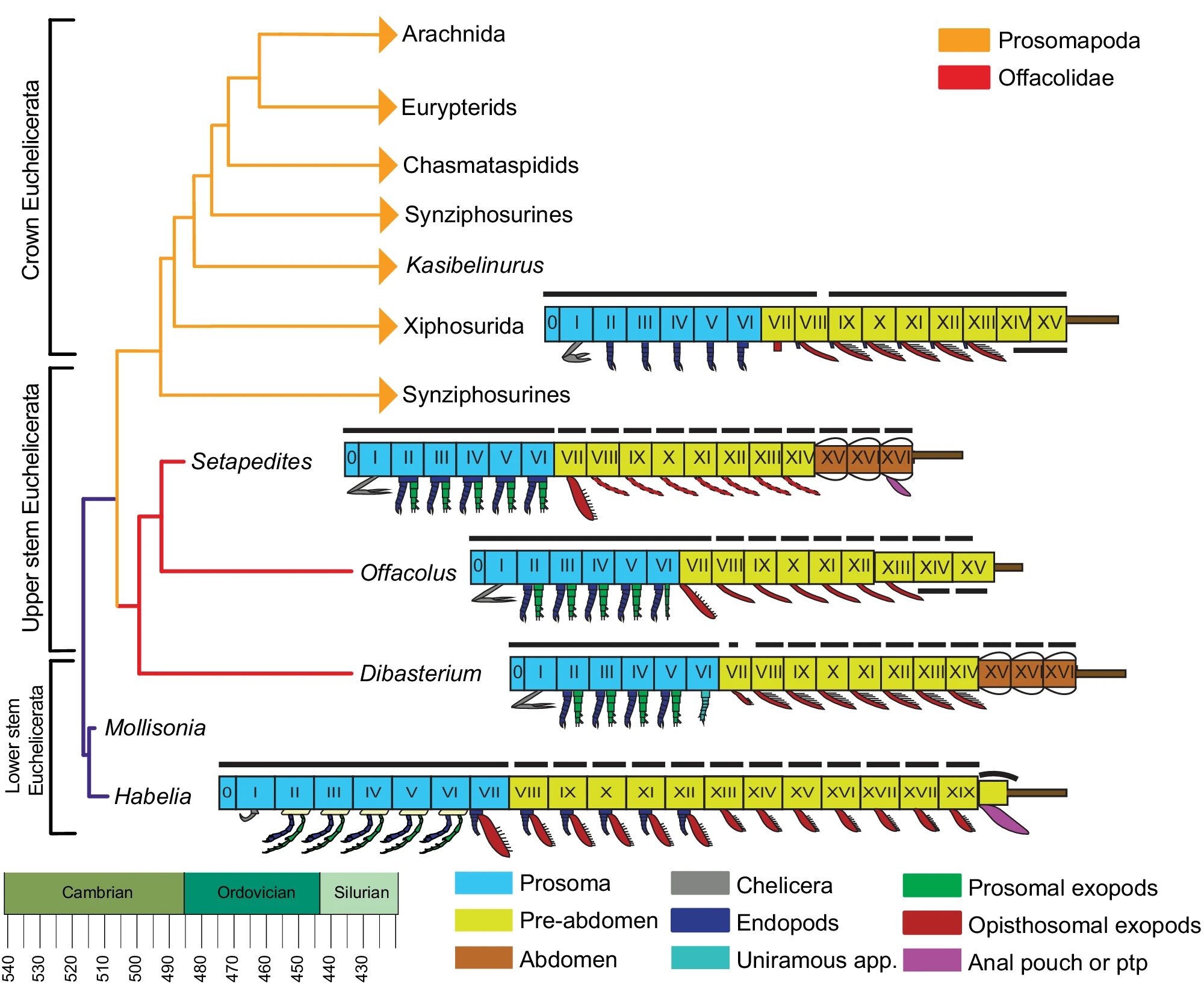
Simplified extended majority rule tree of a Bayesian analysis chronogram of euchelicerate relationships, based on a matrix of 39 taxa and 114 discrete characters, showing the position of Setapedites abundantis within Offacolidae. Lineages extending after the Silurian are indicated with arrowheads. Schematic models of the body organization in Habelia, Setapedites abundantis, Dibasterium, Offacolus, and Xiphosurida illustrate the origin and early evolution of euchelicerate uniramous prosomal appendages and tagmosis. Roman numbers designate somites. Prosoma somites are highlighted in blue, pre-abdomen somites in yellow, abdomen somites in brown, and the possible anal pouch or post-ventral structure (pvs) in purple. Black dorsal lines indicate tergites and cephalotorax. Schematic model of Xiphosurida Offacolus, and Dibasterium from 45, Habelia

Also of note: Setapedites had biramous appendages, a feature that is mostly kind of lost in modern arthropods — the outer branch got adapted into gills and lungs and even wings.

I can’t help but notice that domestication and artificial selection turns wolves in little yapping Pomeranians, but natural selection turns shrimp into tarantulas.

Burying the dead

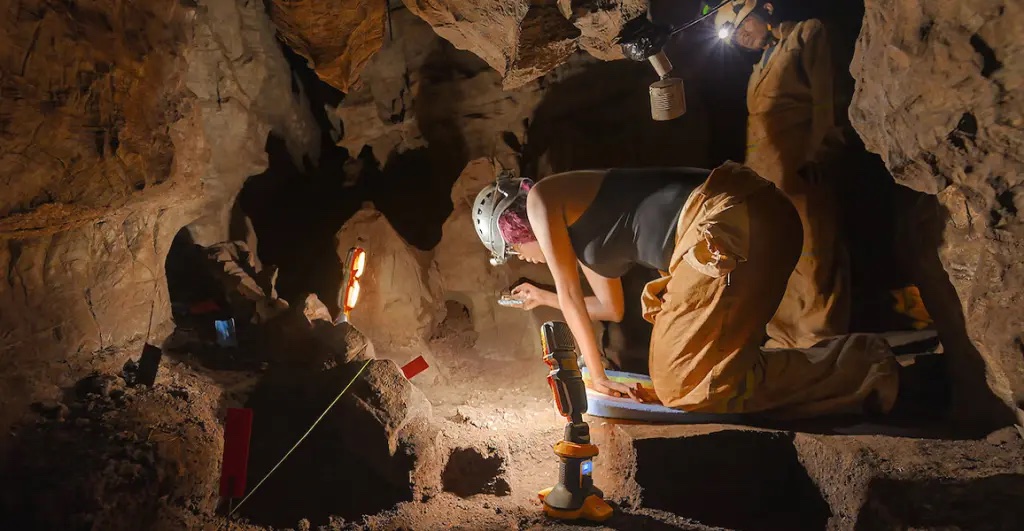
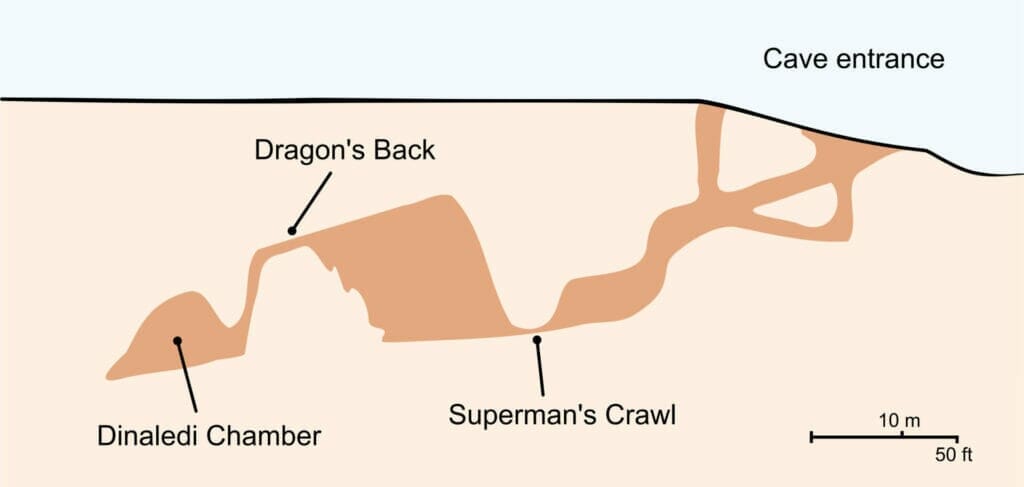
If you have a subscription to Netflix, you might want to watch Unknown: Cave of Bones, about the discovery of Homo naledi in the Rising Star cave system. It’s spectacular.

On the other hand, if you’re claustrophobic, you might want to skip it. I’m not particularly, but I watched the video of those women wriggling their way down a narrow crack to reach the Dinaledi Chamber gave me a rising sense of panic. There’s no way I could put myself in that position without having a screaming heebie-jeebie fit.

If you can get past that, though, it’s worth it to watch the adventure of science.

First feathers, now lips?

OK, guys, this has gone far enough. I grew up on images of dinosaurs that portrayed T. rex as hulking, scaly, snaggle-toothed dinosaurs, stomping through jungles and roaring. Now look at this…this…revisionism.

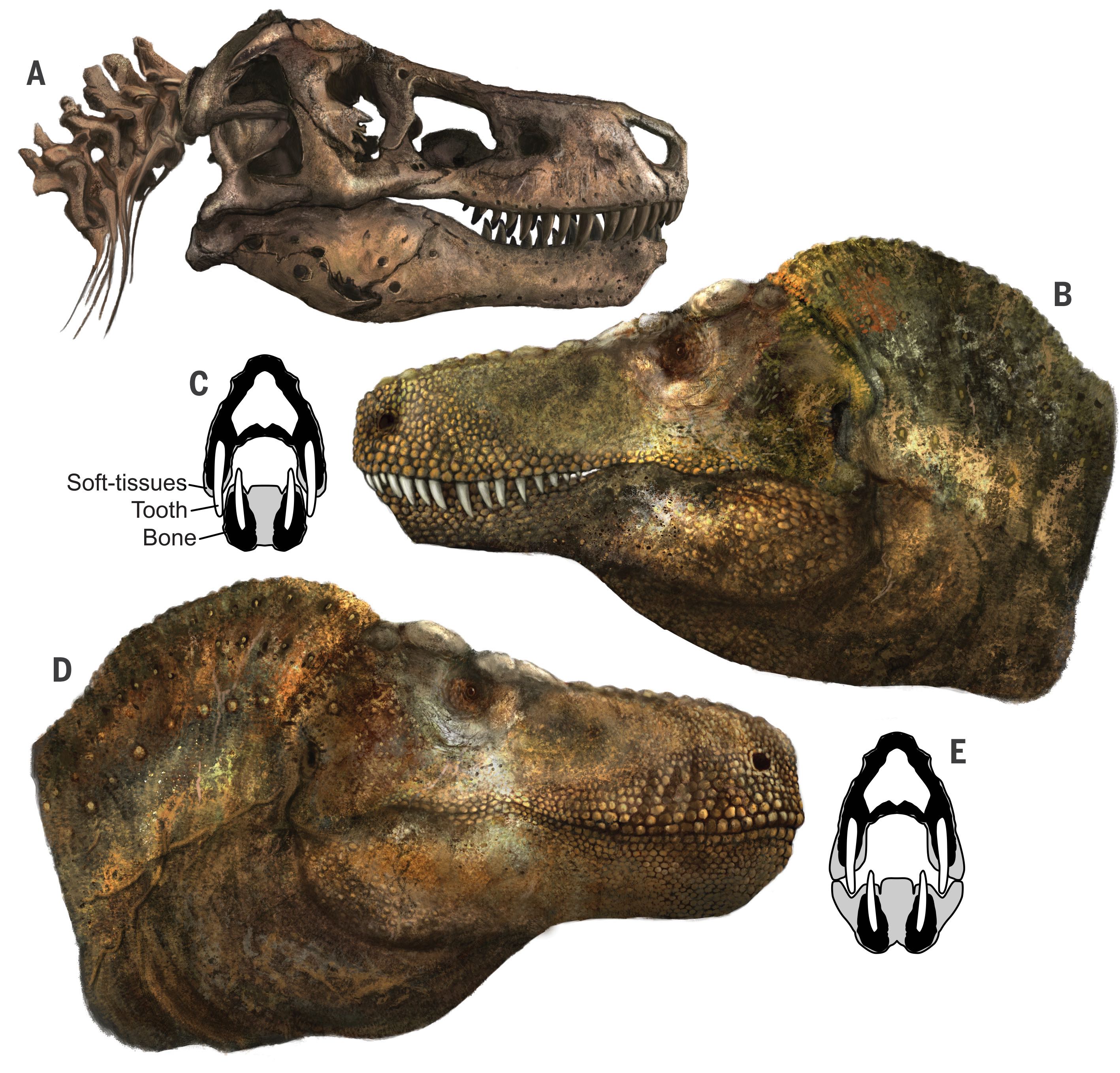
Theropod dinosaurs such as the iconic Tyrannosaurus rex have long been portrayed with their teeth fully visible, similar to extant crocodilians. This pattern of portrayal largely had to do with relatedness between dinosaurs and crocodilians and the relationship between tooth and jaw size. Cullen et al. tested hypothesized facial reconstruction in this group using histological analysis of tooth wear patterns and quantitative relationships between skull length and tooth size in both extinct and extant reptiles. Contrary to depictions that have dominated for more than a century, they found that theropods, including T. rex, had lips that covered their teeth, leaving them looking more like modern Komodo dragons than crocodiles.

Apparently, they covered up their dagger-like teeth behind lips, like perfect gentlemen.

Comparisons of the reconstructions of T. rex. (A) Skull, based on Field Museum of Natural History specimen FMNH PR 2081. (B to E) Two hypothetical flesh reconstructions, one with exposed teeth (B) and an associated cross section of the snout (C) and one with extraoral tissues covering the teeth (D) and an associated cross section of the snout (E).

I tell you, if some smarty-pants does an analysis next that shows that T. rex had a lovely singing voice and went “tweet tweet,” I’m going to turn this thing around and cancel the time machine project. There’ll be no point.

What an odd little beastie

I never heard of the Thylacocephala until I saw this video, and they are bizarre arthropods, now extinct, unfortunately. I learned something new!

At first I thought these were some strange planktonic creatures, but they were 20-30cm long. They were actively swimming predators that looked like some kind of remote drone submersible. They thrived from the Ordovician to the upper Cretaceous, making it kind of ridiculous that I knew nothing about them until now.

Vulcanized fossil spiders

And they fluoresce, too!

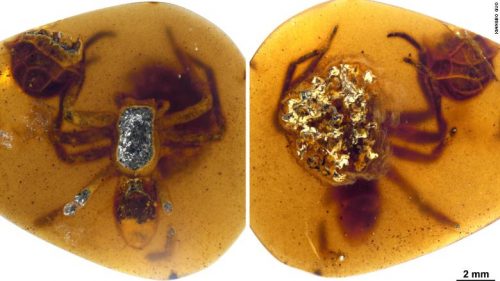
Part and counterpart of two fossil spiders shown in plain light and under UV illumination.

These are part of a well-known invertebrate fossil bed, 22.5 million years old, in France. It contains lots of well preserved insects and spiders, and one question is…why? What makes this particular place so good at preserving these delicate specimens?

The fluorescence was a clue. They dug into the chemistry of the fossils, and figured out that the glow was produced by the sulfurization of chitin, that as the dead spiders sank in the diatom-rich waters of an ancient pond, the sulfur in the diatoms reacted with the chitin carbohydrate to produce a tough carbon polymer, inedible to the microbes, that could last for millions of years.

Cartoon shows the entire proposed pathway: spider becomes entrained in planktonic diatom mat. Pieces of the diatom mat, both with and without spiders entrained within fall to the sediment floor against a background sedimentation of other diatoms and algae (gray dots). With time, these sediments become compressed and preserved into the rock record. a Chemical composition of chitin. Two chains of chitin are illustrated, organized in anti-parallel. Gray boxes indicate the carbonyl functionalities on the chitin. b Sulfonate-containing molecule, which are common in diatom EPS, can undergo microbial sulfate reduction (MSR), leading to the production of sulfide. c Chitin molecule after sulfurization. C–S bonds could potentially replace the carbonyl functionalities, and S–S bridges could form across the chitin chains. d Idealized molecule representing a chitin polymer after further diagenetic alteration, which could result in the formation of aromatized carbon.

I thought that was kind of neat. It’s also a reminder to biology students that you never know where that organic chemistry we make you take might be useful.

I could be worse

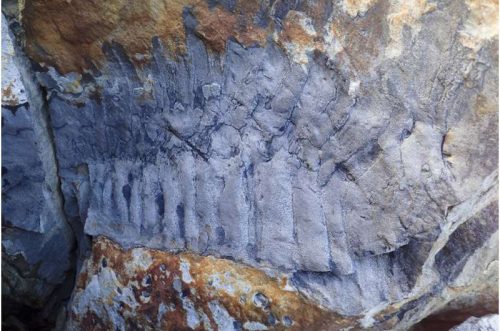
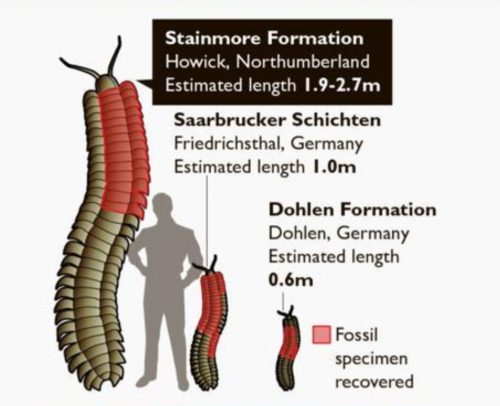
I know many of my readers shudder in dread whenever I mention “sp*d*rs”, but just imagine if Arthropleura hadn’t died off a few hundred million years ago — I’d be growing them in my lab right now and posting photos of my cuties for you to see. This is in the news now because they just found a third fossil.

Sadly, not only have only a few of these humongous millipedes been found, but they’re all fragmentary. All we have are chunks — chunks that are several feet long — of the beast. Nobody has yet found a fossilized Arthropleura head. Just imagine all the eyes, and the nasty great mandibles, and the hungry expression on their face, if you can figure out the various bits of what passes for a face in a giant millipede. I’d show you, if I had a picture!

As long as your imagination is cranking away, here’s a visual aid.

I think his cousin is living in my bathroom shower right now.

Tell me about it

Old news.

Nothing gets between a fiercely protective mother spider and her children. Dripping tree resin trapped adult female spiders and baby spiderlings about 99 million years ago, forever showcasing the maternal care exhibited by these arthropods, according to new research.

One of the awkward things about raising spiders is that they don’t just have a few babies, and they don’t just dribble them out a few at a time over a long period…no, when spiders have babies they have a whole lot of them all at once. Yesterday, on top of all the teaching I do on Tuesdays and Thursdays, I had to feed all the spiderlings I’ve sorted out into individual vials, and then I noticed another egg sac had hatched out into a vast cloud of hungry, tiny arthropods, demanding a meal too. I’m nearly out of flies! I’m going to have to double the quantity of flies I grow just to keep up with the ravenous horde!

No one ever talks about how it was a tender parent and affectionate partner

No. It’s always “underwater killing machine” this and “largest creature of its age” that. Consider the accomplishment of growing to become one of the largest animals on the planet during the Ordovician, instead.

Look at you! Scarcely out of the Cambrian, and already 2.5m long, with a sophisticated sensory system, clever system for maintaining equilibrium in the ocean, and beautifully adept tentacles. Be proud, great brave mollusc! You were more than just a murder monster.

Bring back the weird

The paleontological literature is a showcase for tragedy — it’s a graveyard of long-dead species, all snuffed out millions and millions of years before any human was around to appreciate them, and all we can do is look in awe at their fossilized corpses. In particular, fans of the Cambrian fauna can only pine for magnificently weird creatures that have been extinct for hundreds of millions of years, and represent entire exotic lineages that have left no descendants today. Two of the strangest are Anomalocaris and Opabinia.

Two of the most peculiar Burgess Shale animals, Anomalocaris and Opabinia, illustrate the complicated history of research of many Cambrian soft-bodied taxa – a result of their unfamiliar morphologies compared to the occupants of modern oceans. Both Anomalocaris and Opabinia possess compound eyes, lateral swimming flaps, filamentous setal structures, and a tail fan. Recent work has revealed that Anomalocaris and its relatives, the radiodonts, are united by the presence of paired sclerotized protocerebral frontal appendages and mouthparts composed of plates of multiple sizes, forming a diverse group containing over 20 taxa. Radiodonts range in age from the early Cambrian to at least the Devonian, and have been recovered from numerous palaeocontinents. Meanwhile, the most celebrated animal from the Burgess Shale, Opabinia regalis, with its head bearing five stalked eyes and a proboscis, remains the only opabiniid species confidently identified and is only known from a single quarry in the Burgess Shale. Myoscolex ateles from the Emu Bay Shale was proposed as a possible close relative, though this interpretation was hotly contested, and other authors have proposed a polychaete affinity.

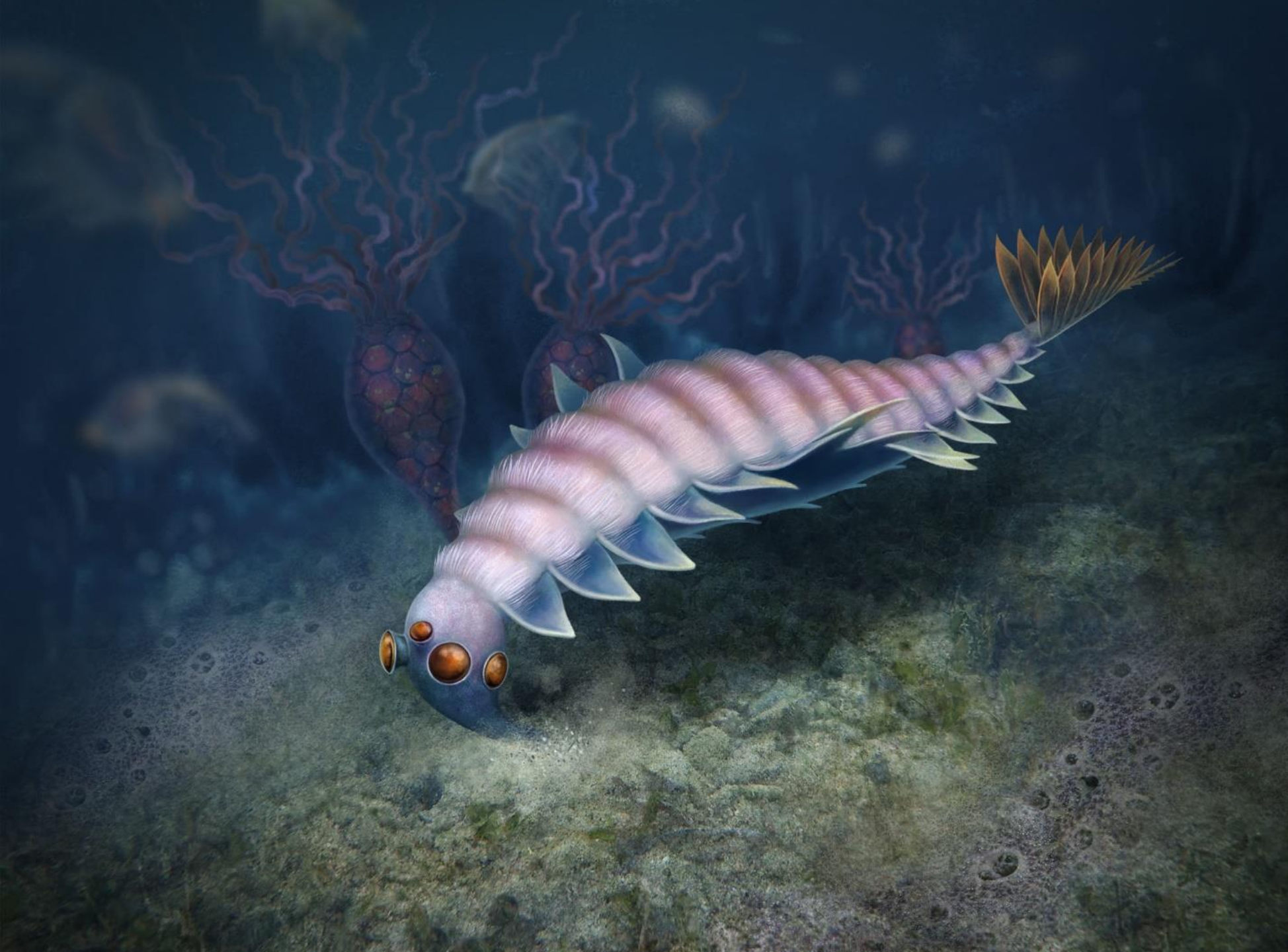
The radiodonts (arthropods with mouths containing plates arranged in a wheel, that irised open and closed) are diverse and notorious. For a time, they were the largest predators on the planet, with their paired long spiky Great Appendages extending from the front of their head. Like the quote says, the opabiniiids are known from one location and one species, but they are weird. A similar array of swimming flaps like Anomalocaris, but then having 5 eyes on stalks and a long snout with a mouth on the end of it…it’s heartbreaking that they no longer exist. Spiders are cool and all, but I’d love to have schools of anomalocariids or opabiniids swarming in our local lakes.

At least one new opabiniid species has been identified, though. This cutie:

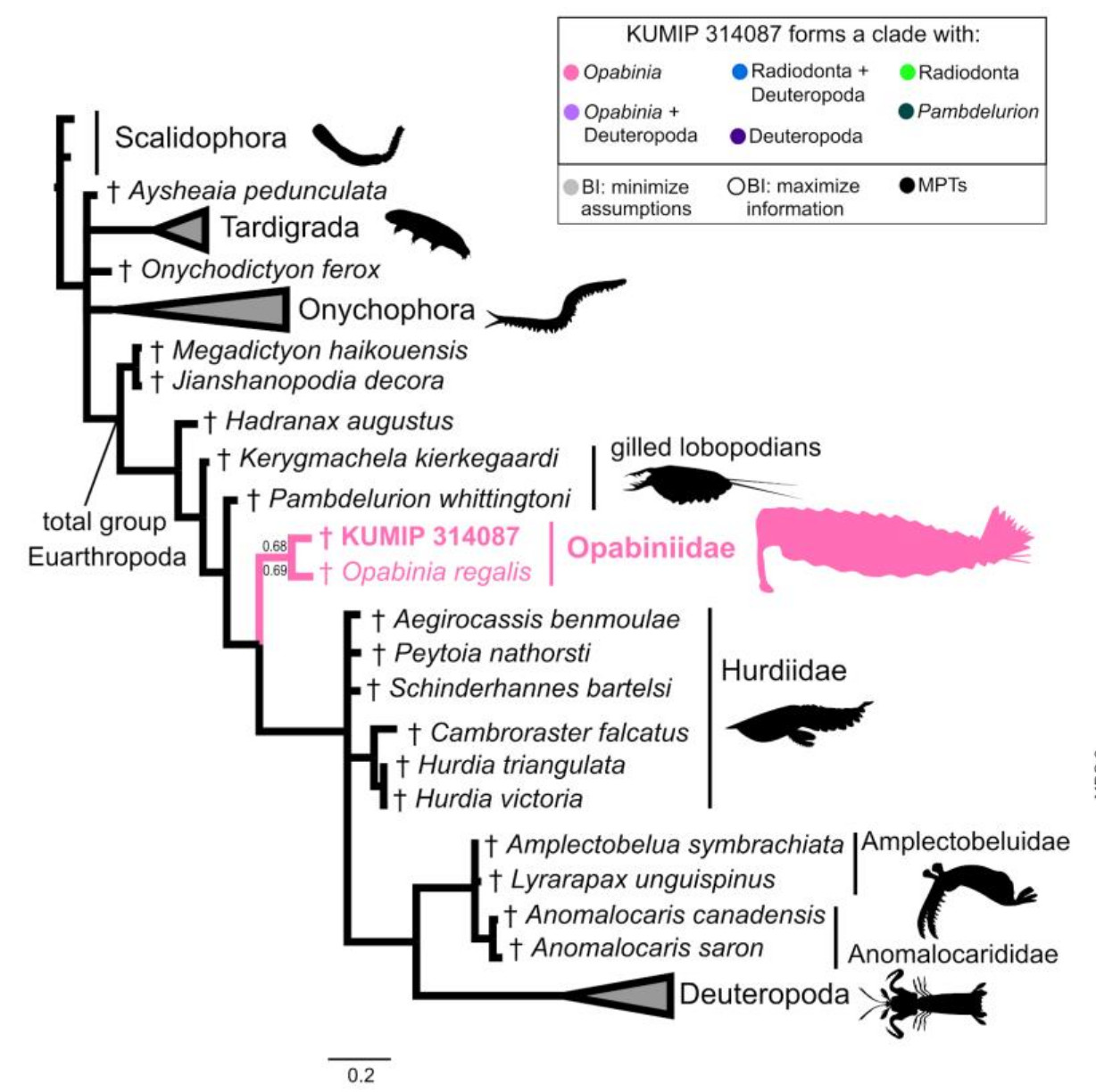
For perspective, here’s where they fall on the phylogenetic tree.

Tardigrades and velvet worms and mantis shrimp are certainly wonderful and interesting animals, but I have to yearn to see more of that glorious radiation of interesting forms in between. All gone, though. If gods were real, they’d never have let them die off.

Crunchies vs. Squishies: ask the pterosaurs

I’m not a taxonomist; early in my career I settled on the model systems approach, which meant all the nuances of systematics disappeared for me. “That’s a zebrafish” and “that’s not a zebrafish” were all the distinctions I had to make, and zebrafish were non-native and highly inbred so I didn’t have to think much about subtle variations. There was one taxonomic boundary one of my instructors forced me to recognize: Graham Hoyle had nothing but contempt for “squishies”, as he called vertebrates like fish or mice or people, and was much more focused on the “crunchies”, insects and crustaceans and molluscs. These seemed like odd ad hoc taxonomic categories to me, I and could think of lots of exceptions where “crunchies” were pretty squishy (see witchetty grubs or slugs), and “squishies” were armored and crunchy (armadillos, any one?), and besides, as a developmental biologist, they were all squishy if you caught them young enough. But OK, if you like dividing everything into two and only two categories, go ahead.

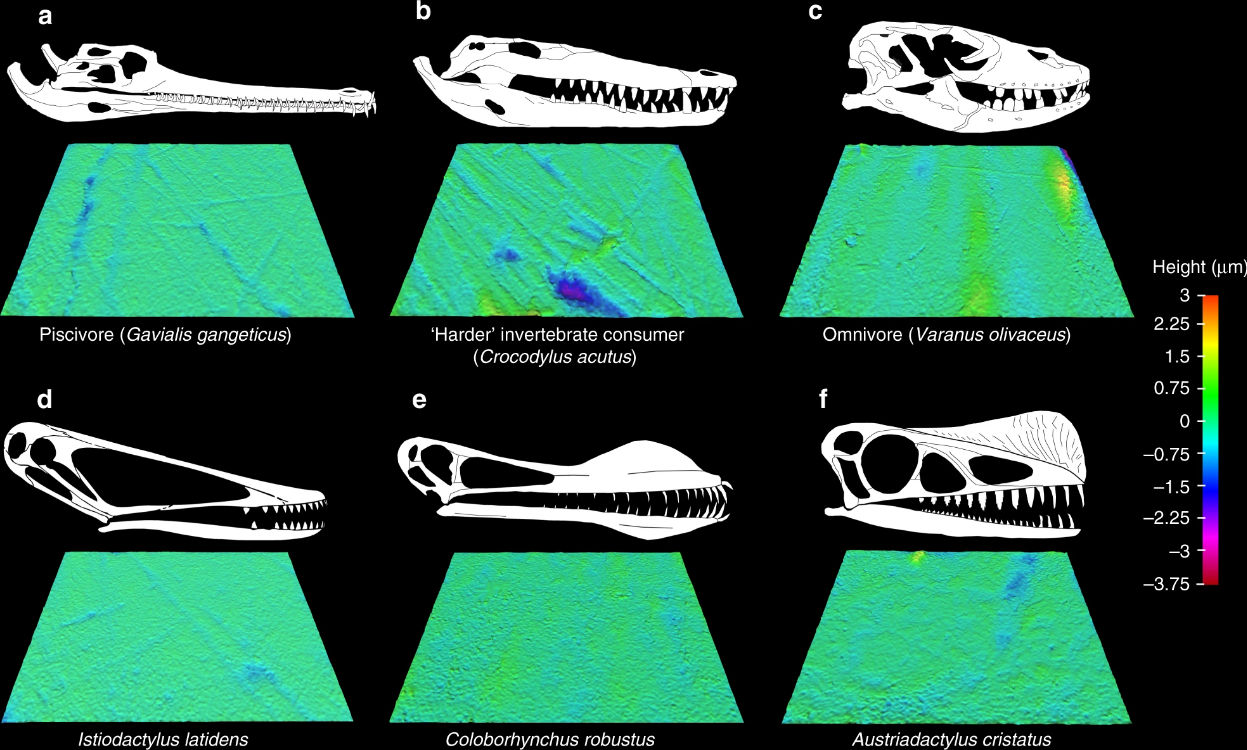
Then today I read this paper, “Dietary diversity and evolution of the earliest flying vertebrates revealed by dental microwear texture analysis”, and saw that there was at least one practical use for the distinction. What you eat affects wear patterns on your teeth, that if you eat lots of crunchy things vs. lots of squishy gooey things, you’ll have a different pattern of dental scratches, and since teeth fossilize — unlike guts — you can get an idea of what long dead animals had for dinner. Furthermore, you can compare fossil microwear textures to the textures in extant animals, where you do know what kinds of things they eat.

This is cool — so you can estimate the range of things ancient pterosaurs ate from how their teeth were worn, whether they ate lots of soft-bodied bugs like flies, or hard-shelled crustaceans, or soft-fleshed fish, by making a fine-grained inspection of their fossilized teeth and comparing them to modern reptiles.

a–c Reptile dietary guilds; a piscivore (Gavialis gangeticus; gharial), b ‘harder’ invertebrate consumer (Crocodylus acutus; American crocodile) and c omnivore (Varanus olivaceus; Grey’s monitor lizard). d–f Pterosaurs; d Istiodactylus, e Coloborhynchus (PCA number 5) and f Austriadactylus (PCA number 2). Measured areas 146 × 110 µm in size. Topographic scale in micrometres. Skull diagrams of extant reptiles and pterosaurs not to scale.

But they’re not done! Knowing the phylogenetic relationships of those pterosaurs, you can then infer evolutionary trajectories, getting an idea of how dietary preferences in species of pterosaurs shifted over time.

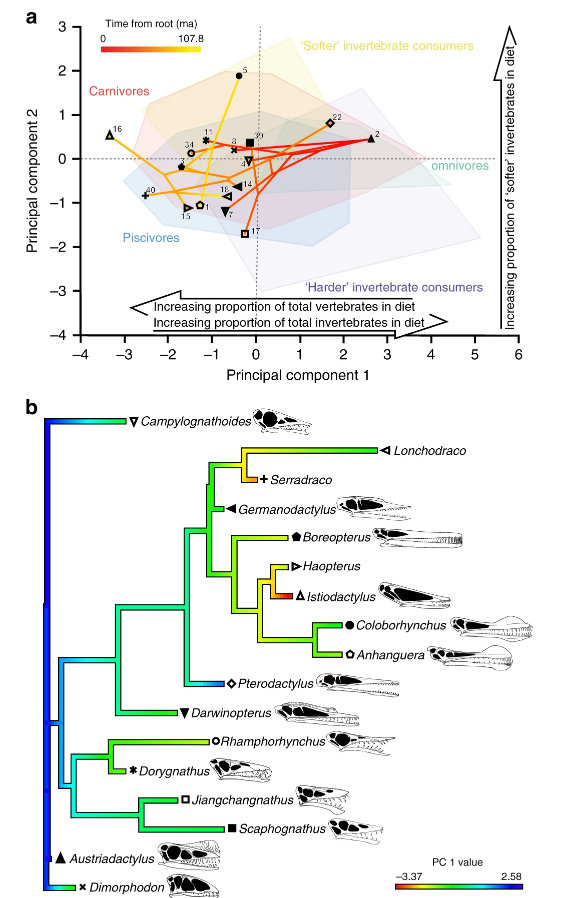
a Phylo-texture-dietary space of pterosaur microwear from projecting a time-calibrated, pruned tree from Lü et al.33 onto the first two PC axes of the extant reptile texture-dietary space. b Ancestral character-state reconstruction of pterosaur dietary evolution from mapping pterosaur PC 1 values onto a time-calibrated, pruned tree from Lü et al.33. To account for ontogenetic changes in diet, only the largest specimen of respective pterosaur taxa, identified by lower jaw length, were included. Pterosaur symbols same as Fig. 2. Skull diagrams of well-preserved pterosaurs not to scale (see ‘Methods’ for sources).

These results provide quantitative evidence that pterosaurs initially evolved as invertebrate consumers before expanding into piscivorous and carnivorous niches. The causes of this shift towards vertebrate-dominated diets require further investigation, but might reflect ecological interactions with other taxa that radiated through the Mesozoic. Specifically, competition with birds, which first appeared in the Upper Jurassic and diversified in the Lower Cretaceous, has been invoked to explain the decline of small-bodied pterosaurs, but this hypothesis is controversial. DMTA provides an opportunity for testing hypotheses of competitive interaction upon which resolution of this ongoing debate will depend.

In summary, our analyses provide quantitative evidence of pterosaur diets, revealing that dietary preferences ranged across consumption of invertebrates, carnivory and piscivory. This has allowed us to explicitly constrain diets for some pterosaurs, enabling more precise characterisations of pterosaurs’ roles within Mesozoic food webs and providing insight into pterosaur niche partitioning and life-histories. Our study sets a benchmark for robust interpretation of extinct reptile diets through DMTA of non-occlusal tooth surfaces and highlights the potential of the approach to enhance our understanding of ancient ecosystems.

So pterosaurs started as small bug-eaters and diversified into niches where they were consuming bigger, more diverse prey over time, which certainly sounds like a reasonable path. I don’t know that you can really assume this was a product of competition with birds — I’d want to see more info about the distribution of pterosaur species’ sizes, because expanding the morphological range doesn’t necessarily mean that you’re losing at one end of that range, but I’ll always welcome more ideas about how Mesozoic animals interacted.