Come on, people! At least try to do a little bit.
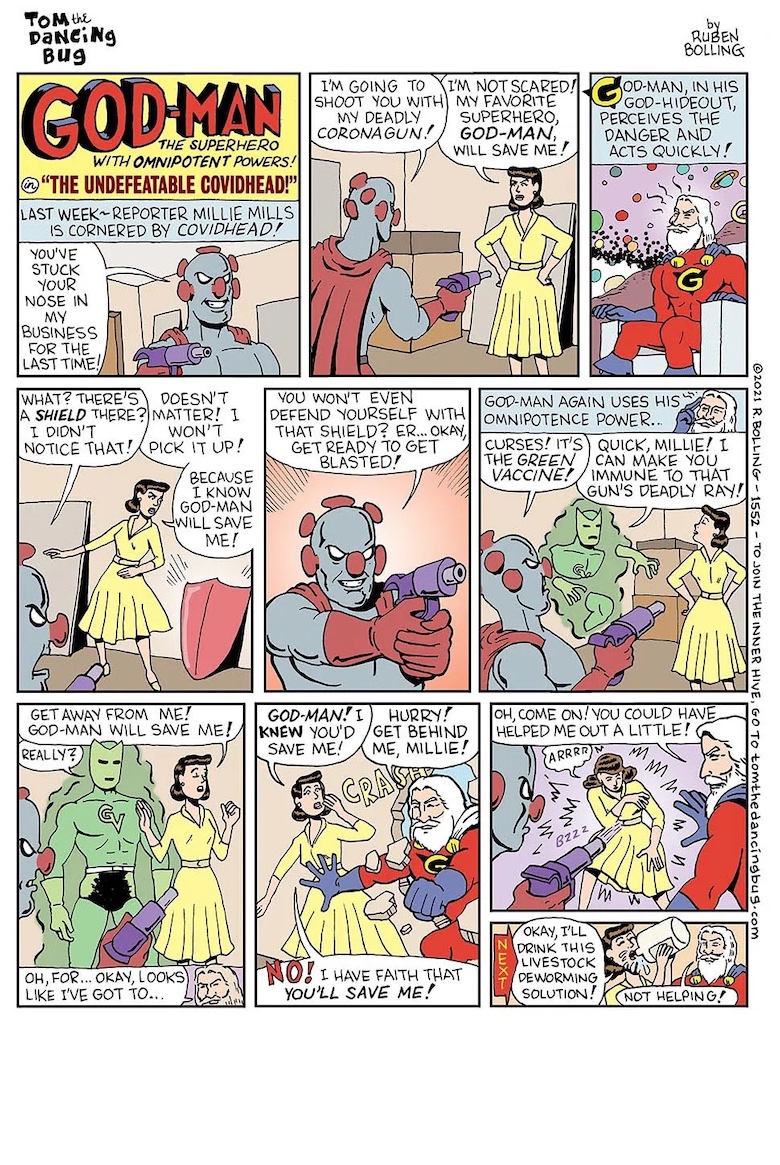

The internet is awash with examples of people in the US who believe in the craziest things. Even without seeking them out, my casual websurfing throws up so many that I have become somewhat numb to the examples that I find that demonstrate deep stupidity. But once in a while, I come across things that really boggle the mind, the more so when the perfectly normal way that people start out talking give you no warning that they are about to say things that are completely bonkers.
Take this woman who rose to speak at a school board meeting in Kansas where they were debating whether to require students to wear masks.
I wrote two weeks ago about the resignation of a high-ranking Catholic official, Monsignor Jeffrey Burill, the general secretary of the US Conference of Catholic Bishops, after a Catholic publication named The Pillar used cellphone data to deduce that he was a frequent user of Grindr, the queer dating app, and regularly visited gay bars. I wondered at the time whether this exposure was due to homophobia and it appears that it was.
In an interview with Michael O’Loughlin, a national correspondent at the Catholic media organization America, the radio program On The Media provides some background on The Pillar, that it is a small but virulently anti-gay organization dedicated to getting rid of all gay Catholic priests from the church.
[Read more…]
Ever since Edward Snowden revealed the vast extent to which governments and tech companies collect data on each and every one of us, people should have assumed that anything they do is known or inferable since communication technology is so all-encompassing that we all leave a trail almost wherever we go and whatever we do. So we should live as if the details of our lives can be revealed at any time. This is not a good way to live but it is the reality.
But this causes a problem for those who are pretty much forced to live part of their lives in secret. This is the case for gay Catholic priests. While we may wonder why they joined and stay in an institution that shuns them just for who they are, there are plenty of scenarios by which someone could end up being a prominent member of an organization that discriminates against people like them and not everyone is in a position to quit. But that does not mean that they deserve to be outed for their private activities, as happened with a high-ranking administrator of the US Conference of Catholic Bishops.
[Read more…]
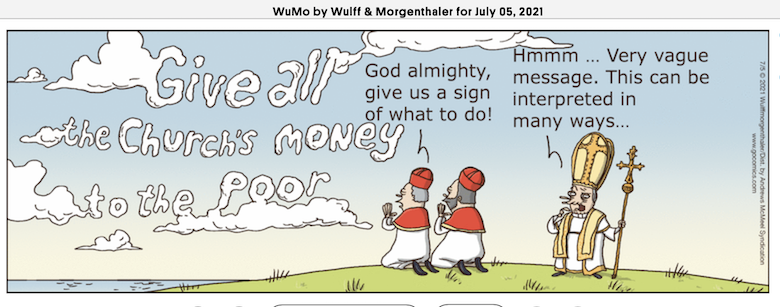
(WuMo)
During the height of the pandemic when things were pretty much locked down and all but essential workers were required to work from home, there was considerable speculation as to whether some of the changes in work and lifestyle might become permanent. Particularly in the case of work, many people found the absence of a tedious commute a very positive benefit. Some business found that they could dispense with the offices in city centers for which they were paying high rents. As a result, there was speculation that some employers might continue the practice even after things opened up, adopting at least a hybrid model of some days at home and some in office. It is too early to see whether those speculations will pan out or whether businesses will go back to the old ways.
[Read more…]
In the US, people use religious beliefs to claim a broad array of exemptions from the laws that apply to everyone. The primary vehicles for doing so have been the Free Expression clause of the First Amendment and the Religious Freedom Restoration Act (RFRA), and courts have often been willing to accommodate them. But it seems like there are limits to that leeway, as this case shows.
The U.S. Supreme Court on Monday declined to take up a religious rights case involving an Idaho man who refused to provide the state his Social Security number in a job-related filing because he said it was “the number of the beast” – an ominous biblical reference.
The justices let stand a lower court ruling against a man named George Ricks who in a lawsuit against Idaho demanded an exemption due to his Christian beliefs from the state’s requirement that he provide his Social Security number to apply to work as a state contractor.
[Read more…]
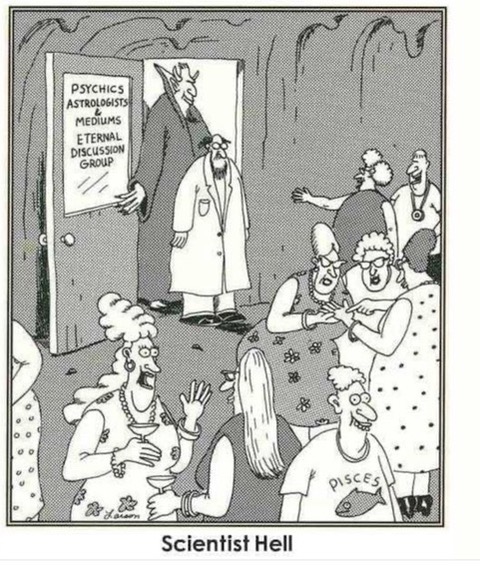
Phil Torres has published a scathing essay that looks closely at the ugly trajectories that the careers of a group of prominent people identified with New Atheist movement has taken. The title of the piece Godless grifters: How the New Atheists merged with the far right, along with the subtitle What once seemed like a bracing intellectual movement has degenerated into a pack of abusive, small-minded bigots pretty much captures the essence of the essay.
[Read more…]
One of the shameful features of US history is its attempted genocide of the indigenous people here. Apart from the outright massacres, other attempts involved the erasure of their identities by destroying their language and culture. One means of doing so was a governmental policy involving the forcible abduction of Native American children from their parents and sending them to boarding schools where they were forbidden to practice any aspects of their culture and were forced to adopt those of white people.
[Read more…]