There are more spider videos where this one comes from, I guarantee it

I have noticed that my spider videos get about a fifth of the traffic of my other videos, which means I must make more, many more, in order to train my audience. You don’t think people just naturally gravitated to cat videos, do you? It took years of exposure to overcome ailurophobia and accustom people to seeing lithe hairy predators (note: description applies to both spiders and cats) on their computer screens. So you just need more. You WILL watch the spiders. You WILL learn to love them.

This is Iðunn, my first specimen of Parasteatoda tepidariorum caught in the spring of 2019. I discovered that she had molted either last night or this morning, so here she is with her leftover cuticle.

WATCH IT. WATCH IT NOOOOOOOOWWWWWW.

Now my beauties. Something with poison in it I think. With poison in it!

I’ve spent all winter doing the book-learnin’. I’ve got so much unfocused spider lore stuffed into my head that I expect it to hatch and little spiderlings to start creeping out of my nostrils. I really need to start applying this information and working with real animals, so every day I prowl around looking for eight-legged beasties to study, and every day I shake my fist at the weather which hasn’t gotten around to any sustained warmth yet. It’s getting a little frustrating. I also have a group of students I’d like to deploy, but it’s all empty cobwebs right now.

They’re out there, I know it. I see an occasional salticid or pholcid indoors, I’m starting to see flies and other prey buzzing around, I’m expecting an explosion of spiders any day now.

Springtime for Spiders

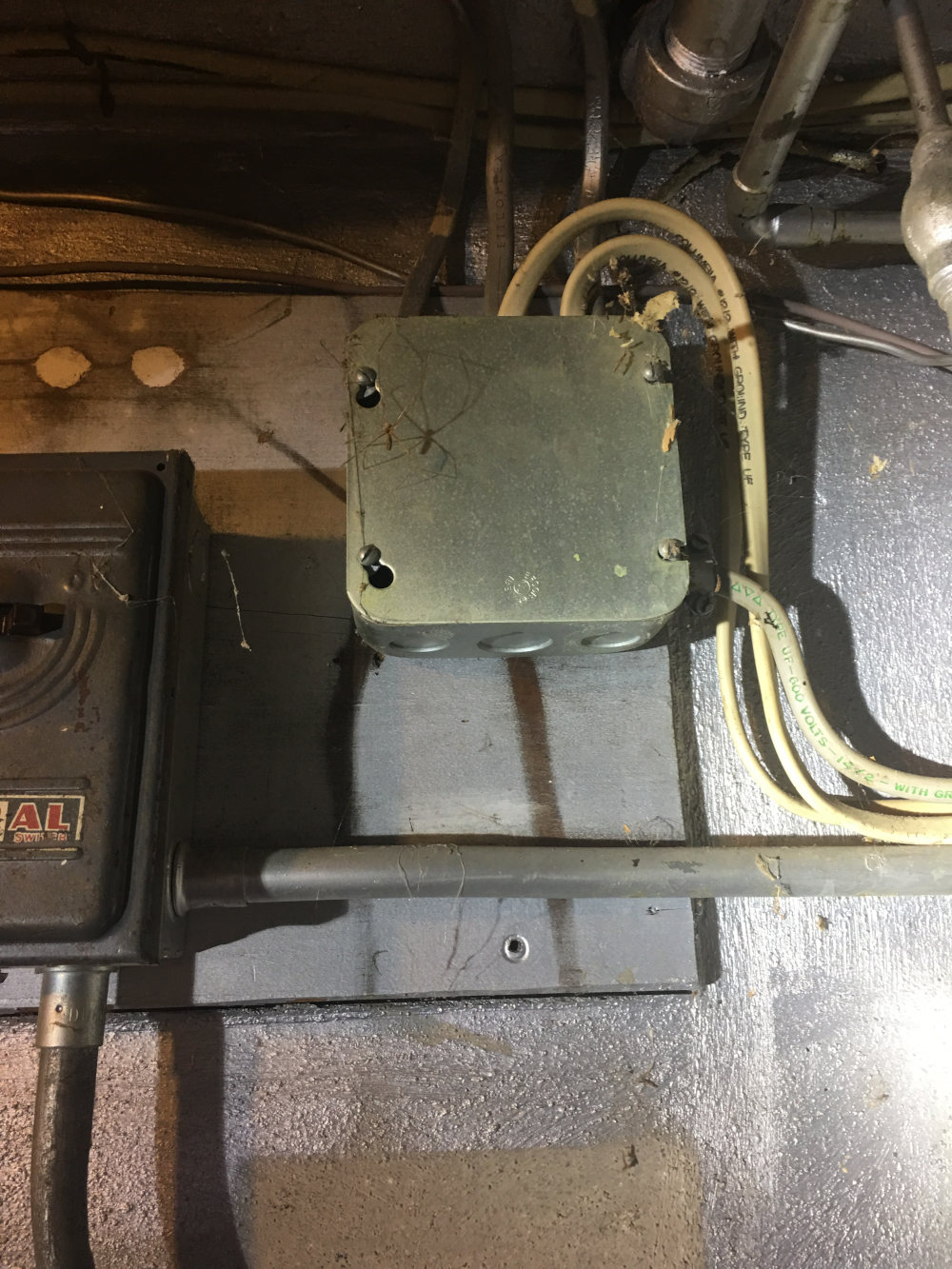
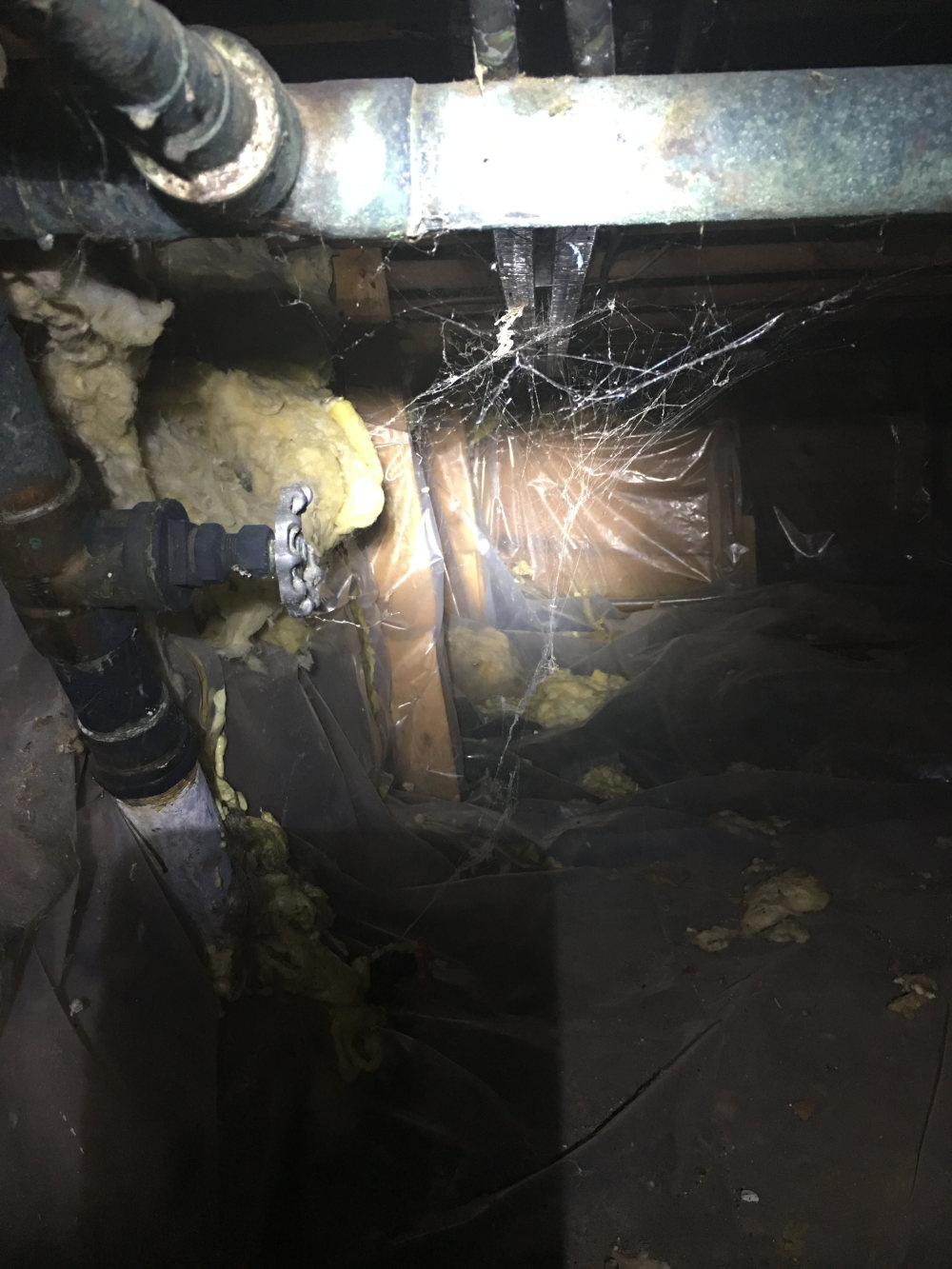
I have been so impatient for the spiders to flourish once again, and have been keeping an eye on what looks like a hotspot for Parasteatoda egg sacs and spiderlings. Nothing there yet, but at least I get to show you the spider paradise and where I expect to see more spiders soon.

Then my wife discovered the first Theridiidae of the spring scampering across some cardboard! I caught her (I’m pretty sure it’s a her, but she’s small and juvenile), and brought her into the lab.

The new spider is named Iðunn. May she be fertile and fruitful.

Whales just want to say hello

Who wants to go swimming with sperm whales? Their sonar is so intense that they can kill animals with a focused click, but here are some free divers playing with them.

(The video overstates some of its inferences — you can’t predict higher brain functions from the presence of spindle cells, or simply from the size of the brain — but it’s still powerful stuff.)

That’s some adaptation they’ve got, and still we killed them to scoop out the oil in their heads.

5,000 year old crime

Well, this is a dreadful image. It’s a reconstruction of a mass burial in Poland from 5,000 years ago. It’s mostly women and children who were murdered.

The interesting thing about it, illustrated above, is that they did DNA analyses of all the bones and figured out the family relationships.

Evidently, these individuals were buried by people who knew them well and who carefully placed them in the grave according to familial relationships,” they note.

Based on their research, the authors gained a startling glimpse into the families’ relationships. For example, they discovered that four of the individuals were brothers, but did not all share the same mother – though the similarities in the two women’s DNA suggest that their mothers may have been related.

One of the mysteries in the grave is the absence of older males in the grave, except for one father. This has led the authors to suggest that they were the ones who buried the people in the grave, who are mostly women and children.

Based on the nature of their injuries, the authors suggest that the people in the grave were captured and executed, rather than killed during fighting. This would fit the broader context of violence between competing groups at the time, in which women and children were often taken as captives.

The forensic analysis of the nature of the crime is fascinating, but the picture of Neolithic family structure more so, and this was a terrible tragedy that struck these people.

Now we just need to track down the individuals responsible for this horrific act and bring them to justice.

How to make a spider ‘penis’

To the relief of many, I haven’t been saying much about my lab spiders lately, and there’s a good reason for that — they aren’t doing much. They’re all females, they’re not producing egg sacs, and despite checking daily, I’m not finding any Parasteatoda tepidariorum in the wild, either. I think they’re in hiding, reeling away from our horrible winter weather, and we haven’t had enough spring warming yet for them to emerge and start spawning lots of little babies for me to use to replenish the colony.

I miscalculated. I started with a small group of about a dozen spiders and several egg cases before the winter hit, and I clearly need a larger colony to maintain a balance of the sexes, because the females occasionally chow down on their partners, so I was seeing the male population in constant decline. Then I also failed to sort out the sexes in the second generation, because I couldn’t tell them apart.

Adult male and female P. tepidariorum can be easily distinguished, because the males have these massively enlarged pedipalps hanging off the front of their face — I can easily tell them apart with the naked eye, they’re so distinctive. These palps are a sperm storage and intromittent organ, specific to each spider species, which they use in a lock-and-key arrangement in mating, so they both deliver sperm and guarantee that they’ll only mate with conspecifics.

I’m sure the spiders will be back soon, and I’m looking up all kinds of stuff on recognizing sexes in pre-adult spiders so that I don’t repeat this year’s mistakes again. Then, jackpot: this paper on Formation and development of the male copulatory organ in the spider Parasteatoda tepidariorum involves a metamorphosis-like process, and it’s got exactly the information I need, and also is pretty nifty in its own right.

This is a close-up of the organ I’m interested in. Impressive and rather terrifying, isn’t it? Males have two of them, too, which makes me a bit envious.

Like I said, these just leap to the eye when you examine an adult, since they’re much, much bigger than the female palps, which are slender and relatively delicate. I want to know how to spot them in younger sub-adults, though, and so here’s a developmental series illustrating the changes that go on. What’s interesting is that after an earlier molt, the terminal part of the palp swells up like a balloon, literally simply inflating with hemolymph (blood) to form a fluid-filled shell with a little primordium (in orange) of the adult palp resting within it.

What’s fascinating here is that, in the subadult, the hemolymph will coagulate to form a stable matrix which may play a role in shaping the species-specific expansion of the primordium. So it inflates, fills with material that shapes development and then is gradually lysed as the adult cuticle grows and fills the space.

As the title of the article suggests, this looks familiar — we see something similar in arthropod metamorphosis, where the structure of the larva is actively broken down, basically digested with enzymes, and adult primordia (the imaginal discs) grow to replace the animal.

It also has me wondering if one of the reasons spider intromittent organs can be so labile, varying from species to species, is that this developmental process of interactions between a coagulated matrix and the primordium is highly plastic. The authors say it’s consistent within this species, but I’d be curious to know how sensitive the adult morphology is to fluctuations in that matrix.

Now I’m really eager to get more spiderlings so I can watch their organs grow.