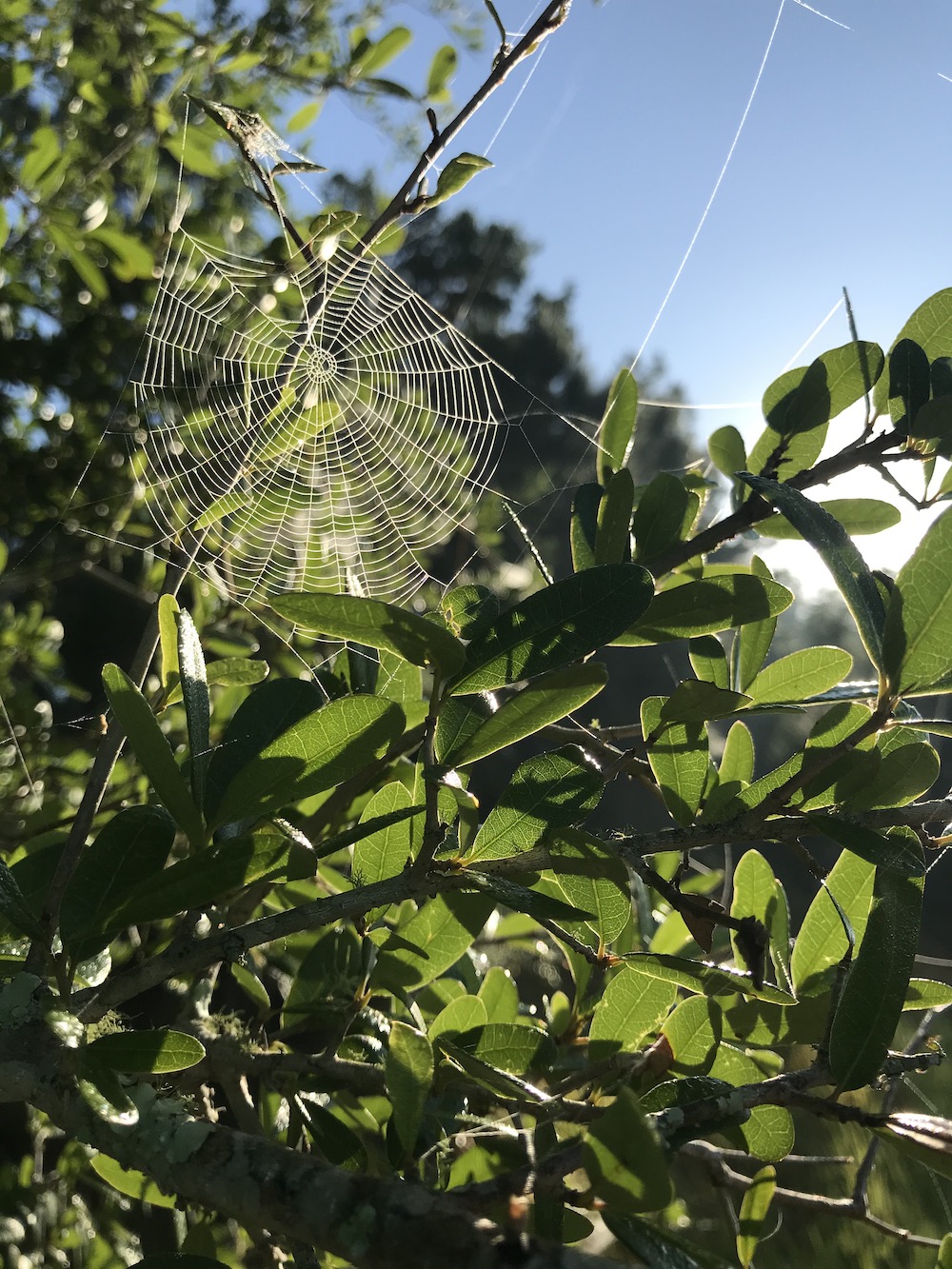
Classic orb

A reader sent this in — I’m envious. I’ve been eyeing various likely sites for webs, haven’t seen any of the orb webs yet. I’m in the land of cobwebs and jumping spiders right now, and haven’t had much of an opportunity to get out and explore yet.

Soon, though. I’ll be fetching my wife in about two weeks, and then it’s a summer of visiting lonely empty places with lots of spiders. Romantic!

I only find out now about this?

I grew up in the Pacific Northwest, and no one ever told me about the Pacific folding trap-door spider. I sure never saw one. But this lucky woman out walking her dog saw one on the sidewalk and — oh what a waste — ran away.

Experts say the spider she spotted is a Pacific folding trap-door spider. It’s not a tarantula, but it is a “tarantuloid” – a related type of arachnid – according to Jaymie Chudiak, general manager of the Victoria Bug Zoo.

“It is the closest thing we have to a tarantula,” Chudiak said. “They are incredibly beautiful, but also very large, so people who do see them go, ‘Oh my gosh, what is that? It’s enormous.’ But they’re actually extremely docile and timid.”

If you want, there’s a picture at the link. It’s beautiful.

I also learned this.

Like tarantulas, there is a commercial market that sells Folding Trapdoor Spiders. Many species in this genus are brown or dark brown. The black, native Pacific Folding Door Trapdoor Spider is commonly sold in the Pacific Northwest as a pet.

“Commonly”? “Commonly”? It is true. I wasted my youth, because I never saw one. Now I want to.

Hoo boy, the Discovery Institute is pathetic

Everyone seems to be “pivoting to video”, including the creationists, so I might as well join in the fun. The Discovery Institute put out a quasi-animated video with a young hipster narrator to promote science denialism — they want to claim that the whale transitional series is bogus, and that all those fossils are just a random jumble of unconnected species that somehow just appeared, and none of them are really intermediates. So I had to expose the flaws in their thinking. Unstylishly, of course.

If I look a little bit squinky-eyed, it’s because I only noticed after recording it that the sun was glaring in through the window to one side. Next time I do one of these, I’d better draw the blinds.

Bring me…a shrubbery!

I made my usual rounds of the house, seeking spiders, today. In particular, I have my eyes on this:

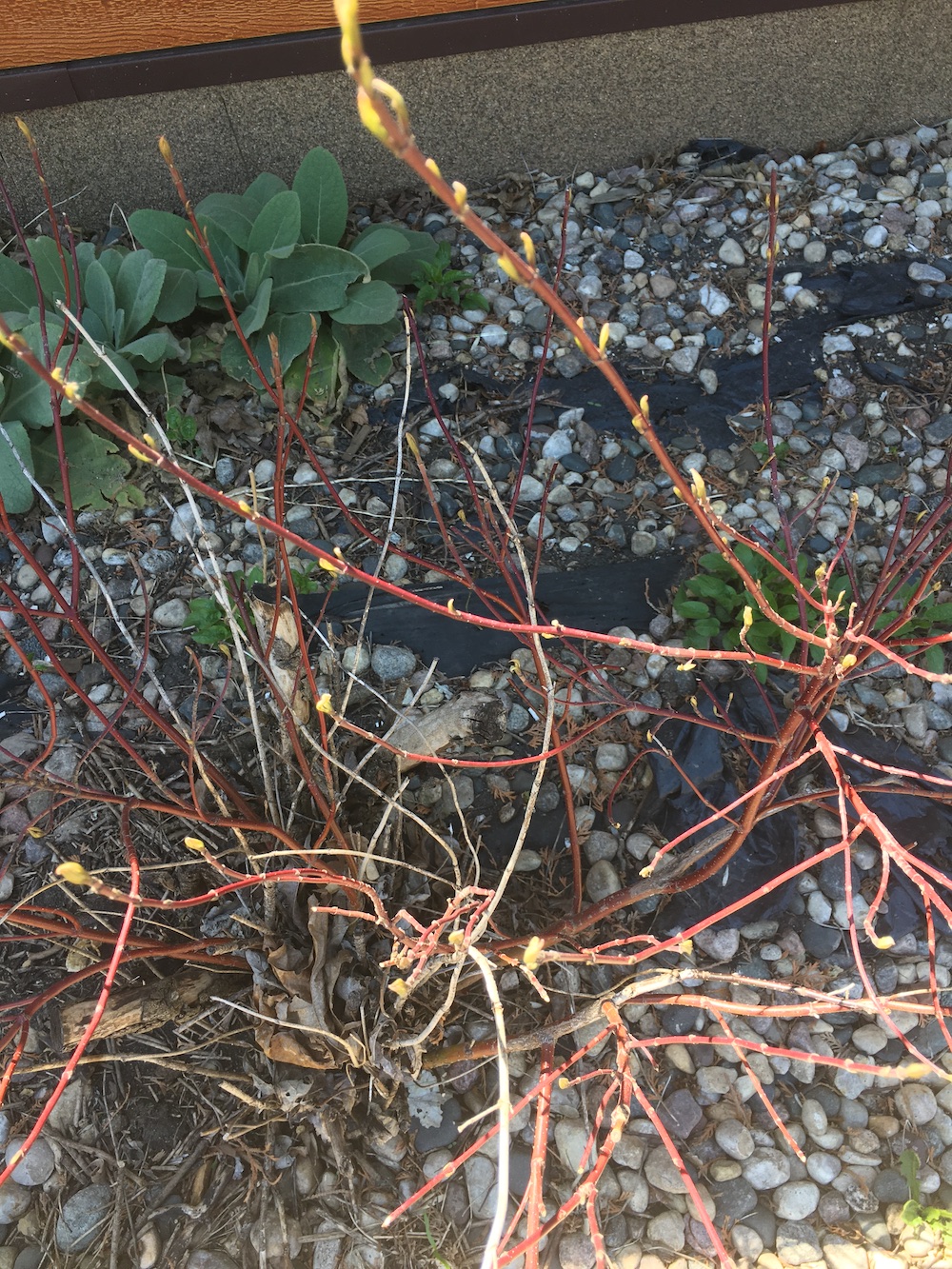
It’s some kind of twiggy bush growing near my house — I have no idea what it is, my resident plant-identifier is off in Colorado, neglecting my needs — but what you can’t see in this, as in all the shrubberies around my house, is that there are delicate lines of silk connecting all the branches. It’s true, I look in my yard with all the newly budded plants around it, and all I see are frames for holding spider silk. I stared at that for about a half hour, possibly making the neighbors wonder if I was already going mental, tracing each branch and every strand of silk, hoping to find the perpetrator.

I did not.

I will be checking regularly throughout this spring, and I’m certain that at some point I will catch them in the act. It’s just a matter of time, and they will be mine.

I did find other spiders on the wall, though. The usual zebra jumpers and asiatic wall jumping spiders…

…but also this mysterious young lady. Curious. She looks a bit like Attulus, but so dark. I see a lot of variation in color, though, so I don’t know.

Then, I struck gold. I found the first Parasteatoda specimen I’ve seen outdoors since last year. She even killed a mosquito for me!

I want you to know, though, that in order take her picture, I had to get down on my knees in the dirt. Then I had to get even lower and lie on my side to get the right angle. I think it’s going to be laundry day.

As usual, the spider photos are tucked away on Instagram, iNaturalist, and Patreon if you want to see them.

This is not a photo of a spider

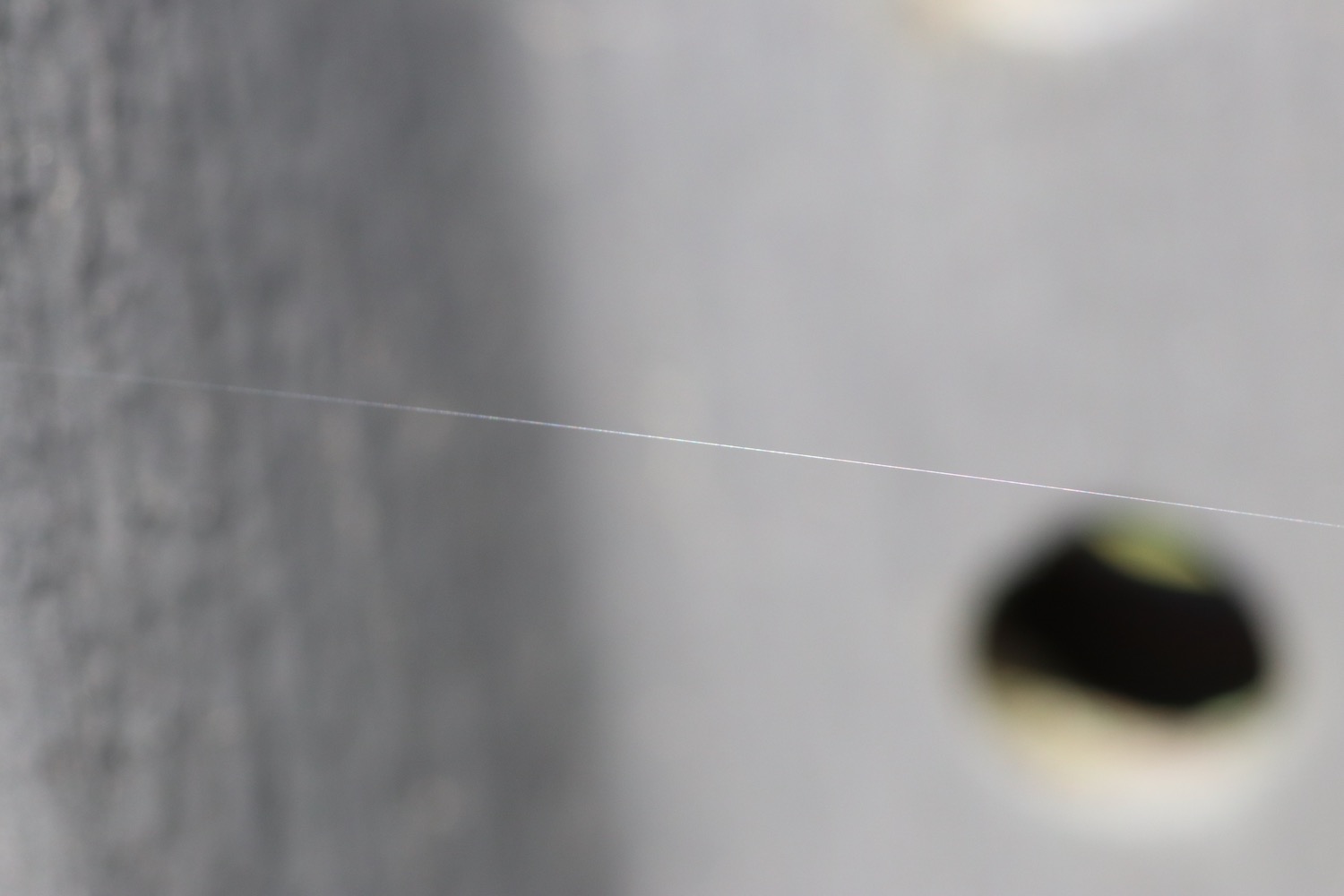
I wouldn’t do that to you. This is a single line of webbing on a metal signpost.

I wandered around on a walk this afternoon, and while I didn’t find any spiders, I’ve started noticing that everything everywhere is held together with delicate tracings of silk, fueling my new hypothesis that what’s really holding the planet together is the work of spiders.

I haven’t yet found any spider associated with this particular strand of silk, although there were many similar lines — therefore, since it’s invisible and holds all of earth together, it must be Jesus. I’ll keep looking and see if I can get a photo of Him. (Note: more likely to be a Her, and not a vertebrate at all, which leads to some provocative corollaries to my hypothesis.)

Best river monster ever!

Back in 2014, a reconstruction of the full skeleton of Spinosaurus was proudly published. It had been assembled from multiple partial fossils, and was the best approximation of the organism possible.

It was an impressive beast, 15 meters long with that spectacular sail on its back.

At the time that Spinosaurus lived, what is now eastern Morocco was covered with sprawling lakes, rivers and deltas. As a top predator, the dinosaur would have had been among the rulers of an ecosystem teeming with huge crocodile-like animals, massive sawfish and coelacanths the size of cars.

Compared with other dinosaurs in its group — the two-legged, meat-eating creatures known as theropods — Spinosaurus has strikingly short rear legs. Ibrahim’s team interprets this as meaning that the dinosaur walked mainly on four legs. Its centre of gravity would have been relatively far forward, helping it to move smoothly while swimming.

John Hutchinson, a palaeontologist at the Royal Veterinary College of the University of London, is less convinced. He worries about the reliability of cobbling together different specimens to create a single picture of an animal. “We have to be careful about creating a chimera,” he says. “It’s really exciting speculation, but I’d like to see more-conclusive evidence.”

The caveat at the end was prescient. Some pieces were missing from the fossil record. Now that has been changed, and wow, it’s even more spectacular! The old tail wasn’t quite right — it had a broad paddle.

a, b, Caudal series (preserved parts shown in colour) in dorsal view (a) and left lateral view (b). c–e, Reconstructed sequential cross-sections through the tail show proximal-to-distal changes in the arrangement of major muscles. f, Sequential cross-sections through the neural spine of caudal vertebra 23 (Ca23) to show apicobasal changes. g, Skeletal reconstruction. Scale bars, 50 cm (a–e), 10 cm (f), 1 m (g).

OK, this is now my favorite dinosaur.

Capitalism is not the core philosophy of evolution

Abe Drayton, who appeared in last Sunday’s hangout, has a fine article centered on Mexie’s discussion of the injustice of capitalism towards disabled people. You should watch it, but also read Abe’s commentary.

Capitalism relies on the lie that human nature is all about greed, competition, and aggression. That is not what drives civilization, it’s what constantly tries to dismantle it. Every advance we have made in human wellbeing has come from the mass of people working together against those obsessed with competition and power to create a world that’s better for everyone. Capitalism does not give a damn about you, but fortunately those obsessed with capitalism are wrong – it is not an inevitable result of human nature, it is a perversion of it. A better world is possible, and we can move in that direction the same way we always have – by expanding the “tribe”, by pooling our resources and efforts, by caring for each other, and by using our collective power to force change.

Lay people seized upon Darwin’s idea of natural selection to distort it in directions favorable to capitalism, and started a dreadful feedback loop that justified exploitation — “I’m rich, therefore I deserve to be rich by natural law, and you’re poor, so you don’t deserve what little you have” — and ballooned it into a rationalization for our current nightmare. It’s what allows creationists to caricature evolution as nothing but a history of death and suffering.

It’s more mainstream than that, too…the whole idea of “Darwin Awards” is terrible and unrepresentative, unless you also give the award to individuals who increase the success of others and themselves with generosity and cooperation. The human species did not succeed because they were the best at killing — they’ve always improved our common survival by working together and building communal social structures.

More serious analysis of online conferencing, please. It’s our future.

You’d think that after a long period of isolation I’d be looking forward to a return to normality and the opportunity to mingle with others at a conference again. Strangely, I am not. There are great things about real-life conferences, but also great awkwardnesses. I stopped attending the annual Society for Neuroscience conference many years ago as attendance soared past 20,000, which made the face-to-face appeal diminish as we became a faceless mob…and also as it became obvious that a subject as complex and diverse as neuroscience couldn’t be appropriately managed in a one-size-fits-all event.

So I thought this article about organizing scientific conferences online was somewhat informative. I’ve been involved in running a social justice conference online, once upon a time, so I’m familiar with some of the compromises, but it’s good to see some new ideas. Zoom has all kinds of potential, and they used Crowdcast, but I thought the way they applied it was a good mix of traditional and novel uses.

Even the traditional elements were improved.

We largely retained the legacy conference format of a single track for invited talks (30 minutes plus 15 minutes for questions) from established scientists, and contributed talks (18 minutes plus 4 minutes for questions) selected from the submitted abstracts to highlight work from up-and-coming researchers. However, the online platform used – Crowdcast – allowed for some significant innovations. First, everyone was able to see the speaker more clearly than in a lecture theatre. Second, Crowdcast allows anyone to submit a question to ask the speaker at the end, and viewers can vote on those questions. This led to a question and answer session that was considerably more lively and democratic than in a typical legacy conference, where participants often note that the same established professors are asking the same questions at every talk. As in the case of the short talks, it may be better to extend the questions even more to capitalize on the quality of the questions asked in the safer and more democratic online format. The third innovation is the chat window that appears alongside the talk. We did not anticipate how significant this would be. Students and others were able to ask basic questions about definitions or ask for links to papers while the talk was going on. Other participants could answer them in real-time without disrupting the presentation, thereby allowing a deeper level of engagement by the audience than is possible in legacy conferences. Moreover, since recordings of these talk were available immediately after the session, it would be possible to go back and revisit portions of the talk that may have been missed or were presented too quickly.

Right, you’ve got to keep the talks limited to familiar blocks of time. We do a lot of training and practice to maximize information in small specified chunks of time. They didn’t do one hour talks, though? I’m used to conferences with plenary sessions with hour-long time slots for bigwigs in the field…they usually don’t live up to their billing, though. An hour is a long time to fill.

The other thing you need for a conference is the schmoozing. They had a way of doing that that seemed to me to be trying too hard. Typical nerds.

One feature of a legacy conference that would appear to be impossible to replicate online is the social aspect: chance encounters during the coffee breaks, social events or banquets. In place of this aspect, neuromatch algorithmically matched attendees to other like-minded scientists for individual 15-minute chats. We use a combination of topic modeling techniques and linear programming to solve the matching problem based on a sample of their research abstracts (Achakulvisut et al., 2018). The matching part was based on a highly popular experiment carried out at the Conference on Cognitive Computational Neuroscience, but it is particularly well-suited to an online format. There remains considerable scope for further innovations in replicating or improving on the social experience of legacy conferences, especially as the online format may be less socially intimidating.

Wouldn’t it be easier to just randomly put people into small break-out groups? This sounds too planned — one of the benefits ought to be serendipitous encounters using a simple algorithm that assumes every participant is equally interesting with unique attributes that anyone might find productive. One useful parameter I wanted to know is what is the optimal group size for these chats. Was it one-on-one? Half a dozen in a group? Small classroom size with 30 participants?

I suspect that one good thing that will emerge from this pandemic is more online conferences. It vastly reduces the expense, gets rid of the bother of air travel, and helps participants manage their time better. I currently try to attend one conference a year because it’s such a huge investment of time and effort — and this year the one I’d planned on got cancelled, of course. But if they were online, I’d be able to schedule that arachnology conference, the Society for Developmental Biology annual meeting, and SICB every year without killing myself with constant travel to the airport, while still learning new things and engaging with new people. Make it so, scientific societies!

Also, if you’re interested, Skepticon is going online this year. I’ve long wanted to attend Dragon*Con, but it’s been impossible because it always falls during the first few weeks of classes, when I can’t possibly just take off. Of course, if it went online, what would happen to all the cosplay events? And now I want to attend even less, because it’s held in a state where Brian Kemp is the Republican governor who is mismanaging the pandemic, and we’ll probably see another wave about the time Dragon*Con opens for business as a big bustling petri dish. Many Shubs and Zulls will know what it is to be roasted in the depths of a Sloar that day, I can tell you!

I wonder if they’re even considering alternatives — I get the idea that our regional SF con, Convergence, is going ahead with the idea that they’ll be doing business as usual in late August, while developing contingency plans. I’m not so confident. Getting crammed into a single building with thousands of other attendees, many of whom need to be reminded about the basics of hygiene, seems to regularly lead to icky cases of con-crud. Only this con-crud can kill you!

P.S. I’ve only just noticed that searching for “online conferences” produces strange images of people sitting around a conference table staring at a screen on the wall, or the always-popular image of two people shaking hands through a pair of computer screens. I really don’t think they get it. That’s not how it’s going to work, or can work. And shaking hands? Is anyone else feeling repulsed at the idea of physical contact with some stranger’s filthy hands?

Australian rules

I’ve been wrestling with spider taxonomy, and I hate it. Hate it, hate it, hate it. You finally learn to recognize a common spider, and somebody comes along and turns the nomenclature upside down…like this recent case, where the genus Sitticus gets revised to be called Attulus. There’s good reasons for it — detailed molecular phylogeny clarifies relationships — but it’s still infuriating. I remember when Brachydanio rerio was revised to Danio rerio, and I’m still reading papers about Achaearanea tepidariorum despite the fact that we’re now supposed to call it Parasteatoda tepidariorum (at least zebrafish got revised to a shorter, easier to pronounce name).

So screw it. I’m just going to have to adopt the Australian rules for naming spiders.