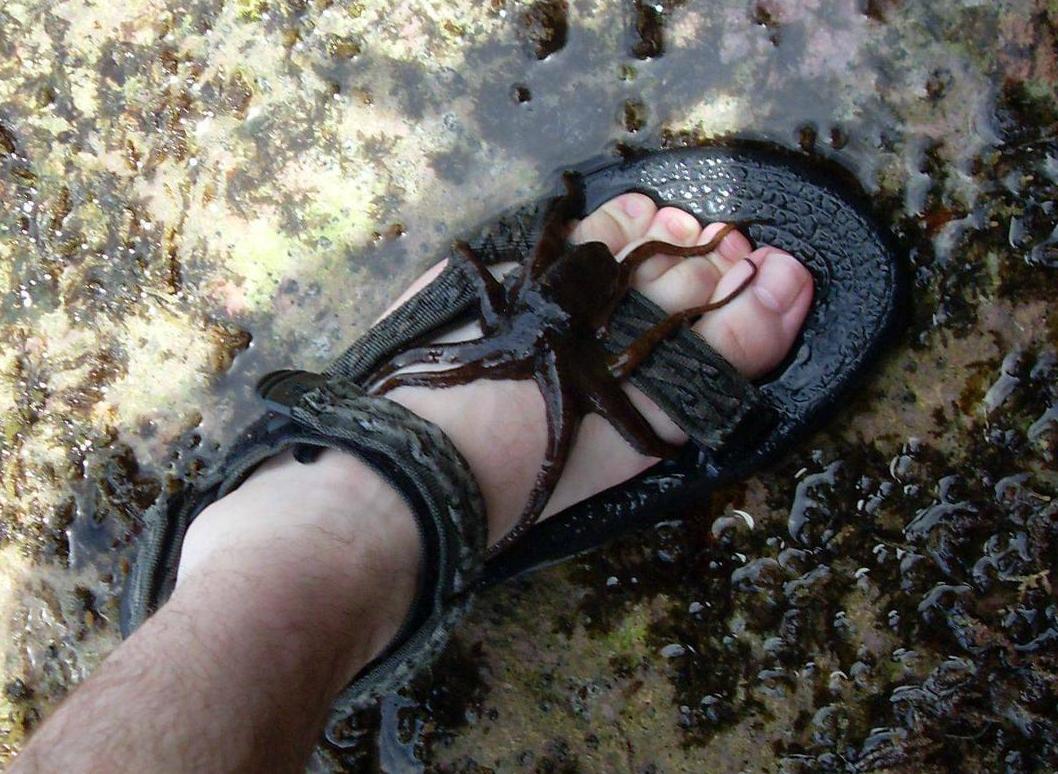
I am actually staying home for several weeks, and it feels so good and relaxing. So this is kind of a self-portrait, I think.
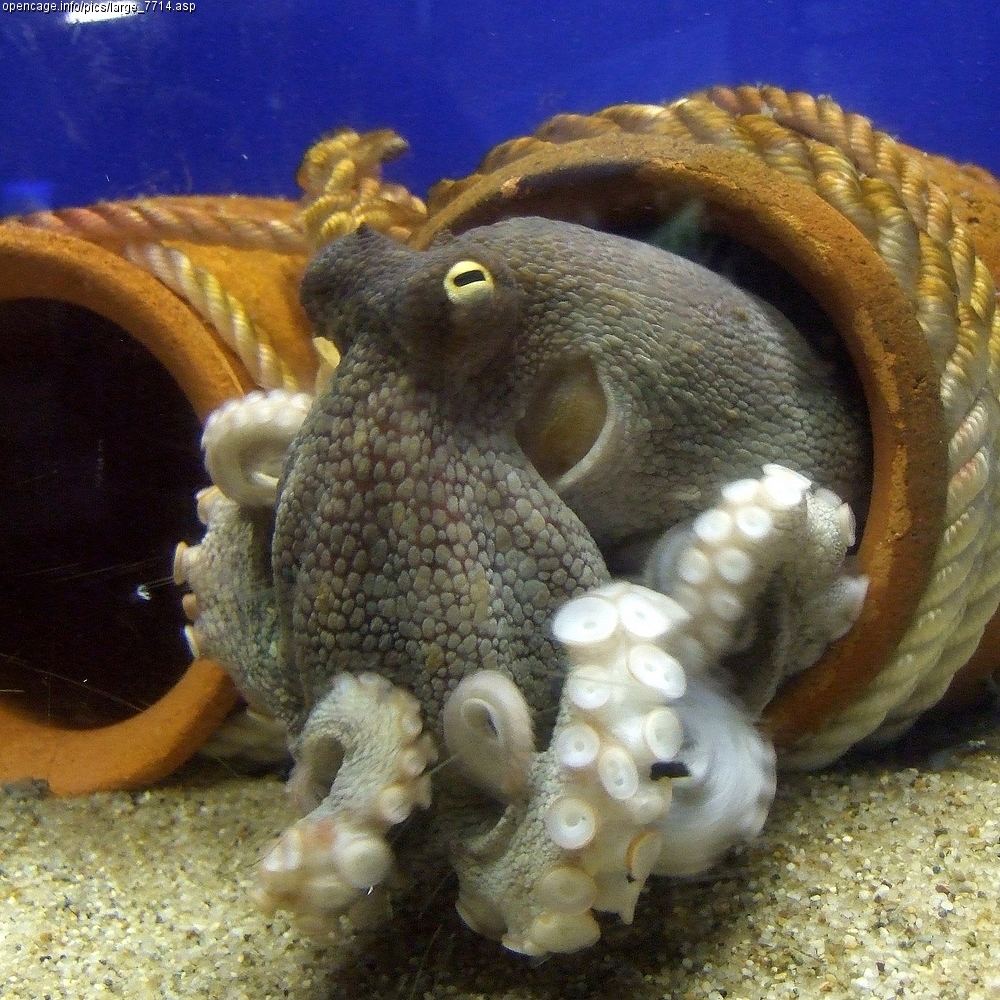
(via)

I am actually staying home for several weeks, and it feels so good and relaxing. So this is kind of a self-portrait, I think.
(via)

You know, many species of turtles are in trouble; they’re just slowly dying off. So one Clemson student, Nathan Weaver, did a very simple experiment: he watched what happens when a turtle crosses the road.
Weaver put a realistic rubber turtle in the middle of a lane on a busy road near campus. Then he got out of the way and watched over the next hour as seven drivers swerved and deliberately ran over the animal. Several more apparently tried to hit it but missed.
What? People intentionally run over small animals on the road? I’ve been doing it wrong: I hit the brakes or swerve to avoid them, and there have been a couple of times I’ve stopped and carried a turtle across the road.
I’m rather appalled that anyone would think it entertaining to squash turtles just for the hell of it.

I’ve constricted my anus 100 times
Scientists intend to sequence Adam Lanza’s DNA. They’re looking for genetic markers for mass murder. Why? Because some scientists are stupid.
Some researchers, like Dr. Arthur Beaudet, a professor at the Baylor College of Medicine and the chairman of its department of molecular and human genetics, applaud the effort. He believes that the acts committed by men like Mr. Lanza and the gunmen in other rampages in recent years — at Columbine High School and in Aurora, Colo., in Norway, in Tucson and at Virginia Tech — are so far off the charts of normal behavior that there must be genetic changes driving them.
“We can’t afford not to do this research,” Dr. Beaudet said.
There must be genetic changes underlying this specific behavior? There is no reason at all to assume that. Furthermore, this isn’t “off the charts of normal behavior” — there have been 62 mass murder events in the US in the last 30 years. There are witch-burnings going on in Africa right now. European Americans casually exterminated the native population of the Americas, and now pens the remnant population in reservations where they are kept in poverty. We had entire nations worth of people involved in the mass murder of 6 million Jews in the last century. Hey, shall we round up a bunch of Germans and take DNA swabs so we can figure out what there is that’s unique to their genes that allows them to commit genocide? (I better be clear here: I’m being sarcastic. I really don’t think Germans have a biological predilection for racism or murder, any more than any other people.)
I would ask whether there is any reason to assume that this behavior is a heritable trait. Is there a familial history of mass murder? Are we really going to assume that the diverse individuals who have committed these horrific crimes are all related, or all carry some common marker that isn’t found in people who don’t commit murder?
I can predict exactly what will be found when they look at Adam Lanza’s DNA. It will be human. There will be tens of thousands of little nucleotide variations from reference standards scattered throughout the genome, because all of us carry these kinds of differences. The scientists will have no idea what 99% of the differences do. They will make dubious associations — for example, they might find a novel nucleotide in a gene that has other variants correlated with schizophrenia — and in the absence of any causal link at all, they’ll publish garbage papers that try to impute a signal to common genetic noise. Some idiot will make noise about screening for an obscure mutation that Lanza carried, just because it’s something different.
I wonder if there are neurologists poking around in his brain, looking for differences, too. It’s the same issue; we don’t understand the majority of the functional consequences of individual variations in connectivity in the brain, and we have a population with large amounts of random variation. So how are you going to recognize what’s special and unique and causal about Lanza’s brain (or Einstein’s brain, or my brain, or yours)?
Fortunately, there are some sensible people out there.
“It is almost inconceivable that there is a common genetic factor” to be found in mass murders, said Dr. Robert C. Green, a geneticist and neurologist at Harvard Medical School. “I think it says more about us that we wish there was something like this. We wish there was an explanation.”
I suspect the explanation is going to be more a consequence of individual experience, although of course biology is going to shape how we respond to circumstance. But to go rifling about in a genome we don’t understand to find a simple cause is ridiculous and futile. Sure, freeze some cells down and store them away; maybe some day we’ll understand more and there will be a legitimate and specific hypothesis that can be tested by examining killers’ genetics…but a fishing expedition is pointless and dumb, and at this state of our understanding, only opens the door to misconceptions and ethics abuses.

There are days when having a glass desk is a serious health hazard, because I run the risk of serious facial lacerations when I read certain things.
Take this extremely well-intended article at Care2.com:
Human-accelerated climate change is a disaster waiting to happen. We’ve already seen the superstorms and drought it can create. Although we can work to slow climate change, there’s no way to stop it completely. This reality means adaptation will once again become the most important strategy for survival.
One thing’s for sure: the Earth will continue to exist as it has for eons. The question is, what will be left behind to inhabit it? Below are five species known for their resilience and ability to survive in adverse conditions. They are the most likely to survive a climate change disaster.
If you’re going to write one of those web-traffic pandering List Posts — not a criticism: I’m writing one this weekend as it pays the bills — that’s not a bad topic to tackle. True, the fact that the article starts this way might cause an anticipatory eyeroll:
Survival of the fittest. This basic tenant of evolution explains why the dodo bird no longer exists and why humans have opposable thumbs.
I’m trying to imagine what a basic tenant of evolution looks like. Maybe a Sphenodon. She’s paid her rent on time since the Pleistocene, comes from a good family, never made noise or caused trouble. You know the type.
That said, if I start making fun of people for typos there’s about a decade and a half worth of mine online people can choose from.
And it’s a great idea for a post. What species are likely to survive the disastrous climate change we’re almost certainly facing in the next decades? Human-adapted pests, probably, like rock doves a.k.a. pigeons, Rattus norvegicus, German cockroaches, but those stories have been written over and over again. How about wild species? Western sagebrush, maybe: that complex of subspecies in Artemisia tridentata that’s only just gotten settled in the Intermountain West, and is busily evolving new regional strains since the end of the Pleistocene? Or invasive exotics in the wild? That’s be a good if not precisely new topic.
Nope. Here are the five “species” listed:
We can call “species” 2 and 5 near misses: wolves and coyotes comprise two closely related species, and while there are about 4,500 species of cockroaches and five commonly found in human dwellings as pests, the author mentions one in particular, the American cockroach. Though that’s not the one you usually think of as surviving Armageddon.
But those others. “Trees in the Amazon” as a species? really? There’s not a single place on the planet you could have picked where there are more tree species. One estimate of species diversity for trees in the Amazon basin put the likely number of species in the Brazilian section alone as above 11,000.
There are an estimated 22,000 species of ants. The author says this, almost:
There are approximately 20,000 different species of ant, with colonies of millions located all over the world. They were here long before humans, and the odds are good that they’ll be here long after.
One has to wonder what the author thinks the word means, if a species can be made up of more than 20,000 species. “Taxon,” maybe? Hard to say.
And “algae.” The author says:
Once of the few species that has been around since the beginning of evolution (remember the primordial slime?), there are over 200,000 varieties [of algae] known to man.
A chance to use the word “species” correctly, almost, but the author opts for “varieties” instead.
This is an inconsequential article and the author meant well. It’s a good thing to get people to think about. And Care2’s editors, if they have any over there, are really the people to blame here, if I were blaming rather than observing. Which I’m not. Really.
But to quote the celebrated environmental scientist Rush Limbaugh, “words mean things.” Maybe it’s just PTSD from having spent most of my adult life editing prose by environmental activists. I may well have had a big red button pushed. But if you’re writing about saving the natural world, you need to know at least a little bit about the natural world. And when you write about threats to biodiversity, knowing the actual definition of the word that represents the basic unit of biodiversity is a good idea.
Lest you end up calling “algae” a species.

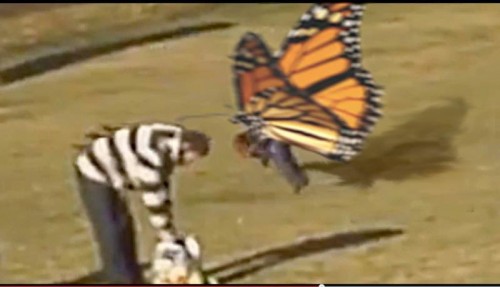
Probably also faked: the sweater looks completely ‘shopped. Via Ed Lam.
I held forth on the fake eagle video thing at some length over here at KCET yesterday, but there was something I didn’t mention there that irked me about the hoax: in the recap part, where the “amazing footage” of the “eagle” “catching” the “child” gets “replayed” in slow “motion,” the filmmakers dubbed in a bit of sound effect right at the moment where CGI talon hit virtual toddler.
And of course it was a red-tailed hawk call. It always is, It doesn’t matter what bird of prey is in a film: the SFX guys will always dub in a red-tailed hawk call.
Not that the red-tail sound was a dead giveaway: during the 45 minutes or so in which I was somewhat taken by the hoax in I was prepared to grant that perhaps the videographers just did a clumsy, misguided dubbing job, for much the same reason that nature YouTubers always seem to want a horrible music track to cover up their occasionally interesting footage. But it was the same kind of mistake as inflating a CGI osprey to eagle size and calling it a golden and expecting birders to believe it for a second.
In case you’ve never seen a bird of prey represented in video and have no idea what I’m talking about, here is a red-tailed hawk’s call:
By way of comparison, here’s what golden eagle vocalizations sound like:
Bald eagles have calls you might well mistake for a gull’s:
[Update: in comments, otrame offers a more characteristic adult bald eagle call.]
Almost without exception, the red-tailed hawk call is what the sound engineers will use. I do know of one such exception. In the 2010 remake of Clash Of The Titans, which I suspect most people here watched solely for the Kraken and the releasing thereof, there was a scene where Zeus and Perseus were having a difficult father-son moment. Perseus is recalcitrant, whereupon Zeus transforms himself into an eagle and flies away. And that eagle doesn’t “keeeer” — he peeps. Like a golden. Honestly, that one moment of verisimilitude was worth the preceding hour. I was impressed that they got that one detail right. Though the Kraken did disappoint.
Exemplary efforts like Clash Of The Titans aside, it seems like there’s a secret world law governing natural sounds in TV and film that requires all raptors sound like red-tailed hawks. All rats squeak incessantly. Horses whinny while chewing placidly. Tropical rainforests in Africa and South America always have kookaburras in them. And as soon as you start to pay attention to how things actually sound in the real world, that kind of mistake unsuspends your disbelief pretty damned quickly. It’s a bit like having a scene where John Wayne is leading a wagon train westward to Oklahoma City, and they pass the Tetons on the way.
It’s the natural world version of illiteracy, and it makes those of us who know a few things wince.


This is a plant that uses water splatter to spread its seeds, as explained on the Australian Geographic site.

Also, that eagle…probably an atheist.
The word is out: the eagle video is totally fake.
Damn. My newly hatched cunning plan to satisfy the hunger of American atheists by training eagles to capture Canadian babies is foiled by reality.

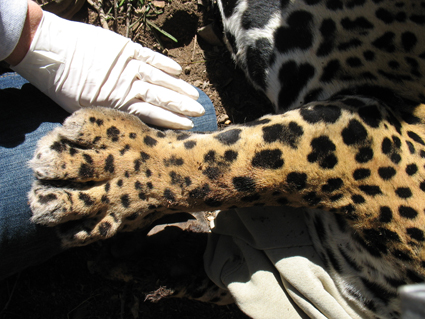
I wrote here about the accidental 2009 capture and subsequent euthanasia of Macho B, an aging male jaguar who’d wandered across the U.S. border into southern Arizona.
Last week, in a really rather remarkable bit of investigative journalism, Dennis Wagner of the Arizona Republic reported that Macho B’s capture may not have been precisely accidental:
Although Game and Fish officials claimed Macho B’s capture was accidental, [Biologist Emil] McCain actually set the snare along a favored trail and baited it with scat from a female jaguar in heat. Then he flew to Europe to visit his girlfriend, leaving Smith and another Game and Fish employee to check the traps.
Macho B was caught on Feb. 18, 2009. Smith promptly shared the news with Ron Thompson, the Game and Fish administrator overseeing carnivores, who fired an e-mail to McCain in Spain, announcing: “Thorry did it!” [Thornton “Thorry” Smith, McCain’s colleague]
As word spread, congratulatory messages contained a hint of conspiracy. McCain received one e-mail from a co-worker who wrote, “And just think, he was an ‘incidental’ take. The hell with politics.”
The answer: “Yes, it was incidental, and you know that. Right? I had nothing to do with this right? And neither did Ron.”
Thompson then issued a warning about indiscreet messages: “Emil, be aware that we cannot use the government email to communicate with you. Sky Island (Alliance) is calling it a conspiracy, and for the first time they are right!”
For those of you not conversant in Endangered Species Act jargon, “take” is defined in that act as “to harass, harm, pursue, hunt, shoot, wound, kill, trap, capture, or collect [a listed species], or to attempt to engage in any such conduct.” An incidental take is a take that’s not deliberate, but rather a side effect of some other activity.For instance, accidentally capturing a jaguar in a snare you’ve set for pumas.
Which means, if Wagner’s report is accurate, that AZ Game and Fish employees and contractors tried to pass off a deliberate take as an incidental take. In other words, fraudulent violation of Federal environmental law.
Why? Wagner has an idea:
The ability to track a jaguar known as Macho B would make the state agency and its contractors clear favorites to win a multimillion-dollar research grant. It would bring prestige to scientists and administrators involved. And it might provide valuable information about the border travels and habitat of an endangered species.
The last three years have been a festival of conflicting stories and fingerpointing. McCain was convited of violating the Endangered Species Act and given five years probation, during which time he’s not allowed to study big cats in the US. So he’s doing so in the Eastern Hemisphere. Biologist Janay Brun, who had acted as McCain’s assistant, agreed to a plea bargain and is writing a book.
Here’s what that “incidental” take did to an aging cat:
[S]ometime on Feb. 18, 2009, an aged feline known as Macho B stepped on the tripping mechanism with his left front paw. No one witnessed what happened next. Based on injuries and evidence at the scene, however, there is little doubt that the creature’s escape efforts were panicked and prolonged.
One of the jaguar’s legs was cut and severely swollen. A canine tooth was broken off at the root. Claw fragments, hair and fluids were recovered from the tree trunk. A javelina tooth was inexplicably stuck in the jaguar’s tail.
Brun has described the cat’s struggles in an online interview, based on her visit to the site afterward. “Macho B fought,” she said. “I don’t know how long he fought, but he was climbing this tree, clawing the tree, biting the tree, banging himself against (a boulder). He fought and used probably every last ounce of strength he had. … It just absolutely killed him.”
Macho B was tranked, collared, and released, and recaptured two weeks later when his transmitter stopped moving. Despite being gravely ill, with a septic hind leg that was hugely swollen, it took some doing to get him back in custody. He was euthanized for kidney failure shortly after recapture.
Wagner details further dissembling, both before and after Macho B’s death, by both Game and Fish and US Fish and Wildlife Service staff. It’s a difficult read, but Macho B deserves no less.