Just watch the wheel of illogic turn in Jordan Peterson’s head.
lmao Jordan Peterson actually believes the Bible story about Adam and Eve, the snake and the apple confirms recent scientific hypotheses about how humans evolved to have eyesight. In other words, he believes the Ancients discovered DNA and postulated the theory of evolution 🤣 pic.twitter.com/bVvgBOl4wy
— ☀️👀 (@zei_nabq) September 10, 2018
First, we get a quick summary of the book of Genesis.
A snake gives them an apple, and that wakes them up.
Then he waddles off into a discursion about science. This is key, because he’s going to conclude by using science to validate his version of the Bible.
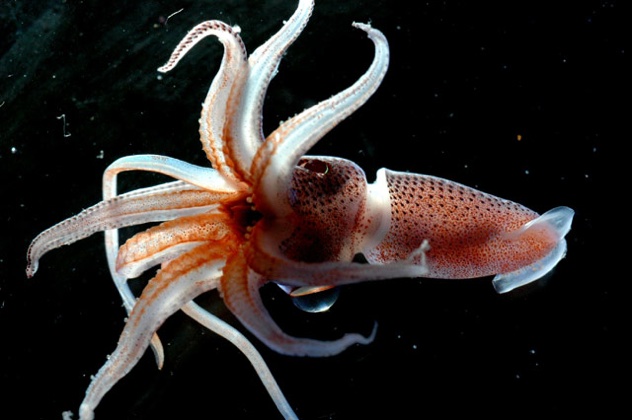
The reason that humans have such great vision, way better than most animals, except for raptors, is because our visual systems were designed to detect predatory snakes.
Friggin’ bollocks.
He cites a book by a primatologist whose name he can’t remember on this “fact”. The evidence is a lot weaker than he implies.
Snakes were “the first and most persistent predators” of early mammals, says Lynne Isbell, a behavioral ecologist the University of California, Davis. They were such a critical threat, she has long argued, that they shaped the emergence and evolution of primates. By selecting for traits that helped animals avoid them, snakes ultimately endowed us with forward-facing eyes, for example, and enlarged visual centers deep in our brains that are specialized for picking out specific features in the world around us, such as the general shape of a snake’s body camouflaged among leaves.
Isbell published her “Snake Detection Theory” in 2006. To support it, she showed that the rare primates that have not encountered venomous snakes in the course of their evolution, such as lemurs in Madagascar, have poorer vision than those that evolved alongside snakes.
There is no strong correlation. I read Isbell’s paper, and there is no statistical comparison, which would be difficult given the lack of specificity. Here’s the extent of the “species comparisons” she did.
Malagasy prosimians have never co-existed with venomous snakes, New World monkeys (platyrrhines) have had interrupted co-existence with venomous snakes, and Old World monkeys and apes (catarrhines) have had continuous co-existence with venomous snakes.
To which I have to ask, “Why restrict yourself to venomous snakes?” New World monkeys have as much to fear from constrictors as they would from venomous snakes. I think the answer might lie in her reasoning in response to the argument, “but then why haven’t rodents evolved bigger brains and sharper vision?” — it’s because she argues that rather than visual adaptations, rodents evolved to become more resistant to venoms. It’s an entirely adaptationist hypothesis, of course, which is OK…but when an adaptation is turned into an umbrella hypothesis which explains everything with a single cause, I get a little leery.
At least the paper has the best “What have the Romans ever done for us” line I’ve seen in a scientific work.
What besides visually guided insectivory, feeding on fruits and nectar, moving on fine terminal branches, or leaping could favor better depth perception in near space and a better ability to “break” camouflage, both of which are improved with orbital convergence, particularly in the lower visual field?
Her answer, obviously, is “snakes!”
Trust Peterson to ignore the multiple factors that contributed to our pattern of evolution to focus on just the one that he can twist to stand in defense of the fundamental truth of the Old Testament. If only the story had told about how Eve, a hairy, monkey-like creature, crept along the branch of a pear tree gathering ants for breakfast before leaping to the apple tree, finding both a snake and a ripe apple waiting for her…
Once again, though, Peterson is going to use a mention of snakes in the scientific literature to suggest that the authors of the book of Genesis had a startling and anachronistic understanding of evolutionary theory thousands of years before Darwin.
Our visual system, which is the ability to see, and to be enlightened let’s say because enlightenment, for example, is associated with vision, the snake gave that to us because we had to pay attention to predatory things that were after us for tens of millions of years.
Well then. Basically every animal has had to pay attention to predatory things. Do they all get enlightenment? It’s almost as if there has to be more to the explanation than just, “Yikes! A snake!” As if, maybe, the Genesis tale is more of a poetical metaphor than a scientific description of a phenomenon.
And fruit, that’s interesting, we have color vision because we are fruit eaters. Our color vision is precisely evolved to detect ripe fruit.
No it’s not. That’s part of the story.
We don’t have particularly good vision, or even particularly good color vision (the exceptional qualities we do have arise from more elaborate visual processing in our brains). Other vertebrates, like reptiles, fish, and birds have tetrachromatic vision — they have four opsins, or color filters, in their eyes. Mammals are descended from a common ancestor that lived in the Cretaceous and was nocturnal — it foraged in the dark at night, when the less sensitive color opsins were useless, and they lost all but two color opsins. We primates secondarily evolved a third opsin by gene duplication approximately 30-40 million years ago.
So I guess the book of Genesis is all about the catarrhine radiation sometime in the Eocene?
Also, the “ripe fruit” story isn’t as straightforward as he claims.
Another approach in trying to understand how primate colour vision evolved is to examine directly how behaving animals exploit colour information. For this purpose, the polymorphic platyrrhines have provided an invaluable resource, since we know that (i) opsin gene polymorphisms responsible for the colour vision variations in platyrrhine monkeys have been maintained by natural selection over long periods of time and (ii) individual monkeys in these species are forced to deploy strikingly different colour vision capacities to achieve common life-supporting goals. Studies of such species can ask, for instance, whether animals with alternative colour vision arrangements are better or worse at particular foraging tasks. In tests run under semi-natural conditions, trichromatic monkeys proved to be more efficient at gathering foods predicated on the use of colour cues than were dichromatic conspecifics. Although such outcomes imply that trichromacy could have evolved in the service of efficiency in food harvesting, other research suggests that the story may be more complicated than that. For instance, several sets of observations made on monkeys feeding in natural circumstances found no causal relationships between colour vision status and efficiency in foraging. Supporting this conclusion is a recent examination of the efficiency of fruit gathering in polymorphic spider monkeys (Ateles) that also detected no differences between dichromatic and trichromatic animals. This experiment focused specifically on foraging that is conducted over very short range (within an arms length) and the physical feature of the target fruits that best predicted foraging efficiency was not colour, but rather luminance contrast, a cue that should be equally available to trichromatic and dichromatic viewers. It may be noted that short-range foraging such as this also allows for the exploitation of various non-visual cues.
Researchers have had little difficulty in identifying potential advantages that might explain why colour vision evolved in the way that it has among the primates, but so far have had less success in demonstrating which among these may hold greater importance or, indeed, whether any single set of circumstances may provide a general explanation. Future studies on this topic will no doubt continue to exploit the exceptional opportunities for study offered by the polymorphic platyrrhine monkeys, while having to pay closer attention to the physical details of the viewing environment operative for a range of natural behaviours.
Always question those pat answers that ascribe a complex phenomena to a single cause. Our color vision is a contingent property of a fortuitous event in a successful distant ancestor; we’ve opportunistically used it in our species for many functions, whether it’s gauging the ripeness of fruit or getting more cues in foraging or detecting social cues or creating art or labeling our side with blue vs. red.
We didn’t get it from a snake peddling apples. But here’s where we see Peterson make the fallacious conclusion that yes, we did, and further, a group of priests in Palestine 2500 years ago had secret knowledge of the evolution of primates in the Paleogene, and wrote a metaphorical history of the catarrhines.
So that part of the story is right.
No, it’s not. The bullshit generator in Peterson’s brain has assembled a rationalization that falls apart when examined by anyone with basic knowledge of evolution.