I ♥ my hot glue gun & Dremel

It’s a busy day with all these job interview related things, but over my lunch hour I banged out 8 more spider cages, even with my gimpy left arm. I used a saw attachment on my Dremel (sorry, neighbors, if there was a lot of high-pitched screaming noises from my lab) to quickly hack up some bamboo strips and quarter-inch dowels, and then slapped them all together with hot glue. So easy.

I’m letting them cool now, and then I have to go through and clear out the threads of hardened glue scattered around — although the spiders probably won’t mind the strings — and let any fumes air out for a day, and then fill them up with more spiders.

And clean up. My lab is full of sawdust and little scraps of wood right now.

In the End Times, idiots can promise anything

I’m pretty sure that’s in the Bible somewhere, but I haven’t cracked one of those open in decades.

Anyway, Jim Bakker, convicted fraud, rapist, and shill for bulk food products, is now capitalizing on fear of the coronavirus to sell a “cure”, bringing on a naturopath to tout the virtues of colloidal silver.

You know it doesn’t work, right? Bakker is selling quantities ranging in price from $40 to $300 to gullible old Christians who tremble in fear at every paranoid theory Fox News trots out.

…similarly marketed products also include colloidal silver which according to the National Center for Complementary and Integrative Health (NCCIH) provides no known health benefits. Ingesting it can cause side effects including argyria, or discoloration of the skin or other tissue, and poor absorption of other medications by the body.

Whoa. When the NCCIH, an organization of quacks designed to funnel federal grant money to other quacks, says this snake oil has no health benefits at all, then you know it’s bad. Of course, knowing NCCIH, they’re probably only saying that because colloidal silver isn’t part of Traditional Chinese Medicine, and they’d rather you got acupuncture to cure your viral disease.

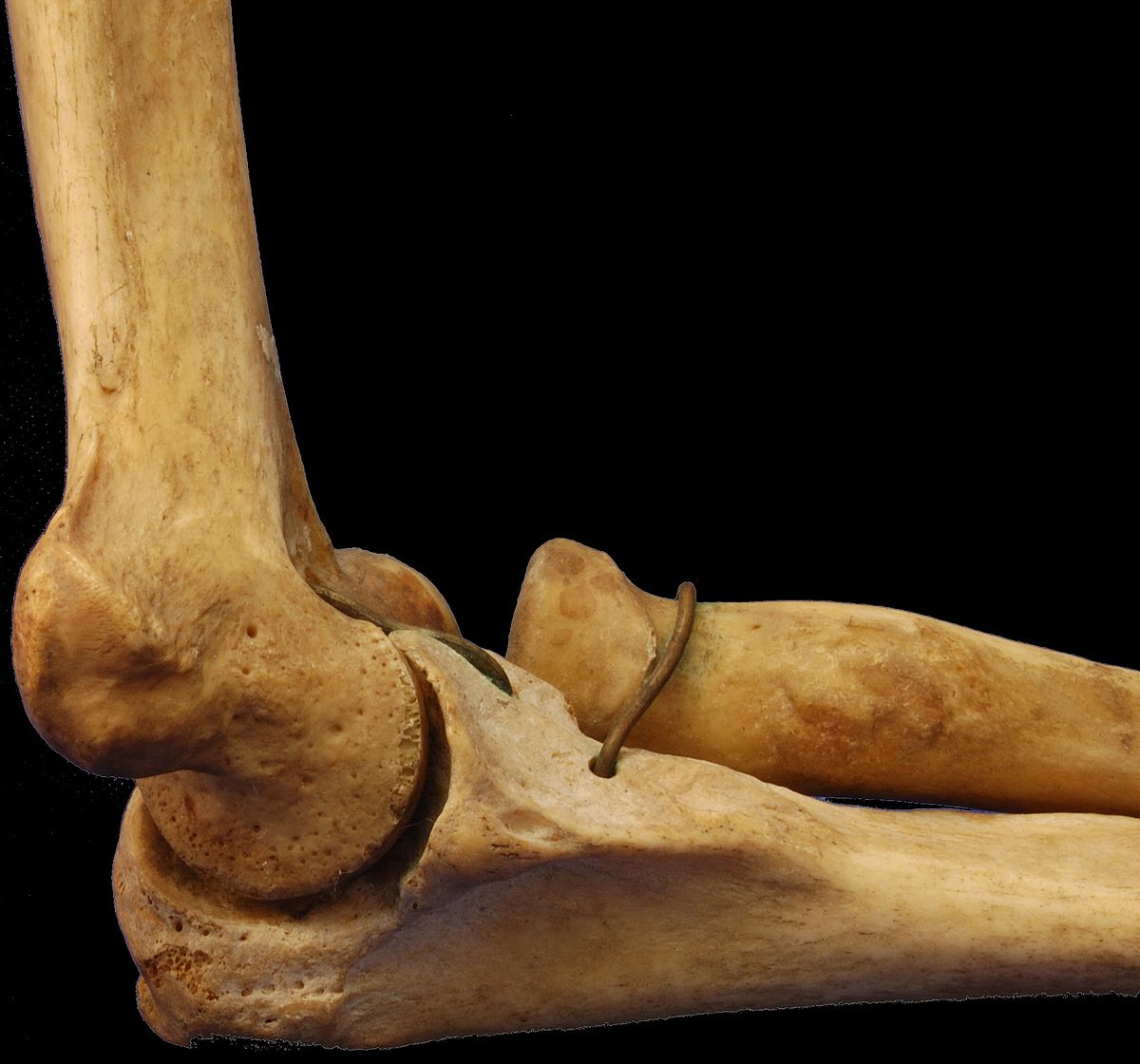
Funny, I don’t remember banging my elbow into anything

Yesterday, I discovered that my elbow was causing me excruciating pain. I was mystified; I wasn’t doing any unusual physical activity the day before, and I don’t remember bumping into anything with my elbow. I have no idea what happened.

Except, now that I have a flaming hot lance of incredible fiery pain in my elbow, I’ve discovered that I bang into things all the time. Walk into the bedroom, there’s a door…of course I hit it with my elbow. Go to the bathroom…whoops, there’s a divider by the sink, give it a good whack. Is it possible for me to make coffee in the morning without bumping into anything? No, it is not. Now I go around hissing in agony and cussing up a storm.

At least I have learned the evolutionary function of elbows. They are knobby bony things that act as antennae to detect obstacles in the environment for clumsy people. No other purpose. Also, they have a direct neural connection to the expletive lobule of the brain.

They really, really, really want to use racist slurs

Dennis Prager is upset that he “isn’t allowed” to use the n-word.

He’s wrong, though. There is no n-word police, anyone can use the term any time they want, there isn’t a gang of leftists waiting to kneecap you for saying those two syllables. Go ahead, say it, Dennis!

The only consequence is that it confirms you’re a racist. But then, wanting to say it is sufficient to affirm that, so mission accomplished, Dennis Prager.

Anyway, it’s just the strangest thing to desire.

New cage is a success so far

You may be pleased to hear that my initial test of my new spider cage architecture didn’t kill my test subject, and she actually looks a little more lively and relaxed this morning. She has started filling in a web and was hangin’ upside down and chillin’ like a boss — now that she has a bit of a cobweb, I’ll toss some flies in this morning and see how she reacts.

Then this weekend I’ll have to assemble another dozen or so frames. It takes about 5 minutes to cut sticks to size and tack ’em together with hot glue, so that won’t be too time-consuming.

“Silent Sam”? I think you mean “Shady Sam”

An interesting development in the Silent Sam saga. Silent Sam was a Confederate monument at the University of North Carolina that was toppled by protesters, which prompted the university to immediately and generously hand over $2½ million to a sleazy racist organization, the Sons of Confederate Veterans to lovingly care for the beloved statue of a racist traitor. It was weird. The SCV had scarcely declared their intent to sue when the university immediately handed over millions of dollars to this shakedown by a low-rent gang of nobodies.

Well, never mind. A judge just voided the whole arrangement.

A judge has overturned a contentious settlement that the University of North Carolina system reached with the Sons of Confederate Veterans over the Confederate monument known as Silent Sam.

The November 2019 agreement required the UNC system to give Silent Sam to the Sons of Confederate Veterans, along with $2.5 million for its preservation and display. It was announced within minutes of a lawsuit filed by the group.

There’s something going on at that university, and it’s not to be trusted. The board of governors apparently has so much power, and certain biases, that they can just cavalierly fling huge sums of money at a mob of Confederate rats who just ask for it.

After the statue came down, it was put into storage. The university system’s board of governors gave no indication about what they planned to do with the monument before a sudden announcement that the system had reached a deal with the Sons of Confederate Veterans.

As NPR reported in December, “The university system insisted it was settling a lawsuit, but court records show the board of governors’ chairman agreed to the deal before a lawsuit existed.” Baddour signed off on the deal just seven minutes after the lawsuit was filed.

The UNC system’s Board of Governors never held a public meeting to discuss options for what to do with the statue.

UNC is a state and federally funded institution that needs to have its money management policies closely scrutinized. No matter what side of this decision you favor, there is something seriously wrong with how the board decides to spend money.

Our cars provide a glimpse into the American psyche

I’ve been wondering about something. Here in small town America, when I walk downtown, I see swarms of pickup trucks parked outside the coffee shops and restaurants, especially the ones that cater to the older citizens on a tight budget, like McDonalds (Mickey D is huge with old retirees) and a local homestyle restaurant, DeToys. These are massive vehicles to ferry their owners a few miles to a cheap eatery, where they emerge looking like shriveled pot-bellied cowboy-wanna-bes on stick-like legs, where they hobble in to scrape change out of their pockets to buy a cup of bad coffee off the dollar menu. They make me look young and spry and sensible. Note that I’m not complaining about them being old and poor — if anything, we should take better care of the elderly — but the jarring incongruity of these people driving around in something that’s a small step down from a monster truck.

I don’t quite understand the mindset behind their priorities. All my life I’ve been getting the smallest car I can fit the family into, and my kids will testify to that…perhaps bitterly, as they recall family vacations in cramped vehicles. I aspire to someday have a car that is shrunk down to just big enough to hold me and my wife, gets phenomenal gas mileage (EV, preferably), and has good safety ratings. That’s all I want in a machine that I use to move from point A to more distant point B.

But then, it turns out I’m un-American.

Car companies…knew what people really wanted: to project an image of selfish superiority. And then they sold it to them at a markup.

The picture they painted of prospective SUV buyers was perhaps the most unflattering portrait of the American way of life ever devised. It doubled as a profound and lucid critique of the American ethos, one that has only gained sharper focus in the years since. And that portrait is largely the result of one consultant who worked for Chrysler, Ford, and GM during the SUV boom: Clotaire Rapaille.

Rapaille, a French emigree, believed the SUV appealed—at the time to mostly upper-middle class suburbanites—to a fundamental subconscious animalistic state, our “reptilian desire for survival,” as relayed by Bradsher. (“We don’t believe what people say,” the website for Rapaille’s consulting firm declares. Instead, they use “a unique blend of biology, cultural anthropology and psychology to discover the hidden cultural forces that pre-organize the way people behave towards a product, service or concept”). Americans were afraid, Rapaille found through his exhaustive market research, and they were mostly afraid of crime even though crime was actually falling and at near-record lows. As Bradsher wrote, “People buy SUVs, he tells auto executives, because they are trying to look as menacing as possible to allay their fears of crime and other violence.” They, quite literally, bought SUVs to run over “gang members” with, Rapaille found.

Another obvious contrast is that most of the SUVs and trucks I see are clean and shiny, maintained for the prestige. They are not working vehicles. I’ve seen real working vehicles: when I was a kid visiting my uncle’s ranch, they had a beat-up old pickup, rusted and filthy, that we’d load up with hay bales in the morning and drive out over the rocky sagebrush-covered fields to scatter food for the cows. That was not a truck you’d drive into town, not unless you were desperate to get away. Most of the people driving these things are demonstrating some warped status-seeking behavior.

Car companies marketed SUVs towards these people with advertisements featuring SUVs dominating roads, climbing boulders, and other extreme feats even though, by the auto industry’s own research, somewhere between one and 13 percent of SUV owners actually drove their vehicles off-road, and most of those who said they did considered flat dirt roads “off-roading.” In other words, auto companies spent billions of dollars on marketing every year to nudge people to buy over-engineered, inefficient, and expensive vehicles in order to allay irrational fears far out of touch with the lives they actually had.

This cynical marketing worked stunningly well. In 2019, the seven best-selling vehicles in the U.S., and 13 of the top 20, were either pickup trucks or SUVs (pickups, of course, now incorporate many of the same marketing tropes as SUVs from the early 2000s). According to the Detroit Free Press, pickups and SUVs now account for 60 percent of new vehicle sales.

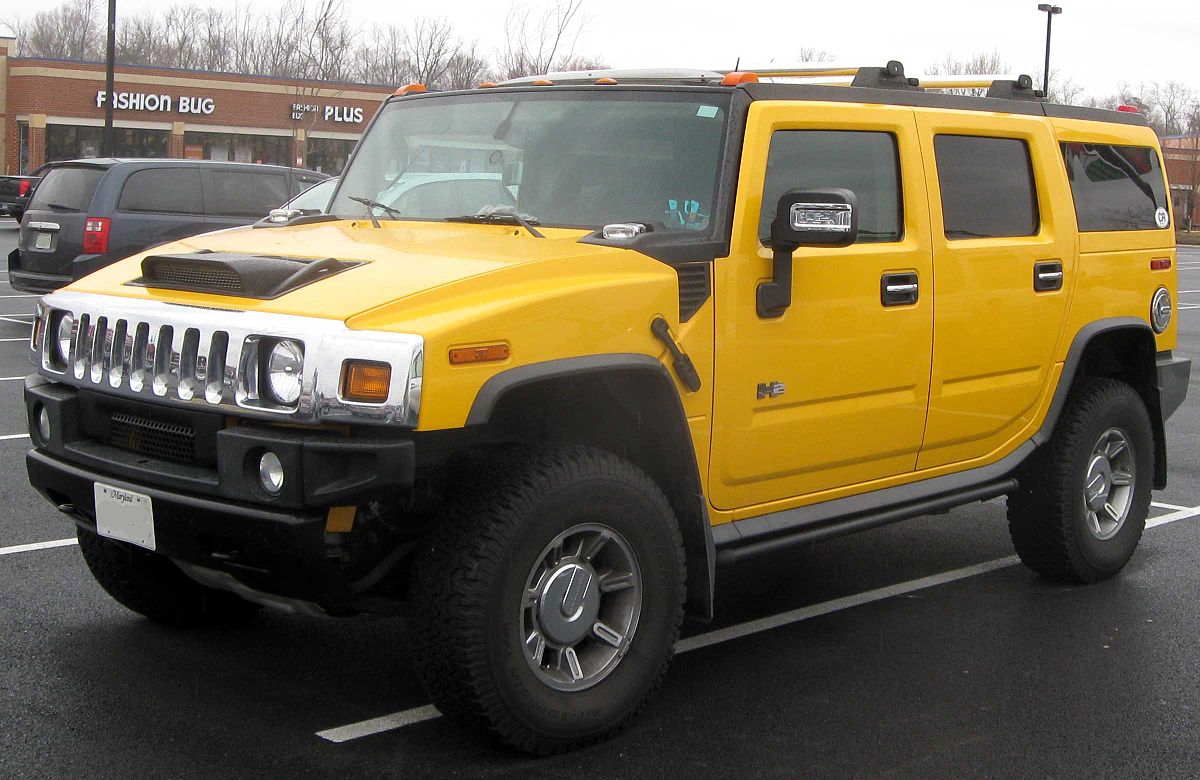
Perhaps no vehicle exemplified this trend more than Hummer. Owned by AM General until GM bought the brand in 1999, Hummer embodied a specific time and place in the American psyche that embellished the SUV persona of overcompensation for insecurity and fear.

Michael DiGiovanni, a GM market researcher who persuaded GM to buy Hummer and ended up running its Hummer operations, told Bradsher the $100,000 vehicle was marketed to “rugged individualists” who were “people who really seek out peer approval,” a delicious irony considering how much other road users loathe Hummers. Like their general SUV-owning brethren, few used the vehicle for actual off-roading.

They aren’t even safer than my tiny little Honda! There’s an 11% greater chance of a fatality in an SUV than in other vehicles, despite their larger size.

Now I’m wondering if the reason I’m not interested in a gargantuan truck is that I watch very little commercial TV, so I don’t see the advertising, and the online targeted advertising I do get doesn’t even try to interest me in buying small tanks. If you watch Fox News, are you more likely to want the biggest metal box you can buy to protect yourself from the Urbans and Immigrant Hordes?