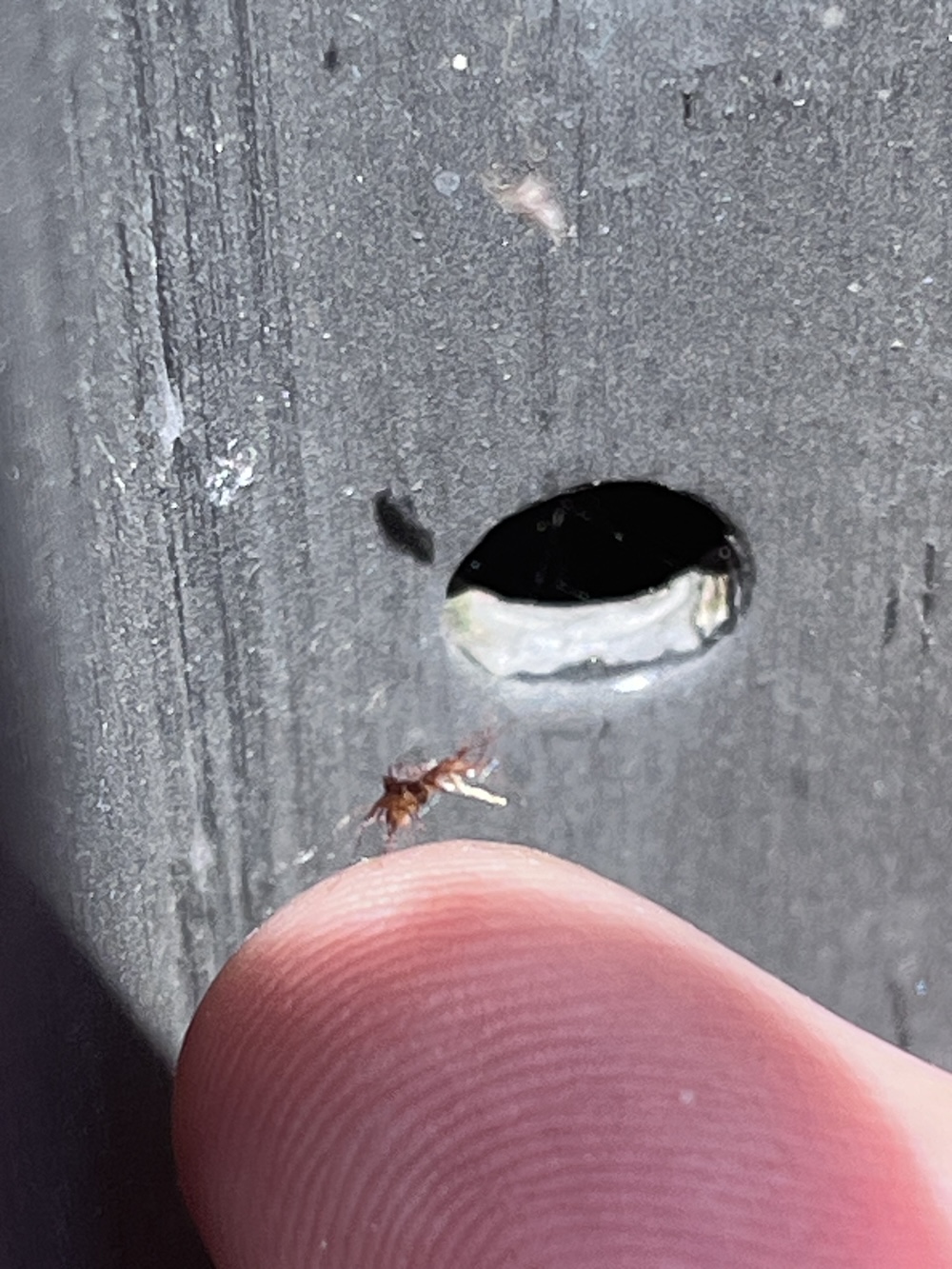
Spiders in the genus Theridiidae (and their cousins, Latrodectus) are well known for hunting and eating prey much bigger than they are, including vertebrates. Here’s a vigorous specimen of Steatoda nobilis trussing up a shrew, which she then reduced to skin and bones over the course of three days.
I’m sad to say that we don’t have S. nobilis where I live, but there’s hope — they’re spreading across the country. Our spiders in my region can get fairly big (especially S. triangulosa) but they’re still a little smaller than S. nobilis. All Theridiidae have neurotoxic toxins in their venom.
Considering the range expansion and population densities achieved by S. nobilis over recent decades, it is unsurprising that the species utilizes its full repertoire of predatory tactics as it continues to adapt to new territories and exploit available resources. As this species continues to spread, such events of vertebrate predation are likely to increase. This contribution validates that S. nobilis is a habitual rather than an occasional vertebrate eater, thus demonstrating the potential impact of S. nobilis on native organisms and the continued need to closely monitor this species.
Don’t worry — you’re not on the menu, yet.