Back in the 2000s, I used to write for Seed, the glossy, artsy, fabulously interesting magazine that tried to do for science what Wired did for technology in the 90s. I liked the magazine, but it tried too hard and went belly-up in 2012, leaving behind a diaspora of science writers who’d been briefly nourished at its teats.
That was too bad, but maybe it was for the best: it could have encouraged a generation of obnoxious twits who thought they understood science, but really just liked fancy fonts, odd layouts, and money. You know, like Wired spawned. Imagine a world where naive pseudo-scientists announce that we just need to science more shit and all our problems would be solved, and we just need to tweak a few genes and mix up some new pharmaceuticals and…oh, wait. We live in that world. Never mind.
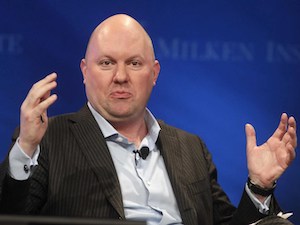
Anyway, what brought this to mind is that Marc Andreessen, the very rich guy who turned an early investment in Netscape into billions of dollars, and who has been rewarded with regular columns in the Washington Post, has scribbled up something he calls the Techno-Optimist Manifesto
, which I haven’t read. I don’t want to read it, because I’ve read a few of his WaPo columns, and he’s just another spoiled conservative wanker who actively repels me with his narrow, selfish perspective. But Dave Karpf read it! He didn’t like it.
In the manifesto (which, let’s be honest, reads more like an extended twitter thread), Andreessen positions himself as a brave, bold truth-teller:
We are being lied tohe declares.We are told to be angry, bitter, and resentful about technology… Technology is the glory of human ambition and achievement, the spearhead of progress, and the realization of our potential… For hundreds of years, we properly glorified this – until recently… It is time, once again, to raise the technology flag. It is time to be Techno-Optimists.This is a familiar diatribe. Louis Rossetto used to say exactly the same thing back in WIRED’s startup days. Rossetto insisted that the media and the government were clinging to power by trying to scare people away from the liberatory power of the internet. The only thing that could stop inevitable technological progress was a culture of pessimism and fear. As recently as 2018, Rossetto was calling for a return to “militant optimism,” insisting that the sole barrier to our bright, abundant future is a pessimistic mood. Kevin Kelly, Stewart Brand, and Peter Schwartz all hit similar themes throughout the 90s. Their “Californian Ideology” was a mix of libertarianism and technological optimism, declaring that all of the world’s problems could be solved if we would just sit back and let the engineers of techno-capitalism do their work.
I asked the same question Karpf does: who is lying to us?
Who is lying to us, Marc? You serve on the boards of trillion-dollar companies. A few of your peers own media companies. A few others have chosen to bankrupt media companies that write mean things about them. You have been celebrated for thirty years as the genius-inventors-of-the-future. If the public is turning against you, who ought to be held responsible for such a change in the public mood?
Isn’t it funny how the richest people in the country, the ones who have profited exorbitantly off the current system, are so upset at any criticism of the system. It’s as if a mysterious entity is threatening to take some of their yachts away, when in reality, the sheep are too busy trying to forage for grass rather than look up and plot to overthrow the minority that are gnawing on rack of lamb. Maybe the rich are worried we’ll notice, so they give us these semi-religious artifacts of techno-idolatry as a distraction. And it’s been working!
What makes Andreessen’s 90’s retread so odd is the way he frames it as a challenge to the status quo. Technological optimism has been the dominant paradigm throughout my adult life. We have spent decades clapping for Andreessen and his buddies. We have put them on magazine covers. We stopped regulating tech monopolies. We cut taxes for the wealthy. We trusted that they had some keen insight into what the oncoming future would look like. We assumed that the tech barons ultimately had our best interests at heart.
Even amidst the techlash years, public criticism of the tech platforms ultimately amounted to very little. The ranks of the tech billionaires grew. The largest companies that we associate with digital technology reached trillion-dollar valuations. Their every announcement of a bold new technological future was treated with extraordinary credulity. (remember the metaverse? Remember Web3?)
I have a special place in my heart for this little passage, though.
Our enemy is the ivory tower, the know-it-all credentialed expert worldview, indulging in abstract theories, luxury beliefs, social engineering, disconnected from the real world, delusional, unelected, and unaccountable – playing God with everyone else’s lives, with total insulation from the consequences.
That’s ripped straight from the book, Jurassic Park — the section where the protagonist rails against modern science, handing all-powerful tools to students who don’t know what they’re reading. I read it as a grad student, and I could tell you it was straight-up bullshit. But I’ll let Kieran Healy dismantle that claim:
Yeah. Exactly. Andreessen is a guy with a bachelor’s degree, nothing more, who got lucky. If I were playing God, and one of my students got $1.7 billion, I’d at least insist on a small percentage. All we can really do is guide students to interesting stuff and hope they can use it in their lives. I don’t even have a single billion of dollars, and I’m mainly worrying about how I’m going to pay for health care when I retire — I don’t have the leisure to do any social engineering.
But I do have time to look up and notice who has all the money and power and desire to play god with everyone else’s lives. One of them is this bullet-headed fuck: