Everyone knows you have to leaven your evolutionary psychology with Jung, though

Adam Rutherford thought this quiz on evolutionary psychology might cheer me up. The laugh is on him: nothing will cheer me up.*

It’s a good quiz, though, and I like the pre-emptive question at the end.

“Why does this quiz only attack strawmen? Why does it fail to address very serious claims, like (((human biodiversity))), or how young women are genetically programmed to prefer older men even though older men’s dicks don’t work? Where can I address my angry emails? Are you making fun of me? Evolutionary psychology is very serious business! I AM TALKING TO YOU. MEN ARE TALKING.”

In your angry response to the editors, choose the extinct animal you believe most encapsulates your prehistoric rage. Please provide a plausible explanation of how you would take down this animal with only a few pointy sticks and no knowledge of modern physics. Since your ancestors were naturally selected to hunt these animals, and you’ve inherited their genes, you should be fully capable of the task.

a. Woolly mammoth (Mammuthus primigenius)

b. Irish elk (Megaloceros giganteus)

c. Sabretooth tiger (Smilodon)

d. Dire wolf (Canis dirus)

The only problem with the question is that EP proponents live a rich fantasy life in which they are the manliest of men, and their disconnection from reality means they will regard an answer like, “I will wrestle the mammoth and club it to death with my penis” as perfectly plausible.


*OK, maybe something — my daughter and granddaughter are coming to visit this weekend. But it should tell you something that it’s going to take such extreme happy stimulus to make me crack a smile.

I need a time machine with a 500 million year range

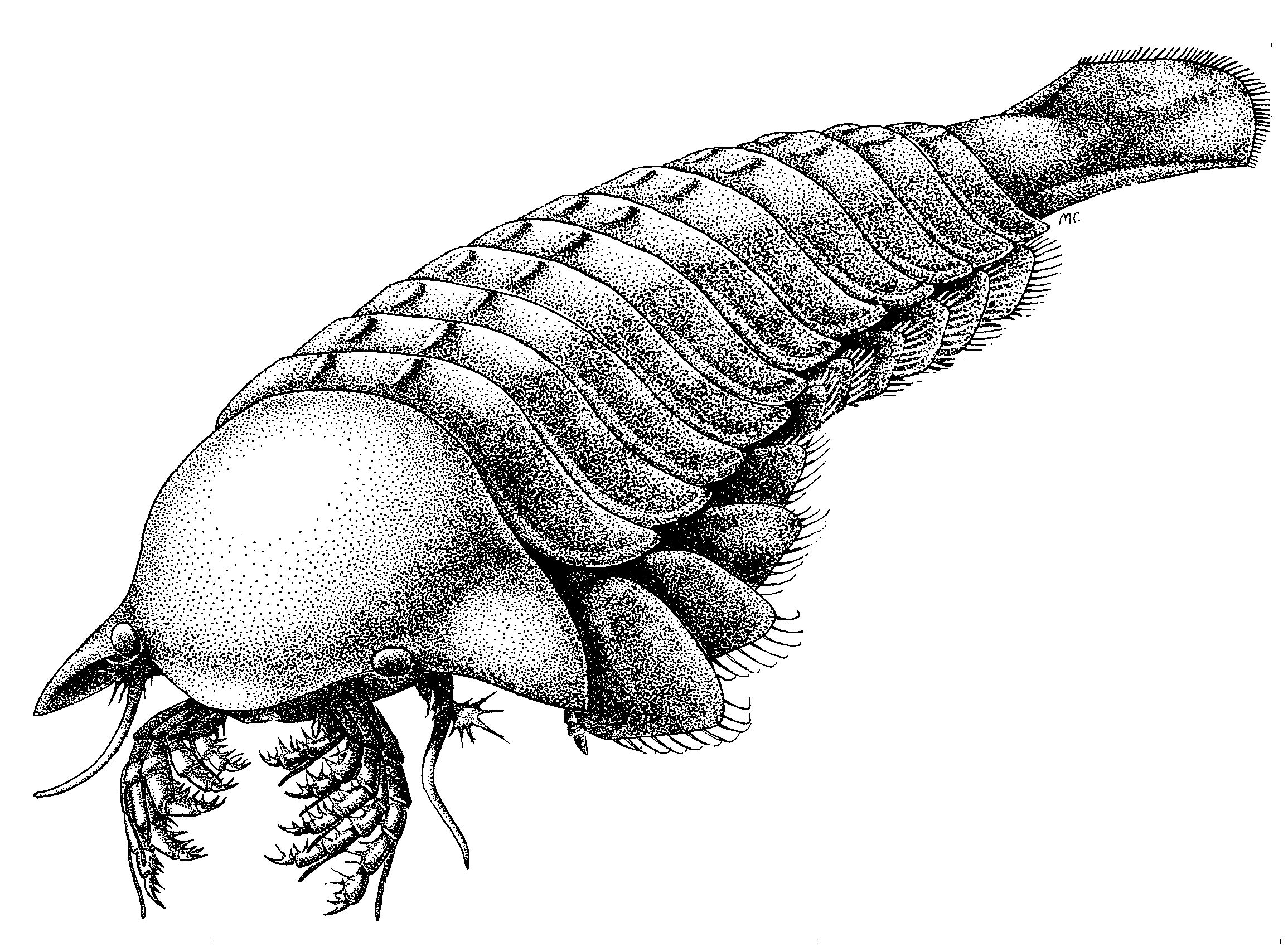
Because I really need to see this Middle Cambrian chelicerate from Mount Stephen, British Columbia. Look at that face full of widgets, like an array of Swiss Army knives! I want a Sanctacaris uncata for a pet.

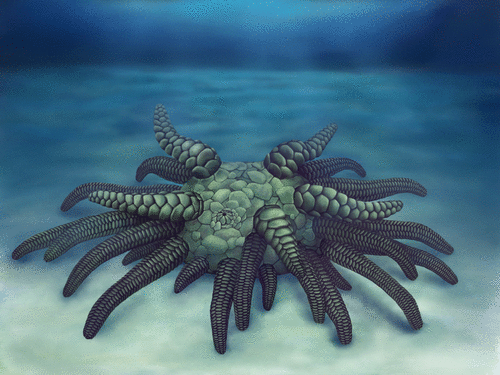
If we’ve only got a 420 million year range, I guess I could settle for a new ophiocistioid with soft-tissue preservation from the Silurian Herefordshire Lagerstätte. Sollasina cthulhu is a lovely name.

I’ve decided mammals are boring, and that invertebrates are where it’s at. Sorry, humans, I’m not really interested in associating with you any more. Nothing personal. It’s not you, it’s me. I’ve changed.

Well, I actually haven’t changed that much.

Friday Cephalopod: Do not taunt the octopuses while they are invading

They’ve established a beachhead in Wales, where swarms of cephalopods have begun their march inland.

Hey, lady! Yeah, you with the white nail polish! Do not tickle and mock Squad Captain Oi’sh’sh’schlick! We see you, we’re marking you down as a target!

When the marine squadrons link up with the spider cavalry, they’re going to be unstoppable.

Australian wildlife is getting weird

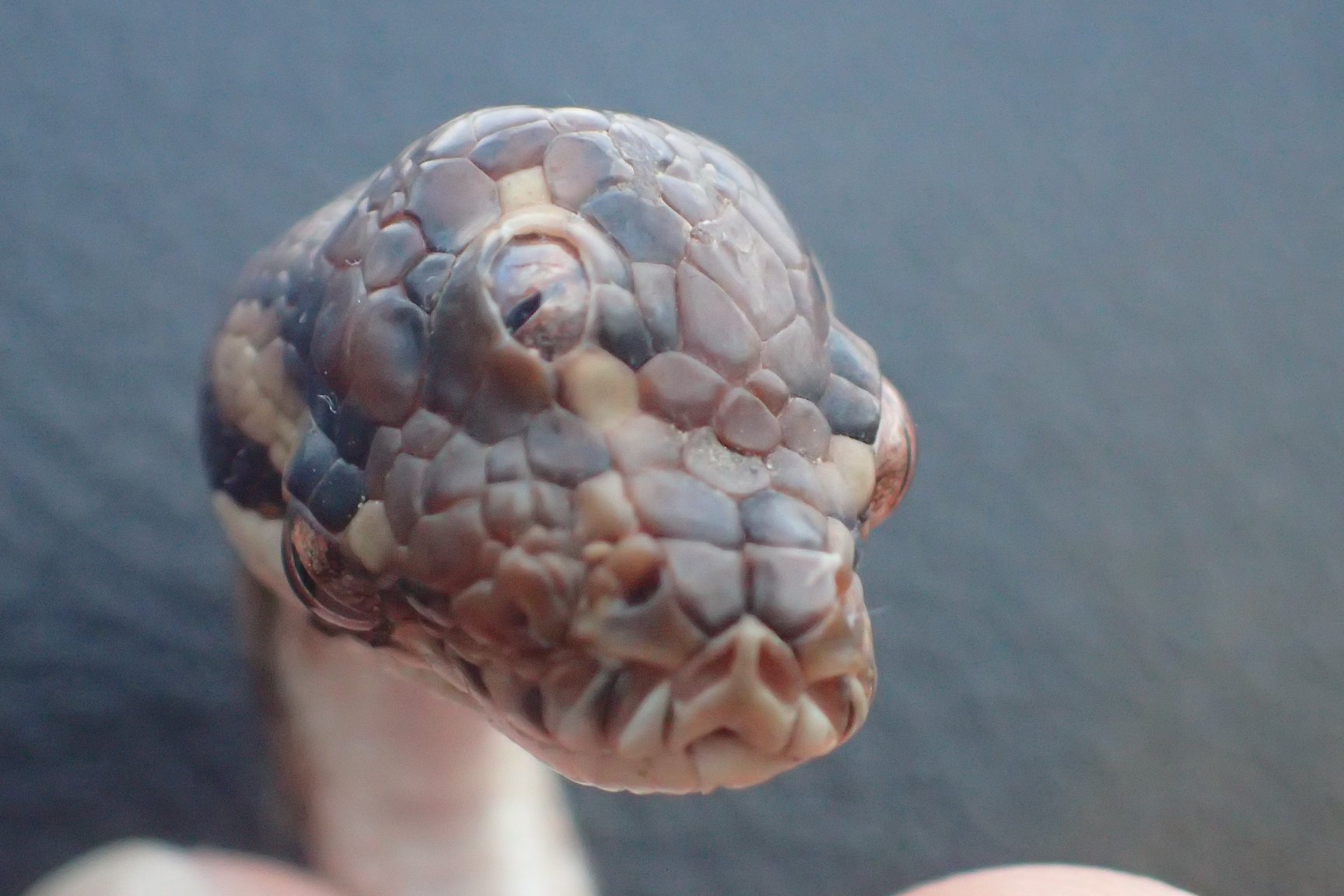
Rangers in the Northern Territory found this lovely beast, a three-eyed snake, which is particularly interesting because the eye is so well formed, and it’s unlikely to be the result of a secondary fusion of two embryos. Something just triggered the formation of another eye near the midline of the cranium.

Unfortunately, it didn’t live long. That extra eye was an obstacle to feeding.

Also unfortunate is the speculation in the comments. This is not likely to be the result of a mutation — mutations don’t work like that. It’s also not likely to be a direct effect of a teratogen. Most likely is that there was an environmental insult of some sort to the early developing head that caused ectopic production of a morphogen signal. I doubt there will be a wave of similar defects appearing all over the snake population (although I confess it would be kind of cool if there were).

Least likely is the idea that this is a sign of the apocalypse, or that white walkers are going to march out of Timor or New Guinea to descend on Australia.

Whoa. I thought having a vagina & no Y chromosome defined a woman?

Although, if you think about it, having two characters already meant it wasn’t a binary, but that you had 4 possible states. It looks like there are other characters people were avoiding talking about, which means there are already a heck of a lot more possible states.

This is all about the complicated story of Caster Semenya, an Olympics-class track star who has XX chromosomes and female genitalia (I’m sorry, she’s been poked and invasively examined to a degree no person should be subjected to), which, according to all the TERFs who yell at me now and then, ought to be sufficient to define her as ALL-WOMAN, but a committee has determined that her testosterone levels are too high, and that she shouldn’t be allowed to compete with the “aim of preserving the integrity of female athletics”. So apparently the vagina/XX chromosome requirement is insufficient, and you also have to have lower testosterone levels than a certain amount?

The physiology of top athletes is already weird and abnormal, or they wouldn’t be top athletes. There are subtle differences in proportions in some cases, and blood cell and bone density may be greater, and don’t get me started on the freakish psychology of people who spend long years in intense physical training. Maybe we should also insist that no one can compete in women’s events with a hematocrit above 40, or set an upper limit on the proportion of fast twitch muscle fibers they can have. Uh-oh…body fat. Women on average have more body fat than men. If they train so hard that they get lean, maybe they should be declared non-women. But it’s the nature of athletics to have to exercise hard. A conundrum!

The good news for us men is that all the policing of the boundaries of acceptable human morphology and biochemistry seems to be executed on women, not us. No one seems to be looking at athletes and suggesting that maybe that much muscle mass means you aren’t human anymore, and you should go home — that it would be unfair for you to compete with normal human beings, to preserve the integrity of the athletics of Homo sapiens. It isn’t a Harrison Bergeron situation if only women get handicapped.

It’s almost as human sexual properties are multifactorial and on a continuum. But that can’t be, right?


CORRECTION: Semenya is 46 XY DSD.

I still don’t know which bathroom she’s supposed to use.

Relax, there aren’t going to be any zombie pigs

I’m catching up on my dramatic reading, so of course I had to dig into the latest mad science, a paper in Nature on the Restoration of brain circulation and cellular functions hours post-mortem. This is classic mad science: pig brains were collected from a slaughterhouse, hooked up to a carefully designed perfusion apparatus, and then flooded with an appropriate physiological solution to examine how well the tissue held up. The authors aren’t trying to raise the dead, though. Rather, it’s more of a quantitative study of what happens to the tissue in the hours after death.

The results are interesting, but not surprising. After all, no one expects that the brain immediately slumps into grey, gooey oatmeal at the instant of loss of brain activity — once metabolic support at the organismal level is lost, and once integrated overall activity in the functional networks of the brain fail, it’s going to take time for death at the cellular level to occur. This paper was looking at the progression of cellular loss, and also examining how their perfusion protocol could slow that decay, making some of the cells available for laboratory research. That should be clear from their conclusion.

These findings show that, with appropriate interventions, the large mammalian brain retains an underappreciated capacity for normothermic restoration of microcirculation and certain molecular and cellular functions multiple hours after circulatory arrest. In addition, this platform could offer investigators the opportunity to conduct prospective, functional ex vivo studies in intact brains that would otherwise be limited to static histological, biochemical, or structural investigation.

So what did they find? That the plumbing of the brain, the major arteries and veins and even portions of the capillary network, were still patent hours after death, and that the walls of the circulatory system were still responsive to pharmacological agents. That the general cytoarchitecture of the brain, that is, the major pathways and grey and white matter of the brain, remained largely intact for hours, although there were also scattered areas that dropped out. That individual neurons retained normal morphology, even to the level of synapse structure, and that their perfusion protocol reduced the swelling and apoptosis of individual cells. That glia persisted and retained some of their inflammatory properties. That when perfused, the brain as a whole still metabolized, taking up glucose and oxygen and producing carbon dioxide, and maintaining the pH of the fluid.

One thing they did not see was restoration of overall activity of the brain — consciousness, even at its most primitive level, is a property of a network of interactions, and that property was gone. That’s what death is to a multicellular organism, a loss of coordination and integration between its components, and finding that bits and pieces still retain functionality at a cellular level doesn’t mean that the whole has been restored.

The observed restoration of molecular and cellular processes following 4 h of global anoxia or ischaemia should not be extrapolated to signify resurgence of normal brain function. Quite the opposite: at no point did we observe the kind of organized global electrical activity associated with awareness, perception, or other higher-order brain functions.

A crude analogy: take a hammer to your computer. You open it up and find broken circuits and cracked connections. You can still pull out an IC and hook it up to an oscilloscope and find that the transistors and resistors and various subcomponents can operate to spec, but you know, that computer ain’t gonna be playing Fortnite no more, and isn’t even going to boot up.

And that’s how I see this study. It’s a useful exercise in salvaging components that could be useful in research, but this isn’t a resurrection protocol. The pig is irreversibly dead with wholesale damage across its nervous system, but some pig cells take longer to die. There’s an important distinction here between global meta-properties of the whole brain, and single cell properties, and you shouldn’t confuse the two. The authors don’t.

But then there’s all this foofaraw from people invited to comment on the study, where I’m not so sure that they see the distinction.

For example, “Pig experiment challenges assumptions around brain damage in people:The restoration of some structures and cellular functions in pig brains hours after death could intensify debates about when human organs should be removed for transplantation, warn Stuart Youngner and Insoo Hyun.” They report the important point that these brains are dead, but still seem to think that there’s hope.

Electrophysiological monitoring did not detect any kind of neural activity thought to signal consciousness, such as any evidence of signalling between brain regions. Nonetheless, the study challenges the long-held assumption that large mammalian brains are irreversibly damaged a few minutes after blood stops circulating. It also raises the possibility that researchers could get better at salvaging a person’s brain even after the heart and lungs have stopped working.

Except that it doesn’t challenge the assumption that large mammalian brains are irreversibly damaged by the loss of circulation. They saw zero evidence of brain function — the brains were dead. That pig wasn’t thinking, dreaming, or rising up in a blood-soaked orgy of zombie violence. It was a non-pig. Even when the researchers clearly saw a reduction of cellular damage with their perfusion technique, there was no claim that they had reversed death.

I also don’t see any offer of hope for clinical situations. What does it mean to “salvage a person’s brain”? If overall function has stopped, there’s no sign of electrical activity, that there’s been a loss of oxygen to the brain to the extent that signaling has been disrupted and lost, to say that some cells aren’t dead just yet does not hold out help for resuscitation.

This certainly does have ethical implications, though. I’m more concerned that some people might misuse this information to argue that resuscitation efforts were suspended prematurely — that a dying patient might cross that threshold into death, and someone will argue that because pyramidal neurons in the cortex of a decapitated pig could show electrical activity 10 hours after death, that’s cause to demand life support be maintained even longer.

And then there’s this one: “Part-revived pig brains raise slew of ethical quandaries: Researchers need guidance on animal use and the many issues opened up by a new study on whole-brain restoration, argue Nita A. Farahany, Henry T. Greely and Charles M. Giattino.” They also point out the obvious — these brains were dead — but they want to express reservations.

The work also raises a host of ethical issues. There was no evidence of any global electrical activity — the kind of higher-order brain functioning associated with consciousness. Nor was there any sign of the capacity to perceive the environment and experience sensations. Even so, because of the possibilities it opens up, the BrainEx study highlights potential limitations in the current regulations for animals used in research.

Most fundamentally, in our view, it throws into question long-standing assumptions about what makes an animal — or a human — alive.

Does it, though? Is this more dramatic than Luigi Galvani’s demonstration that a dead frog’s muscles would still twitch when an electrical current was applied? I’m sure it stirred up deep concerns in the 18th century, and could contribute to Mary Shelley’s Frankenstein, but does it really change our understanding of life in the 21st? I know I’m untroubled. My sense of self isn’t cellular. When my brain can’t perceive the environment or experience sensations or think, I’ll be dead and gone, even if my cerebral vasculature can still dilate.

I am also unsure what changes in regulations are required. They bring up the fact that none of this research would be judged unethical, so they’d like to change the rules so that it becomes unethical? I don’t get it.

The pigs, having been raised as livestock, were exempt from animal welfare laws and were killed before the study started. In the United States, the 1966 Animal Welfare Act is the only federal law that regulates how animals are treated in research, and applies to either living or dead animals. It explicitly excludes animals raised for food. Meanwhile, the policies and regulations of the US Public Health Service, which funds most US research involving animals — mainly through the NIH — do not specify any protections for animals after their death.

I’d really like to know what protections for animals after their death ought to be implemented, when the majority of these animals are being killed in order to suffer the indignity of being eaten. That’s the greater ethical question, not whether we should be working harder to shelter a few fading cells inside an animal that has just had its throat slit, been gutted, and chopped up into little bits that are then packaged in styrofoam and plastic at the grocery store. This study doesn’t raise any ethical concerns that aren’t amplified a million-fold times in our farms and meat-packing industries and kitchens.

Earth Day!

I’m going to be at this event, up north in Alexandria, Minnesota.

I’m one of the speakers on the list. My wife and I are going to lead the kids in an owl pellet dissection, and let them identify the bones they find therein. Then, naturally, I’m going to talk about spiders and hand out vials with totally harmless little spiders (jumping spiders and cellar spiders) and hand lenses, so then can get close up with our arachnid friends. For the more bloodthirsty among them, I’ll also have a bottle of flies and we can feed them and watch guts getting sucked out.

It’ll be a totally wholesome afternoon.