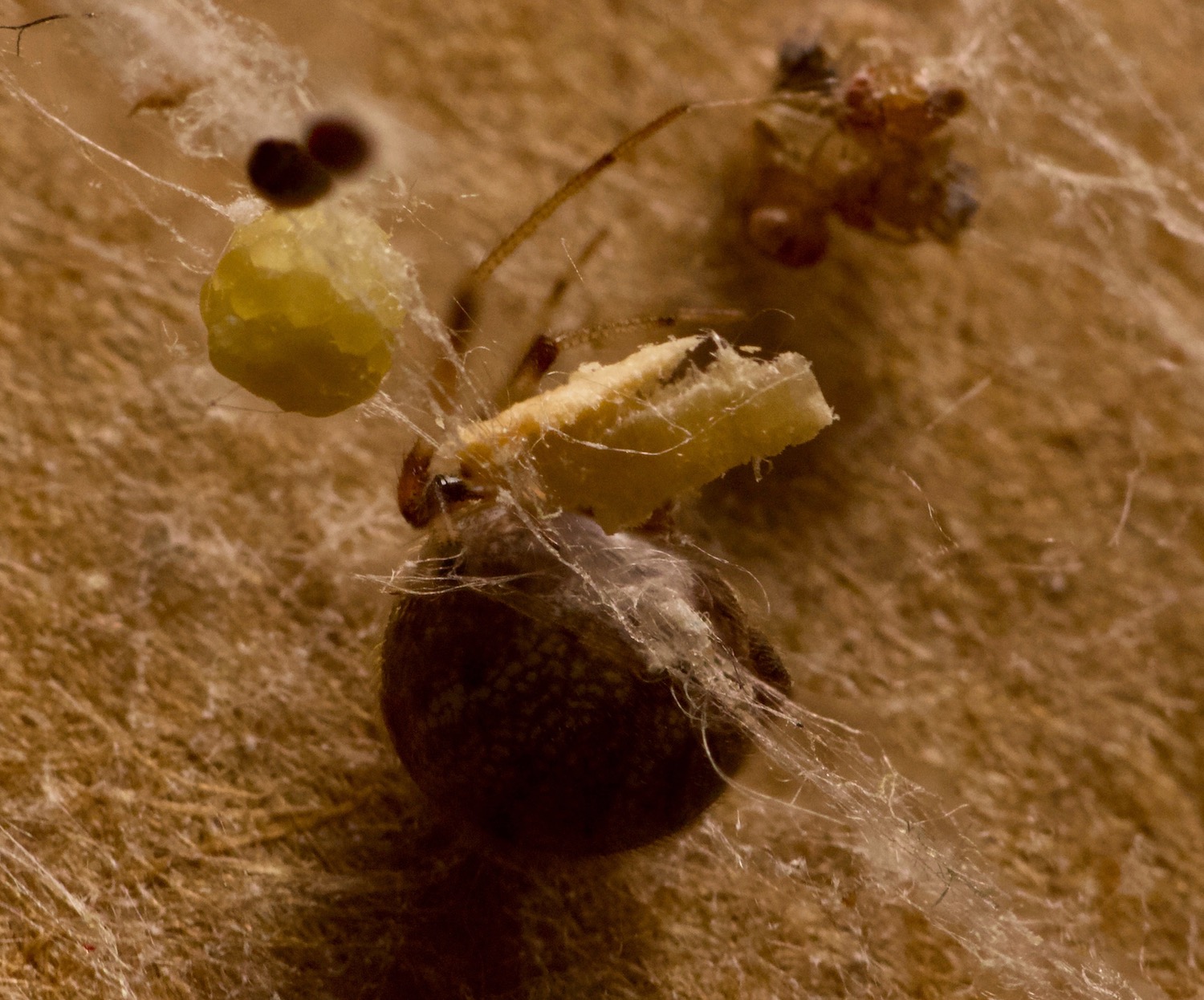
Scallops aren’t animals? Is the author not a journalist?

Oh, man. This is bad. An article on Vice asks, Are Scallops Vegan?, and if you know the rule of questions in headlines, the answer should be “NO”, but this article actually plumps down on the side of “maybe?”

In the case of bivalves—that is, sea creatures with a hinged shell, such as oysters, clams, mussels, and scallops—the line between plant and animal, especially in regards to cooking and eating, remains unclear. “But, they’re alive,” someone may say who has seen the pulse of oyster flesh or the slow opening and closing of a scallop shell. But so are plants—every carrot you slice and every apple you bite into was once alive, and begins to die as it’s removed from its stem or roots. And while some bivalves, like scallops, open and close their shells by using an adductor muscle, plenty of plants can also independently move.

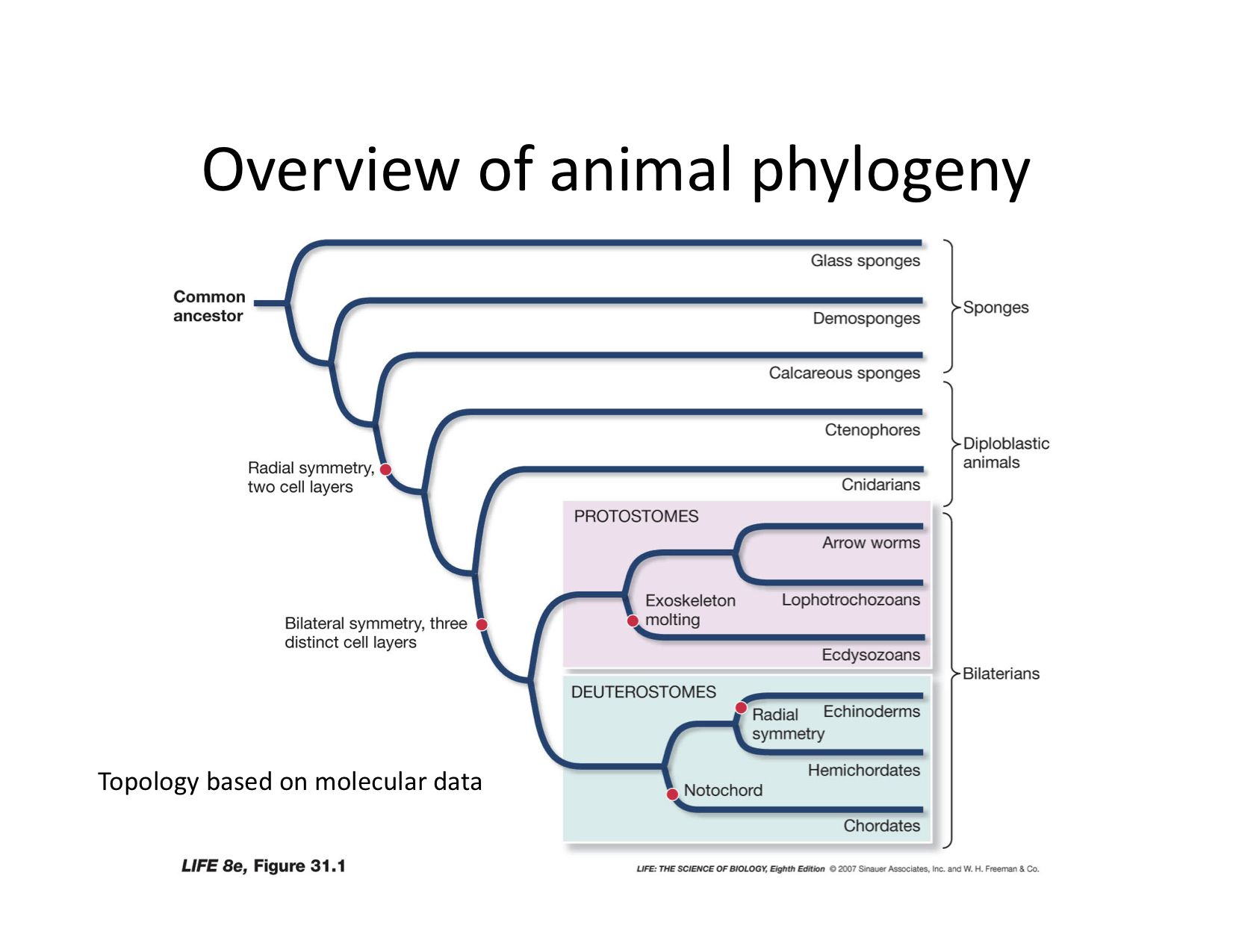
Being alive is not an adequate criterion — it doesn’t distinguish anything in biology. By definition, “life” is “alive”. But whether molluscs of any kind are animals or not is unambiguous — yes, they are animals. They are triploblastic, bilaterian protostomes, members of the lophotrochozoan clade in this diagram.

It’s always a good idea, O Journalist, that when you have a biology question you should ask a biologist, and not just a random layperson you meet at Whole Foods. Or at a local seafood restaurant.

I, a lapsed vegetarian, first heard the argument that scallops could be considered vegan during a recent lunch at Greenpoint Fish & Lobster Co., a Brooklyn seafood restaurant dedicated to sustainability. Though a spot with fish tacos and daily oyster selections may not seem like a vegan’s first pick for dinner, co-owner Vinny Milburn told me that the restaurant has numerous vegan regulars who visit to eat scallops and other bivalves, justifying their consumption, ethically and environmentally, with science. “They feel okay about it because it doesn’t have a central nervous system,” Peter Juusola, general manager at Greenpoint Fish told me.

Uh, they’re not vegans. They’re not even vegetarians. They’re pescatarians. Which is perfectly OK, I’m more of a pescatarian myself, because while I’ve been cutting back, I do eat seafood now and then. I’m not judging them, except to point out that mislabeling yourself because you’re pretending to be more ethical and environmentally sensitive than you actually are is dishonest and a bit yucky.

See that diagram above, with the colored bits labeled protostomes and deuterostomes? All of the members of those groups have nervous systems, every one. So do the ctenophores and cnidarians, although they tend to be more diffuse and lacking in specialized regions. Sponges do not have a nervous system, although their cells do communicate with one another using protein networks that have evolved into our nervous system. Arguing that vegans get to eat anything lacking a nervous system, a dubious claim, would mean you only get to eat sponges. If having localized collections of neurons that function as a kind of primitive “brain” qualifies as an exclusion, you also get to eat jellyfish.

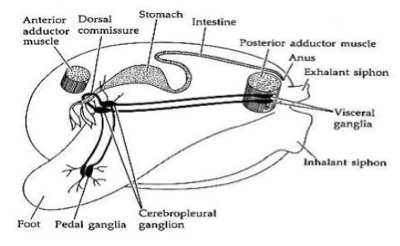
Molluscs do have a central nervous system in the form of a couple of ganglia. Those count.

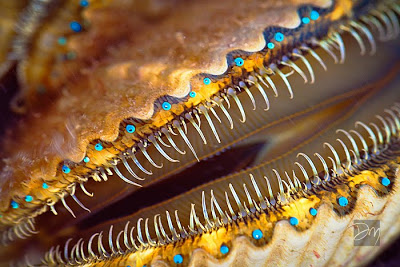
The killer counterargument, as far as I’m concerned, is that scallops have eyes. You’re not a vegan if you eat something that can look back at you. They’re even pretty blue eyes!

This does not seem to persuade some people, who ignore the physical evidence.

Conclusive evidence on whether bivalves, or even crustaceans, for that matter, feel pain, has yet to surface, but for starters, they “do not have a brain,” Juusola says, demonstrating with his fingers that when a scallop opens and closes, that’s a reaction due to a nervous system, not their nervous system calling out pain or danger.

They have multiple ganglia, which can be demonstrated anatomically, but apparently the argument from “opening and closing fingers” refutes the observable existence of coordinated, interacting sets of neurons.

I’m going to have to remember that one. When someone questions me on whether Trump has a brain, I’ll just wiggle my fingers and say, “Obviously, no. See my fingers?” In other good news, we can also legitimize the claim that the rich are brainless non-animals, allowing vegans to eat them.

So what are you waiting for, vegans of the world? Dig in!

When leadership matters

There are legitimate fears of a coronavirus pandemic — don’t panic, it’s an emerging threat, not a full blown emergency — and that’s when it’s a good idea to prepare. We should have a strong medical infrastructure, plans in place, people organizing now, just in case. In the US, however, our plan to respond to potential medical threats is a shambles.

For the United States, the answers are especially worrying because the government has intentionally rendered itself incapable. In 2018, the Trump administration fired the government’s entire pandemic response chain of command, including the White House management infrastructure. In numerous phone calls and emails with key agencies across the U.S. government, the only consistent response I encountered was distressed confusion. If the United States still has a clear chain of command for pandemic response, the White House urgently needs to clarify what it is—not just for the public but for the government itself, which largely finds itself in the dark.

Who is to blame for the chaos? It seems Obama had a thorough, if flawed, response team in place. One man and one party have been actively working to dismantle the entire system.

In the spring of 2018, the White House pushed Congress to cut funding for Obama-era disease security programs, proposing to eliminate $252 million in previously committed resources for rebuilding health systems in Ebola-ravaged Liberia, Sierra Leone, and Guinea. Under fire from both sides of the aisle, President Donald Trump dropped the proposal to eliminate Ebola funds a month later. But other White House efforts included reducing $15 billion in national health spending and cutting the global disease-fighting operational budgets of the CDC, NSC, DHS, and HHS. And the government’s $30 million Complex Crises Fund was eliminated.

In May 2018, Trump ordered the NSC’s entire global health security unit shut down, calling for reassignment of Rear Adm. Timothy Ziemer and dissolution of his team inside the agency. The month before, then-White House National Security Advisor John Bolton pressured Ziemer’s DHS counterpart, Tom Bossert, to resign along with his team. Neither the NSC nor DHS epidemic teams have been replaced. The global health section of the CDC was so drastically cut in 2018 that much of its staff was laid off and the number of countries it was working in was reduced from 49 to merely 10. Meanwhile, throughout 2018, the U.S. Agency for International Development and its director, Mark Green, came repeatedly under fire from both the White House and Secretary of State Mike Pompeo. And though Congress has so far managed to block Trump administration plans to cut the U.S. Public Health Service Commissioned Corps by 40 percent, the disease-fighting cadres have steadily eroded as retiring officers go unreplaced.

But here’s what worries me most: the systemic incentive to continue to wreck what system we have. There is no price the Republicans will have to pay. People will die, the country could be thoroughly disrupted, and the demagogues will just blame it all on the Democrats, or the Chinese, or Islamic terrorists, or filthy disease-ridden immigrants, and people will want to believe them, and everything will just get worse. In fact, catastrophe will strengthen their grip on the country.

Heckuva job, Trumpy.

It’s an anniversary!

Ten years ago today, the Lancet issued a formal retraction of Andrew Wakefield’s notorious bogus paper claiming a link between MMR vaccinations and autism. The paper was wrong, it was shoddily done, and the work hasn’t been replicated.

Ever since, Wakefield has been living in shame, no one treats him as an authority anymore, and of course no one would claim that vaccines cause autism anymore.

Why do scientists cheat?

I am dismayed at this emerging story about fraud in science. It stars Jonathan Pruitt, a professor at McMaster University who studies variation in individual behavior and how it affects group behavior. I’d heard of him since he’s doing a lot of work in social spiders.

He built up several productive collaborations, in particular with Kate Laskowski at UC Davis, sharing data with her that she used in several publications. That’s where the story turns dark, because Laskowski later examined the data in more detail and found multiple examples of blocks of data having been duplicated, padding the data set with more replicates than were actually done. He’d actually passed her a poison pill that tainted all the work they’ve done together; her papers are no longer trustworthy, and she has retracted them.

Laskowski is being heroically restrained in her reaction to this betrayal — I’d probably be throwing things and saying lots of not-nice words. Pruitt also seems to be peculiarly blasé and detached from the problem, conceding that there are serious problems in the data set, but not offering any explanations about how this has happened (again, if some of my data were found to be bogus, I’d either be furious and trying to track down the source of the bad data, or, if I were guilty of doing the duplications, I guess I’d be trying hard to deflect.)

There’s a lot of discussion and dissection of this issue going on, and most of it seems to be rightly concerned with making sure Pruitt’s coauthors aren’t hit with serious splash damage. At some point, though, there has to be a reckoning, and the source of the contamination tainting so much work will have to be dealt with. So far, everyone seems to be strangely cautious and circumspect.

I will not say Jonathan Pruitt is a victim, but he is part of the tragedy. Will we ever really know what motivated him? I decline to guess. He burst on the animal behavior scene with his first paper in 2008 and immediately began publishing at such a prolific rate that in another year or two he would have overtaken my own 41 year career in numbers of publications. This output got him a lot of academic success leading to his current position (current as I write anyway) of Canada 150 chair at McMaster University.

What Jonathan Pruitt produced was so far beyond average, it is hard to believe anyone would feel pushed to that level. But others feel pressure to produce in academia.

Fine. I’m not involved in any of this concern, so it’s not my place to say how the victims ought to respond. But I would say that the slower the build-up, the bigger the explosion, and so far this is looking to be a truly ugly meltdown at some point in the near future. Keep an eye on Jonathan Pruitt, there will be a supernova at some point soon, and not the good, pretty kind.

I’m mainly dismayed at the failure of scientific ethics. You don’t make up data! Ever! Every year I’m in student labs, explaining to students that “your data is your data” (I literally say that a lot, I’m afraid), and if your experiment didn’t come out the way you expected, or the data are ambiguous about what the one true Answer is, your job isn’t to make the data fit, it’s to rethink your work, track down sources of confusion, repeat the work, analyze the results appropriately, and if it doesn’t support your expected answer, revise your expectations.

That’s easy for me, though. The students don’t have a publication in Nature or a tenure decision in their favor, so they’re lacking all that unscientific pressure to get the neat, tidy, snazzy answer with beautiful p values.

It’s going to be a long semester

Tuesdays I have a morning class and an afternoon lab; sandwiched in between was a discipline meeting. I think I’m plum wore out today.

Just to make it more awful, the first genetics assignment is due tomorrow, and I made an awful hash of it, trying to juggle multiple textbook editions, so the students are all confused. So I made an announcement that the assignment is basically cancelled, ignore everything I said, and I’ll come in tomorrow with a whole new problem set that we’ll work on together. What a mess. I’m exhausted just thinking of sorting it all out.

A whole lot of chompin’ and sexin’ going on

This is a beautiful video about the arachnids of Uruguay — great videography and information, and some spectacular closeups of spiders in action. They do seem to spend a lot of time murdering insects and sucking them down, and the sex scenes, especially in the sexually dimorphic species, can be graphic and moderately distressing — tiny males scurrying up to the abdomens of huge females, it’s like trying have sex with a wall topped with fangs that can descend when you’re done and kill you.

It’s all still pretty, and now I want to visit South America. I’ve been to Ecuador, but that was before I discovered the wonders of spiders. I should go again, except…damn this legal weight on my shoulders.

Everyone needs more training to deal with racists

Adam Rutherford is coming out with a new and timely book, How to Argue with a Racist, expected here in the US in early February. I’ve already pre-ordered a copy, and if you’re interested, you can get a taste of the story in The Guardian.

In the 19th century, Darwin’s half-cousin Francis Galton and others tightened their scientific arguments for race though, as Darwin noted, no one could agree on how many races there actually were, the range being between one and 63. Galton was an amazing scientist, and a stunning racist. The most delicious irony about him is that the field he effectively established – human genetics – is the branch of science that has demonstrated unequivocally that race is not biologically meaningful. Modern genetics clearly shows that the way we colloquially define race does not align with the biology that underpins human variation. Instead, race is a cultural taxonomy – a social construct. This doesn’t mean it is invalid or unimportant, nor does it mean that race does not exist. Humans are social animals, and the way we perceive each other is of paramount importance. Race exists because we perceive it.

That’s one message I wish I could get across to all the so-called “scientific” racists. The consensus of real, honest science is that the artificial categories people assign to races don’t exist as biological phenomena. You only find it in the pages of racist ideologues like Charles Murray or hothouse niches on the internet for dishonest cranks like Steve Sailer. Or right-wing think-tanks. Or misinformed YouTubers who got millions of views by parroting bigotry.

I think this book ought to be required reading for journalists and other media spokespeople who seem to be responding to the rise of racism among people with power with nothing but rank credulity and reporting that just echoes the biases without criticism. Maybe the Democratic presidential nominee, whoever it might be, ought to read it to be prepared for debates with our racist president.