Another perk for my Patreon patrons

For patrons only, I’m going to post the YouTube videos I’m doing for my courses during this period of isolation. Note that these are rough, I’m not doing any fancy editing at all, and abbreviated. I’m aiming too keep them under 15 minutes, and then they are supplemented by discussion sessions on Zoom…and by the textbook, of course.

I have to whip out a couple of these every week so when I say rough, I mean rough — they’re just recordings of Keynote presentations. Normally I’d hope to be interacting with students and handling questions and throwing out problems to solve, and these 10-15 minute summaries would expand out to an hour, but we gotta do what we gotta do during this pandemic.

Lawyers and self-importance go together like a slime & maggot sandwich

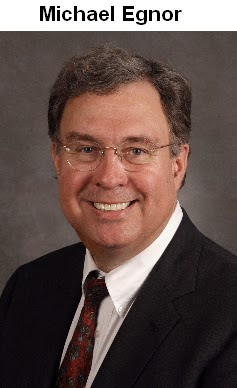
This New Yorker interview with “legal scholar Richard Epstein” is one of the most amazing exhibitions of arrogance I’ve read lately…and I’m living in the age of Donald Trump. Epstein earlier wrote an essay for his home base, the right-wing think tank the Hoover Institution, in which he predicted that the coronavirus pandemic was over-exaggerated, that it would peak with about 500 deaths and then fade away. His work was widely cited by conservatives, claiming that it showed that the cure was worse than the disease. His estimate was passed within a week, and the death toll is still rising. He’s wrong, definitively, and his prediction was quickly falsified. But he’s still defending it!

Most galling, his defense is that his prediction is supported by evolutionary theory. I know a little bit about evolution, so that was a startling claim. He’s a lawyer, not a biologist. He tries to explain his justification in this interview, and it turns out to be built on wishful thinking and faulty beliefs in how evolution works.

Here’s why he thinks the pandemic wouldn’t be as bad as the experts say.

But then adaptation starts to set in. And, in my view, adaptation is a co-evolutionary process in which things change, not only in human behavior but also change in genetic viral behavior.

OK, sure, humans are evolving, the virus is evolving, but how does that support the notion that the virus will kill 500 and not 100,000 people? There’s a leap there that emerges murkily.

…as the virus becomes more apparent, adaptive responses long before government gets involved become clear.

Wait, so his argument is that the virus will adapt to become relatively harmless before any public health work can take effect? I seem to recall that this viral adaptation to become weaker didn’t happen with, say, polio. He’s making assumptions about the rate of change.

Well, what happens is it’s an evolutionary tendency.

Also assumptions about a “tendency”. How does this work? He explains that. It’s jaw-droppingly stupid.

So the mechanism is you start with people, some of whom have a very strong version of the virus, and some of whom have a very weak version of the virus. If the strong-version-of-the-virus people are in contact with other people before they die, it will pass on. But, if it turns out that you slow the time of interaction down, either in an individual case or in the aggregate, these people are more likely to die before they could transfer the virus off to everybody else.

So his idea of why slow-the-spread works is not that it gives health services time to treat severe cases, it’s that he imagines there is this substantial variation in lethality of the virus, and that isolation allows people carrying strong strains to die, eliminating those variants, giving weak strains a selective edge. This ruthless Darwinian winnowing of viral strains will occur over the course of a few weeks.

He’s postulating a hyper-evolutionary acceleration; it’s very similar to the arguments of creationists who think all the vast amount of variation in species emerged from a few kinds preserved from the Flood 4000 years ago. Good evolutionary biology does not treat selection as a god-like force that instantly generates an optimal solution — we’re entirely aware of the limitations and how fast it can potentially work. We can use math. Epstein’s mechanism might work…over a few hundred thousand generations, which I suspect is even slower than our dilatory president’s response to the crisis.

And you’re not an epidemiologist, correct?

No, I’m trained in all of these things. I’ve done a lot of work in these particular areas. And one of the things that is most annoying about this debate is you see all sorts of people putting up expertise on these subjects, but they won’t let anybody question their particular judgment.

No, he’s not trained in those particular areas. He’s a lawyer. They work contrary to how scientists work. Lawyers start with the conclusion that they want to reach, and then select evidence that fits that conclusion.

That comment is particularly ironic because it applies spectacularly well to him. He’s claiming expertise he doesn’t have. You know, as I said, I actually do have some training in evolutionary biology, but I understand the limitations of what I know. I understand general principles and basic rules, but I also know that there are domains of specialization, like epidemiology, that I know very little about. I wouldn’t try to trump an epidemiologist’s detailed understanding of pandemics with my general knowledge of evolution of fish and spiders and cephalopods. Yet here’s Epstein, asserting that his legal training qualifies him to know better than epidemiologists.

I also wouldn’t declare that my knowledge of biology means I know better than Epstein how the law works.

What I’m doing here is nothing exotic. I’m taking standard Darwinian economics—standard economic-evolutionary theory out of Darwin—and applying it to this particular case.

There is actually a field of Darwinian economics. It’s mostly a bunch of economists who are smart enough to know that biologists have built up a lot of theory about how evolutionary biology works, and they’re trying to apply biological principles to economics. That’s not what Epstein is doing. He’s trying to jigger his fantasy Libertarian notions of economics to fit biology, and throwing a snit because biology is not obliging.

Oh yes, a snit. The following exchange is a stunning demonstration of how thin-skinned Richard Epstein is.

I was just asking about—

I’m saying what I think to be the truth. I mean, I just find it incredible—

I know, but these are scientific issues here.

You know nothing about the subject but are so confident that you’re going to say that I’m a crackpot.

No. Richard—

That’s what you’re saying, isn’t it? That’s what you’re saying?

I’m not saying anything of the sort.

Admit to it. You’re saying I’m a crackpot.

I’m not saying anything of the—

Well, what am I then? I’m an amateur? You’re the great scholar on this?

No, no. I’m not a great scholar on this.

Tell me what you think about the quality of the work!

O.K. I’m going to tell you. I think the fact that I am not a great scholar on this and I’m able to find these flaws or these holes in what you wrote is a sign that maybe you should’ve thought harder before writing it.

What it shows is that you are a complete intellectual amateur. Period.

O.K. Can I ask you one more question?

You just don’t know anything about anything. You’re a journalist. Would you like to compare your résumé to mine?

Wow. Like, wow. I’m speechless. A bit touchy, isn’t he?

Richard Epstein, you are an amateur and a crackpot, and also arrogant and ignorant. I hope this interview follows you for the rest of your days and demolishes your credibility in all scholarly things.

I may have made a small mistake

In my struggle to get my classes back on track as quickly as possible after spring break, I wanted to get everyone thinking and focused again, so…

  • In my intro class, I assigned a set of homework problems, due on 30 March.
  • In my intro class, I gave a take-home exam on Friday, due on 30 March.
  • In my genetics class, I assigned a set of homework problems, due on 30 March.
  • In my genetics class, I gave a take-home exam on Friday, due on 30 March.

They were supposed to send them to me by email.

Today, you may notice, is 30 March.

I opened my inbox this morning, and recoiled in horror. So many of my students were industrious and on the ball and possibly bored out of their minds, so they got everything done early. There are others who are still working on them, so I expect even more to trickle in during the course of the day.

The next exams are staggered a bit, at least, but I should have done that this time. The shock of the sudden isolation event just put everything in sync.

Where did SARS-CoV-2 come from?

I’ve been seeing some wild speculation that this pandemic is the product of genetic engineering — that it’s a biowarfare weapon that escaped from a lab somewhere. This is nonsense. I’ll refer you to an article in Nature Medicine, The proximal origin of SARS-CoV-2, which discusses a systematic analysis of the structure of SARS-CoV-2 in comparison to other coronaviruses.

It is improbable that SARS-CoV-2 emerged through laboratory manipulation of a related SARS-CoV-like coronavirus. As noted above, the RBD of SARS-CoV-2 is optimized for binding to human ACE2 with an efficient solution different from those previously predicted. Furthermore, if genetic manipulation had been performed, one of the several reverse-genetic systems available for betacoronaviruses would probably have been used. However, the genetic data irrefutably show that SARS-CoV-2 is not derived from any previously used virus backbone. Instead, we propose two scenarios that can plausibly explain the origin of SARS-CoV-2: (i) natural selection in an animal host before zoonotic transfer; and (ii) natural selection in humans following zoonotic transfer. We also discuss whether selection during passage could have given rise to SARS-CoV-2.

A little translation: the virus has a spike protein that binds to an enzyme on the surfaces of cells, called angiotensin converting enzyme, or ACE. This enzyme is important in regulating blood pressure, and is expressed by cells in lung capillaries (fun fact: your lungs play an endocrine role in sending out signals that maintain blood pressure). This is one reason the virus has such a dangerous respiratory effect — the lungs are the primary targets, where it can use the spike protein to bind to cells that express ACE and drill into them.

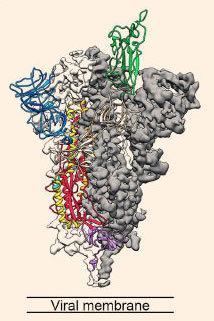
The RBD is the Receptor Binding Domain of the viral spike, and is the most variable part of the virus. This makes sense: the RBD is the key the virus uses to get access to your cells, and it varies because it confers target specificity. So there are all these different varieties of coronavirus, most of which don’t bother humans because they lack the human key — they are adapted to invade other animals’ cells. SARS-CoV-2 has acquired a spike with a human unlock code. Could some cunning super-villain have modified the spike?

Not likely, for several reasons. The virus has other similarities to coronaviruses in other animals; it’s not a de novo construct, but is a member of a large family of viruses. The modification to the spike protein is unusual. It works, but it’s not one that scientific experts would have used — they would have used something that would have been previously modeled. Then also bioengineers have lots of clever tools that could be used to stuff a desired sequence into a virus, but they all leave tool marks, little scraps of the molecule used to do the replacement. Those marks aren’t there. The best explanation is that we’re just seeing natural selection amplifying random variations in the spike.

While the analyses above suggest that SARS-CoV-2 may bind human ACE2 with high affinity, computational analyses predict that the interaction is not ideal and that the RBD sequence is different from those shown in SARS-CoV to be optimal for receptor binding. Thus, the high-affinity binding of the SARS-CoV-2 spike protein to human ACE2 is most likely the result of natural selection on a human or human-like ACE2 that permits another optimal binding solution to arise. This is strong evidence that SARS-CoV-2 is not the product of purposeful manipulation.

Yeah, see, if I were a nefarious super-villain, we already have an even better RBD we could yank out of other viruses, and I would have used that to build a deadly virus. But instead, the SARS-CoV-2 RBD is some clunky variation that came out of nowhere, by accident, without any other signs of intentional manipulation.

They also consider the possibility that this was an accidental variation acquired in a lab — if you pass a virus through a lot of host cells in a cell culture system, it will continue to evolve, and you might imagine the RBD might acquire a random variation that allows it to thrive in those cells, and then it accidentally escapes the lab. This is also unlikely, because it shares a lot of similarities with the pangolin coronaviruses. It’s more likely to have arisen from an existing pool of related viruses in the wild, then either acquired its novel binding site there, or after infecting humans and experiencing selection for better binding to human cells.

The best strategy is to look for intermediates in animals, or in the sequences of humans who were infected early in the pandemic.

The identification of a potential intermediate host of SARS-CoV-2, as well as sequencing of the virus from very early cases, would similarly be highly informative. Irrespective of the exact mechanisms by which SARS-CoV-2 originated via natural selection, the ongoing surveillance of pneumonia in humans and other animals is clearly of utmost importance.

Sorry, conspiracy theorists. The best explanation is evolution and natural selection, not Evil Intelligent Design.

The viral spike protein. The RBD is in green.

Friday Cephalopod: Blinking lights! Wings! It’s an alien spacecraft!

I still dream about cephalopods, even if the arachnids are snaring most of my attention.

There goes Ed Yong, being massively pessimistic

He’s also being scientifically accurate, realistic, and honest, which is the scary part.

Rudderless, blindsided, lethargic, and uncoordinated, America has mishandled the COVID-19 crisis to a substantially worse degree than what every health expert I’ve spoken with had feared. “Much worse,” said Ron Klain, who coordinated the U.S. response to the West African Ebola outbreak in 2014. “Beyond any expectations we had,” said Lauren Sauer, who works on disaster preparedness at Johns Hopkins Medicine. “As an American, I’m horrified,” said Seth Berkley, who heads Gavi, the Vaccine Alliance. “The U.S. may end up with the worst outbreak in the industrialized world.”

He also has some suggestions for what the country needs to do to improve, not that our current leadership will care.

This is all kind of wrecking me. I’m home, totally alone, not meeting anyone, and having video contact at most with my family and students, which means I’m banging around in an empty house fretting. I definitely need to go read a book (not World War Z) or watch a movie (no zombie flicks) or play a game (dang, I don’t have much in the way of games on my computer) or something just to keep from turning into an obsessive ranting bearded prophet of doom. It may be too late.

Exciting! News! From the Spider Lab!

Well, I found it exciting anyway. One of the problems I’ve faced in my new research on local spiders is that I can’t tell two species apart, Parasteatoda tepidariorum and Parasteatoda tabulata. Even the expert sources I consult usually discriminate by dissecting their genitals, which is not useful for me, since I want to study live animals and embryos. There is one suggestive hint, though: P. tabulata builds funky little nests in their webs in the wild, while P. tepidariorum apparently does not. It’s a behavioral distinction, and I have no idea how definitive it is, but at least it’s an angle.

Unfortunately, I haven’t been able to see nest building in the lab. I’ve tried throwing in miscellaneous office debris, like stuff from a whole punch and a paper shredder, but they never pay attention to it. Maybe all of my lab animals are P. tep? Maybe I’m providing the wrong kinds of nest material? I dunno.

So yesterday, in a forlorn, half-assed try, I noticed all the fine wood shavings in the containers for wax worms, their food, and I sprinkled a few small shavings in the cage for one of the new generation of spiders, not yet named, and went home. I’d spread them around, and even avoided the place where she was currently nesting (spiders have preferred spots to hang out in).

Today, presto…she had gathered the majority of shavings into one central place, and had built a nest. Isn’t it beautiful?

You can’t see her in there, because she’s hiding. You can see her brown egg sac, near the top center of the nest. I’ve also highlighted the cobweb by misting it with water. I guess I was just failing to give them the correct home-building materials before.

This is excellent news! Now I have to give all of the spiders in my colony some wood shavings, and see if they fall into two groups, nest-builders and non-nest-builders. I have a student who proposed studying this distinction this summer, if that still happens in this age of pandemic, and one thing we’ll have to try is a nest construction time-lapse — that really was assembled overnight, so it’s speedy, but it was done in the dark, so we’ll have to play with cameras and lighting to see if we can observe it.

The bad news is that when Tabitha — she has a name now — dies, we’re going to have to dissect her and observe her genitals very closely, to independently confirm her species.

Otherwise, though, this is so exciting! Thrilling, even! All the spiders get wood shavings! Everyone gets wood shavings! You can have wood shavings! Come on, you’ve got to admit that complex nest construction behavior in an invertebrate is fun stuff, even if it’s totally unsurprising, given that spiders have always been elaborate builders.

P.S. You might actually be able to see a bit of spider anatomy poking out in one place, but I’ll leave it as an exercise for you to Find the Spider.

Aaron Ginn, smug know-nothing

Last week there was an article published by a guy named Aaron Ginn in Medium, which purported that the current pandemic was going to fade out relatively quickly and do far less harm than others expected. The article was spread widely — you might even say it went viral — and some big names in media promoted it. It was recently taken down, though, and I can’t link to it, nor would I, even if I could. It was a terrible article.

It was interesting as an exercise in critical thinking, though. The first week of my introductory biology course I share a bad science article with the students, and ask them to figure out how they would know whether to trust it or not. They quickly do the usual stuff — look at the source, look at the author, look at the quality of the data — which should have been the response to this article by Ginn…but no. It says things people wanted to hear, so it was disseminated uncritically.

What should have been noticed right away is that Ginn has zero qualifications in epidemiology, yet here he is claiming that the scientists were all wrong. You might be wondering what his qualifications are. He’s a silicon valley tech bro who claims to be an expert in “growth”, meaning how to increase the popularity of products online. Because he uses the word “virality” in his advertising and promotion work, surely he must be a master of the biology of real viruses. He even claims you don’t need a special degree to do epidemiology.

Jesus. Red flags and signal flares popping off all over that mess. The arrogance of these silicon valley dudes knows no limits, and we ought to be able to stop there. Except that Mr Ginn was quite annoyed when his silly, ignorant article was yanked, and he ran yipping and whining to other unqualified media personalities, like Brit Hume, Greg Guttfeld, and Steven Crowder (seriously, dude?), none of them with any qualifications in the subject, either. He’s being censored, don’t you know. He’s now frantically and rather indignantly defending his claims on Twitter. Someone ought to tell him that Brit Hume, let alone Crowder, isn’t exactly a smart guy to cite, and rather obviously his choice of who to beg for props is telling. Ginn writes for Breitbart in his spare time, and works with the California Republican party.

Anyway, ignore Ginn and his bad paper. Go read this Twitter thread by Carl Bergstrom, who actually knows what he’s talking about.

Ginn is puking up exactly the kind of misinformation that ought to be filtered out — he’s cocky and full of himself, but he knows pretty much nothing about the subject he’s lying about.

No spiders today

I decided to get out of the house and take a walk. Everything is still dead and brown and frigid outdoors, but I had a cunning plan: I’d visit the university greenhouse! I was disappointed.

Oh, sure, there were colorful flowers.

But I was looking for spiders. The only arthropods I could find were some tiny ants scurrying all over twigs and leaves. You can’t escape ants.

There were some tantalizing dense cobwebs in a couple of close spaces, but the inhabitants weren’t hanging out. Probably lurking. I’ll have to come back and check again.