I am impressed with their thorough analysis of butts & poop

I really thought it had to be a joke, a paper describing an automated method for analyzing various aspect of defecation. But it’s real, and published in Nature, no less. It’s well summarized in Vice, and Dr Jenny Morber put up a substantial Twitter thread about it. The level of detail and thought put into the paper on something I would rather not think about is amazing.

My one disappointment is that I failed at a prediction. When I first heard about it, I thought to myself that this has to be coming out of a German lab. But no! It’s from Stanford, the lead author has a Korean name, and the long list of authors looks like a genuinely international team. I guess the whole world can come together in their common interest in poop.

I resisted the temptation to include a figure from the paper, because they all make me slightly uncomfortable. Don’t worry, there are lots at the links I gave.

Spider search…accomplished!

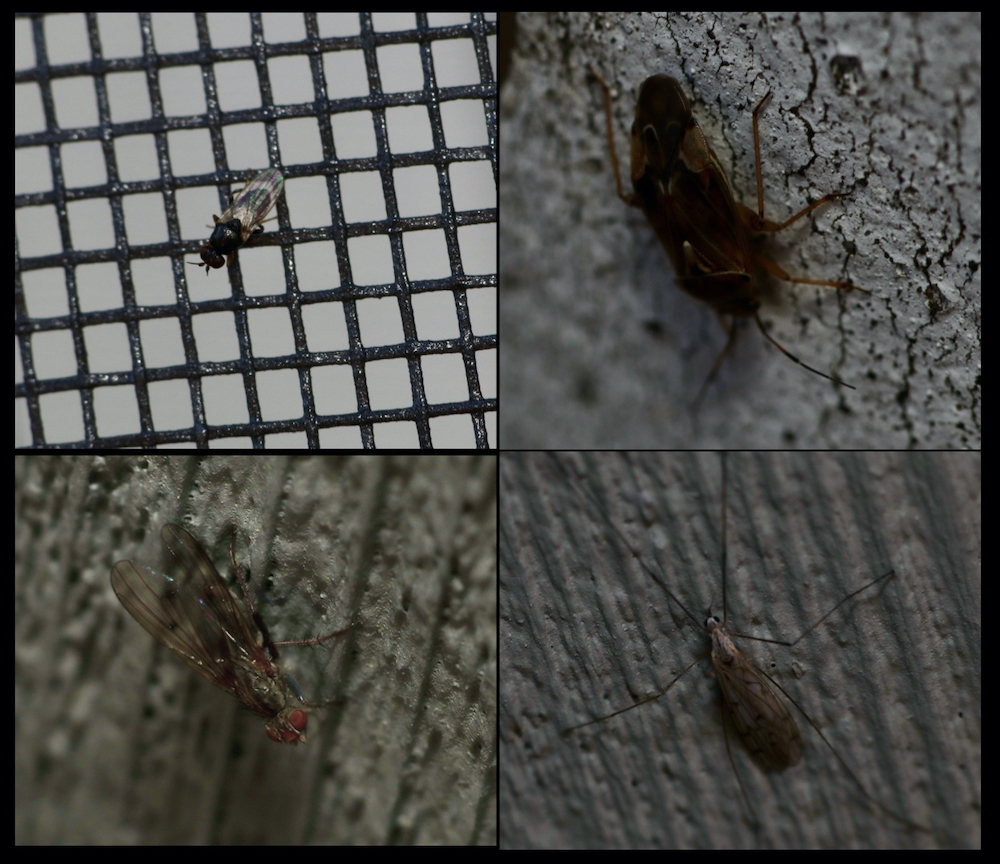
I went all around my house, looking high and low for spiders. The good news is that my house is covered with spider food. Gnats, flies, skeeters, bugs of all sort clinging to the fences and walls and window screens. The predators can’t be far behind!

If I were a spider, I’d want to be here, pigging out on the deliciousness.

And the spiders are here! The first spiders I’ve seen outdoors this spring!

I found a half dozen Salticus scenicus scampering about, looking fit and healthy — maybe too healthy, because they were zooming around at high speed, making it difficult to take pictures of them. I took a few, anyway, and posted them on my Patreon page and Instagram.

The game is afoot! Spider season is upon us!

Can I quarantine myself in Queensland?

They’ve got spectacular spiders there. The Queensland Museum is closed to visitors now, but they’ve started this program called #couchcurators where the people make videos about what they’re doing. This one features Caitlin Henderson and her spider expertise.

I am so jealous. It’s not quite hammock weather here in Minnesota yet, but it is gradually warming up. We also have almost no spiders yet, except for the pholcid swarm that is scheming down in the basement. I am planning to do a spider walk around the house and yard today, though, not that I expect to find much, too cold. It’s even in my daily to-do list: “12:00 — search for spiders.”

By the way, that’s my new thing, getting up and making a list for the day. Everything has become so structureless that I’ve decided to create my own structure, so I get up in the morning and make a schedule for the day, and then I stick to it. Sadly, today my list is mostly repetitive.

1:00 grade
2:00 grade
3:00 grade
4:00 grade

You get the idea. There is a 5:00 student seminar to attend online, and mealtimes (I lay out the menus ahead of time and do not deviate — it’s all too easy to sit here eating all day long), and my 9:50 class, and most importantly, that noon hour dedicated to spiders.

Spirals. It’s always spirals.

Whoa. This is a siphonophore colony, 15 meters in diameter, just floating in the ocean with tentacles dangling down to catch prey.

I read the whole thread and didn’t see an answer to the question that immediately popped into my head. This is a colonial aggregate of multiple siphonophore bodies linked together into a long string, but it has an overall form of a spiral. How? Is there local signaling going on to regulate the distance between the strands so that it spontaneously forms that structure, or is it an accident of currents? I’m going to guess the former, which would be most interesting, because it implies the existence of factors that lead to large scale form and is therefore the kind of process that would lead to more elaborate patterns of development.

Also, it’s so planar. Is this something the animal regulates, or is it just layers in the ocean maintaining it?

Can haz spider time?

I’ve been doing class stuff all morning. I haven’t left the house in several day. I haven’t fed the spiders in five days. Am I permitted to go into the lab for an hour or so today? I promise to avoid touching anything, to wash my hands thoroughly, and feed the girls with lots of tasty flies. And I’ll buckle down to more grading as soon as I get back.

They miss me. Or at least they miss dinner.

Visit a museum!

That’s bad advice, since in my experience museums tend to be full of excited, eager disease-carriers — I mean, children — and a lot of museums are currently closing their doors and laying off staff. There are still museums with an online presence, though. Here’s a spider expert answering questions at the Burke Museum, and the Bell Museum has video tours of their exhibits. Tell your little disease-carriers kids to sit down and pretend they’re visiting a museum!

Hey, also, when this is all over, and when your finances have recovered…become a member of your nearest museum. They’re all hurting right now, too, and we should appreciate and support our local resources.

Rooting for Australian arthropods in amber

I think the title is a double entendre in Australian, but it’s not a language I am fluent in. Anyway, a paper in Nature describes an assortment of organisms found in amber from Australia and New Zealand, ranging in age from 230 million years to 40 million years. It’s lovely stuff.

Significant bioinclusions of plants and animals in Southern Gondwana late middle Eocene amber of Anglesea, Victoria. (A to B) Liverworts of the genus Radula (Marchantiophyta: Radulaceae). (C) Two stems with perfectly preserved phyllids or leaf-like structures of mosses of the genus Racopilum (Bryophyta: Racopilaceae). (D) Juvenile individuals of spiders. (E to F) Springtail of the living genus Coecobrya (Entomobryomorpha: Entomobryidae) in two views. (G) A Symphypleona springtail. (H) Light photograph of large piece of yellow amber with two dipterans, Dolichopodidae at left and Ceratopogonidae at right, and at top of image a mite of the living genus Leptus (Arachnida: Acari: Trombidiformes: Erythraeidae). (I) Dipterans of the family Dolichopodidae (long-legged flies) in copula. (J) Worker ant of the living genus Monomorium or a “Monomorium-like” lineage (Hymenoptera: Formicoidea: Formicidae).

I don’t know about you, but I was most interested in D, the two juvenile spiders.

Wait, I do know about you — you’re most interested in I, the two flies caught in the act. So here’s a closeup.

Count yourself lucky. Now if you want to take a pornographic selfie, you just whip out your phone, capture the moment, and go on with your life. Forty million years ago, you had to say “Freeze! Look sexy!” and wait for a drop of sap to ooze over you, and then you had to hold the pose for tens of millions of years.

There are laws about this kind of congregatin’

The snow is back. Not much of it, but it was mixed with freezing rain and now everything is covered with a thin glaze of extraordinarily slippery ice, so I guess Nature is enforcing the stay-at-home order.

These scofflaw birds don’t care at all, though. My yard was covered with sparrows for a while, and the birdfeeder in my front yard has become the most popular meeting spot in the area. KEEP YOUR DISTANCE. STAY INDOORS. Stupid birds.

Michael Egnor agrees with me, I’m having a panic attack

Uh-oh. Michael Egnor is writing about me over on the Discovery Institute site. He’s commenting on that summary of the origin of SARS-CoV-2 virus I wrote the other day, which is fine. What isn’t fine is that he agrees with it.

I threw up in my mouth a little bit.

Reading further, though, he agrees with it for all the wrong reasons, so I feel a little better.

Myers, like the Nature Medicine scientists, uses the scientific inference to intelligent design to search for (and discount) human intelligent agency. Design science is at the forefront of research on the emergence of coronavirus. Based on the available evidence and using the inference to design as a scientific hypothesis, intelligent design of the COVID-19 virus seems unlikely.

That is incorrect. “Design science” is not at the forefront of the research. The authors of that paper came to their conclusion by extensive comparisons of the viral sequence with viruses in other organisms, and by a functional analysis of the structure of the receptor binding domain. Conspiracy theorists and creationists have been poisoning the global conversation with nonsense about the virus being “designed”, so they addressed and dismissed that idea. The primary interest was in the original source, and what properties of the virus make it dangerous to us.

They also pointed out two major adaptations of the virus spike protein: changes to the receptor binding to allow it to bind effectively (but not optimally) to the human ACE2 protein, and an insertion that adds a polybasic cleavage site which also allows the linkage of glycans to the protein that assist in immunoevasion. Two mutations at once! Doesn’t his pal Michael Behe have something to say about the improbability of multiple mutations?

But there is another lesson about design and evolution to be learned from scientific research on this virus. Natural selection, if understood as undirected variation and differential reproductive success, is a destructive process. Natural selection destroys biological functional complexity — it produces diseases, cancer, and pandemics. It weakens and kills. Natural selection does to living organisms what rust does to a machine. Natural selection corrodes and destroys life, and plays no role in creating it.

Not for the virus, it wasn’t a destructive process. What was undergoing natural selection here was the virus, not us, and it has acquired attributes that make it wildly successful — it is now colonizing vast fields of billions of human beings, producing uncountable numbers of progeny, infecting more people at an accelerating rate. The virus is stronger and thriving thanks to those features, and doing very well thank you very much.

Humans are now possibly undergoing a round of natural selection in response. I don’t know if there’s a pool of heritable resistance to the virus in the population, so it’s possible we’re experiencing a field of bullets scenario, where nothing heritable is being selected for, but if there is a genotype that has an advantage here, natural selection would increase their frequency over time. Natural selection could make us more resistant as a species to SARS-CoV-2, and definitely wouldn’t be a destructive process.

Also, one of the features of the virus is the addition of short sequences, so SARS-CoV-2 may have had a slight increase in complexity over its predecessors.

Egnor is basically wrong about everything. Balance is restored to the universe.