Deep breaths. It’s another day in America. Take a moment to imagine being somewhere else, like the bottom of the Indian Ocean.
Suggestion: the narration is annoying — we don’t need to be told the views are stunning. Just watch with the sound off.

Deep breaths. It’s another day in America. Take a moment to imagine being somewhere else, like the bottom of the Indian Ocean.
Suggestion: the narration is annoying — we don’t need to be told the views are stunning. Just watch with the sound off.

It was rainy and damp, but we found a few little spiders hiding under leaves. Mary held one. Don’t look below if you are not fond of spiders!

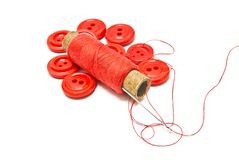
I learned something a long, long time ago, first in studying the origin of life, and then in studying the relationships within networks of genes, and now when thinking about basic epidemiology. Nothing is linear. It’s an idea that’s been discussed since at least the 1980s, when Stuart Kauffman applied it to the logic of the emergence of life on Earth. Here he is talking about the appearance of autocatalytic sets, that is, collections of interlinked enzymes (or ribozymes) that generate emergent properties, like a metabolism.
Now, the next question is how hard is it to get such systems? Does it take a careful crafting of a chemist, or can it arise by chance? The body of theory I’ve been working on now for more than a decade suggests that it’s not hard.
You see this with an analogy: suppose you take 10,000 buttons and spread them out on a hardwood floor. You have a large spool of red thread. Now, what you do is you pick up a random pair of buttons and you tie them together with a piece of red thread. Put them down and pick up another random pair of buttons and tie them together with a red thread, and you just keep doing this. Every now and then lift up a button and see how many buttons you’ve lifted with your first button. A connective cluster of buttons is called a cluster or a component. When you have 10,000 buttons and only a few threads that tie them together, most of the times you’d pick up a button you’ll pick up a single button.
As the ratio of threads to buttons increases, you’re going to start to get larger clusters, three or four buttons tied together; then larger and larger clusters. At some point, you will have a number of intermediate clusters, and when you add a few more threads, you’ll have linked up the intermediate-sized clusters into one giant cluster.
So that if you plot on an axis, the ratio of threads to buttons: 10,000 buttons and no threads; 10,000 buttons and 5,000 threads; and so on, you’ll get a curve that is flat, and then all of a sudden it shoots up when you get this giant cluster. This steep curve is in fact evidence of a phase transition.
If there were an infinite number of threads and an infinite number of buttons and one just tuned the ratios, this would be a step function; it would come up in a sudden jump. So it’s a phase transition like ice freezing.
Now, the image you should take away from this is if you connect enough buttons all of a sudden they all go connected. To think about the origin of life, we have to think about the same thing.
The pattern should also affect how we think about genes. We’ve got about 20,000 genes; each gene influences the expression of some set of other genes. You may think you know exactly which genes are directly affected by a gene you are interested in — you can do experiments and work out the connections, a process called epistasis — but because each of those genes also have multiple connections, you in effect have to consider that every single gene in some way influences the activity of every other gene. Tug on one, and every other gene in the system is affected. Each of us is a supercluster of interacting genes, being tugged on in various ways by the environment.
I’m not an epidemiologist, but this also how I think about the pandemic. I am a button. I’ve been alone for months; if I had gotten the disease, I would have suffered alone but I’d also have been a dead-end for the virus. Now my wife is home, another button, and we are tied together with a red thread such that if I get the disease, she almost certainly will, and vice versa. But also, she was living with my daughter, her husband, and my granddaughter for a few months, she was part of a four-button cluster, which I’ve now joined. If one of us had the virus, it would have readily spread within that group. But it would have ended there.
Unless…what if I cheated? I decided to go out to a bar and chat with ten friends. I’ve basically connected a red thread to each of their clusters, and increased my connectivity greatly. Maybe you think it’s still a manageable number, but that’s only because you don’t see all the red threads outside of your immediate group. The point of Kauffman’s analogy is that the expansion of the network is not linear, as you might naively expect, but jumps rapidly as the number of connections increases, and can undergo a phase transition, where just going out to a bar can achieve criticality, and suddenly you are connected to everyone in the country, and the virus has avenues to reach everyone.
So think of yourself as a button. Every time you touch someone, lean in close and breathe their air, you are tying a red thread to them, linking your fate to some degree to them. You can safely build a little network with close family, and you’re still OK — the threads tangle together just your small family unit. But if your child has a playdate with a neighbor’s kid…they have made a new thread that encompasses everyone in your family, and everyone in the neighbor’s family, and you’ll have no idea how many threads connect you all. And if you decide to take the whole family to that newly opened beach and mingle with thousands of other people, forget about it — the number of connections have shot up exponentially. You’ve lost all control.
The problem is that people don’t grasp the idea of exponential increases intuitively. I don’t. I’ve worked with enough models that I know that these kind of phenomena can produce surprisingly large effects rapidly, though, and that our current situation is a perfect example of that kind of phenomenon, and damn, stay home and stop stitching all those buttons together.

I took a tour of my house this morning to see how the spiders were shaping up. I found lots, even more than I did last week. Some were familiar, like Attulus fasciger, who had captured a mosquito-like creature. Good work, young lady!
Of course there were lots of Salticus scenicus around.
The exciting but somewhat disappointing discovery was that Parasteatoda abounded — they’d colonized several inset corners of the house and areas around the downspouts, where they had good cover and great places to hide.
The disappointing part was my own failure: I couldn’t get a good picture of any of them! They were all living in little houses made of plant debris, and if I tapped on them to ask them to come out, they did a typical Parasteatoda thing: they’d immediately bungee straight down to the ground. They’re conveniently predictable when trying to catch them, but I just wanted to say hello and take a picture.
To see what I mean about the difficulty, I saved one photo of one tucked into a bit of dried flower petal, with just her blurry butt sticking out.
I’ve got 4 of these spider nests tagged now, and I’ll be back tomorrow and will try to get some better pictures. Except I think we’ve got thunderstorms predicted for Sunday…so maybe a little later.
You can see the photos, if you really want to, on Patreon or Instagram, as usual.

I’m starting to think I never want to be around people again, what with all their filthy, moist exhalations.
On the plus side, I’ve always wanted an excuse to wear a mask and cover this homely face. I look forward to the new support for industries that make fashionable face wear — I would like a formal mask for special occasions, a professional mask for work, and a wild & crazy mask for partying in the streets (alone, of course). I may also need a spider mask for those days I’m focused on arachnids, even though they tend not to sneeze.

We put it together today, me and my nerdy daughter and my very excited granddaughter, who had to inspect each of the components.
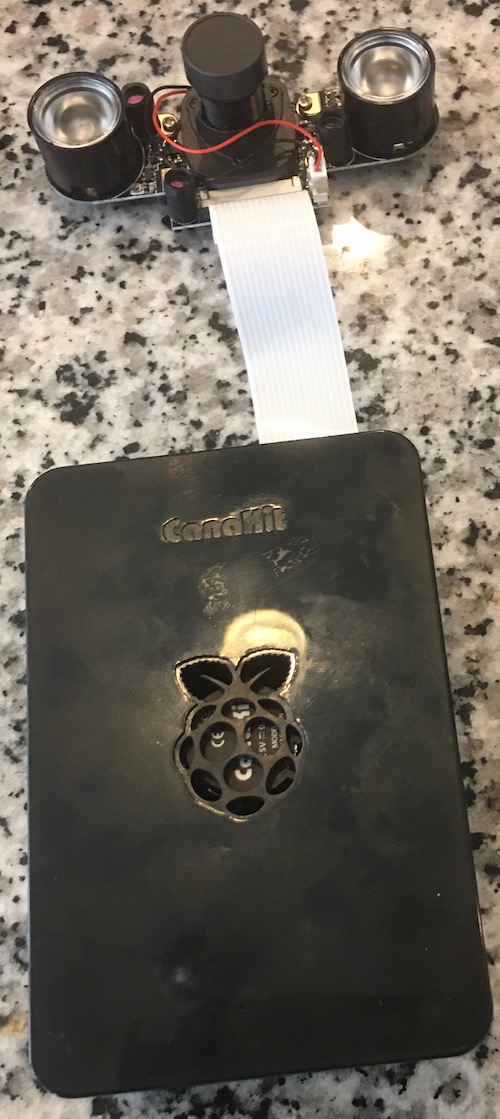
She had to teach me a little (very little) Python, but we got it working with a little script to take time lapse images. That’s the camera at the top, and the two eyeballs are IR LEDs. The plan is to do a test run when I get back and see if we can record night-time spider activity with it. The spiders are very sneaky, and when I see them during the day they’re usually lounging about, doing little unless some prey falls into their web, but every morning I see the cages more densely matted with cobwebs, so it would be nice to watch them at work.
The images aren’t bad for such a minuscule lens. The test will be to see if I can get enough depth of field to get a sense of their 3-dimensional construction methods.
(If you’re curious, that’s the CanaKit Raspberry Pi 4 4GB Starter Kit and the UNIROI Raspberry Pi Camera Module.)


I rejected it because it’s panadaptationist nonsense, among other things. But I’m always happy to see more arguments for why it is garbage, such as this criticism from a philosopher.
Evolutionary psychologists’ thought is that, for at least some of our behaviors, they believe that we have—dare I use this term—hard-wired cognitive structures that are operating in all of us contemporary human beings the same way they did for our ancestors on the savannas. The idea is that, in the modern world, we have sort of modern skulls, but the wiring—the cognitive structure of the brain itself—is not being modified, because enough evolutionary time hasn’t passed. This goes for evolutionary functions like mate selection, parental care, predator avoidance—that our brains were pretty much in the same state as our ancestors’ brains. The sameness in how our brains work is on account of genetic selection for particular modules that are still functional in our environment today. [Editor’s note: These “modules” refer to the idea that the brain can be divided up into discrete structures with specific functions.]
The matching problem is really the core issue that evolutionary psychologists have to show that they can meet: that there is really a match between our modules and the modules of the prehistoric ancestors; that they’re working the same way then as now; and that these modules are working the same way because they are descended from the same functional lineage or causal lineage. But I don’t see any way that these charges can be answered.
True, that. But just watch — evolutionary psychologists will rapidly retreat from those core ideas of “environment of evolutionary adaptation” and “modules” to find safety in the uncontroversial idea that the brain evolved.
We still get buckets of baloney about evolution from people who should know better. Have you heard of the pugilism hypothesis
? This is the idea that men’s beards evolved to absorb a punch to the jaw. You only have to think about it for a moment to realize that getting socked in the face was a small factor in human evolution — 10,000 years ago, I would have been more concerned about starvation, getting a disease, breaking an arm while hunting, or getting thwocked in the back of the head with a rock by a bad guy. That facial hair might have provided a slight cushion to facial injuries doesn’t seem like the kind of thing for which there was much selection pressure, and I could also sit here and imagine all kinds of drawbacks to furry faces.
But it’s been tested! Except no, it hasn’t.
Because facial hair is one of the most sexually dimorphic features of humans (Homo sapiens) and is often perceived as an indicator of masculinity and social dominance, human facial hair has been suggested to play a role in male contest competition. Some authors have proposed that the beard may function similar to the long hair of a lion’s mane, serving to protect vital areas like the throat and jaw from lethal attacks. This is consistent with the observation that the mandible, which is superficially covered by the beard, is one of the most commonly fractured facial bones in interpersonal violence. We hypothesized that beards protect the skin and bones of the face when human males fight by absorbing and dispersing the energy of a blunt impact. We tested this hypothesis by measuring impact force and energy absorbed by a fiber epoxy composite, which served as a bone analog, when it was covered with skin that had thick hair (referred to here as “furred”) versus skin with no hair (referred to here as “sheared” and “plucked”). We covered the epoxy composite with segments of skin dissected from domestic sheep (Ovis aries), and used a drop weight impact tester affixed with a load cell to collect force versus time data. Tissue samples were prepared in three conditions: furred (n = 20), plucked (n = 20), and sheared (n = 20). We found that fully furred samples were capable of absorbing more energy than plucked and sheared samples. For example, peak force was 16% greater and total energy absorbed was 37% greater in the furred compared to the plucked samples. These differences were due in part to a longer time frame of force delivery in the furred samples. These data support the hypothesis that human beards protect vulnerable regions of the facial skeleton from damaging strikes.
I would concede even before testing it that a layer of hair over the face would reduce the force of impacts to some degree. But that’s not testing an evolutionary hypothesis! You need to show that this ‘padding’ had a measurable effect on survival and reproductive success. They merely looked at one superficial phenomenon and decided that dissipating the force of a punch to the jaw allowed beardy guys to thrive, in a world without the Marquis of Queensbury rules. It seems his beard didn’t save Otzi from the arrow that killed him.
There are a few people — thankfully few — that go wacko over their single comprehensive explanation. Apparently, humans evolved to be boxers.
More broadly, the results of this study add to a growing body of evidence suggesting that specialization for male fighting has played a significant role in the evolution of the musculoskeletal system of humans. For example, the short limbs (Carrier 2007), plantigrade foot posture (Carrier and Cunningham 2017), and bipedal posture of our earliest hominins ancestors (Carrier 2011), and the force–velocity tuning (Carrier et al. 2011) and size (Carrier et al. 2015) of the muscles of the human leg may also be associated with improved fighting performance.
Ugh. Umbrella Hypothesis alert.

I’m not quite done with grading — genetics is complete! — but yeah, I already have to think about Fall semester? Yikes. I’m expecting a resurgence of the coronavirus this summer that will be worse than what we had in the spring, because we a) don’t have adequate testing, b) don’t have a vaccine, and c) have a country infested with idjits who want to get a haircut no matter how many other people’s lives it puts at risk. Meanwhile, the universities are dithering about what to do. I have no idea what I’m expected to do come September, although we’re kind of mumbling about contingency plans.
This is a fairly clear-eyed view of the immediate future.
Higher education as we know it is approaching economic collapse. I appreciate the frantic gestures college presidents are making to prevent their own campuses from failing. Many intend to open their campuses for the fall term and avoid economic ruin. It is the wrong call.
Even the most optimistic of epidemiologists have two opinions about the remaining months of 2020: mass gatherings should be prohibited, and people over 55 and/or with pre-existing conditions should continue to stay indoors. We also know that individuals under 25 are least likely to become sick with the coronavirus and are most likely to flout requests to stay indoors, wear masks and avoid public places such as beaches and parks.
College presidents are unsure about what to do with their campuses in the fall, and uncertainty breeds anxiety. No one has a crystal ball, but with what we know, what should happen on the nation’s campuses in the fall is increasingly clear. The option of students returning to campus in the fall is not viable, regardless of the economic implications.
The author has some suggestions about what to do if we are open: cancel all those big stadium football games, make special provisions for faculty and students over 55 (we have to teach online, while the younger faculty teach in classes? I think he has an elevated opinion of the safety of young adults), constant testing (we don’t have a reliable, affordable test), and maintain social distancing in the classroom. OK, so I looked at my list of registered students for the Fall to see if that is feasible. Enrollments are down everywhere, right?
I’ll be teaching cell biology, which typically has about 50 students. It’s down a lot right now, with 35 students registered, although it will probably go up a little bit more over the summer. I’ve been assigned a huge lecture hall, so social distancing in class will be easy — I can put them in every 3rd or 4th seat, every other row, and have room left over. Lecture will be easy.
The problem will be labs. I have 3 lab sections for those 35 students, and we generally have students work in groups. That’s not going to work. Making it work would require major restructuring — break up the labs into more independent study sections, so we can separate them more? Even there, any infected students are going to spray fomites all over the microscopes and spectrophotometers. Need I point out, though, this is where the students who will one day be the front line in dealing with future pandemics will get their start?
I imagine our administration is freaking out.
Greater than 5 percent of the more than 4,000 U.S. colleges and universities are likely to close because of falling enrollment, according to Robert Zemsky. Many observers now predict that enrollments will shrink by 15 percent. The pandemic and the Trump administration’s xenophobia alone will shrink foreign student enrollment, especially from China and India, by 25 percent, the American Council on Education has estimated. Meanwhile, some states like New Jersey are already clawing back money from campuses that has been allocated for this fiscal year; next year’s budgets will be worse than the recession in every state. Philanthropic giving will take a nose dive. Summer and auxiliary enterprises will yield next to no additional revenue.
College presidents have a right to be terrified. But opening campuses in the fall is the wrong move if the primary motivation is to avoid bankruptcy. Public health comes first.
Right. Public health must come first. The answer ought to be a massive public investment in educational and medical infrastructure to keep us all limping along until this disease is overcome. Will we get it? No. It’s hard not to feel a sense of impending doom when we witness the government overseeing this disaster.
So, right now I focus on finishing this last semester, which already ended in a colossal pratfall. Once that’s done, maybe I can think about how to manage the next one.
Hey, rigorous training in how to clean and sterilize a workspace would be an appropriate first lab in cell biology, right?

After I finished today’s grading, I whipped up a little video. Why? Because I could. And because Rhawn Gabriel Joseph is up to mischief again. He’s claiming to have found mushrooms on Venus and Mars!


Yikes. My social media are squirming with the maggoty indignation of cranks lit up by this pseudo-documentary, Plandemic, which is actually nothing but an overlong trailer that was live on YouTube and Facebook briefly, before it got shot down and banned for spreading misinformation. I’m not going to encourage anyone to watch it — I haven’t bothered myself — but will instead tell you all to read Orac’s thorough takedown, “Judy Mikovits in Plandemic: An antivax conspiracy theorist becomes a COVID-19 grifter”. I’d heard enough about the lies in Plandemic before this, but Orac puts them all in one place.
Unfortunately, I also read the comments.
Double-yikes. The anti-vax, science-denialist crowd is out in full force in that comment thread. The conspiracy theorists and anti-Semites (???) are howling. It’s kind of informative to see the bad arguments they’re making, but I’m sure glad we don’t have any of those people here.
