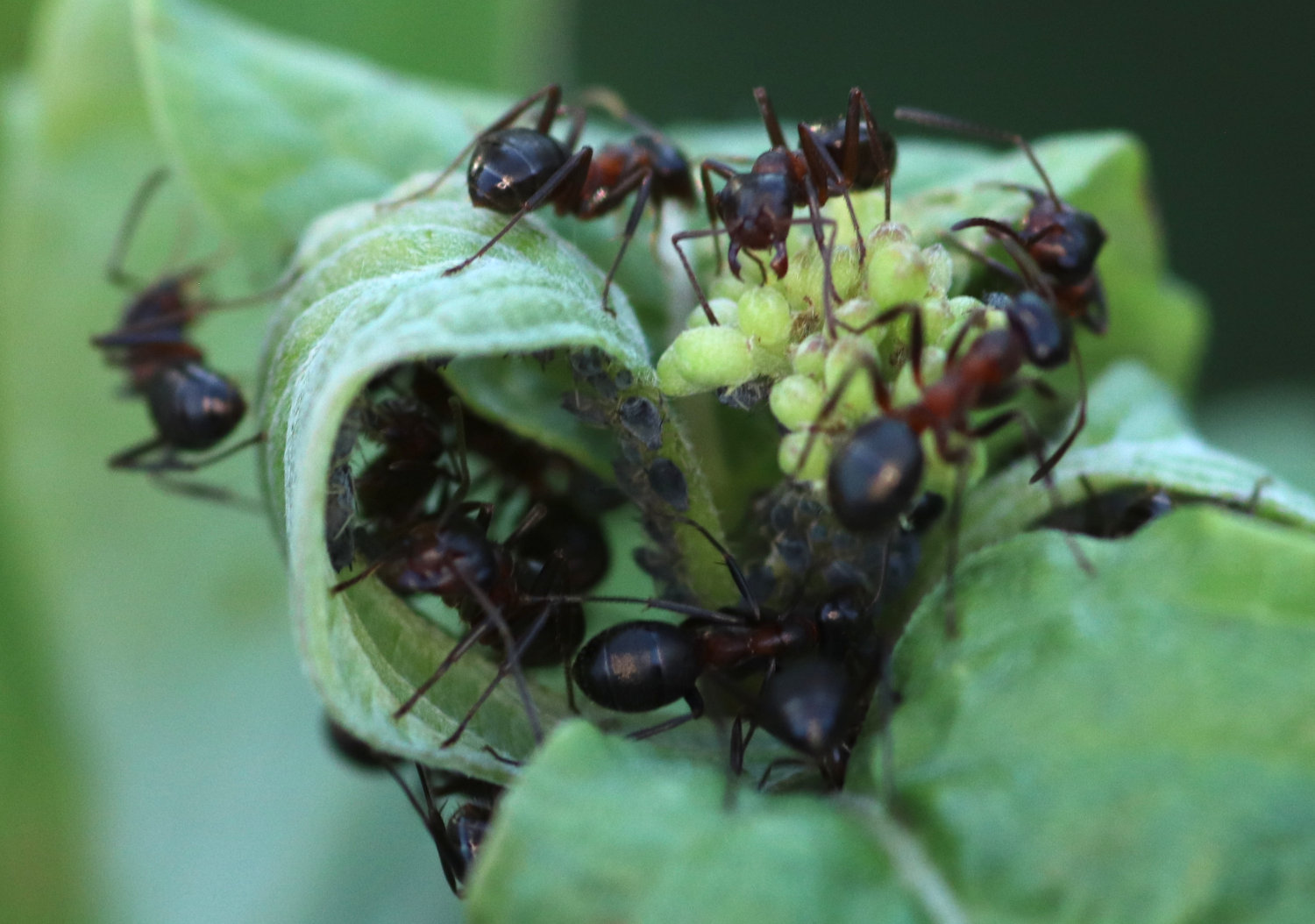
It’s a palace! A SPIDER PALACE!

I found a happy couple, a pair of Parasteatoda, nestled in a very awkward nook, low to the ground and difficult to photograph. That may be to their benefit though, since it’s nicely sheltered.

They’ve built a nest of flower petals and debris brought up from the ground. It’s fairly elaborate, which means it’s not a shack, it’s a palace by spider standards. The female is down below, the male is hiding up above.

(If you want to see it, it’s on my Patreon and Instagram pages)

I strongly suspect this is Parasteatoda tabulata, because they’re the ones with a reputation for building refuges in their web. The only way to be sure is to…dissect them and look at details of their anatomy, which seems like a cruel way to break up the happy pair and destroy their hideaway.

I’m going to take a different tack and leave them alone until I see an egg sac. Then I’ll scoop them up, home and all, and put them in a nice roomy cage in my lab with plenty of food and no predators and raise their offspring. Then maybe I’ll dissect a few of their children instead.

Yikes, that took a dark turn.

I could get used to this style of conference

I’m enjoying this method of attending a conference. I can just sit back in a comfy office chair, the slides are projected crisply right in my face, and if a talk doesn’t interest me, it’s easy to tune out and do something else for a while. We just had a break, and I could go fix my own coffee and didn’t have to talk to anyone but my cat (which is kind of a diminished experience, but I have a serious flareup of imposter syndrome when I talk to real arachnologists anyway), so I’ve got nothing to complain about.

If/when this COVID-19 isolation ends, I’m going to have been spoiled and will want every conference to run this way, or at least have a set of concurrent online sessions.

P.S. I have decided definitively that solifuges are far more terrifying than spiders. If you don’t believe me, look below the fold.

[Read more…]

Uh-oh. I’m going to be glued to my chair all day #arachnids20

The American Arachnology Society Virtual Summer Symposium has been delivered in digestible lumps all through the weekend — two hours here, two hours there — but the marathon begins today, with 15 minute talks beginning at 9am and continuing throughout the day until 7pm. Now there’s the traditional conference structure! Maybe only 10-20% of the talks are relevant to my interests, but I’m just going to put them all up on my second monitor and keep the information trickling my way, perking up when the right magic words are uttered.

It’s not as if I’m going to be going out and about today anyway. A thunderstorm rolled right over my house early this morning, and more are forecast continuing through the early afternoon. Also, hot. Too hot.

Have I been training cannon fodder?

I teach a lot of students who plan on careers in medicine — doctors and nurses. I keep hearing, though, that medical staffing is hitting a ceiling. The people we rely on to treat COVID-19 are vulnerable.

The coronavirus pandemic has tightened its grip on much of Africa, where reported cases have more than tripled over the last month, jeopardizing overstretched medical teams as the need for care soars.

From the pandemic’s early days, leaders across the continent urged prevention and took aggressive action — sealing borders, tracing contacts and building extra isolation wards — asserting that many places lacked the resources to withstand unchecked outbreaks.

Now African health officials and medical professionals are raising concerns about cracks in a crucial armor: Infections among health-care workers have shot up 203 percent since late May, according to the World Health Organization’s Africa arm, following a spike in community transmission and a drop in access to protective gear.

Africa, you say? Who cares? (Well, I would hope my audience wouldn’t say that). But it also hits close to home, with hospitals in Alabama, for instance, reaching capacity. Of course, “capacity” in this case is partly a function of staffing, not just the number of beds. As the pandemic spreads further, that means that effective capacity is going to gradually decline. Everything is going to get worse.

My university is opening in August. We’ve got plans to minimize contact — I’m going to be teaching all of my classes, except the labs, over Zoom — but I’m expecting we’ll shut down the labs, too. We have to keep the flow out of our pre-professional programs going, don’t you know!

I get it now

So “second wave” is kind of like the second stage of a rocket, and is going to launch us to an even higher altitude?

I think maybe our current academic year plans in which I teach all of my classes online, except for labs which have been halved in size to allow adequate social distancing, might turn out to be optimistic.

Spider fans gather at #Arachnids20 today!

Hey! Tonight! It’s the start of the 2020 American Arachnology Society Virtual Summer Symposium, and it’s going to be great.

We’re very excited to launch the AAS 2020 Virtual Summer Symposium TODAY, June 25, 7-9 PM ET with a brief welcome and overview of the symposium, and the keynote address by Martin Ramirez, Senior Researcher at Museo Argentino de Ciencias Naturales, Buenos Aires, Argentina. This talk is honoring the contributions of Norman Platnick to arachnology: “From roots to myriad leaves: the legacy of Norman Platnick on spider systematics”.

So it’s going to start with a discussion of this Platnick.

I anticipate some spicy conversations about cladistics.

Also note, tomorrow is all about social justice.

We also want to share updates and encourage you to join the Forum tomorrow, Friday June 26, 3-5 pm ET where we will host a community discussion of impacts of racism on arachnology and potential actions the AAS can take.

At a science conference?!?? Of course. Smart people care about correcting racial inequalities.

The data is suggestive

It’s been almost a month since George Floyd was murdered, and protests erupted across the country (and the world) very shortly after, so there’s been time enough for the coronavirus to piggy-back on the crowds and cause a surge in infection rates. But look at these plots, especially for Hennepin county!

That’s good news, but it’s a little confusing. Why aren’t those big crowds perfect petri dishes for the pandemic?

What’s more, a new analysis based on cell-phone tracking data suggests a surprising reason for the lack of protest-related spikes in COVID-19: In the cities with large protests, the wider population actually spent more time at home during the demonstrations — suggesting that any surge caused by virus transmission at the protests themselves would have been countered by an increase in social distancing among the rest of the cities’ populations.

While experts consulted by BuzzFeed News agreed that wearing masks and being outside may have reduced the risk of viral transmission at the protests, they pointed to other possible factors as well. Many of the protesters were young, for example, meaning that new infections that occurred while they were demonstrating would be less likely to cause severe disease and show up in official case counts. And even though hundreds of thousands participated in the protests, that’s still a relatively small number compared to the total population of the cities involved — so it might be hard to notice transmission of the coronavirus at the protests.

“The fact is that we will just never know for sure, because there’s too many moving parts,” Andrew Noymer, an epidemiologist at the University of California, Irvine, told BuzzFeed News.

Epidemiology is hard — too many variables, too many moving parts. This suggests, however, that you shouldn’t expect dramatic surges from the recent Republican rally, for the same reasons: small crowds relative to the greater population. That participants were generally older might have more effect, though, and BLM protest participants seem to be a lot more careful about using masks and distancing..

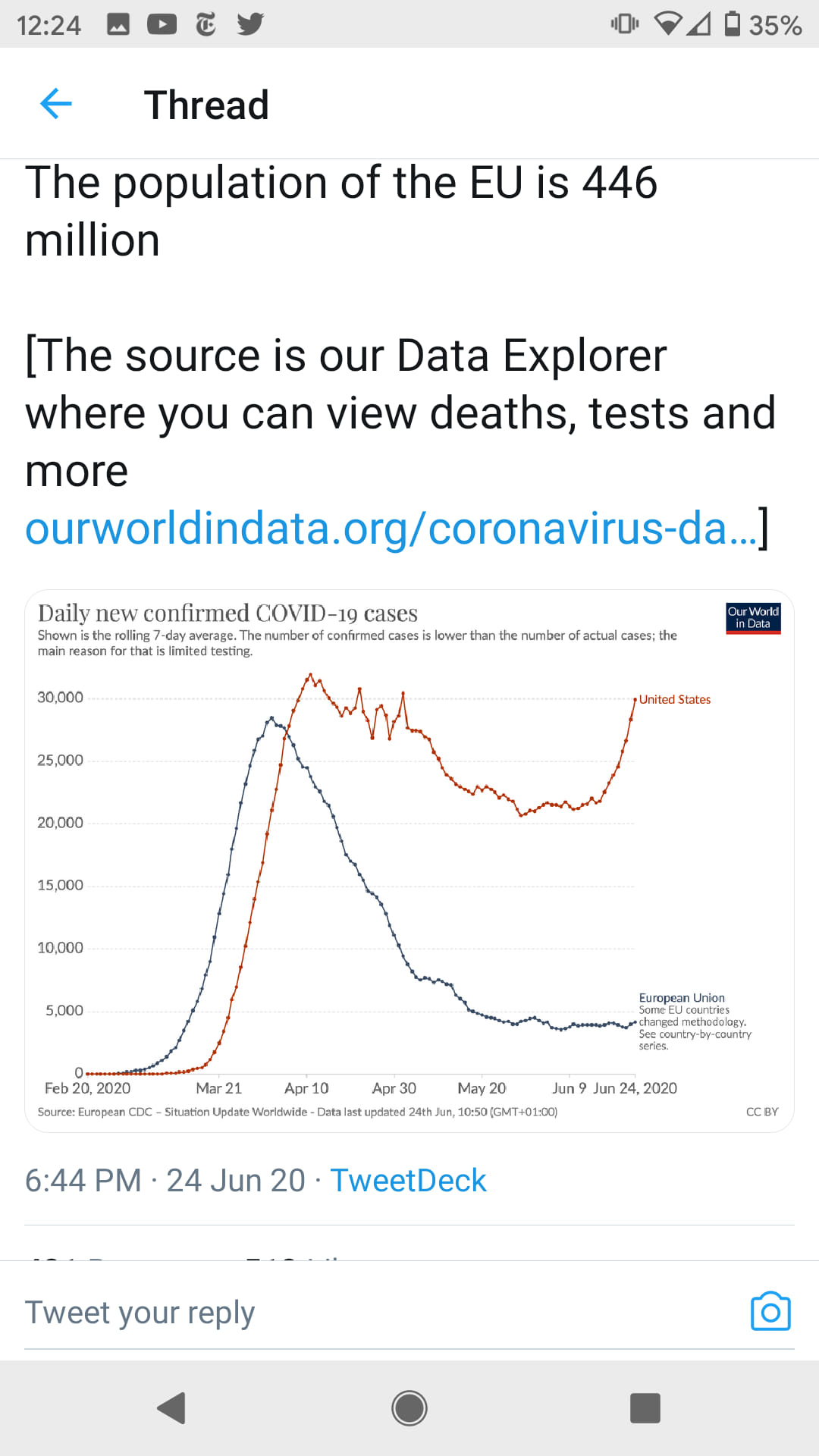
What’s worrying is that the article also shows recent rapid rises in states like Texas, Oklahoma, Florida, and South Carolina, and the country overall. That’s associated with states that have been generally opening up, and reducing mask and social distancing expectations. The lesson: general policy is far more influential than limited events. Republican governors are greater threats to public health than grassroots protests.