Anti-Caturday post

Hey, little Golden Tortoise Beetle, you’re looking adorable!
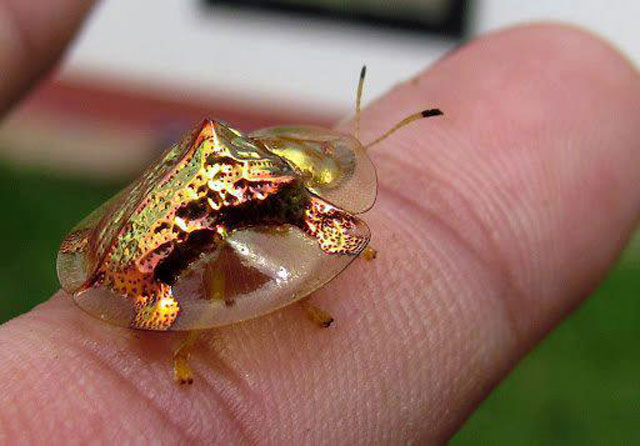
That’s a nice shiny Golden Tortoise Beetle, I love that little transparent shell over your shiny goldenness.
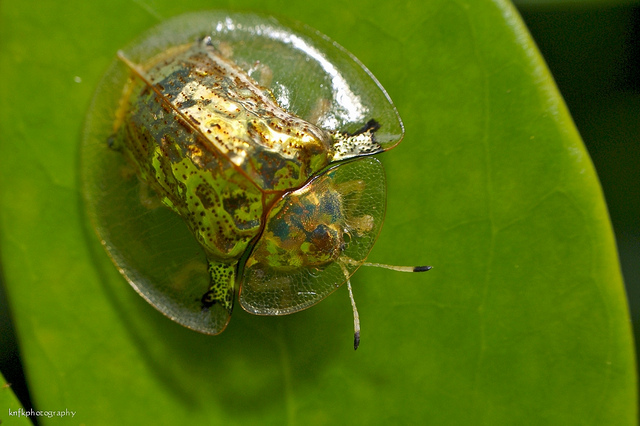
Golden Tortoise Beetle, you’re so shy and cute. Peep out from under your shiny carapace. Yes, you peep out, you little buggy-wuggy.

Watcha doin’, Golden Tortoise Beetle?
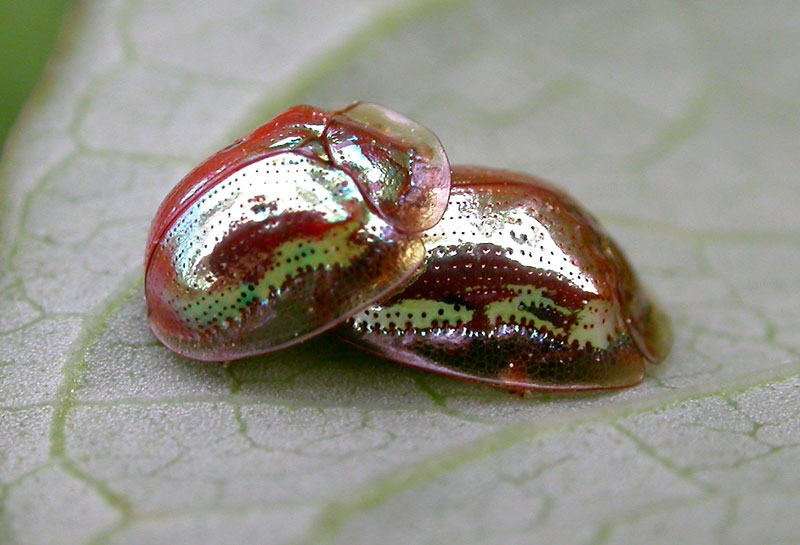
Golden Tortoise Beetle, you’re looking adorable!

I like Golden Tortoise Beetles!


I’m still waiting for the PZome

“-ome” and “-omic” are overused, as Jonathan Eisen has been saying for years, and now the Wall Street Journal has taken notice. There are 404 “-omics” disciplines? It’s so silly that there is now a Badomics generator to invent new terms.

It’s still missing PZomics. I’m serious, it could be a real science, you know…I don’t know why researchers aren’t lining up to get cell samples from me. (There’s probably more money in Venteromics—I say “psshhht!” to their dedication to the principles of true knowledge over mere pecuniary gain.)

Live by statistics, die by statistics

There is a magic and arbitrary line in ordinary statistical testing: the p level of 0.05. What that basically means is that if the p level of a comparison between two distributions is less than 0.05, there is a less than 5% chance that your results can be accounted for by accident. We’ll often say that having p<0.05 means your result is statistically significant. Note that there’s nothing really special about 0.05; it’s just a commonly chosen dividing line.

Now a paper has come out that ought to make some psychologists, who use that p value criterion a lot in their work, feel a little concerned. The researchers analyzed the distribution of reported p values in 3 well-regarded journals in experimental psychology, and described the pattern.

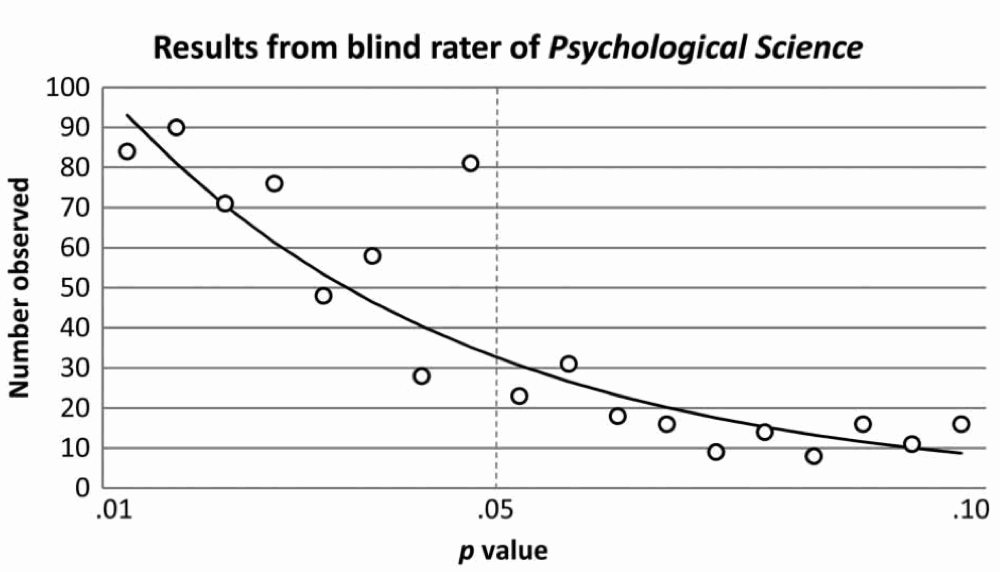
Here’s one figure from the paper.

The solid line represents the expected distribution of p values. This was calculated from some theoretical statistical work.

…some theoretical papers offer insight into a likely distribution. Sellke, Bayarri, and Berger (2001) simulated p value distributions for various hypothetical effects and found that smaller p values were more likely than larger ones. Cumming (2008) likewise simulated large numbers of experiments so as to observe the various expected distributions of p.

The circles represent the actual distribution of p values in the published papers. Remember, 0.05 is the arbitrarily determined standard for significance; you don’t get accepted for publication if your observations don’t rise to that level.

Notice that unusual and gigantic hump in the distribution just below 0.05? Uh-oh.

I repeat, uh-oh. That looks like about half the papers that report p values just under 0.05 may have benefited from a little ‘adjustment’.

What that implies is that investigators whose work reaches only marginal statistical significance are scrambling to nudge their numbers below the 0.05 level. It’s not necessarily likely that they’re actually making up data, but there could be a sneakier bias: oh, we almost meet the criterion, let’s add a few more subjects and see if we can get it there. Oh, those data points are weird outliers, let’s throw them out. Oh, our initial parameter of interest didn’t meet the criterion, but this other incidental observation did, so let’s report one and not bother with the other.

But what it really means is that you should not trust published studies that only have marginal statistical significance. They may have been tweaked just a little bit to make them publishable. And that means that publication standards may be biasing the data.


Masicampo EJ, and Lalande DR (2012). A peculiar prevalence of p values just below .05. Quarterly journal of experimental psychology PMID: 22853650

I’VE BEEN WARNING YOU ALL

They’re evil…EEEEEEEVVVIIIIILLL.

In a horrifying study, ordinary housecats were fitted with little cameras to monitor their activities throughout the day and night. It turns out that cats are carnivores, real predators, that scurried about murdering little creatures. Are you surprised?

About 30 percent of the sampled cats were successful hunters and killed, on average, two animals a week. Almost half of their spoils were abandoned at the scene of the crime. Extrapolating from the data to include the millions of feral cats brutalizing native wildlife across the country, the American Bird Conservancy estimates that kitties are killing more than 4 billion animals annually. And that number’s based on a conservative weekly kill rate, said Robert Johns, a spokesman for the conservancy.

"We could be looking at 10, 15, 20 billion wildlife killed (per year)," Johns said.

When we had cats, they were confined to the house, and only allowed outside under close supervision, because we understood their savage, beastly natures.