Humans versus wildlife

Taricha torosa

Taricha torosa

I figure we could use some less-than-apocalyptic news today. Over the last couple decades, the management of Tilden Regional Park in the hills above Berkeley, California has closed a main road artery through the park each year between November 1 and April 1 in order to protect a local amphibian. The road parallels a seasonal creek; each autumn when the rains start local members of the species Taricha torosa, a.k.a. the California newt, head for the creek to find pools in which to mate. For many of them this involves crossing the road, and even though it’s not a heavily traveled road at the busiest of times that’s still more traffic than the newts can handle.

The California newt is one of those species, like the blue-ringed octopus and the pufferfish, that counts tetrodotoxin among its defense mechanisms. There’s a recorded human fatality involving a related species  — the rough-skinned newt, Taricha granulosa, one of which was swallowed by a drunken Oregon fratboy — but as far as I know the California newt boasts neither a human body count nor spurious pharmazombie folklore like other tetrodotoxic species. The newt’s egg masses are well-endowed with tetrodotoxin as well. Some  garter snakes have developed a resistance to tetrodotoxin and can eat the eggs, but mainly they’re left alone.

Like a lot of very toxic species, the newts’ defense mechanism relies on communicating that toxicity to its attacker. Poke at a California newt and it will usually display its bright orange belly, which any sensible predator would take as a warning of a bad stomachache or worse. Sadly, this defense does little to deter a speeding Buick.

This fall the rains started early, and the newts — apparently belonging to that 47% of American species that refuse to take responsibility for their lives by checking a calendar — started crossing the road a week or two before the closure. The road started to become dotted with little bright-orange corpses. And so the discussion started up between the management of the East Bay Regional Park District and local residents. Should the Park close the road early to protect the newts, or would that add unnecessarily to the inconvenience of the seasonal road closure?

It’s not surprising that there would be conflict. What’s surprising is which parties took which sides. As the blog Berkeleyside reports, it’s the Park that’s being recalcitrant about acting to protect the newts, and the locals who would presumably be most inconvenienced who’re demanding the road be closed.

David Wake, who has lived in the Park Hills neighborhood since the late 1970s, has been studying salamanders and newts since the late 1950s. Professor of the Graduate School in Integrative Biology and Curator, Museum of Vertebrate Zoology at UC Berkeley, he said newt populations have fallen dramatically in recent years, although the closure of South Park Road has helped.

On a neighborhood listserve Wake wrote: “The movement patterns are not governed by human calendars. Males move with the first substantial rains. They migrate in the direction of the creek.  Females come later. But breeding is not completed until the creeks start receding, late in the rainy season. This means that males get knocked off in late October (our first rains typically arrive during the last two weeks of October), and females get knocked off in early- mid-April, when they leave the stream with our last rains. The closure of the road should be extended for two weeks on either end.  I have made this case for many years, unsuccessfully… The tragedy of the newts is that in most years their breeding is completely unsuccessful.”

I’ve been reporting on human-wildlife interactions for twenty years now, and these things almost always get cast as “humans versus wildlife,” as though the right of humans to build something or get a particular job or drive via the shortest route possible on the one hand, and the survival of wildlife species in the other, are of equal weight. A startlingly similar situation here in the California desert involves the Coachella fringe-toed lizard, which depends on what the ecologists call “blow-sand” habitat. Blow-sand habitat is pretty much what it sounds like: in the desert, sand flows downwind from one basin to another, creating distinct habitats with distinct assemblages of sand-adapted vegetation and fauna. The Coachella fringe-toed is one of those fauna, relying on loose sand for shelter against temperature extremes and predators, and its eponymous toe fringe helps it run across that loose sand the way snowshoes help you walk on snow.

The Coachella fringe-toed lizard has had something like three quarters of its habitat destroyed in the last 40 years by sprawl in the Coachella Valley: suburbs, strip malls, golf courses and light industrial development have exploded in the north end of the valley. One of the last stretches of open blow-sand habitat is along the course of the Whitewater River, which flows out of the San Bernardino Mountains into the valley. By the time it reaches Palm Springs the river’s water is mainly underground, and the riverbed an expanse of open sand — fringe-toed lizard habitat.

Three major roads cross that section of river. There are three or five days per year when the wind picks up even more than usual, blowing sand  reduces visibility to near zero, and the police have to close those roads. Engineers could build baffles or fences to keep the sand from blowing across the road quite so much, but that would reduce the flow of sand to the lizard habitat on the downwind side of the road. So instead some people in the Coachella Valley must, a few days a year, add two or three miles to their commute, and the local paper’s website fills with complaints about radical environmentalists prioritizing a lowly lizard over their god-given right to drive wherever the fuck they want to.

There are, of course, people in the Coachella Valley who like having the fringe-toed lizard as a neighbor, and they just don’t happen to write reactionary comments on the Desert Sun’s website. And there are certainly people in the Berkeley Hills who grumble about the goddamn newts making it take 15 minutes longer to get to the golf course. My casting the Berkeleyside piece as an indication of the more advanced ecological sentiment of people in the East San Francisco Bay area would certainly obscure some important nuance. But I’m gonna do it anyway. Even though I lived for 22.5 years before I ever got there, I think of Berkeley as my home town. Seeing my former neighbors turn the usual “humans versus wildlife” trope upside down makes me proud. And homesick.

mating and egg masses.JPG

Mating California newts with egg masses

The CephSeq Consortium has a strategy

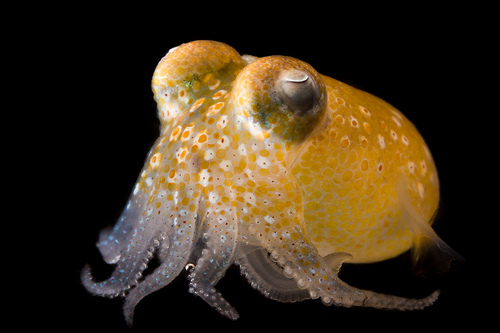
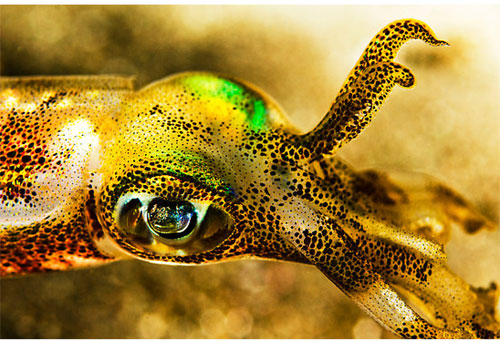
I approve this plan. A number of researchers have gotten together and worked out a grand strategy for sequencing the genomes of a collection of cephalopods. This involves surveying the phylogeny of cephalopods and trying to pick species to sample that adequately cover the diversity of the group, while also selecting model species that have found utility in a number of research areas — two criteria that are often in conflict with one another. Fortunately, the authors seemed to have found a set that satisfies both (although it would have been nice to see the Spirulida and Vampyromorpha make the cut — next round!). Here’s the initial group, table taken directly from the text with the addition of a few pretty pictures for those of you unfamiliar with the Latin names.

Table 1: Cephalopod species proposed for initial sequencing efforts.

Species Estimated genome size Current sequencing coverage Geographic distribution Lifestyle juvenile/adult Research importance
O. vulgaris 2.5-5 Gb 46× world-wide planktonic/ benthic classic model for brain and behavior, fisheries science
O. bimaculoides 3.2 Gb 50× California, Mexico benthic emerging model for development and behavior, fisheries science
H. maculosa 4.5 Gb 10× Indo-Pacific benthic toxicity
S. officinalis 4.5 Gb East Atlantic- Mediterranean nectobenthic classic model for behavior and development, fisheries science
L. pealeii 2.7 Gb Northwest Atlantic nectonic cellular neurobiology, fisheries science
E. scolopes 3.7 Gb Hawaii nectobenthic animal-bacterial symbiosis, model for development
I. paradoxus 2.1 Gb 80× Japan nectobenthic model for development, small genome size
I. notoides 50× Australia nectobenthic model for development, small genome size
A. dux 4.5 Gb 60× world-wide nectonic largest body size
N. pompilius 2.8-4.2 Gb 10× Indo-Pacific nectonic “living fossil”, outgroup to coleoid cephalopods

It’s a nice balance. There’s a pair of related octopus (Octopus vulgaris and Octopus bimaculoides) and a pair of related squid (Idiosepius paradoxus and Idiosepius notoides) so common features to each group can be recognized, a couple of model organisms used in neuroscience (Loligo pealeii) and developmental biology (Euprymna scolopes), and a couple of just plain cool animals, the blue-ringed octopus (Hapalochlaena maculosa) and the giant squid (Architeuthis dux). And of course you have to include a cuttlefish (also an important research model), and a nautilus for the outgroup.

It’s going to be challenging — cephalopods are like us in having large, sloppy genomes with lots of repeats and accumulated junk.

Like all good science, too, this is going to be open and accessible.

We therefore propose to adopt a liberal opt-in data sharing policy, modeled in part on the JGI data usage policy, which will support the rapid sharing of sequence data, subject to significant restrictions on certain types of usage. Community members will be encouraged to submit their data, but not required to do so. We plan to provide incentives for this private data sharing by (1) developing a community data and analysis site with a simple set of automated analyses such as contig assembly and RNAseq transcript assembly; (2) offering pre-computed analyses such as homology search across the entire database; and (3) supporting simple investigative analyses such as BLAST and HMMER. We also plan to provide bulk download services in support of analysis and re-analysis of the entire dataset upon mutual agreement between the requesting scientist and the CephSeq Consortium Steering Committee (see below), who will represent the depositing scientists. Collectively, these policies would provide for community engagement and participation with the CephSeq Consortium while protecting the interests of individual contributors, both scientifically and with respect to the Convention on Biological Diversity. Policy details will need to be specified and implementation is subject to funding. Our intent is to build an international community by putting the fewest barriers between the data and potential researchers, while still protecting the data generators.

I also like that there’s an appreciation of the importance of wider communication of this information beyond the sphere of nerdy genomics researchers and obsessed cephalofreaks. The authors recognize that cephalopods are important barometers of climate change and the ocean environment, and that people are just plain fascinated with them.

People are fascinated by cephalopods, from Nautilus to the octopus to the giant squid. The coupling of genomics to cephalopod biology represents a fusion of two areas of great interest and excitement for the public. This fusion presents a tremendous educational platform, particularly for K-12 students, who can be engaged in the classroom and through the public media. Public outreach about cephalopod genomics will help build support for basic scientific research, including study of marine fauna and ecology, and will add to the public’s understanding of global changes in the biosphere.

Unfortunately, this short paper is a little thin on details of particular interest to me: “Education and outreach will be emphasized for broad dissemination of progress in cephalopod genomics at multiple levels, including K-12, undergraduate and graduate students, and the public at large.” I’d be curious to see more about the how of doing that, but I’m glad it’s on their list of priorities. Part of their plan is building a website, but unfortunately when I just checked it wasn’t yet available.


Albertin CB, Bonnaud L, Brown CT, et al. (2012) Cephalopod genomics: A plan of strategies and organization. Stand Genomic Sci 7:1.

Thanks, Discovery Institute!

Evolution News & Views, the DI’s Pravda, did something good for a change: they alerted me to the availability of BBC 2’s show, Secret Universe: The Hidden Life of the Cell. Here it is!

Of course, you can see why the DI would like this video, since it uses all their favorite buzzwords like “complexity” and “machines” to describe processes in the cell. And it’s true that the cell is complex and contains complex machinery, but that, as I’ve been trying to get through to them for years, does not imply that they did not evolve, because evolution routinely generates complex machines. The evolutionary explanations given are not “spin”, as the DI explains, but good answers for the origin of these processes.

One major caveat: the star of this show is the CGI animation of the molecular activity of the cell, and as usual, it portrays everything as excessively linear and deterministic, and the necessary omission of water from the animation grossly skews the chemistry. One of the scientist narrators, Bonnie Bassler, does briefly explain that everything is stochastic, with molecules bouncing about randomly rather than zooming through empty space directly to their destination. But otherwise, it is a nice basic and rather cartoony overview of what goes on in a cell.