Look who’s moving into our yard!

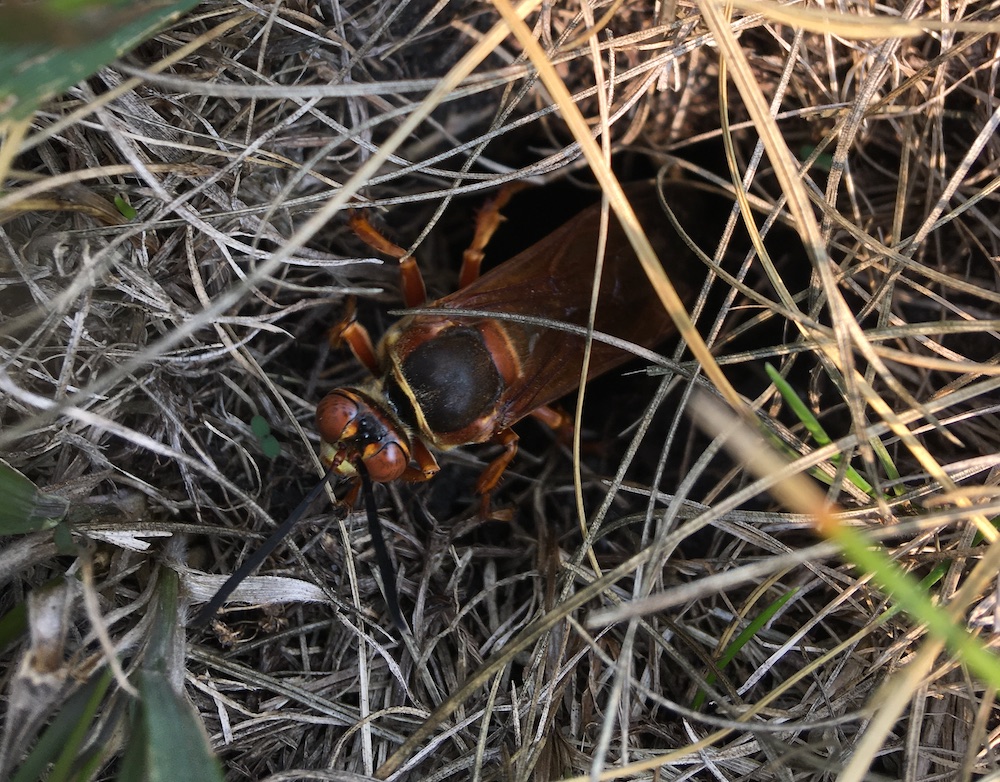
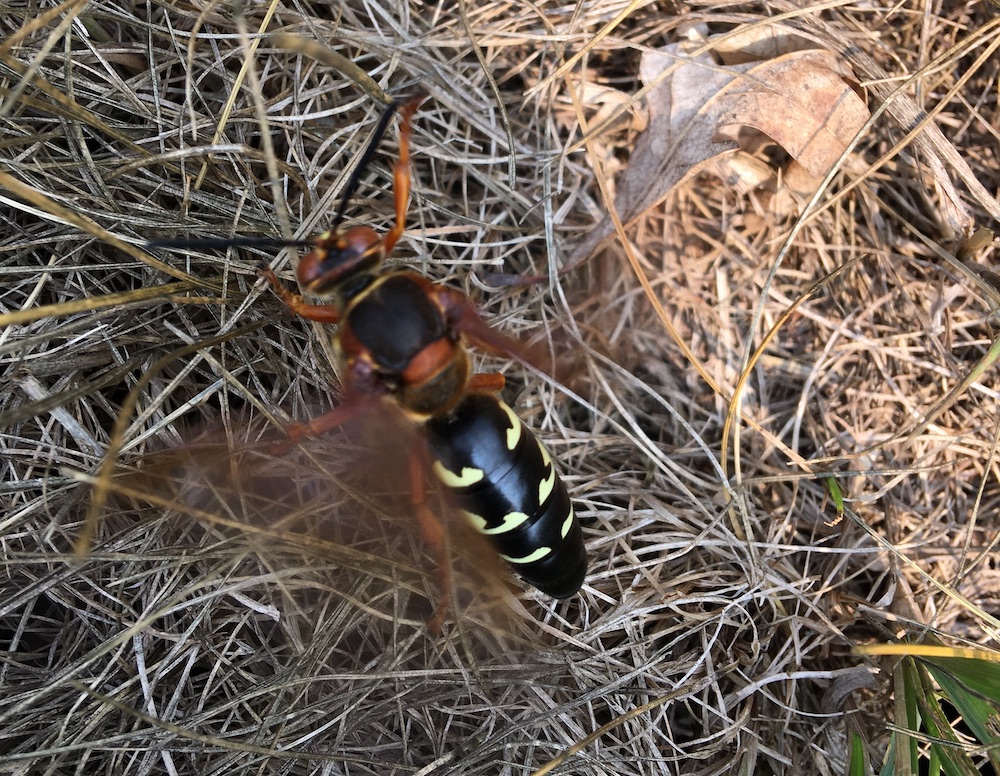
Cicada-killers!

Yes, please, make yourself right at home. Do you have more family you can invite over? August is coming soon, and it’ll be time for a feast. Please do. Kill all those wretched noisy shrill shrieking beasts and dismember their bodies and chew on their guts, thank you very much.

Spirals. It’s always spirals.

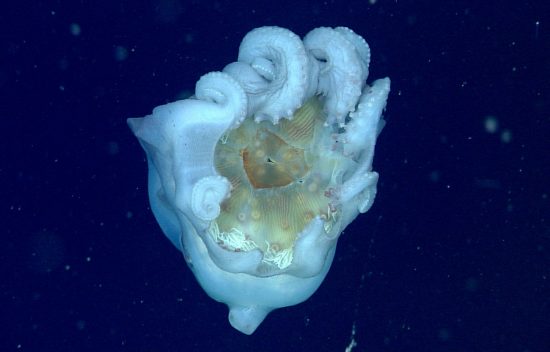
Whoa. This is a siphonophore colony, 15 meters in diameter, just floating in the ocean with tentacles dangling down to catch prey.

I read the whole thread and didn’t see an answer to the question that immediately popped into my head. This is a colonial aggregate of multiple siphonophore bodies linked together into a long string, but it has an overall form of a spiral. How? Is there local signaling going on to regulate the distance between the strands so that it spontaneously forms that structure, or is it an accident of currents? I’m going to guess the former, which would be most interesting, because it implies the existence of factors that lead to large scale form and is therefore the kind of process that would lead to more elaborate patterns of development.

Also, it’s so planar. Is this something the animal regulates, or is it just layers in the ocean maintaining it?

Rooting for Australian arthropods in amber

I think the title is a double entendre in Australian, but it’s not a language I am fluent in. Anyway, a paper in Nature describes an assortment of organisms found in amber from Australia and New Zealand, ranging in age from 230 million years to 40 million years. It’s lovely stuff.

Significant bioinclusions of plants and animals in Southern Gondwana late middle Eocene amber of Anglesea, Victoria. (A to B) Liverworts of the genus Radula (Marchantiophyta: Radulaceae). (C) Two stems with perfectly preserved phyllids or leaf-like structures of mosses of the genus Racopilum (Bryophyta: Racopilaceae). (D) Juvenile individuals of spiders. (E to F) Springtail of the living genus Coecobrya (Entomobryomorpha: Entomobryidae) in two views. (G) A Symphypleona springtail. (H) Light photograph of large piece of yellow amber with two dipterans, Dolichopodidae at left and Ceratopogonidae at right, and at top of image a mite of the living genus Leptus (Arachnida: Acari: Trombidiformes: Erythraeidae). (I) Dipterans of the family Dolichopodidae (long-legged flies) in copula. (J) Worker ant of the living genus Monomorium or a “Monomorium-like” lineage (Hymenoptera: Formicoidea: Formicidae).

I don’t know about you, but I was most interested in D, the two juvenile spiders.

Wait, I do know about you — you’re most interested in I, the two flies caught in the act. So here’s a closeup.

Count yourself lucky. Now if you want to take a pornographic selfie, you just whip out your phone, capture the moment, and go on with your life. Forty million years ago, you had to say “Freeze! Look sexy!” and wait for a drop of sap to ooze over you, and then you had to hold the pose for tens of millions of years.

There are laws about this kind of congregatin’

The snow is back. Not much of it, but it was mixed with freezing rain and now everything is covered with a thin glaze of extraordinarily slippery ice, so I guess Nature is enforcing the stay-at-home order.

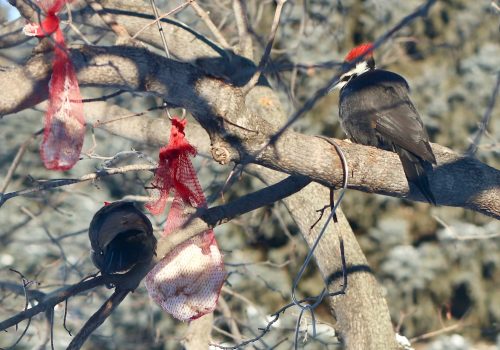
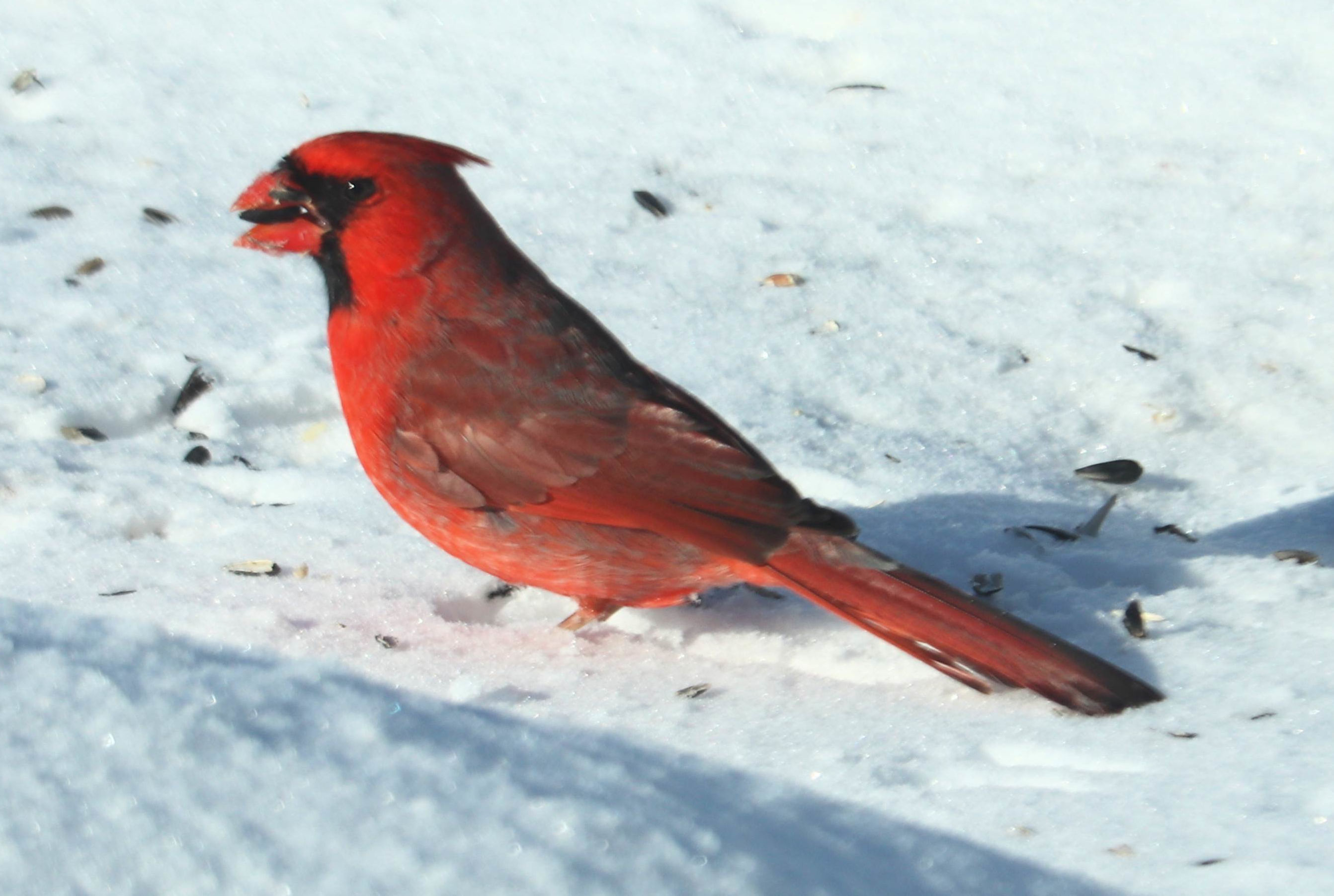
These scofflaw birds don’t care at all, though. My yard was covered with sparrows for a while, and the birdfeeder in my front yard has become the most popular meeting spot in the area. KEEP YOUR DISTANCE. STAY INDOORS. Stupid birds.