By the criteria of those HBD kooks, anyway. He’s published a take-down of Nicholas Wade’s book in American Scientist, pointing out the familiar scientific consensus that inflames them so.
As soon as it appeared, Wade’s book touched off a firestorm of controversy—as he surely knew it would. It’s the latest in a series of dispatches concerning human variation, whose authors in recent decades have starkly divided into two camps, one centered in anthropology and the other in psychology, political science, and economics. Wade is in the latter camp. The Bell Curve: Intelligence and Class Structure in American Life, a widely read text by psychologist Richard Herrnstein and political scientist Charles Murray in 1994, proclaimed intractable human differences in ability between races; the authors based their views on disputed work published by Canadian psychologist J. Philippe Rushton in the 1980s and early 1990s. Meanwhile, anthropologists had developed a divergent concept of human variation, reaching the collective conclusion that the human species is not compartmentalized in races or subspecies (interchangeable terms in zoology). In 1998 the American Anthropological Association adopted its Statement on Race asserting that the best available research shows race to be a social construct that is biologically invalid.
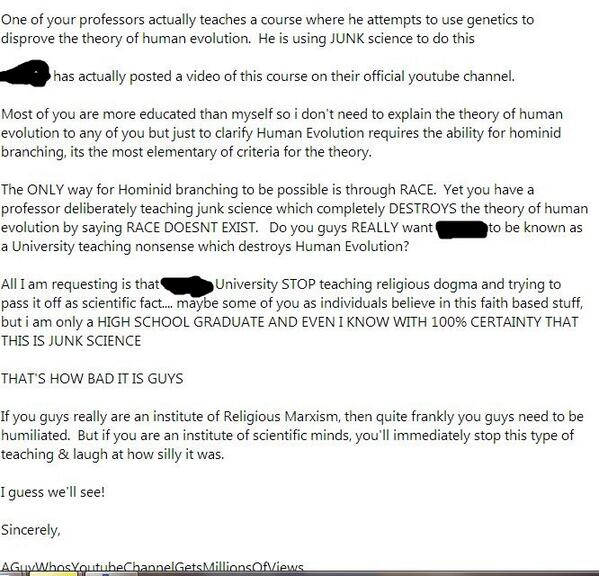
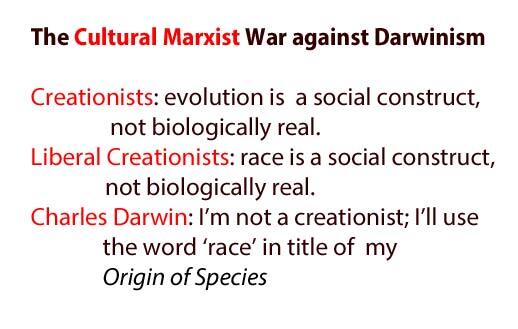
The HBDists were threatening to vote for me as creationist of the year — I thought I’d be a shoo-in, especially if I recognized it as a pointless poll and asked all of you to vote for me. But maybe now there’ll be enough competition that I shouldn’t get cocky. I think the HBD poll would have to include most of the anthropologists on the planet.