Where is Sanal Edamaruku now?

The Catholic church wants to arrest him in India for exposing the hokum behind a ‘miraculous’ bleeding statue (it was a leaky pipe), so Sanal Edamaruku has been traveling through Europe. His next appearance: Ireland! He’ll be in Galway, Cork, Belfast, and Dublin over the next week, lobbying the people to support the separation of church and state.


Also, he’ll be in London first!

Shocking!

It’s the website The Blaze calls “shocking” and their commenters beg, “God help us”…it’s a new initiative from the American Humanists, Kids Without God.

I should warn you that it is full of horrific statements, telling kids to “be nice” and “take care of planet earth”, and it includes videos from Bill Nye and makes recommendations for science books. Horrifying.

Be sure to tell your kids to never ever visit that sinful site!

The science of antediluvian plushies

One creationist claim that’s commonly laughed at is this idea that 8 people could build a great big boat, big enough to hold all the ‘kinds’ of animals, and that those same 8 people were an adequate work force to maintain all those beasts for a year in a confined space on a storm-tossed ark. So the creationists have created a whole pseudoscientific field called baraminology which tries to survey all of taxonomy and throw 99% of it out, so they can reduce the necessary number of animals packed into the boat. Literally, that’s all it’s really about: inventing new taxonomies with the specific goal of lumping as many as possible, in order to minimize the load on their fantasy boat.

In the past, I’ve seen them argue that a biblical ‘kind’ is equivalent to a genus; others have claimed it’s the Linnaean family. Now, Dr Jean K. Lightner, Independent Scholar (i.e. retired veterinarian), has taken the next step: a kind is equivalent to an order, roughly. Well, she does kind of chicken out at the Rodentia, the largest and most diverse group of mammals, and decides that those ought to be sorted into families, because otherwise she’s reducing the number of animals on the ark too much.

Given the characteristics that unite this order and the controversy in suborder classification, one could argue that the obvious cognitum is at the level of the order. Given my personal observations of squirrels and rats, which usually are placed in different suborders (except on the dual suborder scheme where they are both in Sciurognathi), I find this suggestion appealing. However, for the purposes of this project the order is too high for such a diverse group without considerably more evidence. For this reason the level of the kind will be considered to be at the level of the family.

She needs “more evidence” to be able to squish all of the rodents down to one common ancestor 4,000 years ago! You know, there’s no evidence given anywhere in the paper: it’s just a series of abbreviated descriptions of each order (or, for the rodents, family). She made this determination by looking at photos on the web. That’s it. She comes to the conclusion that only 137 kinds of mammals had to be on Noah’s Ark (350, if you count extinct species, which of course she should — Ken Ham is adamant that all kinds were on the ark).

In this paper 137 kinds have been tentatively identified. If the fossil record is taken into consideration, this number could easily double. Beech (2012) listed terrestrial vertebrate families represented in the fossil record. In the list of mammals 210 to 218 families are not recognized here. This suggests that closer to 350 mammal kinds were on the Ark. The large number of extinct families may be partially from a tendency for paleontologists to be splitters. However, much of it reflects the fact that a large amount of the diversity previously found in mammals has been lost.

In this serious attempt to quantify the kinds represented on the Ark, the numbers which resulted are lower than many had anticipated. Previous work had estimated the genus as the level of the kind, knowing this would significantly overestimate the number, in order to emphasize that the Ark had sufficient room for its intended purpose (Woodmorappe 1996). In discussing the results of this study with other creationists, many are surprised at how incredibly spacious the accommodations on the Ark would have been. In any case, this work is a reminder we have a Creator who cares for His creation and, even in judgment, He provides a way of salvation to those who will trust in Him.

Ah, that spacious ark. “Only” 350 mammals had to be cared for by those 8 custodians, and she hasn’t considered the birds and reptiles and amphibians yet. Of course, that’s still a lot of poop to shovel…except she seems to have solved that problem, too.

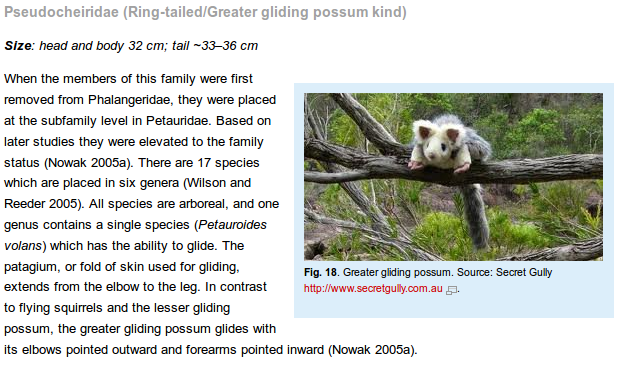
Here’s the quality of her scholarship: this is one of her kinds, the greater gliding posum. Look carefully at that photo. Notice anything odd about it?

Maybe you’d like a closer look to be really sure. RationalWiki noticed this peculiarity.

Hmmm. It reminds me of the time we found that Harun Yahya was using photos of fishing lures to illustrate modern insects. What great science!

But it does solve a lot of problems if the ark were stuffed full of plushies! It’s also a phenomenal marketing opportunity — the museum will be the gift shop!

The best arguments for vegetarianism ever!

I’m very sympathetic to the vegetarian diet — I’m not quite there, but I’ve been gradually cutting back on the meat. It also helps that my wife is fully vegetarian now. But finally I’ve heard the ultimate arguments, published in an Indian health textbook. I guess I’m going to have to stop eating all kinds of meat now!

The strongest argument that meat is not essential food is the fact that the Creator of this Universe did not include meat in the original diet for Adam and Eve. He gave them fruits, nuts and vegetables.

Whoa, I never thought of that! I’m convinced now. But hey, how about some more contemporary arguments?

The Arabs who helped in constructing the Suez Canal lived on wheat and dates and were superior to the beef-fed Englishmen engaged in the same work.

Oh, yeah, those gouty, florid, overweight Englishmen. I should have just looked at that stereotype and realized meat was bad.

But there’s more: carnivores are evil.

They easily cheat, tell lies, forget promises, they are dishonest and tell bad words, steal, fight and turn to violence and commit sex crimes.

Amazing. Fat and protein just clogs up your brain and corrupts it.

All I’ve seen so far are these little excerpts. I want more. Look at the cover:

It promises sex education. I wonder what astonishing claims it will make there?

Can I see an fMRI from a man jumping over a shark next?

I’m feeling cynical today. I think I’ve read one too many fMRI studies. The latest faddish paper is on what the brains of freestyle rappers look like — they compared the brain activity of people reciting memorized words vs. improvising, and guess what…their brains are doing different things during those functions.

What did their brains look like?

No matter what they were rapping about, their brains "activated differently during the improvised flow versus the memorized lyrics," says Stephanie Pappas at LiveScience. When subjects were freestyling, the medial prefrontal cortex — an area associated with organizing and integrating information — showed an increase an activity. Meanwhile the dorsolateral region, which helps with "self-control, self-monitoring, and self-censoring," showed a decrease in activity, adds Pappas. (This area became more active when the rappers were reciting memorized lyrics.) Also active while the subjects freestyled were the brain areas associated with language and motor control ("no surprise given the rappers had to think of words and produce them with the muscles of the mouth and jaw"), and the amygdala, which is the brain’s center for emotional activity.

What does that mean?

"Like jazz musicians, the rappers’ brains were paying less conscious attention to what was going on but had strong action in the area that motivates action and thought," says Sarah Zielinksi at NPR. But unlike jazz musicians playing instruments, the left hemisphere of the brain — where language is processed for most right-handed people — demonstrated a dramatic increase of activity. In other words, says Jon Bardin at the Los Angeles Times, "high-level executive function is actively bypassed to allow for a more natural, spontaneous output of language" — the brain essentially turns off its own censors. There’s an "absence of attention," said Braun. "When the attention system is partially offline, you can just let things fly and let things come without critiquing, monitoring, or judging them."

You know, there’s nothing really wrong with this work: it’s not bad science. It’s just pointless science. It’s settled that we have this technology that can monitor variation in blood flow in the functioning human brain, and that’s nice, but what are people going to do with it? So far, it seems to be simply crudely phenomenological, with investigators stuffing people’s heads in cylinders and asking them to do X, Y, and Z, while we all coo over the pretty colors the computer paints on the screen.

The results of this study, for instance, are completely unsurprising…and they also don’t tell me what should be done next, other than bringing in artists in other genres and seeing what their brains do. Which wouldn’t tell me anything other than more correlations between brain blotches and behavior. I’m not seeing any new questions arising from this work, which to me is the real hallmark of interesting science.

But seriously, I hope someone develops a portable fMRI helmet, so we can take someone and strap it and a pair of waterskis on them, and jump them over a shark. And then we can do a reading of people in an episode with a Special Guest Star that ends with them waking up from a dream as the two leads get married in a very special finale.

That awkward moment when your favorite campsite makes Fox News, again

it looks better without the cross

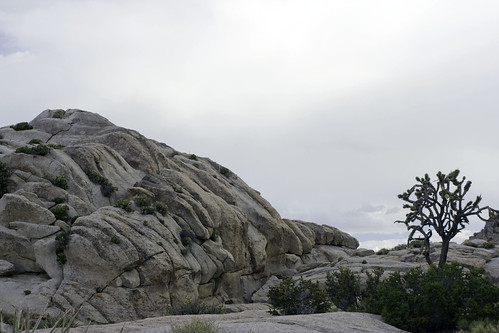
Sunrise Rock with no cross, as God intended

You know what I hate? I hate when Fox News notices my favorite slightly secluded campsite in the Mojave Desert.  They attract pest organisms. There you’ll be sitting quietly among the Joshua trees, enjoying the company of Mojave green rattlesnakes and tarantulas and kissing bugs and other such perfectly honorable animals, and then suddenly a chill wind will blow up the back or your shirt as the television news trucks arrive and some putrescent individual like Sean Hannity steps out into the sunlight, pasty and blinking and malignant. You can actually feel the cacti wither in revulsion.

It happened again this weekend.

[Read more…]

The journey matters more than the destination

I’m an atheist. I know where we’ll all end up: death, extinction, oblivion. So I’m sure as hell going to emphasize how I live my life, how I make my conclusions, and how I regard my place in the universe as far more important than my final fate. I’m not interested in authoritarian short-cuts that substitute wish-fulfillment fantasies for truth, and one thing I definitely do not want to do is lie to myself.

Those are the thoughts I was thinking on reading this review of Stedman’s book, Faitheist, and while watching this lecture by Sir Ghillean Prance, a British ecologist. They’re very different discussions about very different phenomena, but I agree with the general message of both the book and the lecture while utterly detesting how they get there. They are wasting my time and they are misleading people — they are failing to provide the tools that will help people guide themselves to a rational conclusion and a correct answer.

We all know of Stedman here. He’s an atheist, and his book is all about social justice and working with religious people to achieve the goal of helping the poor, the needy, the disadvantaged. I can agree entirely with that goal; I think atheists ought to recognize the reality that they share the world with 7 billion people, each of whom has just as much right to be here as they do, and that a just solution to the world’s problems does not deny the needs of a majority, or even a significant minority, of the people who live there.

While Stedman has part of the answer right — we need to work with everyone to achieve that goal — his path to it is a combination of contradiction and emotion. Everyone, sure, except those meanie-head atheists who he will undercut at every opportunity, because that’s his scheme for notoriety, to be the good atheist, the one who loves Christians and despises atheists. He’s the left-wing version of S.E. Cupp. And how will he persuade people to his vision? By being the gosh-darned nicest, sweetest, gentlest person he can be, and by sucking up to faith (oh, excuse me: “interfaith”) leaders, who will never ever get the kind of criticism he delivers to atheists.

We will never get the critical thinking I consider the ideal of rationalism from a Stedman — even when he’s fighting for a cause I consider eminently defensible by rational means. While an atheist by definition, Stedman is not an atheist by principle. He’s an atheist by feeling (which, admittedly, is true of a great many atheists — just not as often by atheists who try to justify their position with a book).

Meanwhile, Ghillean Prance is an excellent biologist, with data and real concerns about the state of the planet. He discusses the evidence for climate change, its effect on natural populations, the consequences of environmental degradation and habitat destruction, and also deplores the selfishness of our current economic inequities — inequities that are widening rather than be corrected.

I cannot emphasize strongly enough how much I agree with his conclusion. But what ruins it for me is how he gets there.

“We should be taking care of the earth and not destroying it,” says Sir Ghillean. “The Lord God took man and put him in the Garden of Eden to cultivate it and keep it – not to destroy it.”

In this guest lecture, Sir Ghillean discusses the positive role faith leaders are playing in the environmental movement – from the leadership of the Ecumenical Patriarch of the Eastern Orthodox Church (dubbed ‘the Green Patriarch’ by Al Gore), who has brought together faith leaders from around the world to discuss environmental issues, to His Holiness the Dalai Lama who speaks of an ethical approach to environmental protection.

Environmental ethics are, Sir Ghillean says, a part of Christianity and Judaism. He points to Job 12:7-8 as an example:

But ask the animals, and they will teach you, or the birds in the sky, and they will tell you; or speak to the earth, and it will teach you, or let the fish in the sea inform you.” (Job, 12:7-8 NIV)

He asserts that his Christianity is compatible with his scientific/ecological views, and of course it is. But it’s because the religious justifications are endlessly malleable, and you can wrap it around any conclusion you want. There are industrialists bulldozing the rain forests right now who will tell you that their holy book tells them that it is their right to do so; there are people murdering other people because their holy book says to kill the infidel; there are people treating their own children as subhuman because their dogma does not allow them to tolerate people with different sexual desires. To tell people that they should accept scientific observations because their magic book and their sacred leaders say so is a betrayal of scientific thought.

And, man, this guy loves to quote the Bible.

It is through the combination of his faith and career that Sir Ghillean sees the case for environmental sustainability as a moral one. He quotes Isaiah 24:5 to make his case, but points out that there are similar messages and beliefs across the major world religions.

“The earth is defiled by its people; they have disobeyed the laws, violated the statutes and broken the everlasting covenant.” (Isaiah 24:5 NIV)

Whilst Isaiah was talking about moral defilement rather than ecological damage, Sir Ghillean believes that the message here and the impacts of climate change cover the intersection of ethics and ecology.

“It’s the poor who suffer the most from this climate change,” he says. “In some places the rich are getting even richer and the poor poorer. When there’s 1.4 per cent of the world’s wealth with 20 per cent of the population, it is something we should truly be ashamed about.”

If Christianity (and religiosity in general) is so good at convincing people of the importance of charity and fairness, explain the Republican party.

Isn’t it obvious that religion is not a tool for spreading goodness and kindness? That some individuals do so is not argument that their little granfalloon is responsible. That’s true of religion, but it’s also true of science and atheism, as we know all too well.

If you’re trying to persuade people to do the right thing because they’re Christians, or atheists, or ecologists, you’re making a fallacious argument: you’re trying to rope them into a cause by invoking the tribe or authority. Those things are not an appeal to reason! It’s easily subverted: the whole tribe can go marching off to war with another tribe, or the authority can be wrong and send everyone chasing the wrong answer, and the only check we can possibly have on that is if everyone is taught to think for themselves. A quote from the Bible or Darwin can be pretty words to illustrate an argument, but they are not necessarily arguments in themselves.

I entirely endorse the concerns and scientific solutions Ghillean Prance advocates, but not because he’s a Christian. It’s because the data that we’re changing the world for the worse is strong, and because I can respect the beauty and richness of the natural world — not because the Bible tells me I should, but because I know enough about how that world works to see the relationships of all those elements to each other and to me. If I want to see further and do better, I won’t achieve that by burying my nose in a holy book, and advocating greater absorption in magical thinking is going to actively interfere with our appreciation of reality.

I similarly endorse greater involvement in social justice and equality. It’s not because Jesus was a politically progressive social worker or because atheism says I must: it’s because of empathy and the ability to identify with other human beings, and recognizing that all 7 billion of us are on this planet together and that I cannot demand of others what they cannot also demand of me. Philosophy and ethics should shape how we behave not a deified science or imaginary magical being.

Another faulty argument that is fundamental to religion is the idea that you should follow the precepts of your faith because you will be rewarded after you die — an evil argument right at the heart of Christianity. No, you won’t; you’ll be dead, as will we all be, whether we’re paragons of virtue or monsters of vice. The only good arguments are ones that explain the consequences on living human beings — that the paths we take have to be their own rewards.

Happy news from Kentucky

It’s sad to be leaving Skepticon, one of the best conferences around, especially since my time in Springfield had to be so brief this time around. Also, I think I broke some of the audience with my talk this year (comments afterwards: “You made my brain hurt.” “I didn’t understand anything you said, but I enjoyed it anyway.” “Rebecca Watson’s talk had more sex in it.”) But I do have happy news to report.

The Creation Museum in Petersburg, Ky., created quite an uproar in 2007 when it opened with exhibits showing early humans co-existing with dinosaurs. Five years later, the public fascination with that take on paleoanthropology seems to be fading.

This week, the museum told CityBeat that attendance for the year ended June 30 came to 254,074. That amounts to a 10 percent drop from last year’s 282,000 and is the museum’s fourth straight year of declining attendance and its lowest annual attendance yet. The $27 million museum drew 404,000 in its first year and just over 300,000 each of the next two.

Also, Answers in Genesis reported a net loss in 2011! I’ve mentioned before that their fund-raising to build the Ark Park is also stalling out. I don’t expect them to completely collapse and fold up, but I think they will follow the trajectory of most of the creation “museums” I’ve seen: they go static and dead and dusty, repeating the same stories over and over again, and the likelihood of repeat visits begins to fade away. The lack of substance tells; they lack the dynamism of real working museums and can’t bring up new data or substantively new exhibits.

They say the Creation “Museum” is still operating at a profit, but that profit is declining year by year. And if AiG itself is losing money, think about the consequences when their great big expensive-to-maintain-and-operate facility stops being a cash cow and becomes the dinosaur they’ve been saddled with — it could get interesting.

It may not be possible to underestimate the intelligence of the American public, but it’s still possible to bore them.

In which I join Michael Shermer in disagreeing with Jerry Coyne, and Coyne in disagreeing with Shermer

Although, to be fair, I think we’re mostly in agreement but talking past one another because of our prioritizing of certain premises.

Michael Shermer thinks that “the most any natural science could ever discover in the way of a deity would be a natural intelligence sufficiently advanced to be god-like but still within the realm of the natural world.”; Jerry Coyne claims that there could be, in principle, evidence for a supernatural god — there just isn’t.

My position is that we cannot find evidence for a god, that the God Hypothesis is invalid and unacceptable, because “god” is an incoherent concept that has not been defined. I could claim that a spumboodle exists, for instance, and we could go around and around with you presenting hypothetical examples and listing potential entities or forces that are spumboodles, but we’ll get nowhere if I never tell you what the heck a spumboodle is or what it does or even how I recognize a spumboodle. Without that, the whole concept is untestable and unverifiable. It really doesn’t count if I insist that something undefined exists, and then keep jiggling between vague realities (it exists in our dimension! It has a color!) and contradictory guesswork (it’s transdimensional! And completely invisible!) designed to keep moving the spumboodle away from any possibility of honest evaluation.

Coyne accepts the wobble. On the one hand, he is insisting on general principle in the possibility of existence of a divine being (I think a clear and unambiguous definition of “divine” is a prerequisite for that), but on the other he’s willing to substitute a mundane creature with only unexplainable abilities for “divine”.

Well, yes, we wouldn’t know whether a divine being was absolutely omniscient and omnipotent, or relatively more omniscient or omnipotent than us. But if the degree of, say, omnipotence and omniscience is sufficiently large (i.e, any miracle can be worked, all things can be foretold), then I think we can say provisionally that there is a God. I’ve previously described the kind of evidence that I’d provisionally accept for a divine being, including messages written in our DNA or in a pattern of stars, the reappearance of Jesus on earth in a way that is well documented and convincing to scientists, along with the ability of this returned Jesus to do things like heal amputees. Alternatively, maybe only the prayers of Catholics get answered, and the prayers of Muslims, Jews, and other Christians, don’t.

Yes, maybe aliens could do that, and maybe it would be an alien trick to imitate Jesus (combined with an advanced technology that could regrow limbs), but so what? I see no problem with provisionally calling such a being “God”—particularly if it comports with traditional religious belief—until proven otherwise. What I can say is “this looks like God, but we should try to find out more. In the meantime, I’ll provisionally accept it.” That, of course, depends on there being a plethora of evidence. As we all know, there isn’t.

And that’s where he loses me. What does it mean to be relatively omniscient or omnipotent? If our criterion is that the being has to be a certain amount more powerful than us to be defined as a god, what is that amount? The sun is much larger than us, and has far more power than we do…is it a god? Or will that suggestion be met by the sudden appearance of additional criteria to constantly exclude all entities from consideration that don’t also meet certain unstated requirements?

What I want is something like the Higgs boson: a description of a set of properties, inferred and observed, that can be used as a reasonable boundary for identifying the phenomenon. If you’re going to dignify it with the term “hypothesis”, there ought to be some little bit of substance there, even if it’s speculative. The god proponents can’t even do that. God beliefs are remarkably specific — belief in Jesus as an admission ticket to paradise, for instance — but somehow, when it gets down to saying who, what, where, when, and why, they all fly to pieces, and when it comes to saying how they know of its existence, all goes silent, or subsides into ritualistic repetitious chanting of words from a holy book.

The only way to win this game is to not play. Don’t concede the possibility that X might exist unless you’ve got clear criteria for defining the bounds of X’s existence, and it’s up to the advocates for X to provide that basic foundation. If they can’t do that, reject the whole mess before you brain gets sucked into a twisty morass of convoluted theological BS.

(By the way, I do agree with Coyne on one thing: I also reject Shermer’s a priori commitment to methodological naturalism. If a source outside the bounds of what modern science considers the limits of natural phenomena is having an observable effect, we should take its existence into account. If Catholic prayers actually affected medical outcomes, we shouldn’t reject it out of hand because of the possibility of a supernatural source. But it’s still not evidence for a god, unless you’re going to commit to defining god as a force that responds to remote invocation via standard Catholic ritual chants by increasing healing…in which case god becomes something we can disprove, and also faces the prospect of consolidation with other phenomena. Maybe god becomes the placebo response, for instance, in which case he’s been reduced to something feeble.)

What? You can just get a blog post published in a journal?

Especially a paper about scientific fraud that uses this clever figure? (It’s short and openly accessible, go ahead and read it.)

I’m envious. But then, it is a pretty good summary of the kinds of wickedness some scientists are up to. I’d have to put a few of the scientists in the ENCODE consortium in level II, and evolutionary psychology is definitely condemned to level III.

It’s titled the nine circles of scientific hell, so sorry, creationists don’t even register.