That’s a non-response

One of Montana’s candidates for governor, Greg Gianforte, is being brutally attacked by paleontologist Jack Horner.

A new television ad features former Montana State University paleontologist Jack Horner saying candidate Greg Gianforte thinks the Earth is only a few thousand years old. Horner says Gianforte supports using taxpayer money to fund “private schools that obscure the truth about dinosaurs and the age of the Earth.”

“He’ll say I’m attacking his religion — I’m not,” Horner says in the ad. “We just need to make sure that our kids learn the truth. I’d think twice about voting for Greg Gianforte.”

Gianforte, a Bozeman technology entrepreneur who is making his first run for political office, is in a tight race against incumbent Democratic Gov. Steve Bullock. Gianforte campaign spokesman Aaron Flint on Wednesday called the ad silly and said it misrepresents Gianforte’s strong support of public schools and teachers.

Oh, it’s “silly”. OK. But the question is whether Gianforte is a creationist who denies basic biology. Is he?

“From his personal support of CodeMontana, computer science in every high school, support for more trades education and more — Greg is proposing increasing investments in our public schools once he’s elected governor,” Flint said.

Gianforte does not have an opinion on the Earth’s age, Flint said. Regarding Gianforte’s views on evolution, Flint forwarded a comment made last year by Gianforte in which he said, “I believe young people should be taught how to think, not what to think, and a diversity of views are what should be presented.”

Yes, I guess he is. Point to Jack Horner.

Wait, there’s more?

Gianforte has steadfastly refused to talk about his religion, and it has not emerged as a major issue in the campaign. He attends and helped build an expansion to Grace Bible Church in Bozeman and has donated millions of dollars to religious organizations in the U.S. and in Africa, according to tax records released by Gianforte last year.

He also funded an expansion to the Christian school his children attended, Petra Academy, and his foundation has donated at least $2.3 million to help students afford tuition at Montana private schools.

OK, OK, point made. He’s a religious creationist. Why are public school teachers supporting him, if they are, as he claims?

The tax records show Gianforte’s foundation also donated $290,000 to a museum that holds the creationist view that humans and dinosaurs coexisted.

Alright already! Case closed! How can anyone who supports science possibly vote for this Gianforte clown?

So who’s going to Skepticon?

I’m all booked and registered for Skepticon on 11-13 November, so who all is joining me there? I am not going to be an official speaker, but I am leading a workshop on Friday at noon on how to deal with creationist misconceptions (note: I know the difference between a workshop and a lecture, so I will not be lecturing away at attendees…I have a little exercise planned where I will make you work at figuring out how to address common claims). It should be fun. And then I see that Rebecca Watson is speaking on Friday evening, so you even have a reason to show up on the first day of the con, and then if nothing else, we can kill some time together until the big show starts.

Springfield, Missouri beckons. How can you possibly spurn its siren call? Especially since pretty much all the attendees will be liberal/progressive types, and I am currently expecting that the post-election celebrations will be awesome, even for a con with a reputation for late night conversations and parties.

Bad reasons to colonize Mars

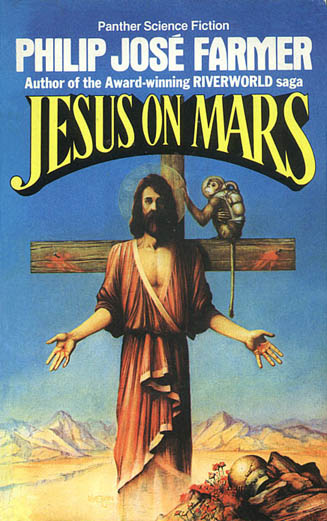
jesusonmars

I presume you all already know about my deep antipathy to Elon Musk’s stupid lifeboat rationale for going to Mars — I’m still getting hate mail for not worshipping Musk. In my defense, though, allow me to pull out Kim Stanley Robinson to say exactly the same thing.

What needs to happen for the Mars colony to live sustainably and give humanity the lifeboat Musk envisions?

It’s important to say that the idea of Mars as a lifeboat is wrong, in both a practical and a moral sense.

There is no Planet B, and it’s very likely that we require the conditions here on earth for our long-term health. When you don’t take these new biological discoveries into your imagined future, you are doing bad science fiction.

In a culture so rife with scientism and wish fulfillment, a culture that’s still coming to grips with the massive crisis of climate change, a culture that’s inflicting a sixth mass-extinction event on earth and itself, it’s important to try to pull your science fiction into the present, to make it a useful tool of human thought, a matter of serious planning as well as thrilling entertainment.

This is why Musk’s science fiction story needs some updating, some real imagination using current findings from biology and ecology.

But I’m not posting this to flog Musk some more. I’ve found a rationale even worse than Musk’s — we’re supposed to colonize Mars to expand the sacred worship of gods. James Poulos uses some ridiculously bad history to suggest that a religious impulse ought to drive our colonization.

The traditions of humanism and religion we’ve inherited from ancient Athens and Jerusalem also treat the natural world as a type of “base reality” against which our collective history can take place. Those traditions allow old myths and social orders to be honored and new ones to be founded — fresh starts, but by no means blank slates, where the best of what came before can be retained and given promise on new soil. In this sweeping journey of civilizations, what was begun with the exodus from Egypt and the founding of Rome continued, more or less, right up through the Pilgrims’ arrival on Plymouth Rock, Abraham Lincoln’s “new birth of freedom,” and on, perhaps, to the present day. You don’t have to be pious to think of human history in these essentially religious terms — as a multimillennial journey that is far from over (perennial panic over the literal End Times notwithstanding), and that in its totality can only be fully conceived of and known by a consciousness beyond what our human nature affords.

I must point out that the Biblical Exodus is a myth — it didn’t happen. That’s a very weird justification for a huge secular enterprise, to cite a self-serving and false story. Rome was founded by bandits and rapists who had a poor reputation among their neighbors, and likewise the religious gloss on their founding myth was added after the fact. The Pilgrims? Jesus. Horrible awful religious fanatics who contributed a deplorable Puritan sanctimony to American history. The Gettysburg Address mentions “God” only once, and even that is questioned — there are multiple drafts and transcripts, and they don’t all include the “under God” phrase, which is a peculiar focus to use to claim that the consecration of a graveyard is analogous to colonizing Mars. This guy is really reaching to claim a religious drive behind all of human history.

And that last sentence — can only be fully conceived of and known by a consciousness beyond what our human nature affords — total bullshit. You can imagine all kinds of nonsense, their irrationality does not mean that there must exist a cosmic intelligence that can make sense of it all.

The babble continues.

From this standpoint, the exciting thing about colonizing Mars (and tomorrow, the galaxy!) is not the prospect of accelerating humanity past the point of humanity. Instead, it’s continuing the grand journey of humankind, wherein sacred traditions can be imitatively repeated and re-founded. A colony on Mars, then, is not like a personal trainer, pushing us through some artificial but valuable exercises that end up taking us to a higher plane of aliveness otherwise unavailable to us. Humanity’s achievement of interplanetary life wouldn’t allow us to break with the past and level us up into a new reality. It would humble us in recognition of a newfound, enduring mission — to create new ways to honor our human essence and praise what has allowed it to be sustained over time, whether we call that nature, nature’s God, or something else.

You know what? That’s just noise. Religion is really good at generating well-meaning phrases that can be strung together into a happy collection of sounds that resonate because they’re familiar and often repeated to believers, but to anyone outside the belief, it’s just word salad.

He just keeps going!

Such an act of providence would be restorative for humanity — and there’s reason to think we now require a Mars colony to allow for it. What’s clear is that Earth no longer invites us to contemplate, much less renew, our deepest spiritual needs. It has filled up so much with people, discoveries, information, and sheer stuff that it’s maddening to find what F. Scott Fitzgerald called a fresh green breast of a new world — the experience of truly open horizons and an open but specific future. That’s a problem that does suggest a terrible calamity, if not exactly an imminent apocalypse. But by making a fresh pilgrimage to a literally new world — say, red-breasted Mars — we could mark our pilgrims’ progress from the shadows of ignorance and apartness from God.

Oh, he’s done with Earth. It’s got nothing lovely anymore. So let’s go to a place that isn’t ruined for good Christians!

He thinks we might need a religious litmus test for the Mars colony ship — maybe they should all be religious, with no atheists to pollute the contemplative theology of Mars.

That means asking and answering initially awkward questions, like, would we be best off if our first Martian colonists were religious observers? Especially today, nature and freedom won’t defend themselves, and they’re certainly not taken as a given by some of Earth’s more powerful people. But it turns out that even today, and in the far-flung future, many of those who see our cosmos as supernaturally real are still their best defenders. There may not be much to recommend for life on Mars if we don’t clear a path for Christ on Mars.

Now I’m torn. I’m horrified at the idea of spawning a space colony that is a home to religious zealots, but at the same time, I expect the colony to fail, especially if it is entirely crewed by babbling Jesus freaks. And then I’m further torn by the dilemma of whether to cheer at shipping out fanatics to their inevitable doom, or to mourn the loss of human life, or to regret that the tiny numbers of ‘colonists’ will make no dent in the population of idiots remaining here on earth.

Gets me right in the feels, it does.

Two expressions I’ve come to detest

As the Trump campaign steadily sinks deeper into the swamp of racism, misogyny, and anti-semitism, there are a couple of phrases I hear over and over, in multiple variations, and it just needs to stop.

“We didn’t know he was this bad”. I usually hear this one from Republicans. It’s a lie. We’ve all known that he was a colossal boor since at least the 1990s, and he hasn’t gotten worse — this is the same jerk we’ve known for about 30 years. There is absolutely no surprise in his behavior or his record, but people have just always looked the other way. You probably know assholes like this right now, and we’ve always just rolled our eyes, shaken our head, and walked away.

“And now he’s running for President of the United States,” usually said by Democrats with a note of horror. The high office he is running for should not make the slightest difference. Would this be acceptable if he were merely a real estate tycoon, or a ditch digger? Is there some kind of invisible class line such that if you’re below it, it’s expected that you will call women pigs, but once you’re above it, only then does it become rude?

What prompts my irritation is that a friend of mine, a woman, a feminist, and a prominent atheist, has been receiving a flood of hateful comments on facebook that aren’t really that different from what Trump says. We all take this for granted as the normal state of affairs. But I have to wonder…these petty vulgarians have friends — I should say enablers — who retain their associations with them even as they call women “ugly”, “fat”, and “pieces of shit”. They are not shunned. They have their own little communities of hatred. They thrive. They get healthy sums of money from their patreon accounts. They have turned the atheist movement into an embarrassing crap heap.

What I’m learning from Trump is that we can’t expect to see them condemned until a) they’ve been at it for 30 years, or b) they decide to run for president. And until then, the only people we’re going to scorn are the ones who dare to call them out before either of those eventualities are reached.

But what if I can explain these fossil mysteries?

challenge-accepted-meme

I was sent this link to Five Fossil Mysteries…That Evolution Can’t Explain. Challenge accepted, sir!

Unfortunately, after reading their list of five, and realizing it was Answers in Genesis, and that their ‘unexplainable’ mysteries were trivial and stupid, I felt a bit deflated. It was like being invited to a battle, showing up in my +5 armor and +3 Vorpal Sword of Fireballs and discovering my opponents were a bunch of preschoolers in diapers, armed with sippy cups. Undaunted, though, I wreak carnage upon them.

One: Life’s Unexpected Explosion
Forty major animal groups appear out of nowhere at the bottom of the fossil record. Where did this “Cambrian Explosion” come from?

This one is built on a lie by Kurt Wise: But the ancestors of the Cambrian animals have never been found. Yes, they have. The pre-Cambrian biota, however, were small and softbodied — it is totally unsurprising that the transition from small multicellular eukaryotes to large, hard-shelled metazoans would involve smaller creatures without hard body parts, and also that the evolution of hard body parts might be piecemeal. So we find pre-Cambrian trace fossils, trackways and burrows, for instance, and later we find the small shellies, an assemblage of tiny fragments — partial bits of armor, mouthparts, an occasional spike and spine — all of which were once mounted on gooey soft wormy bodies that did not fossilize.

Wise is wrong. The Cambrian is not the bottom of the fossil record, and we have traces of precursors to Cambrian forms.

Two: Those Not-So-Dry Bones
If dinosaurs died millions of years ago, how can their fossils still contain soft tissue?

Question your assumptions, Marcus Ross! What would happen chemically to proteins isolated in sealed, thick mineralized chambers, away from the atmosphere and from degrading bacteria, for millions of years? I don’t know. Apparently they’ll persist in some form for far longer than I would have expected. The fossils are known by strong physical methods to be 70 million years old; finding rare scraps of peptides imbedded deep inside them doesn’t challenge their age, since we didn’t know exactly what happens to totally isolated proteins, but should make us think harder about molecular taphonomy.

Three: Without a Leg to Stand On
Birds are vastly different from dinosaurs, even in the way they walk. How could one come from the other?

Another lie! This one cites a single article, which does not claim that birds are vastly different from dinosaurs — instead, it makes a single, narrower claim about respiration in dinosaurs. It points out that modern birds have basically immobilized the upper leg, the femur, in the body wall, and explains that the reason for that is that movement of that part of the limb would impair the function of abdominal air sacs. They look at fossil dinosaurs, and found that the femur was clearly used in walking, and therefore argue that they almost certainly lacked those abdominal air sacs, although there is evidence that they may have had air sacs elsewhere. Here, read the paper for yourself. It concludes,

We conclude that there are few data supportive of there having been an avian style lung air-sac system in theropods or that these dinosaurs necessarily possessed cardiovascular structure significantly different from that of crocodilians. These conclusions are reinforced by previously cited evidence for crocodilian-like lung ventilation in theropod dinosaurs.

Isn’t it interesting how they present a piece of the scientific literature as supporting their anti-evolution crusade, when it actually does nothing of the kind?

Four: Amazingly Preserved Leaves

When leaves die, they shrivel up and crumble. So why is the fossil record full of well-preserved, flat leaves?

But…but…not all fossil leaves are flat or well-preserved! And leaves don’t always “shrivel up and crumble” — if you’re not zealous about raking your lawn (I can’t imagine who wouldn’t be), it’s pretty easy to get damp, matted piles that preserve the leaves for a few years. You can dig in a peat bog and find preserved plant material that is hundreds or thousands of years old. Anoxic environments can do somewhat surprising things.

Here’s another paper you can read: The Taphonomy of Plant Macrofossils. This is a non-problem. Here’s the conclusion from that paper:

Experiments with individual plant organs and modern vegetation have demonstrated that the leaf-rain potentially contributing to plant fossil beds reflects trees within only short distances of the area of deposition. Separate sedimentary facies in fluvial, paludal and lacustrine environments preserve plant macrofossil assemblages which reflect varying biases in the level of transport (autochthonous to allochthonous deposition) and hydrodynamic sorting (Figure 7 .5).Different vegetation types within any landscape will have a varied proportional representation in these sedimentary facies, reflecting proximity to depositional sites, the mode of deposition of both plant parts and sediment, and the energy of transport. Each ‘flora’ present within an exposure of particular facies will represent a subsample of the total vegetational mosaic, in some cases strongly biased towards individual plant communities, in other cases containing elements from several communities.

In consequence of these observations, plant macrofossil studies of palaeovegetation must (where possible) sample from within discrete bedding planes and consider sedimentary facies when attempting floristic reconstructions of palaeovegetation. While the potential sources of bias are great, observations of modern plant fossil sedimentary analogues allows predictive models to be constructed that allow palaeovegetation reconstructions to account for sedimentary facies, biofacies and differential dispersal (and small-scale variation through seasonal effects?). Such applications of taphonomy are reliant on careful and systematic stratigraphic sampling and result in a finer resolution of the palaeocommunity. Previous approaches of treating single plant fossil localities as a ‘flora’ must be abandoned in favour of such an approach.

Kurt Wise thinks that finding all the leaves neatly flattened (they aren’t) is compatible with the idea that they were fossilized in a catastrophic, world-destroying flood 4000 years ago. He’s an idiot.

Five: Tracks But No Trilobites

Why do we find lots of trilobite tracks in lower rock layers, but we don’t find any trilobite fossils until higher up?

This one is hilarious. I will quote Kurt Wise directly. Why do older rock layers have only trace fossils (trilobite tracks), while more recent Cambrian layers feature whole preserved exoskeletons (see also One: Life’s Unexpected Explosion)?

Such a worldwide pattern of fossil layers suggests that a global catastrophe, such as the Bible describes, once struck the world. What if, when the “fountains of the great deep were broken up” (Genesis 7:11), the spreading waters surprised the trilobites living on the ocean bottom? As the water became muddy, trilobites scurried about in terror, leaving their tracks behind them. Then as a layer of mud covered their tracks, they climbed through the mud and left tracks on the next layer—repeating this process until they finally succumbed in exhaustion and were themselves buried and preserved.

Ah, hydraulic sorting and differential mobility, those familiar old canards. This also explains why clams are found in more recent layers than Kimberella — they were better at climbing. We also have insight into trilobite culture: they must have held great reverence for their ancestors, since while scurrying about in terror, they still found time to excavate all of the bodies of their dead and haul them to higher ground with them. Clearly, they were god’s creatures.

Sorry for all the slaughtered toddlers. Also clearly, I am not one of god’s creatures, since I have so little reverence for religious idiocy.

The most revolting justification for the Indian genocide yet

I blame Jason Colavito. He told me to look up the Solutrean hypothesis, and I did, and now I can’t unsee it — this stuff is flamingly racist, stupid, and wrong.

Here is the shit. The ‘hypothesis’ is that 20,000 years ago, white Europeans, the Solutreans, peacefully settled in the empty wilderness of North America (there is no evidence for any of this). And then…

And it was the American Indians who came way later, ten thousand years later, around 10,000 BC, crossing over from Siberia into Alaska and then down through Canada to what is now the USA. It was those American Indians from Asia, a merciless, slant-eyed people related to the Mongols, a race given to horrific tortures and genocides, who killed them off, just as the Asiatic Indians did horrific tortures to American pioneers in the 1600s, 1700s and 1800s, and Asians committed indescribable atrocities to white soldiers, sailors and marines during WWII in the Pacific, during the Korean War and the Vietnam War.

You may close your mouth now. I know you’re sitting there slack-jawed with shock.

We didn’t know about the horrors that Asians committed against pure, white European peoples because, as this bozo claims, the jew-owned press won’t publish it. However, he has no evidence for any of the above — there is no archaeological evidence of an advanced Aryan culture inhabiting the Americas 20,000 years ago, nor evidence that non-white people are more savage than Europeans; I think the Nazis are a persuasive counter-example. There is also no evidence for this story:

[Read more…]

Go away, Alain de Botton

Oh, no, another interview with the insipid de Botton. I can’t stand it.

Sean Illing: You’ve said the most boring question we can ask of any religion is whether or not it’s true. Why is that?

Alain de Botton: For me, and I think for many other people as well, the issue of religion actually goes way beyond belief in the supernatural, and yet a lot of the debate around religion started by people like Christopher Hitchens and Richard Dawkins…

Stop right there. I’m already bored. Christopher Hitchens is dead, and Richard Dawkins is one guy. Why does everyone who is asked to pontificate on modern atheism immediately try to turn it into a cult of personality? There are some atheists who certainly seem to have replaced religion with the worship of their personal favorite godless prophet, but that sure isn’t the central concern of most of us.

But then, de Botton wouldn’t know how to handle an issue that wasn’t reduced to its most simplistic state, and I think he identifies strongly with the whole cult of personality thing himself.

…reduces to familiar questions: Does God exist or not? Do angels exist or not? Is it stupid to believe in angels?

Those are important questions, but only because people still insist on believing in the existence of gods and angels. Most atheists I know are thoroughly satisfied with the answer that no, they don’t exist, and only continue to address them because believers insist on it. I’ve been in debates before; it’s always the other guy who pops up and thinks “Does god exist?” is a respectable debate topic, and I’m the one who says “No, pick something more specific”.

While I understand the kind of emotional resonance around that, I think the real issue is why did people get drawn to religion? Why did we invent religions? What need did they serve? And also what are the aspects around religious life that may be disconnected from belief that nevertheless have great validity and resonance for people outside of faith today?

You know, de Botton, those are the same questions your bugaboos, Hitchens and Dawkins, asked in their books. That they asked in their lectures. That people discuss at atheist conferences now. I know you want to think you’re something special, but you’re not.

Religions are not just a set of claims about the supernatural; they are also machines for living. They aim to guide you from birth to death and to teach you a whole range of things: to create a community, to create codes of behavior, to generate aesthetic experiences. And all of this seems to me incredibly important and, frankly, much more interesting than the question of whether Jesus was or wasn’t the son of God.

Drop in to most of the churches in the United States and stand up and suggest to everyone that this Jesus stuff is irrelevant. See how well that flies. You might be able to get away with it at a UU church, or a Church of Christ, or the liberal branch of a church on a university campus, but elsewhere…whoa. Have your escape route planned ahead of time.

There’s also this absurdly pollyannaish view of religion.

The underlying ambition of religions is impressive to me. They are trying to locate the tenets of a good life, of a wise life, of a kind life. They are interrogating the greatest themes, and so I’m attracted to the aspects of religion that know that human life is quite difficult and that we are going to need a lot of assistance, a lot of guidance. And what religious life is trying to do is to provide us with tools for how to keep being the best version of ourselves.

No, most are not about a good life. They are about servility. They’re about sacrificing part of your life to serve an institution that makes false promises; it’s often about earning a good afterlife, which does not exist.

My experiences with most religions has been that they are about giving you the tools to be the worse version of yourself: intolerant, self-righteous, meddling, and ignorant. There are small religious groups that do try to be the opposite of that, but if you aren’t ready to recognize the difference between Southern Baptists and your own idealized vision of a benevolent religion, you aren’t ready to discuss how to develop a philosophy for living that doesn’t plummet into dogma and solipsism and tribalism.

It’s to distinguish it from the modern incarnation of atheism, which was promulgated by people like Richard Dawkins and Christopher Hitchens

Shut up, Alain de Botton.

that really made the central aspect of atheism the question of whether one did or didn’t believe. And I suppose I’m interested in the kind of atheism that starts with the assumption that of course God doesn’t exist, we made him up, that’s fine.

While I’m more interested in the kind of atheism that starts with the assumption that the natural world is central and important, and that pursuit of the truth is absolutely essential to understanding that world. Do not let a lie linger unquestioned.

I want to look at the way religions go about things as an inspiring starting point for thinking about what secular culture is lacking and still needs. Because let’s remember that when religion started to decline in the 19th century, in Western Europe…

This is false. The 19th century was not a non-religious era. WWII was driven by religious justifications — “Kinder, Kuche, Kirche“, and the idea that the religious and ethnic other must be cleansed — and the Cold War sent the United States into a self-destructive spiral of conservative religious doctrine that still lingers with us.

But then, de Botton does not consider truth to be an important issue. It’s how you feel about it that matters.

…there was a lot of thinking that was done. People asked how would we fill the gap, the God-shaped hole. And there were lots of theories, and the leading answer, I suppose, was culture.

And that’s religious dogma once again. There is no “God-shaped hole”. When culture was dragooned into believing that culture was in service to a non-existent deity and a self-serving religious institution, it was culture itself that was needed, not the parasitical religious apparatus that was leeching off of it. Kill the parasite, the culture still thrives.

It’s just that the parasite wants you to believe that it is responsible for art and science and music and architecture and poetry, and that if you destroy it you will lose all that beauty. It’s another self-serving lie that de Botton gladly parrots.

Election fraud!

Oh, look here: the Christian Times has exposed a massive conspiracy, tens of thousands of pre-cast ballots for Hillary Clinton stored in an Ohio warehouse, ready to be released and cheat Trump out of his rightful victory.

According to sources, Randall Prince, a Columbus-area electrical worker, was doing a routine check of his companies wiring and electrical systems when he stumbled across approximately one dozen black, sealed ballot boxes filled with thousands of Franklin County votes for Hillary Clinton and other Democrat candidates.

“No one really goes in this building. It’s mainly used for short-term storage by a commercial plumber,” Prince said.

So when Prince, who is a Trump supporter, saw several black boxes in an otherwise empty room, he went to investigate. What he found could allegedly be evidence of a massive operation designed to deliver Clinton the crucial swing state.

Prince, shown here, poses with his find, as election officials investigate.

Prince, shown here, poses with his find, as election officials investigate.

The article then goes on to state that they don’t actually have any photos of the contents of those ballot boxes, but they have a picture of a sample ballot filled out for the Democrats.

You might be predisposed to be suspicious — wouldn’t this be big news? Why don’t they have any samples of the ballots? You might also look at that photo and be thinking…wait a minute, the words “BALLOT BOX” are just clumsily Photoshopped on, without even an attempt to tweak them into the appropriate perspective.

I bet you wouldn’t even be surprised if I told you that that isn’t Randall Prince. Or that the photo isn’t taken in Ohio. Or that while those actually are ballot boxes, they’re empty.

We know this because the origins of that photo have been tracked down. It’s a stock photo that has been poorly edited of empty ballot boxes being transported in Sheldon Heath, Birmingham, England.

Boy, the residents of Birmingham are sure going to be surprised to learn that they voted to elect Hillary Clinton to the US presidency.