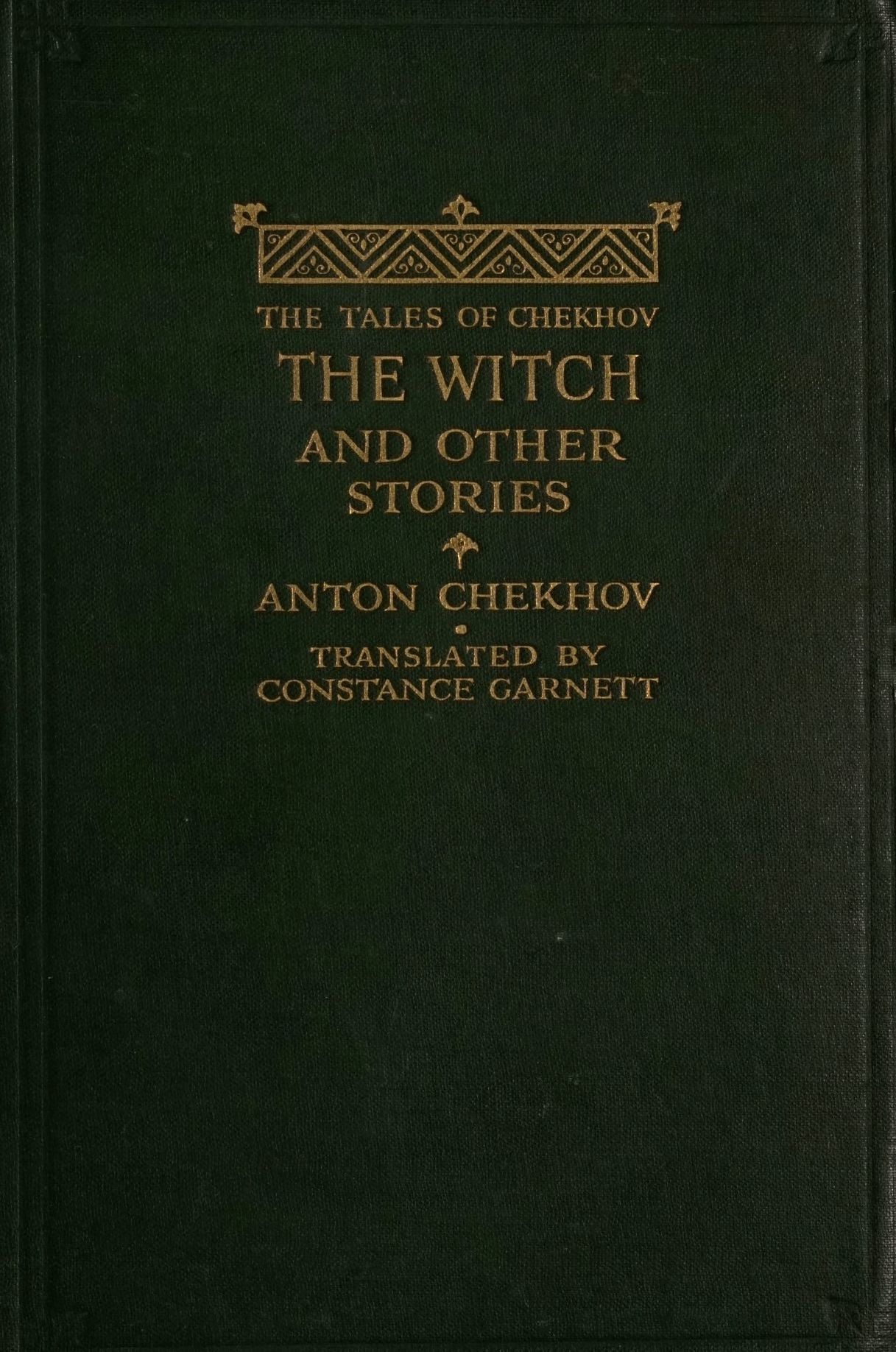
Anton Chekhov. The Tales of Chekhov. The Witch and other Stories. Translated by Constance Garnett. New York, The Macmillan company, 1918.
Sometimes the simplicity of beautiful lettering is all you need.
via: The Internet Archive

Anton Chekhov. The Tales of Chekhov. The Witch and other Stories. Translated by Constance Garnett. New York, The Macmillan company, 1918.
Sometimes the simplicity of beautiful lettering is all you need.
via: The Internet Archive
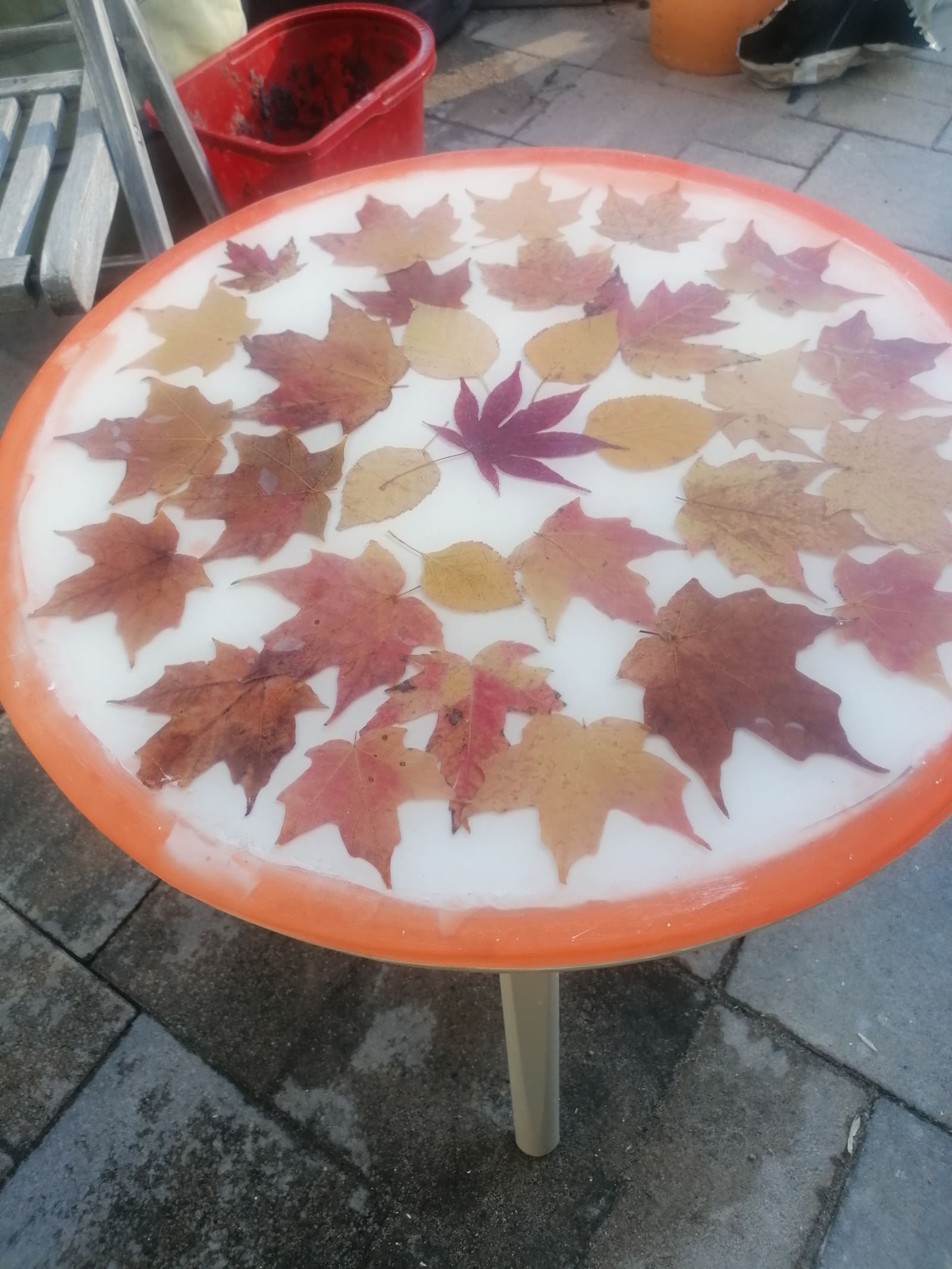
In crafting circles, a UFO is an Un Finished Object and they tend to be common. You may remember that some time back voyager sent me a giftbox that contained lots of pressed leaves and I wanted to do something special with them. I had bought a set of small couch tables from IKEA and wanted to turn the larger one into a resin covered table. If you look at the pictures from Ikea, you can see that they’ve got a rim around them and I didn’t want to fill that with resin during the first casings, so I carefully taped around the rim using gaffer tape.
Well, let met put it like this: there’s still resin on my kitchen floor. Also some of the leaves very stubbornly refused to take on any resin. And removing the now resin glued gaffer tape took off parts of the white coating.
Now of course I needed something else to construct a barrier around the table and I decided that I could hotglue some firm plastic round it. Once it was finished I would heat the glue with a hairdryer and remove everything. This created a resin proof barrier. To hide all the horrible things that happened to the tablerim I poured some orange there. and tried to persuade the damn leaves to please let themselves be coated. In the end, the hot glue removal involved sharp knives and took off a lot more paint and I think you can see why I lost a bit of enthusiasm. Because I don’t have a router I needed to carefully round the new sharp rim by hand. Also the orange hadn’t managed to hide the damage completely, so I decided to leave it matte, which actually does look quite nice. At this point i was so fed up that the table went into the Lego room unfinished until I took it out again this week.
I painted the sides again where the colour had parted with the wood, and looking at it in the sunlight I noticed that my top was anything but nice. now I probably only have myself to blame. When mixing resin you have to make sure it’s well mixed. There are certain amounts that mix well in a 0,2l cup. Too little and you stir in too much air. Too much and you can’t mix thoroughly anymore. If you want to do it right you mix, pour it into a different container and mix again. Usually I am too lazy for that and when working with small amounts of coloured resin it doesn’t matter, because you mix it again when you add the ink and then you see perfectly well if you need to keep mixing. This time, not so much. I tried polishing it out with chrome polish, but that didn’t work. I tried 2000 grit paper to no avail and then decided to go back to 800 grit and you know how much that hurts. I got most of the “stains” removed and it does look ok when not seen in direct sunlight. Thank goodness the window in the Lego room is quite small…
©Giliell, all rights reserved

©Giliell, all rights reserved

©Giliell, all rights reserved You can see the spots here where no resin ever stuck.
I do have ideas fro the second table in that set, now with a lot of knowledge about “how not to do it”. When I do that one I’ll probably give this one a well mixed top coat, but until then I#ll call it finished. Of course I#m less than totally happy with the result, but it’s still a pretty and unique piece of furniture.
Everybody knows dinosaurs are awesome, but it’s also commonly known that scientists and artists are extrapolating heavily from the available fossilized remains – in other words, reconstructing the Jurassic past requires a lot of guesswork. What we think dinosaurs look like is a carefully estimated probability of which muscle attached where, based on the (sometimes very) few bones that are found.
However, from time to time the circumstances align just so and some soft tissues are also preserved – as formerly squishy soft things and also in the bones of dinosaurs.
Anyway, the whole point here is that I like to look at paleoart. But how do we know they are right? (Spoiler: we don’t, not really.) What C.M.Koseman has done is examine some modern day animals and try to reconstruct them from the point of view of a fossil hunter millions of years in the future (personally, I think there might be a multi-leg bias in future interpretations, but Koseman has done his best):
C.M. Kosemen is an Istanbul-based artist and author (along with John Conway and Darren Naish) of the 2012 book, All Yesterdays: Unique and Speculative Views of Dinosaurs and Other Prehistoric Animals. A long-time creature designer, Kosemen had always had an interest in dinosaurs, but he embarked on his book with Conway after they began to realize that something was a bit off. “We were both dinosaur geeks, but the more we looked at these skeletons, and the more we looked at the pictures, we noticed that most mainstream dinosaur art didn’t look at dinosaurs as real creatures,” says Kosemen.
Most serious paleoart bases itself on the detailed findings of paleontologists, who can work for weeks or even years compiling the most accurate descriptions of ancient life they can, based on fossil remains. But Kosemen says that many dinosaur illustrations should take more cues from animals living today. Our world is full of unique animals that have squat fatty bodies, with all kinds of soft tissue features that are unlikely to have survived in fossils, such as pouches, wattles, or skin flaps. “There could even be forms that no one has imagined,” says Kosemen. “For example there could plant-eating dinosaurs that had pangolin or armadillo-like armor that wasn’t preserved in the fossil. There could also be dinosaurs with porcupine-type quills.”
I think he undervalues the vast majority of the artists who do draw prehistoric art, because the process involves a lot of imagination and creativity, with the added pressure of scientific accuracy. Certainly we don’t know the outer shapes of dinosaurs or other prehistoric creatures, so artists must work with what little scientific information they do have, and look at animals existing today, and then add layers of interpretation – not easy by any stretch. If Koseman is just arguing for more flamboyance, though, I’m 100% on board.
Anyway, the Atlas Obscura article has some examples from C.M.Koseman, and they are suitably creepy:

How a baboon skeleton might be interpreted by future paleoartists. via Atlas Obscura

Swans imagined as though they were featherless dinosaurs. via Atlas Obscura
Two main aspects of my life have, for as long as I can remember, been art and palaeontology. I’ve been drawing since I could hold a pencil and have stubbornly refused to grow out of the dinosaur/palaeontology craze that afflicts most children. The latter proved so hard to shake that I studied for a degree in Palaeobiology and Evolution between 2002 – 2005 at the University of Portsmouth, UK and stayed there for my PhD studies between 2005 – 2008. I have since held a research position at Portsmouth. In 2010 I was honoured to be part of a joint University of Portmsouth/Royal Society exhibition which installed several models of giant flying reptiles in the centre of London (image of me and Bamofo, one of our giant azhdarchid models, right). In 2013 my book, Pterosaurs: Natural History, Evolution, Anatomy was published by Princeton University Press to critical acclaim. I now make a living as a technical consultant on palaeontological documentaries, palaeoartist, graphic designer and author.
I have a hate-hate relationship with all professional sports*, especially with zero-sum competitions. Apparently even that IMO shitty environment can be made even shittier for women by men who have no clue but wield a lot of power.
This video spoke to me for some reason.
*In short, they are unhealthy and they more often than not foster self-harm, tribalism, and abuse.
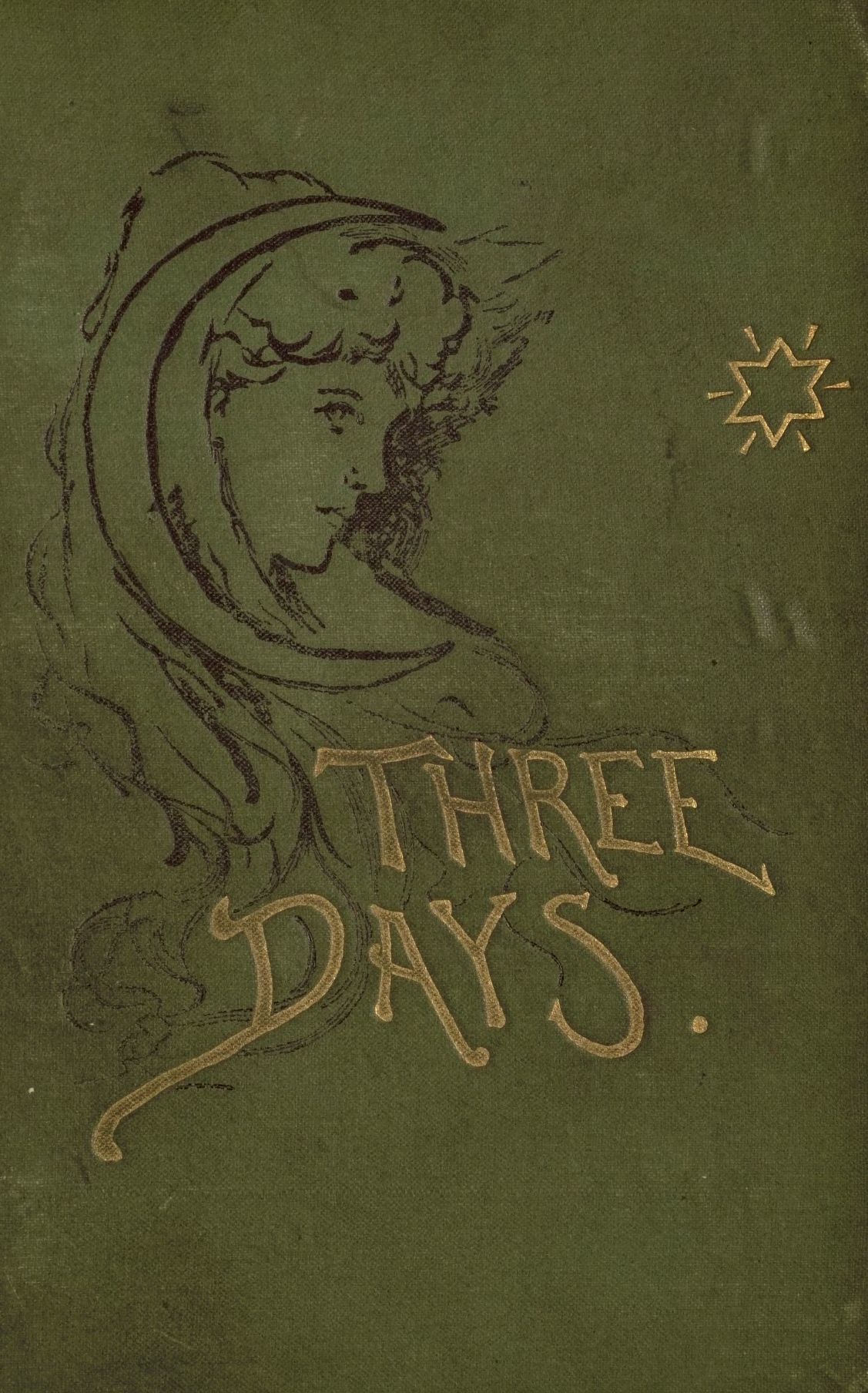
Samuel Williams Cooper. Three Days; A Midsummer Love Story. Philadelphia, J.B. Lippincott Company, 1889.
Anne, Cranky Cat Lady has been crafting dolls made from paintbrushes, and luckily, she’s sharing them with us. I think they’re wildly creative and they’ve given me a few ideas. Thanks, Anne. If you’d like to know more about their making please check Anne’s Dreamwidth site.

Paintbrush Dolls, ©Anne, Cranky Cat Lady
This is a small piece (finished painting 10x15cm) for a colleague-friend, who I have now known for a couple of years but who only recently asked for a painting. Since I used his expertise to find out interesting information about my mitochondrial DNA at no cost, I figured it’s a fair trade.
Now before anyone comments on the fact that this scene is astronomically impossible, I would like to say that this scene is astronomically impossible. The mountain is a real mountain, but in real life its orientation is such that the constellation Orion would probably not appear above it at that angle. I think the same about the full moon.
The main reason for drawing a scientifically inaccurate scene, however, is because the original sketch idea is based on Mount St Helens, where this astronomical alignment is perfectly possible. At least, possible enough for my artistic license (except for the full moon again, I think – not both together like that). But since Friend is from some other mountains, it would not do, so I had to substitute in something from the Alps.
First, a teaser – a by-product of the process, the process below the fold.

©rq, all rights reserved

The Hollow, Twisted Tree ©voyager, all rights reserved
“Mommy… Mommy,” I heard Jack call out excitedly from somewhere up ahead. Soon I saw him exit the forest and do a quick trot toward me on the trail. All of this was quite surprising because Jack seldom gets excited, and he doesn’t do the quick trot anymore, so something was up.
“What is it, Bubba?” I asked as he got nearer.
“Oma Troutchen is missing, and the fairies need our help.”
“Why do the fairies need our help?”
“They need my nose, and you have to drive,” Jack said, “Gnorman will explain it. He wants to talk to you.”
“Is Gnorman a fairy?” I asked, getting excited at the thought of finally meeting one of Jack’s fairy friends.
“Silly Mummy. Gnorman isn’t a fairy. Gnorman is a Gnome. Over here,” Jack said, walking back into the woods and stopping beside a tall, twisted tree stump.
I approached carefully and looked around, but I didn’t see anyone except for Jack.
“Where is he, Jack?”
“Up here, you Ninny, and put that camera away,” I heard a gruff voice say, but I still didn’t see anyone.
“Here, in the tree,” and sure enough there he was, a small wizened creature with a bushy white beard wearing a pointed red cap, standing inside the hollowed-out tree.
“Why must I put the camera away,” I asked.
“Because I told you to. Now, are you going to keep asking silly questions, or are you going to listen?” Gnorman said.
“I’m listening, but I’d like to take your photo, please,” I said as politely as I could.
“Maybe later. Right now, we’s got a lost fairy, and we needs Jack to help us find her. And Jack says he needs you to help him, so we’s decided to take a chance and asks you’s fur a bit of human help.”
“I’ll help however I can,” I said, wondering what on earth I could do to help find a fairy.
“It’s Oma Troutchen we’s lost. She was out collecting acorn caps with the school kids yesterday when young Freddy Fox wandered in and started sniffing around, and somehow Oma got caught up in his tail, and the silly fool ran off with her hanging there, and he’s done went and lost her.”
“That’s terrible.” I said, “Do you have any idea where she might be?”
“That’s the trouble. Freddy says that he thinks he lost her around Punkydoodles corner, but that’s a long way from here, and the fairies don’t have their wings yet to go looking for her. The birds is out looking for her, but they haven’t found her yet, and Oma ain’t gonna do well on her own for long.”
“Why won’t Oma do well? And why don’t the fairies have their wings?”
“Great grasshoppers! You sure do ask a lot of questions.” Gnorman said.
“Everyone knows that Fairies shed their wings in the fall and grow them back in the spring, so’s it’s easier for them to live underground in the winter. As for Oma, she’s very old and has the forgetting disease. Everyone in the forest is out looking for her. Even them drunken Imps are helping, but Freddy took her too far, and it’s hard to find a fairy who ain’t got her wings.” Gnorman was getting upset. “, where’s that stupid fox. He was supposed to meet us here to give Jack a bit more knowing about where they went. Hrmph! You just can’t trust a fox.”
“if you can’t trust a fox, how do we know he’ll tell us the truth?” I asked.
“‘Cause he’s got the whole durn forest mad at him and even a fox is smart enough to know you don’t mess with the fairies.”
“Everyone loves Oma Troutchen, Mummy,” Jack spoke up. “She’s been living in this forest for a long, long time and she’s friends with everyone. She was the first fairy I met, and she tells the best stories. I love her, too.” Jack sighed heavily, and I could see his eyes misting over.
“Alright, Gnorman. Jack, can you find the trail without waiting for this fox to turn up?”
“I can find fox trails, but I can’t be sure which one belongs to Freddy,” Jack said sadly.
“Well, then, I guess we’d better wait to see if Freddy turns up,” I said, sitting down on a log to wait.
“Thar’s a good girl,” Gnorman growled. “Now, I’ll let ya take one photo, but not too close. You humans always seems to make us Gnomes look silly.”
“Well, you do look a bit silly up in that tree,” I said.
“I climbed up here to make it easier for you, young lady, there’s nothing silly about that.” Gnorman smiled for the first time.
“Thanks,” I said, smiling back at him. “I appreciate your effort. And it’s nice to be called ‘young lady,’ no one calls me that anymore.”
“Well, you don’t look a day over a hundred to me,” Gnorman said merrily, and while I was letting that remark sink in, he quietly said, “Thanks to ya, fur helping us,” and then he blew me a kiss.
I reached for my camera and snapped a quick photo before Gnorman changed his mind.
Jack lay down beside me and placed his head heavily on my foot. I could see he was tired, and I stroked his back, hoping he would take a power nap.
And so we waited, hoping Freddy Fox would turn up soon.

Gnorman, ©voyager, all rights reserved
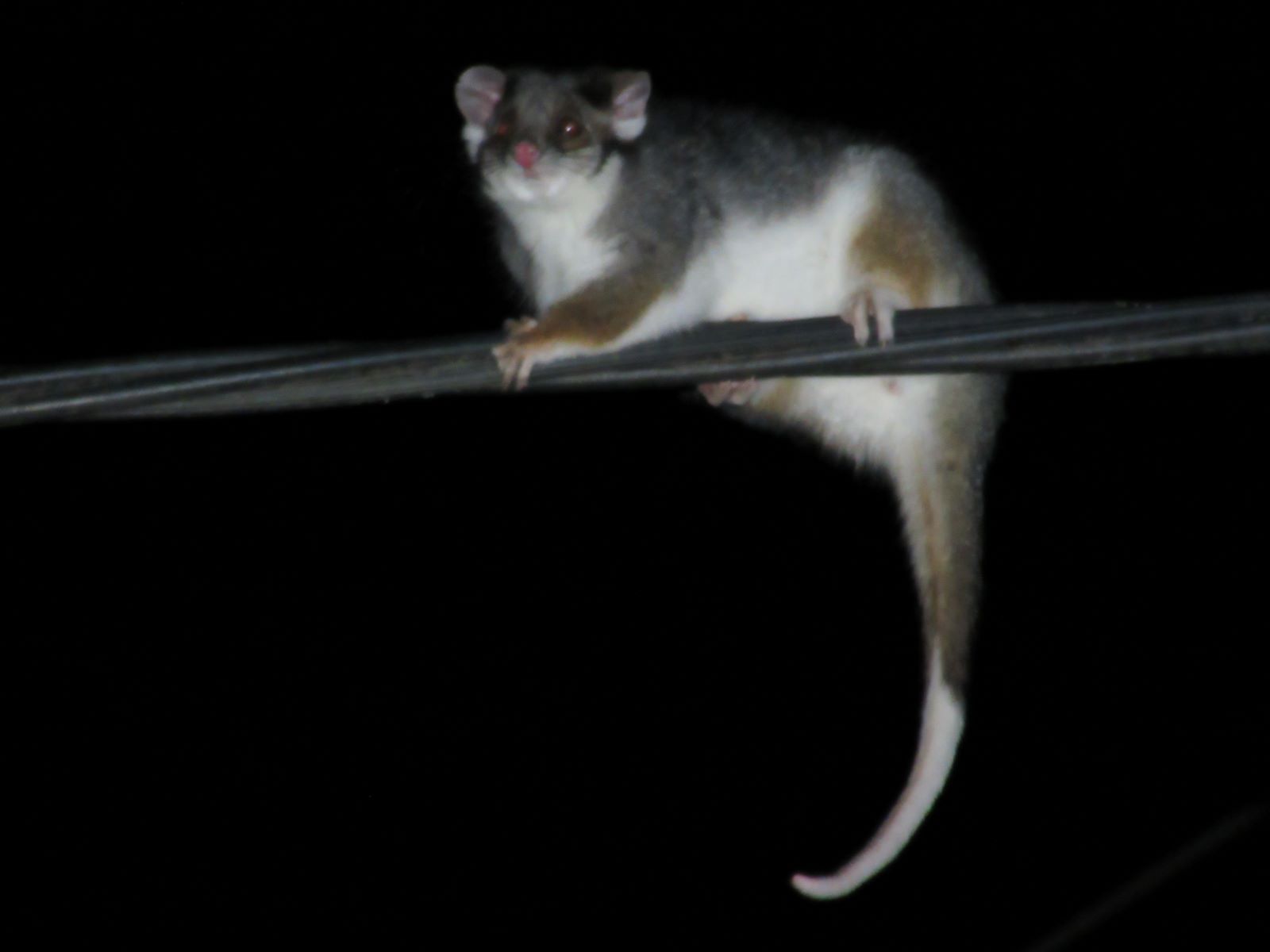
From Lofty,
… here are two ringtail possums cavorting on our power cable, just like the birds do in the daylight. I just used my powerful head torch
and the little Canon Powershot so it’s a little grainy!

©Lofty, all rights reserved
©Lofty, all rights reserved
In the small Palestinian village of Al Walaja, just outside Bethlehem, lives an ancient olive tree, that may be one of the oldest trees in the world. It has been carbon-dated to an age range of 3,000 to 5,500 years old and it is the job of one man, Salah Abu Ali, to protect it.
Ali wakes every morning to tend to his family’s orchard. Entering through a neighbor’s yard, he trots down the grove’s narrow paths in a way that belies his age, occasionally reaching down to quickly toss aside trespassing stones; briskly descending verdant terraces, one after another until he comes to the edge of the orchard. It is at this edge where Ali spends most of his day, pumping water from the spring above or tending to the soil. It is where he sometimes sleeps at night, and where he hosts people that have made the pilgrimage to the Holy Land. But many come for the tree, an olive that some believe to be the oldest in the world.
The olive tree of Al Walaja, like all trees in the world, is under threat from climate change and is recovering from a recent drought. It is also under the added threat of Israeli expansionism.
But the olive tree of Al Walaja has become something else to its residents. Now, it’s a symbol of resistance. The village is a shadow of its former self. Most of the village’s residents were forced to flee their homes amidst heavy fighting during the 1948 Arab-Israeli war. “In 1948, we came here and slept under the trees,” Ali says, as Israeli military personnel chant during drills in the valley below. After the dust settled and the demarcation lines were drawn, Al Walaja had lost around 70 percent of its land.
The town was further eroded after Israel captured the West Bank during the Six-Day War in 1967. Israel then expanded the Jerusalem Municipality, annexing around half of what was left of the village.More recently, Israel’s separation wall threatened to once again cut the village in two, isolating the Al Badawi tree. But residents won a court battle which saw the chain-link wall diverted around the village. The wall now stands just below Ali’s family orchard, separating the new village from the site of the old, just across a narrow valley.
Despite the court victory, dozens of homes have been bulldozed to make way for the Jerusalem Municipality. Al Walaja still sits isolated, hemmed in on nearly all sides by Israel’s separation wall and no longer able to access uncultivated farmland or many of the village’s once-famed springs.
It is because of these threats that Ali guards the ancient olive tree, and he considers it his life work to protect it. Ali now receives a small sum from The Palestinian Authority to take care of the tree, due to reports of Israeli settlers and soldiers cutting down and burning ancient olive trees in other parts of the West Bank.
According to the United Nations, approximately 45 percent of agricultural land in the West Bank and Gaza Strip contain olive trees, providing income for some 100,000 families. “The Palestinians are attached to the olive tree,” Ali says. “The olive tree is a part of our resistance and a part of our religion. With the olive tree we live, and without it we don’t live.”
Story from Atlas Obscura
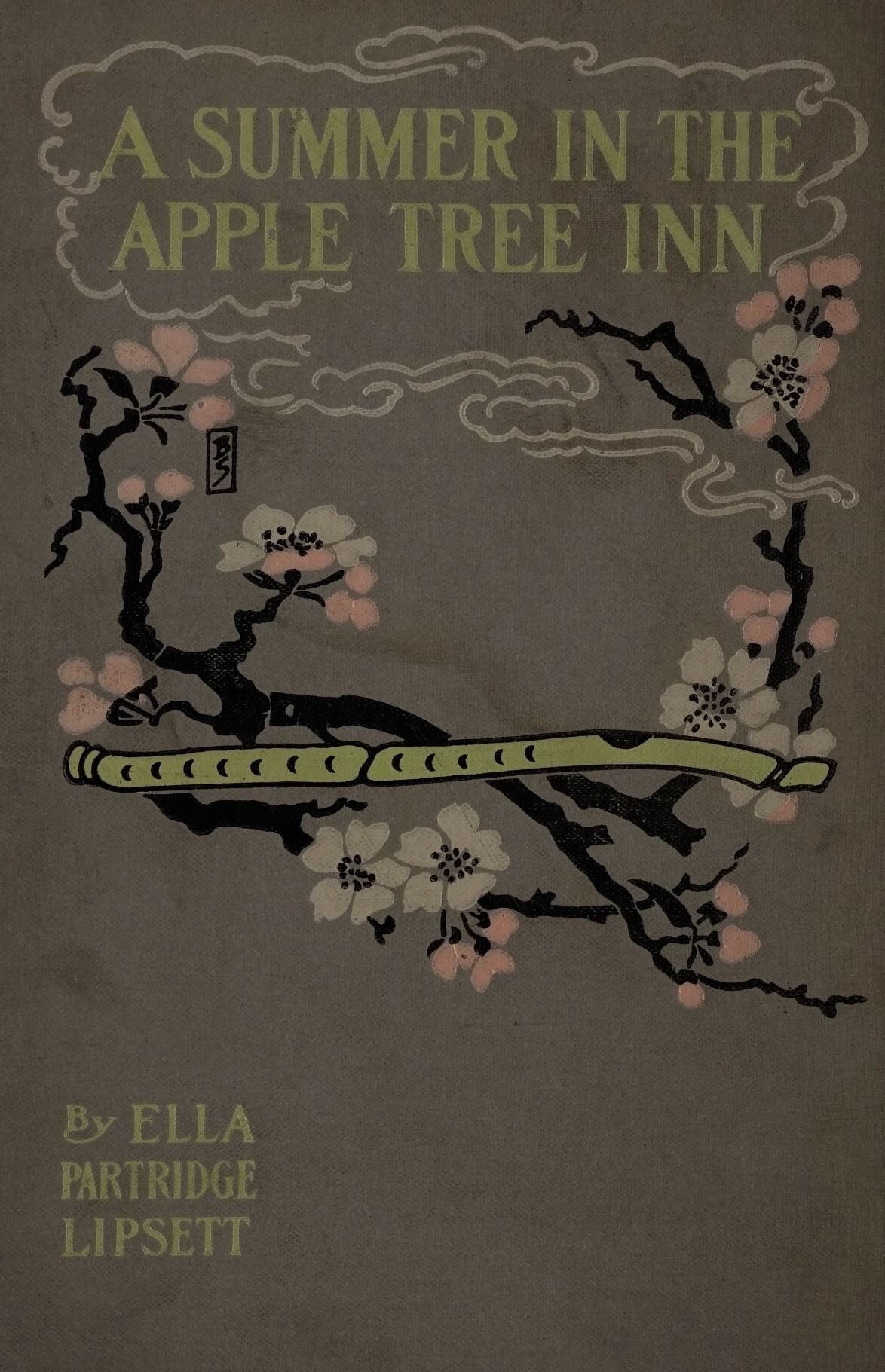
Ella Partridge Lipsett. A Summer in the Apple Tree Inn. New York, H. Holt and Company, 1906.

Royal Dixon. Forest Friends. New York, Frederick A. Stokes company, 1916.
via: The Library of Congresshttps://www.loc.gov/resource/dcmsiabooks.forestfriends00dixo/?st=gallery
There are some larger projects still in progress, like the dragon egg, but in between there was time for some smaller things, especially some that could be done with the kids.
#1 A birthday gift

©Giliell, all rights reserved
At school we have the tradition of “Geburtstagswichteln”. Now, Wichteln is what you’d call “secret Santa” at Christmas, but since the German word comes from “Wichtel”, a gnome, you can use it all year around. Tomorrow is the birthday of my recipient and since I cannot hug her or give her a present I sent her gift by mail. A necklace in the “smoke in resin” style, Lindt chocolates and nasturtium seeds for flowers.
#2 Shakers
You will remember my shaker disasters. After the second try I simply gave up and ordered some moulds.
They come in two varieties. Number one: open

©Giliell, all rights reserved
To finish them you need overhead transparency film and UV resin. You cut a piece of transparency to fit over the opening. Then you fill in your glitter and glue the transparency to the mould using UV resin. Then you fill the shaker with baby oil through the tiny opening you can see at the basis of the TV set and close that opening with UV resin. Finally you put a coat of resin on top.

©Giliell, all rights reserved
The other version comes with two moulds, one for the shaker, the other one for the top

©Giliell, all rights reserved
The idea is the same, just without the transparency. There’s also a little piece to close the opening, but it’s not in the picture. I sent the first set of those to my friend so she can craft them with her kiddo as well. I know she’s got UV nail polish so she won’t need to go shopping for UV resin. I also noticed that while I know exactly where cutlery and plates are in their kitchen, I had no idea what number their house is…
#3: And, you already spotted them: Pikachus!

©Giliell, all rights reserved
These moulds are a set of four. I first cast them in normal resin and then added the details with UV resin. The local Pokémon expert informed me that the eyes were all wrong above so I had to do them again. Working with black and white UV resin is tricky because, duh, they’re opaque and need a lot of UV light and time for curing. So if you spot a madwoman with sunglasses in her kitchen, don’t worry, she’s a madwoman wearing proper eye protection.
#4 Landscapes

©Giliell, all rights reserved
I saw these moulds on Youtube and I was really fascinated by them. You cast the pieces in two steps: First you do the landmasses as you can see in brown here, then you put those into the other moulds and pour the sea. They are really pretty (the image doesn’t do the finished brown pieces justice), but they’re also a bit on the small side, as you can see in the Euro coin next to them (for ‘Muricans, a little less than an inch). I think they would work best in a necklace putting several of them next to each other, but for that I’ll have to cast them in the same colours.
Well, that’s it for today. See you next when it’s time for “thank goodness my hands are keeping my mind busy”.


