Great Blue Herons (Ardea herodias) from Kengi. Majestic birds. Click for full size.


© Kengi, all rights reserved.

Great Blue Herons (Ardea herodias) from Kengi. Majestic birds. Click for full size.
© Kengi, all rights reserved.
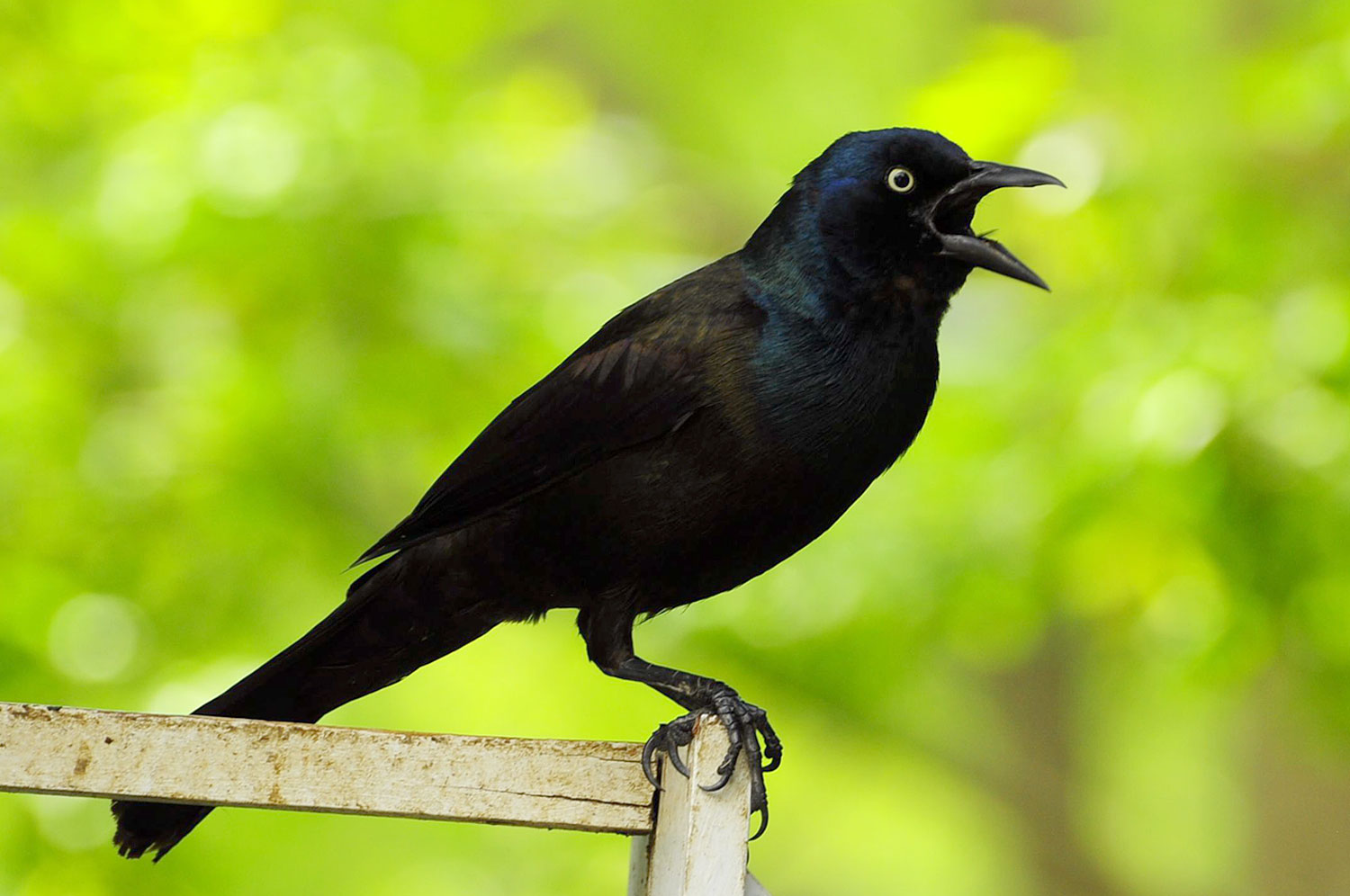
Grackle, putting out the call. Click for full size.
© C. Ford, all rights reserved.

National Guard and wounded during 1921 Tulsa race riots (Tulsa World/Wikimedia Commons).
A brief look at Tulsa’s history, and it’s not at all a good one.
The black neighborhood in Tulsa was known as “Greenwood” because Greenwood Avenue ran through it. Approximately 10,000 African Americans lived there. While there were large numbers of black people who lived in poverty in the area, the business district was its own complete city. There were dozens of black-owned businesses. Every kind of small business — grocery stores, beauty shops, jewelry stores, photography studios, tailor shops, and much more — a large number of restaurants, and a 750-seat theatre, the Dreamland Theater “that offered live musical and theatrical revues as well as silent movies accompanied by a piano player.” There were two black-owned newspapers. There were 15 African American physicians’ offices. A hospital. A large number of churches. A library. And a 54-room hotel, the Stradford Hotel.
[…]
During the night and the following day, the white mob invaded Greenwood. They pulled residents out of their homes and beat and killed them, including old people and children. They torched every building. Black people escaping Greenwood were arrested by the Oklahoma National Guard, who locked masses of them up in holding centers and only released them when white people stepped forward and vouched for individual black people.
The best estimates are that 300 people died during the riot, and 1256 structures were torched. While the Red Cross provided relief efforts for those thousands of people who had been burnt out of their homes, for which the city and county paid into the Red Cross relief fund, no compensation was paid to the victims of the violence. In addition, not a single white person was held accountable for any of the crimes committed May 31-June 1.
I had never heard of this before, and it’s unconscionable that to this day, it’s barely acknowledged, and no restitution or compensation was ever offered. Tulsa’s history with people of colour is a dark and shameful one. It’s time to bring it all out into the light in the spirit of change, and one of those should be a vow to stop murdering people of colour. It’s been going on much too long, as the recent murder of Terence Crutcher demonstrates all too well.
Another unarmed black man gunned down by police on video, but Zika is an Epidemic? I'll worry about a Mosquito when it can carry a badge!
— DL Hughley (@RealDLHughley) September 20, 2016
From DL Hughley: Another unarmed black man gunned down by police on video, but Zika is an Epidemic? I’ll worry about a mosquito when it can carry a badge!
All I can say to that is word. A word that needs to spread and spread and spread, until we are all screaming for accountability. The murders must stop.
I saw this in Mr. Hughley’s twitter stream, and laughed:
Any questions… #TeamDL pic.twitter.com/22cGfqePrL
— DL Hughley (@RealDLHughley) September 20, 2016
Donald Trump: Why isn’t President Obama working instead of campaigning for Hillary Clinton?
George Takei: As Commander-in-Chief, he is sworn to protect us from threats both foreign and domestic. You, sir, are the latter.

Via Twitter.
A miniature float designed for Coweta High School’s indoor homecoming parade has sparked outrage with Native Americans across the community that has spread to include a national audience.
A photo of the float appeared on social media Thursday afternoon. It was a covered wagon with the words “Scalp the Indians” on the side, with a mannequin of a Native American man hanging out from the back end.
The Coweta Tigers are hosting the Catoosa Indians in homecoming football action Friday night.
In a Facebook message to the Wagoner County American-Tribune, Sierra Bowen said she was “completely disgusted at the fact that Coweta High School has decorated this wagon for their homecoming.”
“I grew up in and graduated from Coweta and I was raised much better than this,” Bowen wrote. “I did not want to come home to my home school for homecoming and see something like this on the field. This is so disrespectful.”
Katrina Jacuk posted a similar sentiment on the Coweta American Facebook page.
“Leadership at Coweta High School has permitted this to be displayed at the high school. How ignorant are these educators and students as to the history of our town, Koweta, along with the genocide of Natives that have been murdered since 1491?” Jacuk wrote in her post. “This is disgraceful and morally repugnant and creates a hostile environment for Native students at our school.”
[…]
Friday morning, Coweta Superintendent Jeff Holmes told the newspaper the homecoming float issue was brought to his attention after school on Thursday.
“The high school principal (Gary Ellis) was notified via social media and he immediately took action to find out about the float and investigate,” Holmes told the American-Tribune in an exclusive interview. “He let me know that he immediately disassembled the float. As soon as he found about it, he was taking action.”
The superintendent said students have been making floats all week throughout the entire school. Investigation continues to determine who was involved in making the float and its theme.
Early Friday via internet and social media, Holmes released a statement addressed to Coweta Public School students, families, friends and neighbors.
“I am very sorry that this happened as there is no excuse for this in our school. Please know that this does not reflect the values of our school district,” Holmes wrote. “I offer my most sincere apology to all who were offended and want to assure that we will use this situation to educate our students regarding the importance of respecting all cultures.”“We have been getting phone calls and emails from across the country. People are offended and rightfully so,” Holmes said. “The high school principal and I are visiting to make sure that everything is double and triple checked to make sure there are no negative meanings on any of the floats, that no signs that will be offensive at the ballgame or that our student section will be doing anything that will be offensive.”
“We have a lot of great kids. This is not a school-wide activity where everyone was trying to offend someone,” Holmes said. “This one particular float is very offensive. It was never part of a parade and we caught it before the parade happened. But we didn’t know about it until then, and we have no excuses. No excuses.”
The superintendent said there will be training for students and staff as needed, and “if disciplinary action is needed, that will take place as well.”
“It’s totally disrupted the school day for hundreds of students, and it’s been very offensive to the people inside Coweta and to people around the world and in our great state,” Holmes said.
The superintendent said he has reached out to leaders within the Muscogee (Creek) nation and the Cherokee Nation about the matter. As of 12 noon, he was still waiting to speak with them directly.
As Simon Moya-Smith said, It’s a putrid effigy of the dehumanization of Native Americans, the result of a ubiquitous colonial narrative. I’m glad the school has responded the way it did, but someone had this idea, someone put this float together, and there had to be an adult floating about somewhere, who saw and did not stop this. Seeing something like this is a bone deep shock, and this is not a matter of sniffy offense, it’s a matter of trauma. Think of the Native kids who saw this, think of what something like this does to their world, what it does to any sense of trust they may have had. Whoever was responsible for this, every person responsible, including those who turned a blind eye and kept silent, you should be shamed, loudly and openly. It’s of little moment that this float didn’t make their parade, because it did make the internet, and whatever damage the person responsible wanted to do was done. And no, this was not a fucking joke, of any kind, in any way, I don’t care if it had to do with precious sportsball. This is fucking poison. *spits*
Story here.

Gerald R. Ford. Whitehouse.gov
When Gerald Rudolph Ford was sworn in as President in August 1974, he inherited a conflict that was already a century in the making.
Ninety-seven years earlier, in the Black Hills of South Dakota, the federal government entered into an agreement with a small group of Sioux Indians. The February 1877 agreement called for the Sioux to relinquish their rights to the Black Hills, a range of sprawling, tree-covered mountains the Sioux had occupied since the 1770s.
In exchange for 7.3 million acres of land in the Black Hills—and rights to gold Lt. Col. George Armstrong Custer discovered there in 1874—the government promised allotments in Indian Territory, along with “all necessary aid to assist the said Indians in the work of civilization.” It also promised rations of beef, bacon, flour, corn, coffee, sugar and beans, etc., “until the Indians are able to support themselves.”
Ten percent of the Sioux Nation’s adult male population signed the agreement, along with representatives from the Northern Arapaho and Cheyenne nations. But the agreement, later passed by Congress, directly violated the Fort Laramie Treaty of 1868, in which the Black Hills, were “set apart for the absolute and undisturbed use and occupation of the Indians,” and determined that land would not be ceded without approval from three-fourths of the tribe’s adult male population.
Although the Sioux believed the 1877 act violated the 1868 treaty, they had no way to pursue litigation against the United States. That changed in 1946 when President Harry S. Truman signed the Indian Claims Commission Act, establishing a process for resolving long-standing disputes between Indians and the federal government.
The Sioux Nation filed an initial claim in 1950. Twenty-four years later, in February 1974, the Indian Claims Commission ruled that the United States took the Black Hills illegally. The commission also determined that the 1877 value of the land—and gold discovered there—was copy7.5 million (inflated to copy03 million by 1974).
Two months after taking office, Ford signed the Indian Claims Commission Appropriations Legislation, which he called an opportunity “to take clear and decisive action” to make things right. “Although we cannot undo the injustices from our history, we can insure that the actions we take today are just and fair and designed to heal such wounds from the past,” he said.
Ford called on the government to pay the monetary claim, but did not take action to return the land. The Sioux refused the money, which still sits in the U.S. Treasury, earning interest.
Neil Young’s song about what’s happening at Standing Rock! Thank you, Neil.
Young has campaigned against big oil for years, and he drives a car that runs on plant-based ethanol. Along with Willie Nelson and Lakota hip-hop artist Frank Waln, he performed at a concert to rally supporters opposing the XL Keystone Pipeline. Earlier in 2016 he provided the background music for the American Indian College Fund’s new advertising campaign.
When the Apache Stronghold movement traveled throughout the United States to oppose the degradation of sacred Oak Flat by the Resolution Copper Mine, Young welcomed the Apache to drum at one of his concerts in New Jersey before they rallied in Washington D.C. The iconic performer has also been actively engaged in First Nations’ battles. He donated the proceeds of select concerts on his Honor the Treaties Tour to the legal fund for the Athabasca Chipewyan’s struggle to halt the expansion of the Alberta Tar Sands.
Vincent Schilling’s full article is here. And please, heed Neil, and share the news!

Courtesy Lauren A. Badams.
A team of scientists from the U.S., Belgium, Portugal, and the U.K. have pushed back the first use of Indigofera tinctoria as blue fabric dye in the world to South America 6,200 years ago. The previous oldest physical specimen was from Egypt 4,400 years ago, although there were written references to blue dye going back 5,000 years. The blue dyed cotton fabric was discovered in an archaeological site that has been studied for many years, Huaco Prieta, located in the northern coastal region of modern Peru.
Publication of the study by Jeffrey C. Splitstoser and his colleagues in Science Advances this month has set off wisecracks in popular science publications about Andean Indians inventing blue jeans, but it is a much bigger deal than that. Besides, what was new about blue jeans was the rivets, not the color.
[…]
Indigo blue was highly prized long before the Americas were “discovered.” The ancient Greeks understood India to be the source of the dye and indigo—along with spices and silk—made up the trade goods the Europeans were seeking when they got sidetracked by Aztec and Incan gold.
Why is it a big deal that indigo appears in South America long before Asia or Africa? If the dye required nothing but mashing up something blue, then it might be found everywhere the plant grew, but it’s a bit more complicated than that.
Most ancient dyes were fairly simple. Flower petals were boiled to make them yield up their color. Ochre yielded reds and yellows, depending on the exact iron content. A bright white dye can be extracted from milkweed.
The first difference indigo presents is that the dye is not in the flowers. It’s in the leaves. To make the leaves yield the color, they first have to be fermented. The fermented solids are then dried. The fermented and dried indigo is light and easy to ship.
The indigo solids must then be treated with an alkaline substance, commonly urine, to produce a dye that is apparently white. Yarn treated with the reconstituted indigo comes out white but then turns to yellow, to green, and finally to the deep blue that makes the dye so valuable.
In an interview with Live Science, Splitstoser speculated, “This was probably a technology that was invented by women.” He noted that women were typically in charge of weaving and dying in Andean cultures.
The discovery at Huaco Prieta adds another example of cultural knowledge either purposely destroyed or ignored out of arrogance by conquistadors who believed they were doing God’s work in destroying non-Christian cultures. That destruction fed the myth that Europe represented science when the Americas represented superstition.
These people who were burning Mayan writings and destroying works of astronomy and mathematics and chemistry were burning human beings for heresy at the same time. Indians had science and Europeans had superstition. It ought to be possible to compare cultures in a more objective manner than the settlers have chosen when they wrote all the histories.
Full article here.

Film maker Jenni Olsen takes on the B Word, and does a great job of it, too. The word is pervasive, now more than ever, and it’s a damn difficult word to get out of your head, even if you manage to get it out of your speech and writing. I came of age in the early ’70s, and being a native Southern Californian, spent much time at various beaches. Back then, bitchin‘ was used as an overall positive. How that came about, I don’t know. Like most of my peers, that expression dropped from lips often. My grandmothers disapproved, in pursed lip fashion. They also felt that geez was near blasphemous, so I didn’t pay much attention to the pursing. Later on, bitchin! disappeared, and bitch was in, in a very dark and nasty way. The nastiness of it hasn’t disappeared in the least, if anything, it’s dug in, and bitch is more widespread than ever. It’s directed at pretty much everyone these days, but the basic of it has not changed. When you call someone a bitch, you’re calling them a woman, and that remains a very lowly and bad thing to be. Just a small excerpt from Jenni Olsen’s article, because the whole thing is an excellent read:
As this terrific Vice.com article on the word’s long history concludes: “ ‘Bitch’ has come a long way, sure, but perhaps the reason it hasn’t been truly reclaimed is because conditions for women haven’t really changed, either…Words only make sense in context. When we see the day when the context is changed, then the core meaning of the word will change, too.”
[…]
Just to anticipate the two arguments in your head. Yes, it’s true that women use the term. We’re women—we get to do that sometimes because it’s ours. And no, it’s not the same as the reclamation of the word queer, at least not for you. Britney, Rihanna, Madonna and Alanis Morissette can shout it at the top of their lungs. But as men you can’t reclaim something that was never yours in the first place. And I confess that, as a feminist raising two daughters in our still very sexist society I’m not really that comfortable with those songs and reclamations either—the hostility towards women and continued sexism in our culture just makes it hard for me to accept so much mainstream flippant usage of the term. Quite simply: It still feels hurtful and hateful to me.
So maybe just ask yourself next time you have it on the tip of your tongue. Does this word really mean so much to you? And if it does, why is that? If you felt that compelled and entitled to use those other F and N epithets on a daily basis—what would it say about you? As my thirteen year-old daughter Sylvie often urges me when considering her requests: “Think about it.”

Willard Stone, “War Widows” (nd), wild cherry wood, 7 1/2 x 20 1/2 x 4 1/2 inches (courtesy Gilcrease Museum).
Most people don’t know Willard Stone, a Cherokee sculptor who did amazing work, most of in in the 1940s. He was deeply affected by the threat of atomic war, and that is the subject of several of his pieces. There’s a show and centennial celebration of his work at the Gilcrease Museum in Tulsa, Oklahoma until January 22nd, 2017. Hyperallergic has an excellent article about Mr. Stone.
TULSA, Okla. — Willard Stone’s wood-carving style might be described as Art Deco Cherokee, with a distinct, streamlined movement and natural themes that reflect his indigenous heritage. He’d originally wanted to be a painter, but a childhood accident with a blasting cap blew off his thumb and two other fingers. So he slowly learned sculpture instead, forming figures from Oklahoma’s red clay. His 1940s work in particular responded to the threat and promise of atomic energy, while still including the Native American motifs expected by his patrons. To mark the centennial of his birth in Oktaha, Oklahoma, the Gilcrease Museum in Tulsa is exhibiting Following the Grain: A Centennial Celebration of Willard Stone.

Willard Stone, “Tree Dog” (nd), torch-burned cherry wood, 13 3/4 x 3 3/4 x 5 1/8 inches (courtesy Gilcrease Museum).

Willard Stone, “Modernistic Indian Girl” (1946), oak wood, 9 x 2 1/2 x 1 3/4 inches (courtesy Gilcrease Museum).
There’s much more to see, and read, at Hyperallergic. Following the Grain: A Centennial Celebration of Willard Stone.
Via Hyperallergic.
From Giliell, click for full size. I absolutely *love* the first photo. So vibrant, such beautiful life.

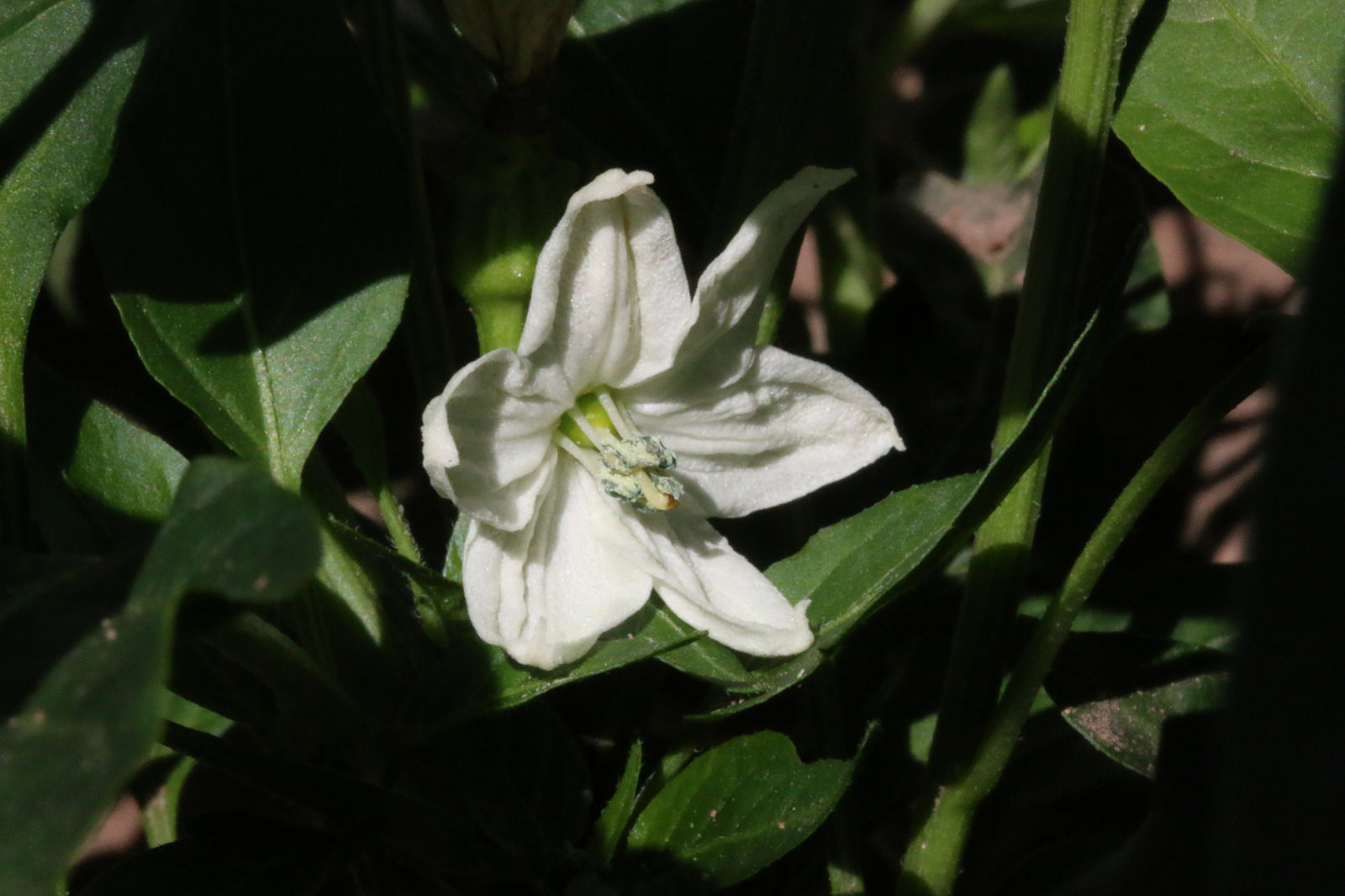

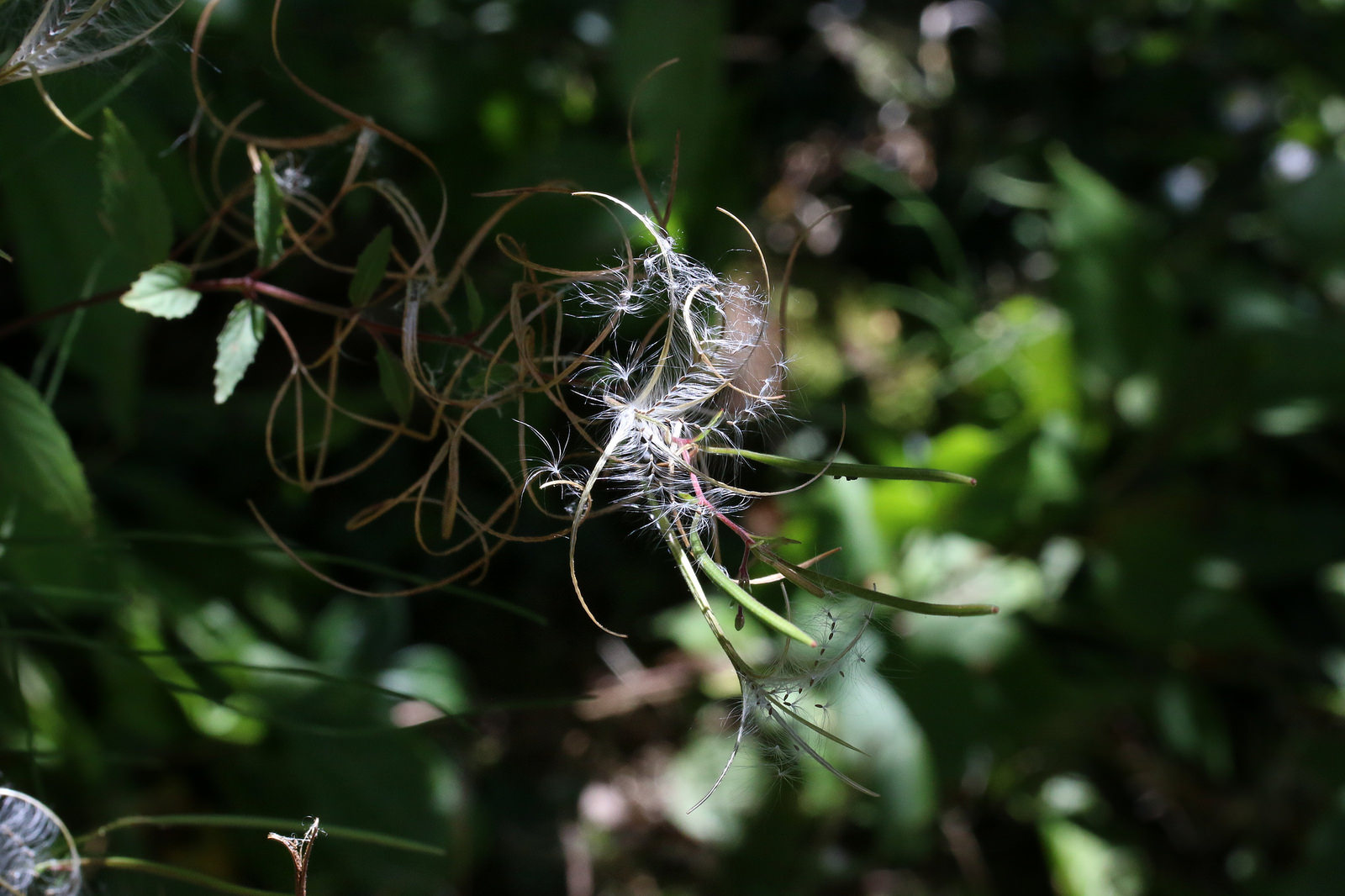

© Giliell, all rights reserved.
From Kengi, click for full size. Such striking birds!


© Kengi, all rights reserved.
Downy Woodpecker. Click for full size.

© C. Ford, all rights reserved.